Spandidos Publications Logo
  • About
    • About Spandidos
    • Aims and Scopes
    • Abstracting and Indexing
    • Editorial Policies
    • Reprints and Permissions
    • Job Opportunities
    • Terms and Conditions
    • Contact
  • Journals
    • All Journals
    • Oncology Letters
      • Oncology Letters
      • Information for Authors
      • Editorial Policies
      • Editorial Board
      • Aims and Scope
      • Abstracting and Indexing
      • Bibliographic Information
      • Archive
    • International Journal of Oncology
      • International Journal of Oncology
      • Information for Authors
      • Editorial Policies
      • Editorial Board
      • Aims and Scope
      • Abstracting and Indexing
      • Bibliographic Information
      • Archive
    • Molecular and Clinical Oncology
      • Molecular and Clinical Oncology
      • Information for Authors
      • Editorial Policies
      • Editorial Board
      • Aims and Scope
      • Abstracting and Indexing
      • Bibliographic Information
      • Archive
    • Experimental and Therapeutic Medicine
      • Experimental and Therapeutic Medicine
      • Information for Authors
      • Editorial Policies
      • Editorial Board
      • Aims and Scope
      • Abstracting and Indexing
      • Bibliographic Information
      • Archive
    • International Journal of Molecular Medicine
      • International Journal of Molecular Medicine
      • Information for Authors
      • Editorial Policies
      • Editorial Board
      • Aims and Scope
      • Abstracting and Indexing
      • Bibliographic Information
      • Archive
    • Biomedical Reports
      • Biomedical Reports
      • Information for Authors
      • Editorial Policies
      • Editorial Board
      • Aims and Scope
      • Abstracting and Indexing
      • Bibliographic Information
      • Archive
    • Oncology Reports
      • Oncology Reports
      • Information for Authors
      • Editorial Policies
      • Editorial Board
      • Aims and Scope
      • Abstracting and Indexing
      • Bibliographic Information
      • Archive
    • Molecular Medicine Reports
      • Molecular Medicine Reports
      • Information for Authors
      • Editorial Policies
      • Editorial Board
      • Aims and Scope
      • Abstracting and Indexing
      • Bibliographic Information
      • Archive
    • World Academy of Sciences Journal
      • World Academy of Sciences Journal
      • Information for Authors
      • Editorial Policies
      • Editorial Board
      • Aims and Scope
      • Abstracting and Indexing
      • Bibliographic Information
      • Archive
    • International Journal of Functional Nutrition
      • International Journal of Functional Nutrition
      • Information for Authors
      • Editorial Policies
      • Editorial Board
      • Aims and Scope
      • Abstracting and Indexing
      • Bibliographic Information
      • Archive
    • International Journal of Epigenetics
      • International Journal of Epigenetics
      • Information for Authors
      • Editorial Policies
      • Editorial Board
      • Aims and Scope
      • Abstracting and Indexing
      • Bibliographic Information
      • Archive
    • Medicine International
      • Medicine International
      • Information for Authors
      • Editorial Policies
      • Editorial Board
      • Aims and Scope
      • Abstracting and Indexing
      • Bibliographic Information
      • Archive
  • Articles
  • Information
    • Information for Authors
    • Information for Reviewers
    • Information for Librarians
    • Information for Advertisers
    • Conferences
  • Language Editing
Spandidos Publications Logo
  • About
    • About Spandidos
    • Aims and Scopes
    • Abstracting and Indexing
    • Editorial Policies
    • Reprints and Permissions
    • Job Opportunities
    • Terms and Conditions
    • Contact
  • Journals
    • All Journals
    • Biomedical Reports
      • Information for Authors
      • Editorial Policies
      • Editorial Board
      • Aims and Scope
      • Abstracting and Indexing
      • Bibliographic Information
      • Archive
    • Experimental and Therapeutic Medicine
      • Information for Authors
      • Editorial Policies
      • Editorial Board
      • Aims and Scope
      • Abstracting and Indexing
      • Bibliographic Information
      • Archive
    • International Journal of Epigenetics
      • Information for Authors
      • Editorial Policies
      • Editorial Board
      • Aims and Scope
      • Abstracting and Indexing
      • Bibliographic Information
      • Archive
    • International Journal of Functional Nutrition
      • Information for Authors
      • Editorial Policies
      • Editorial Board
      • Aims and Scope
      • Abstracting and Indexing
      • Bibliographic Information
      • Archive
    • International Journal of Molecular Medicine
      • Information for Authors
      • Editorial Policies
      • Editorial Board
      • Aims and Scope
      • Abstracting and Indexing
      • Bibliographic Information
      • Archive
    • International Journal of Oncology
      • Information for Authors
      • Editorial Policies
      • Editorial Board
      • Aims and Scope
      • Abstracting and Indexing
      • Bibliographic Information
      • Archive
    • Medicine International
      • Information for Authors
      • Editorial Policies
      • Editorial Board
      • Aims and Scope
      • Abstracting and Indexing
      • Bibliographic Information
      • Archive
    • Molecular and Clinical Oncology
      • Information for Authors
      • Editorial Policies
      • Editorial Board
      • Aims and Scope
      • Abstracting and Indexing
      • Bibliographic Information
      • Archive
    • Molecular Medicine Reports
      • Information for Authors
      • Editorial Policies
      • Editorial Board
      • Aims and Scope
      • Abstracting and Indexing
      • Bibliographic Information
      • Archive
    • Oncology Letters
      • Information for Authors
      • Editorial Policies
      • Editorial Board
      • Aims and Scope
      • Abstracting and Indexing
      • Bibliographic Information
      • Archive
    • Oncology Reports
      • Information for Authors
      • Editorial Policies
      • Editorial Board
      • Aims and Scope
      • Abstracting and Indexing
      • Bibliographic Information
      • Archive
    • World Academy of Sciences Journal
      • Information for Authors
      • Editorial Policies
      • Editorial Board
      • Aims and Scope
      • Abstracting and Indexing
      • Bibliographic Information
      • Archive
  • Articles
  • Information
    • For Authors
    • For Reviewers
    • For Librarians
    • For Advertisers
    • Conferences
  • Language Editing
Login Register Submit
  • This site uses cookies
  • You can change your cookie settings at any time by following the instructions in our Cookie Policy. To find out more, you may read our Privacy Policy.

    I agree
Search articles by DOI, keyword, author or affiliation
Search
Advanced Search
presentation
Oncology Reports
Join Editorial Board Propose a Special Issue
Print ISSN: 1021-335X Online ISSN: 1791-2431
Journal Cover
September-2015 Volume 34 Issue 3

Full Size Image

Sign up for eToc alerts
Recommend to Library

Journals

International Journal of Molecular Medicine

International Journal of Molecular Medicine

International Journal of Molecular Medicine is an international journal devoted to molecular mechanisms of human disease.

International Journal of Oncology

International Journal of Oncology

International Journal of Oncology is an international journal devoted to oncology research and cancer treatment.

Molecular Medicine Reports

Molecular Medicine Reports

Covers molecular medicine topics such as pharmacology, pathology, genetics, neuroscience, infectious diseases, molecular cardiology, and molecular surgery.

Oncology Reports

Oncology Reports

Oncology Reports is an international journal devoted to fundamental and applied research in Oncology.

Experimental and Therapeutic Medicine

Experimental and Therapeutic Medicine

Experimental and Therapeutic Medicine is an international journal devoted to laboratory and clinical medicine.

Oncology Letters

Oncology Letters

Oncology Letters is an international journal devoted to Experimental and Clinical Oncology.

Biomedical Reports

Biomedical Reports

Explores a wide range of biological and medical fields, including pharmacology, genetics, microbiology, neuroscience, and molecular cardiology.

Molecular and Clinical Oncology

Molecular and Clinical Oncology

International journal addressing all aspects of oncology research, from tumorigenesis and oncogenes to chemotherapy and metastasis.

World Academy of Sciences Journal

World Academy of Sciences Journal

Multidisciplinary open-access journal spanning biochemistry, genetics, neuroscience, environmental health, and synthetic biology.

International Journal of Functional Nutrition

International Journal of Functional Nutrition

Open-access journal combining biochemistry, pharmacology, immunology, and genetics to advance health through functional nutrition.

International Journal of Epigenetics

International Journal of Epigenetics

Publishes open-access research on using epigenetics to advance understanding and treatment of human disease.

Medicine International

Medicine International

An International Open Access Journal Devoted to General Medicine.

Journal Cover
September-2015 Volume 34 Issue 3

Full Size Image

Sign up for eToc alerts
Recommend to Library

  • Article
  • Citations
    • Cite This Article
    • Download Citation
    • Create Citation Alert
    • Remove Citation Alert
    • Cited By
  • Similar Articles
    • Related Articles (in Spandidos Publications)
    • Similar Articles (Google Scholar)
    • Similar Articles (PubMed)
  • Download PDF
  • Download XML
  • View XML
Article Open Access

Hepatic stellate cells promote upregulation of epithelial cell adhesion molecule and epithelial-mesenchymal transition in hepatic cancer cells

  • Authors:
    • Teruya Nagahara
    • Hidenori Shiraha
    • Hiroaki Sawahara
    • Daisuke Uchida
    • Yasuto Takeuchi
    • Masaya Iwamuro
    • Junro Kataoka
    • Shigeru Horiguchi
    • Takeshi Kuwaki
    • Hideki Onishi
    • Shinichiro Nakamura
    • Akinobu Takaki
    • Kazuhiro Nouso
    • Kazuhide Yamamoto
  • View Affiliations / Copyright

    Affiliations: Department of Gastroenterology and Hepatology, Okayama University Graduate School of Medicine, Shikata-cho, Kita-ku, Okayama 700-8558, Japan
    Copyright: © Nagahara et al. This is an open access article distributed under the terms of Creative Commons Attribution License [CC BY_NC 3.0].
  • Pages: 1169-1177
    |
    Published online on: July 13, 2015
       https://doi.org/10.3892/or.2015.4126
  • Expand metrics +
Metrics: Total Views: 0 (Spandidos Publications: | PMC Statistics: )
Metrics: Total PDF Downloads: 0 (Spandidos Publications: | PMC Statistics: )
Cited By (CrossRef): 0 citations Loading Articles...

This article is mentioned in:


Abstract

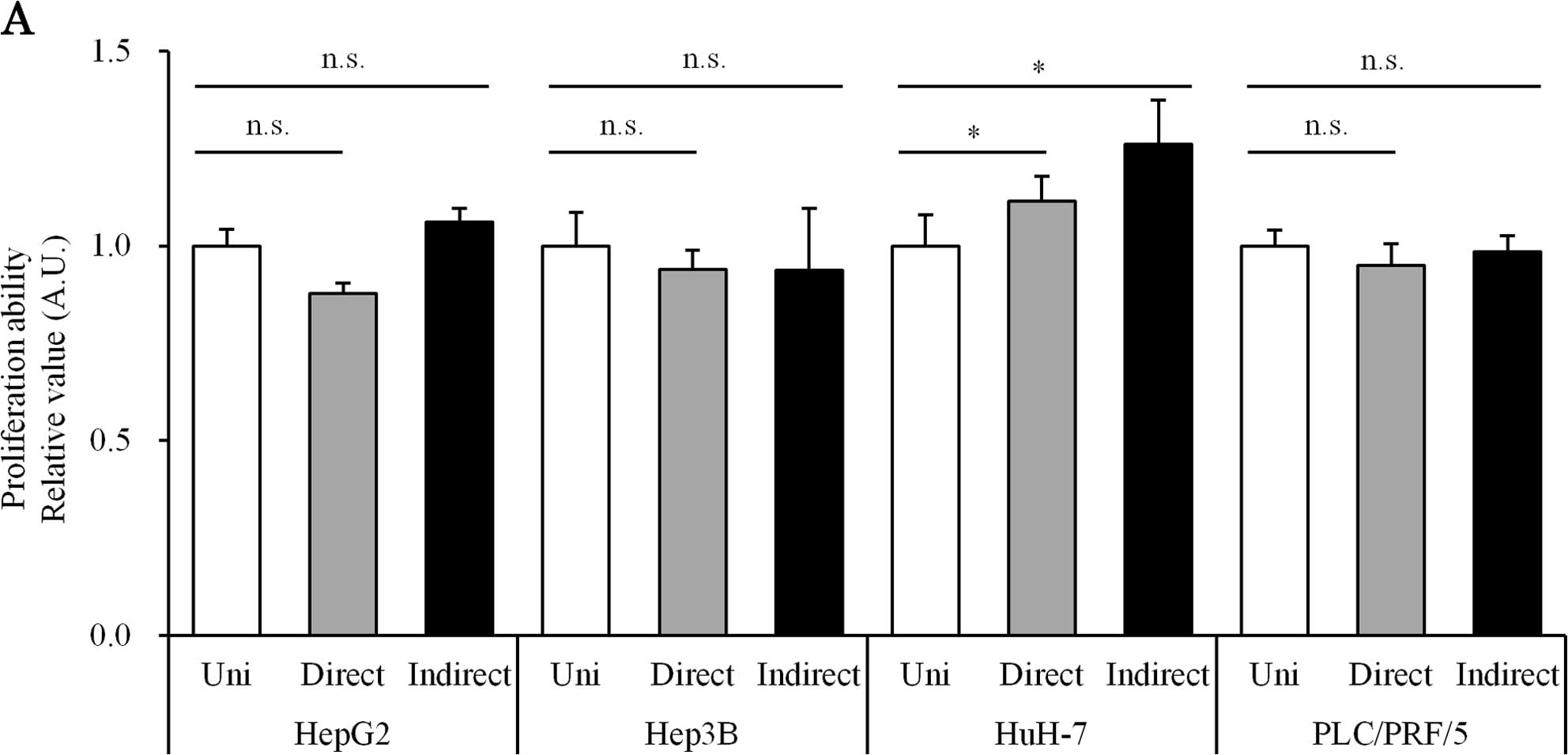
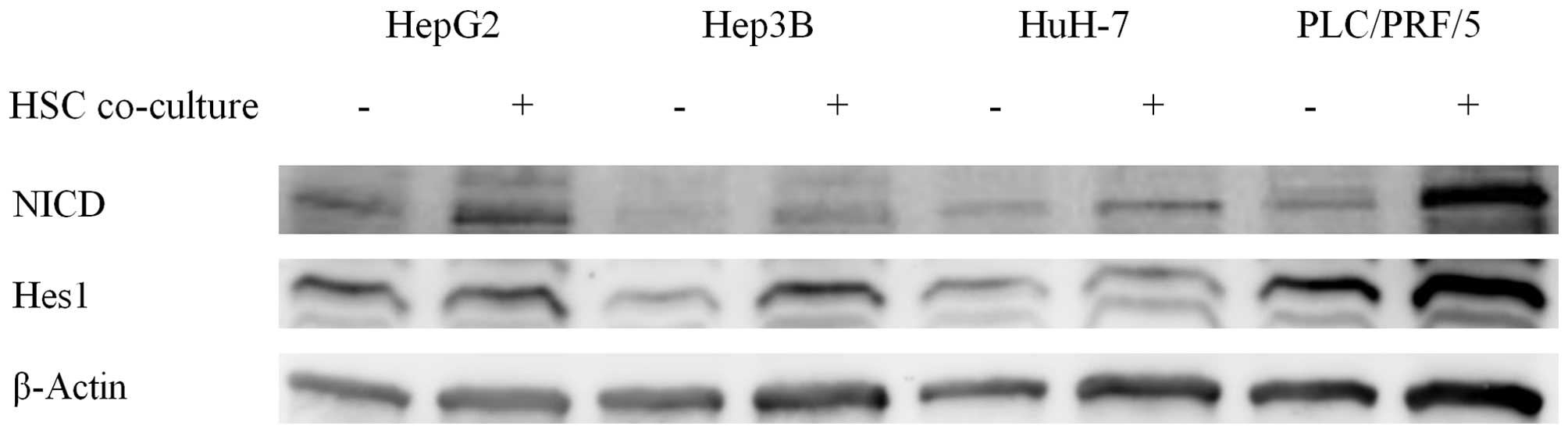
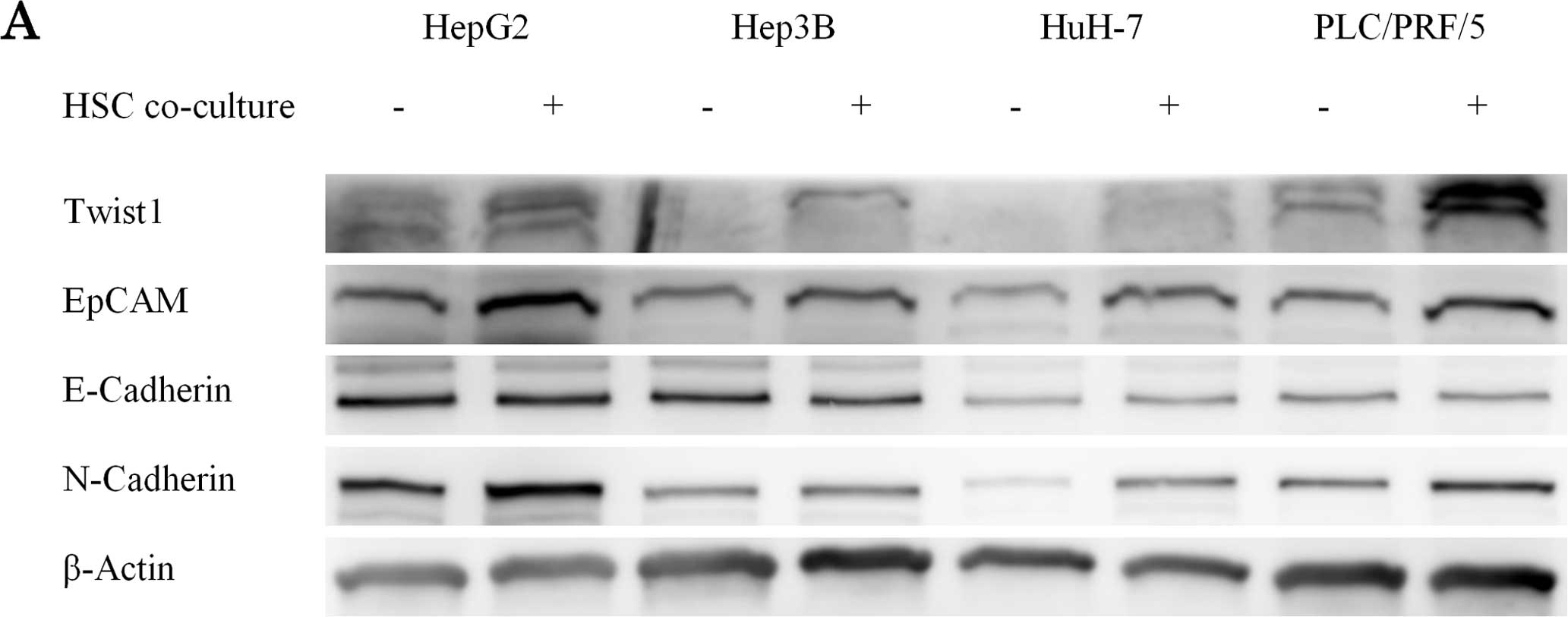
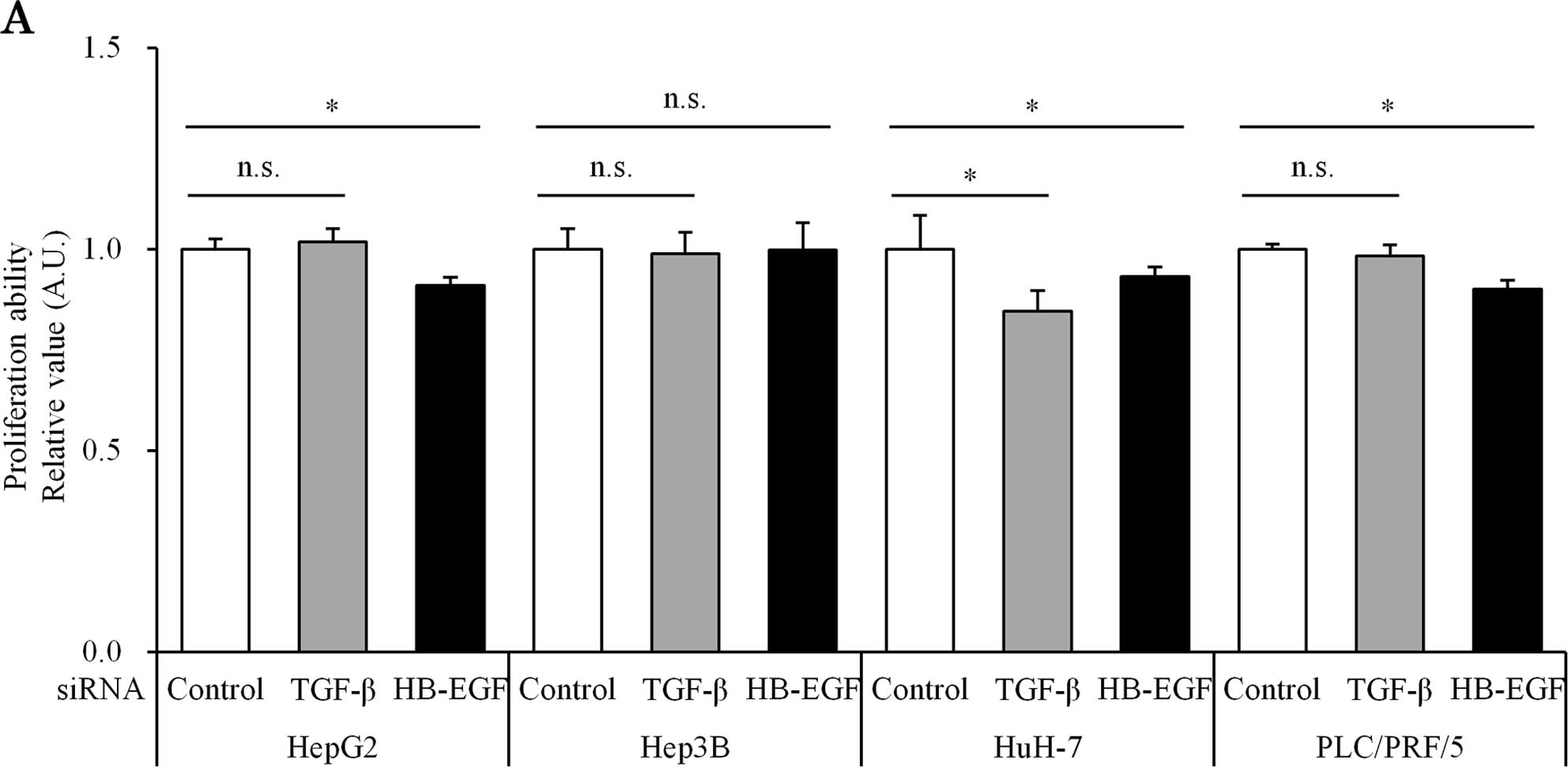
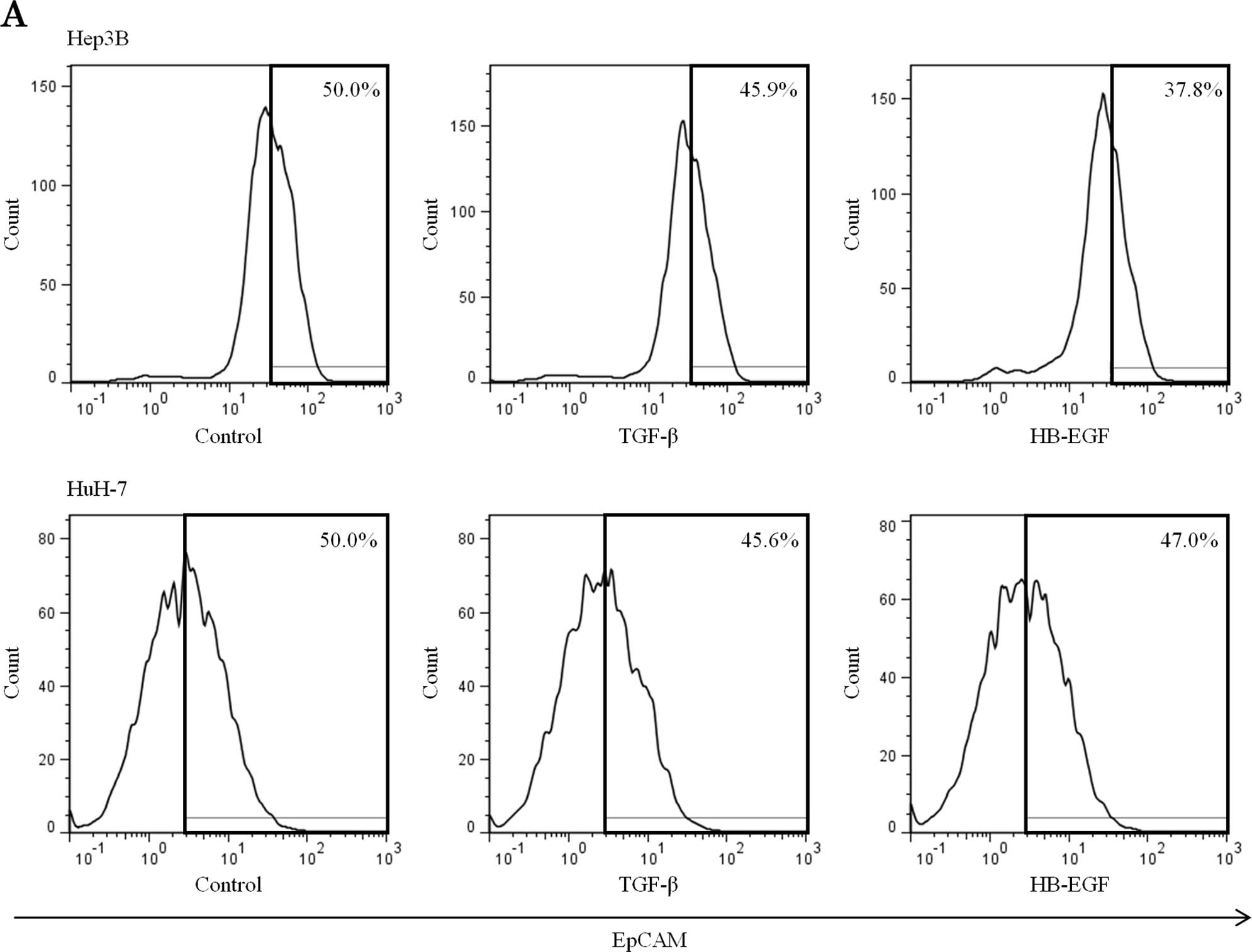
Microenvironment plays an important role in epithelial-mesenchymal transition (EMT) and stemness of cells in hepatocellular carcinoma (HCC). Epithelial cell adhesion molecule (EpCAM) is known as a tumor stemness marker of HCC. To investigate the relationship between microenvironment and stemness, we performed an in vitro co-culture assay. Four HCC cell lines (HepG2, Hep3B, HuH-7 and PLC/PRF/5) were co-cultured with the TWNT-1 immortalized hepatic stellate cells (HSCs), which create a microenvironment with HCC. Cell proliferation ability was analyzed by flow cytometry (FCM) and 3-(4,5-dimethylthiazol-2-yl)-2,5-diphenyltetrazolium bromide (MTT) assay, while migration ability was assessed by a wound healing assay. Expression of EpCAM was analyzed by immunoblotting and FCM. HCC cell lines were co-cultured with TWNT-1 treated with small interfering RNA (siRNA) for TGF-β and HB-EGF; we then analyzed proliferation, migration ability and protein expression using the methods described above. Proliferation ability was unchanged in HCC cell lines co-cultured with TWNT-1. Migration ability was increased in HCC cell lines (HepG2, Hep3B, HuH-7 and PLC/PRF/5) directly (216.2±67.0, 61.0±22.0, 124.0±66.2 and 51.5±40.3%) and indirectly (102.5±22.0, 84.6±30.9, 86.1±25.7 and 73.9±29.7%) co-cultured with TWNT-1 compared with the HCC uni-culture. Immunoblot analysis revealed increased EpCAM expression in the HCC cell lines co-cultured with TWNT-1. Flow cytometry revealed that the population of E-cadherin-/N-cadherin+ and EpCAM-positive cells increased and accordingly, EMT and stemness in the HCC cell line were activated. These results were similar in the directly and indirectly co-cultured samples, indicating that humoral factors were at play. Conversely, HCC cell lines co-cultured with siRNA‑treated TWNT-1 showed decreased migration ability, a decreased population of EpCAM-positive and E-cadherin-/N-cadherin+ cells. Taken together, humoral factors secreted from TWNT-1 promote upregulation of EpCAM and EMT in hepatic cancer cells.
View Figures

Figure 1

Figure 2

Figure 3

Figure 4

Figure 5

View References

1 

European Association For The Study Of The Liver; European Organisation For Research And Treatment Of Cancer: EASL-EORTC clinical practice guidelines: Management of hepatocellular carcinoma. J Hepatol. 56:908–943. 2012. View Article : Google Scholar : PubMed/NCBI

2 

Venook AP, Papandreou C, Furuse J and de Guevara LL: The incidence and epidemiology of hepatocellular carcinoma: A global and regional perspective. Oncologist. 15(Suppl 4): S5–S13. 2010. View Article : Google Scholar

3 

Bae JS, Noh SJ, Jang KY, Park HS, Chung MJ, Park CK and Moon WS: Expression and role of epithelial cell adhesion molecule in dysplastic nodule and hepatocellular carcinoma. Int J Oncol. 41:2150–2158. 2012.PubMed/NCBI

4 

Schulze K, Gasch C, Staufer K, Nashan B, Lohse AW, Pantel K, Riethdorf S and Wege H: Presence of EpCAM-positive circulating tumor cells as biomarker for systemic disease strongly correlates to survival in patients with hepatocellular carcinoma. Int J Cancer. 133:2165–2171. 2013. View Article : Google Scholar : PubMed/NCBI

5 

Chan AW, Tong JH, Chan SL, Lai PB and To KF: Expression of stemness markers (CD133 and EpCAM) in prognostication of hepatocellular carcinoma. Histopathology. 64:935–950. 2014. View Article : Google Scholar : PubMed/NCBI

6 

Yamashita T, Ji J, Budhu A, Forgues M, Yang W, Wang HY, Jia H, Ye Q, Qin LX, Wauthier E, et al: EpCAM-positive hepatocellular carcinoma cells are tumor-initiating cells with stem/progenitor cell features. Gastroenterology. 136:1012–1024. 2009. View Article : Google Scholar : PubMed/NCBI

7 

Bao B, Wang Z, Ali S, Kong D, Li Y, Ahmad A, Banerjee S, Azmi AS, Miele L and Sarkar FH: Notch-1 induces epithelial-mesenchymal transition consistent with cancer stem cell phenotype in pancreatic cancer cells. Cancer Lett. 307:26–36. 2011. View Article : Google Scholar : PubMed/NCBI

8 

Nishina S, Shiraha H, Nakanishi Y, Tanaka S, Matsubara M, Takaoka N, Uemura M, Horiguchi S, Kataoka J, Iwamuro M, et al: Restored expression of the tumor suppressor gene RUNX3 reduces cancer stem cells in hepatocellular carcinoma by suppressing Jagged1-Notch signaling. Oncol Rep. 26:523–531. 2011.PubMed/NCBI

9 

van der Gun BT, Melchers LJ, Ruiters MH, de Leij LF, McLaughlin PM and Rots MG: EpCAM in carcinogenesis: The good, the bad or the ugly. Carcinogenesis. 31:1913–1921. 2010. View Article : Google Scholar : PubMed/NCBI

10 

Patriarca C, Macchi RM, Marschner AK and Mellstedt H: Epithelial cell adhesion molecule expression (CD326) in cancer: A short review. Cancer Treat Rev. 38:68–75. 2012. View Article : Google Scholar

11 

Wu SD, Ma YS, Fang Y, Liu LL, Fu D and Shen XZ: Role of the microenvironment in hepatocellular carcinoma development and progression. Cancer Treat Rev. 38:218–225. 2012. View Article : Google Scholar

12 

Brabletz T: To differentiate or not - routes towards metastasis. Nat Rev Cancer. 12:425–436. 2012. View Article : Google Scholar : PubMed/NCBI

13 

Okamoto K, Tajima H, Nakanuma S, Sakai S, Makino I, Kinoshita J, Hayashi H, Nakamura K, Oyama K, Nakagawara H, et al: Angiotensin II enhances epithelial-to-mesenchymal transition through the interaction between activated hepatic stellate cells and the stromal cell-derived factor-1/CXCR4 axis in intra-hepatic cholangiocarcinoma. Int J Oncol. 41:573–582. 2012.PubMed/NCBI

14 

Kim SW, Choi HJ, Lee HJ, He J, Wu Q, Langley RR, Fidler IJ and Kim SJ: Role of the endothelin axis in astrocyte- and endothelial cell-mediated chemoprotection of cancer cells. Neuro Oncol. 16:1585–1598. 2014. View Article : Google Scholar : PubMed/NCBI

15 

Kikuta K, Masamune A, Watanabe T, Ariga H, Itoh H, Hamada S, Satoh K, Egawa S, Unno M and Shimosegawa T: Pancreatic stellate cells promote epithelial-mesenchymal transition in pancreatic cancer cells. Biochem Biophys Res Commun. 403:380–384. 2010. View Article : Google Scholar : PubMed/NCBI

16 

Hellerbrand C: Hepatic stellate cells - the pericytes in the liver. Pflugers Arch. 465:775–778. 2013. View Article : Google Scholar : PubMed/NCBI

17 

Osta WA, Chen Y, Mikhitarian K, Mitas M, Salem M, Hannun YA, Cole DJ and Gillanders WE: EpCAM is overexpressed in breast cancer and is a potential target for breast cancer gene therapy. Cancer Res. 64:5818–5824. 2004. View Article : Google Scholar : PubMed/NCBI

18 

Yang J, Mani SA, Donaher JL, Ramaswamy S, Itzykson RA, Come C, Savagner P, Gitelman I, Richardson A and Weinberg RA: Twist, a master regulator of morphogenesis, plays an essential role in tumor metastasis. Cell. 117:927–939. 2004. View Article : Google Scholar : PubMed/NCBI

19 

Coulouarn C, Corlu A, Glaise D, Guénon I, Thorgeirsson SS and Clément B: Hepatocyte-stellate cell cross-talk in the liver engenders a permissive inflammatory microenvironment that drives progression in hepatocellular carcinoma. Cancer Res. 72:2533–2542. 2012. View Article : Google Scholar : PubMed/NCBI

20 

Friedman SL: Hepatic stellate cells: Protean, multifunctional, and enigmatic cells of the liver. Physiol Rev. 88:125–172. 2008. View Article : Google Scholar : PubMed/NCBI

21 

Amann T, Bataille F, Spruss T, Mühlbauer M, Gäbele E, Schölmerich J, Kiefer P, Bosserhoff AK and Hellerbrand C: Activated hepatic stellate cells promote tumorigenicity of hepatocellular carcinoma. Cancer Sci. 100:646–653. 2009. View Article : Google Scholar : PubMed/NCBI

22 

Ju MJ, Qiu SJ, Fan J, Xiao YS, Gao Q, Zhou J, Li YW and Tang ZY: Peritumoral activated hepatic stellate cells predict poor clinical outcome in hepatocellular carcinoma after curative resection. Am J Clin Pathol. 131:498–510. 2009. View Article : Google Scholar : PubMed/NCBI

23 

Samatov TR, Tonevitsky AG and Schumacher U: Epithelial-mesenchymal transition: Focus on metastatic cascade, alternative splicing, non-coding RNAs and modulating compounds. Mol Cancer. 12:1072013. View Article : Google Scholar : PubMed/NCBI

24 

Tse JC and Kalluri R: Mechanisms of metastasis: Epithelial-to-mesenchymal transition and contribution of tumor microenvironment. J Cell Biochem. 101:816–829. 2007. View Article : Google Scholar : PubMed/NCBI

25 

Watanabe T, Shibata N, Westerman KA, Okitsu T, Allain JE, Sakaguchi M, Totsugawa T, Maruyama M, Matsumura T, Noguchi H, et al: Establishment of immortalized human hepatic stellate scavenger cells to develop bioartificial livers. Transplantation. 75:1873–1880. 2003. View Article : Google Scholar : PubMed/NCBI

26 

Kang N, Gores GJ and Shah VH: Hepatic stellate cells: Partners in crime for liver metastases? Hepatology. 54:707–713. 2011. View Article : Google Scholar : PubMed/NCBI

27 

Hashiguchi M, Ueno S, Sakoda M, Iino S, Hiwatashi K, Minami K, Ando K, Mataki Y, Maemura K, Shinchi H, et al: Clinical implication of ZEB-1 and E-cadherin expression in hepatocellular carcinoma (HCC). BMC Cancer. 13:5722013. View Article : Google Scholar : PubMed/NCBI

28 

Kimura O, Kondo Y, Kogure T, Kakazu E, Ninomiya M, Iwata T, Morosawa T and Shimosegawa T: Expression of EpCAM increases in the hepatitis B related and the treatment-resistant hepatocellular carcinoma. BioMed Res Int. 2014:1729132014. View Article : Google Scholar : PubMed/NCBI

29 

Oishi N, Yamashita T and Kaneko S: Molecular biology of liver cancer stem cells. Liver Cancer. 3:71–84. 2014. View Article : Google Scholar : PubMed/NCBI

Related Articles

  • Abstract
  • View
  • Download
  • Twitter
Copy and paste a formatted citation
Spandidos Publications style
Nagahara T, Shiraha H, Sawahara H, Uchida D, Takeuchi Y, Iwamuro M, Kataoka J, Horiguchi S, Kuwaki T, Onishi H, Onishi H, et al: Hepatic stellate cells promote upregulation of epithelial cell adhesion molecule and epithelial-mesenchymal transition in hepatic cancer cells. Oncol Rep 34: 1169-1177, 2015.
APA
Nagahara, T., Shiraha, H., Sawahara, H., Uchida, D., Takeuchi, Y., Iwamuro, M. ... Yamamoto, K. (2015). Hepatic stellate cells promote upregulation of epithelial cell adhesion molecule and epithelial-mesenchymal transition in hepatic cancer cells. Oncology Reports, 34, 1169-1177. https://doi.org/10.3892/or.2015.4126
MLA
Nagahara, T., Shiraha, H., Sawahara, H., Uchida, D., Takeuchi, Y., Iwamuro, M., Kataoka, J., Horiguchi, S., Kuwaki, T., Onishi, H., Nakamura, S., Takaki, A., Nouso, K., Yamamoto, K."Hepatic stellate cells promote upregulation of epithelial cell adhesion molecule and epithelial-mesenchymal transition in hepatic cancer cells". Oncology Reports 34.3 (2015): 1169-1177.
Chicago
Nagahara, T., Shiraha, H., Sawahara, H., Uchida, D., Takeuchi, Y., Iwamuro, M., Kataoka, J., Horiguchi, S., Kuwaki, T., Onishi, H., Nakamura, S., Takaki, A., Nouso, K., Yamamoto, K."Hepatic stellate cells promote upregulation of epithelial cell adhesion molecule and epithelial-mesenchymal transition in hepatic cancer cells". Oncology Reports 34, no. 3 (2015): 1169-1177. https://doi.org/10.3892/or.2015.4126
Copy and paste a formatted citation
x
Spandidos Publications style
Nagahara T, Shiraha H, Sawahara H, Uchida D, Takeuchi Y, Iwamuro M, Kataoka J, Horiguchi S, Kuwaki T, Onishi H, Onishi H, et al: Hepatic stellate cells promote upregulation of epithelial cell adhesion molecule and epithelial-mesenchymal transition in hepatic cancer cells. Oncol Rep 34: 1169-1177, 2015.
APA
Nagahara, T., Shiraha, H., Sawahara, H., Uchida, D., Takeuchi, Y., Iwamuro, M. ... Yamamoto, K. (2015). Hepatic stellate cells promote upregulation of epithelial cell adhesion molecule and epithelial-mesenchymal transition in hepatic cancer cells. Oncology Reports, 34, 1169-1177. https://doi.org/10.3892/or.2015.4126
MLA
Nagahara, T., Shiraha, H., Sawahara, H., Uchida, D., Takeuchi, Y., Iwamuro, M., Kataoka, J., Horiguchi, S., Kuwaki, T., Onishi, H., Nakamura, S., Takaki, A., Nouso, K., Yamamoto, K."Hepatic stellate cells promote upregulation of epithelial cell adhesion molecule and epithelial-mesenchymal transition in hepatic cancer cells". Oncology Reports 34.3 (2015): 1169-1177.
Chicago
Nagahara, T., Shiraha, H., Sawahara, H., Uchida, D., Takeuchi, Y., Iwamuro, M., Kataoka, J., Horiguchi, S., Kuwaki, T., Onishi, H., Nakamura, S., Takaki, A., Nouso, K., Yamamoto, K."Hepatic stellate cells promote upregulation of epithelial cell adhesion molecule and epithelial-mesenchymal transition in hepatic cancer cells". Oncology Reports 34, no. 3 (2015): 1169-1177. https://doi.org/10.3892/or.2015.4126
Follow us
  • Twitter
  • LinkedIn
  • Facebook
About
  • Spandidos Publications
  • Careers
  • Cookie Policy
  • Privacy Policy
How can we help?
  • Help
  • Live Chat
  • Contact
  • Email to our Support Team