Spandidos Publications Logo
  • About
    • About Spandidos
    • Aims and Scopes
    • Abstracting and Indexing
    • Editorial Policies
    • Reprints and Permissions
    • Job Opportunities
    • Terms and Conditions
    • Contact
  • Journals
    • All Journals
    • Oncology Letters
      • Oncology Letters
      • Information for Authors
      • Editorial Policies
      • Editorial Board
      • Aims and Scope
      • Abstracting and Indexing
      • Bibliographic Information
      • Archive
    • International Journal of Oncology
      • International Journal of Oncology
      • Information for Authors
      • Editorial Policies
      • Editorial Board
      • Aims and Scope
      • Abstracting and Indexing
      • Bibliographic Information
      • Archive
    • Molecular and Clinical Oncology
      • Molecular and Clinical Oncology
      • Information for Authors
      • Editorial Policies
      • Editorial Board
      • Aims and Scope
      • Abstracting and Indexing
      • Bibliographic Information
      • Archive
    • Experimental and Therapeutic Medicine
      • Experimental and Therapeutic Medicine
      • Information for Authors
      • Editorial Policies
      • Editorial Board
      • Aims and Scope
      • Abstracting and Indexing
      • Bibliographic Information
      • Archive
    • International Journal of Molecular Medicine
      • International Journal of Molecular Medicine
      • Information for Authors
      • Editorial Policies
      • Editorial Board
      • Aims and Scope
      • Abstracting and Indexing
      • Bibliographic Information
      • Archive
    • Biomedical Reports
      • Biomedical Reports
      • Information for Authors
      • Editorial Policies
      • Editorial Board
      • Aims and Scope
      • Abstracting and Indexing
      • Bibliographic Information
      • Archive
    • Oncology Reports
      • Oncology Reports
      • Information for Authors
      • Editorial Policies
      • Editorial Board
      • Aims and Scope
      • Abstracting and Indexing
      • Bibliographic Information
      • Archive
    • Molecular Medicine Reports
      • Molecular Medicine Reports
      • Information for Authors
      • Editorial Policies
      • Editorial Board
      • Aims and Scope
      • Abstracting and Indexing
      • Bibliographic Information
      • Archive
    • World Academy of Sciences Journal
      • World Academy of Sciences Journal
      • Information for Authors
      • Editorial Policies
      • Editorial Board
      • Aims and Scope
      • Abstracting and Indexing
      • Bibliographic Information
      • Archive
    • International Journal of Functional Nutrition
      • International Journal of Functional Nutrition
      • Information for Authors
      • Editorial Policies
      • Editorial Board
      • Aims and Scope
      • Abstracting and Indexing
      • Bibliographic Information
      • Archive
    • International Journal of Epigenetics
      • International Journal of Epigenetics
      • Information for Authors
      • Editorial Policies
      • Editorial Board
      • Aims and Scope
      • Abstracting and Indexing
      • Bibliographic Information
      • Archive
    • Medicine International
      • Medicine International
      • Information for Authors
      • Editorial Policies
      • Editorial Board
      • Aims and Scope
      • Abstracting and Indexing
      • Bibliographic Information
      • Archive
  • Articles
  • Information
    • Information for Authors
    • Information for Reviewers
    • Information for Librarians
    • Information for Advertisers
    • Conferences
  • Language Editing
Spandidos Publications Logo
  • About
    • About Spandidos
    • Aims and Scopes
    • Abstracting and Indexing
    • Editorial Policies
    • Reprints and Permissions
    • Job Opportunities
    • Terms and Conditions
    • Contact
  • Journals
    • All Journals
    • Biomedical Reports
      • Information for Authors
      • Editorial Policies
      • Editorial Board
      • Aims and Scope
      • Abstracting and Indexing
      • Bibliographic Information
      • Archive
    • Experimental and Therapeutic Medicine
      • Information for Authors
      • Editorial Policies
      • Editorial Board
      • Aims and Scope
      • Abstracting and Indexing
      • Bibliographic Information
      • Archive
    • International Journal of Epigenetics
      • Information for Authors
      • Editorial Policies
      • Editorial Board
      • Aims and Scope
      • Abstracting and Indexing
      • Bibliographic Information
      • Archive
    • International Journal of Functional Nutrition
      • Information for Authors
      • Editorial Policies
      • Editorial Board
      • Aims and Scope
      • Abstracting and Indexing
      • Bibliographic Information
      • Archive
    • International Journal of Molecular Medicine
      • Information for Authors
      • Editorial Policies
      • Editorial Board
      • Aims and Scope
      • Abstracting and Indexing
      • Bibliographic Information
      • Archive
    • International Journal of Oncology
      • Information for Authors
      • Editorial Policies
      • Editorial Board
      • Aims and Scope
      • Abstracting and Indexing
      • Bibliographic Information
      • Archive
    • Medicine International
      • Information for Authors
      • Editorial Policies
      • Editorial Board
      • Aims and Scope
      • Abstracting and Indexing
      • Bibliographic Information
      • Archive
    • Molecular and Clinical Oncology
      • Information for Authors
      • Editorial Policies
      • Editorial Board
      • Aims and Scope
      • Abstracting and Indexing
      • Bibliographic Information
      • Archive
    • Molecular Medicine Reports
      • Information for Authors
      • Editorial Policies
      • Editorial Board
      • Aims and Scope
      • Abstracting and Indexing
      • Bibliographic Information
      • Archive
    • Oncology Letters
      • Information for Authors
      • Editorial Policies
      • Editorial Board
      • Aims and Scope
      • Abstracting and Indexing
      • Bibliographic Information
      • Archive
    • Oncology Reports
      • Information for Authors
      • Editorial Policies
      • Editorial Board
      • Aims and Scope
      • Abstracting and Indexing
      • Bibliographic Information
      • Archive
    • World Academy of Sciences Journal
      • Information for Authors
      • Editorial Policies
      • Editorial Board
      • Aims and Scope
      • Abstracting and Indexing
      • Bibliographic Information
      • Archive
  • Articles
  • Information
    • For Authors
    • For Reviewers
    • For Librarians
    • For Advertisers
    • Conferences
  • Language Editing
Login Register Submit
  • This site uses cookies
  • You can change your cookie settings at any time by following the instructions in our Cookie Policy. To find out more, you may read our Privacy Policy.

    I agree
Search articles by DOI, keyword, author or affiliation
Search
Advanced Search
presentation
Oncology Reports
Join Editorial Board Propose a Special Issue
Print ISSN: 1021-335X Online ISSN: 1791-2431
Journal Cover
December-2015 Volume 34 Issue 6

Full Size Image

Sign up for eToc alerts
Recommend to Library

Journals

International Journal of Molecular Medicine

International Journal of Molecular Medicine

International Journal of Molecular Medicine is an international journal devoted to molecular mechanisms of human disease.

International Journal of Oncology

International Journal of Oncology

International Journal of Oncology is an international journal devoted to oncology research and cancer treatment.

Molecular Medicine Reports

Molecular Medicine Reports

Covers molecular medicine topics such as pharmacology, pathology, genetics, neuroscience, infectious diseases, molecular cardiology, and molecular surgery.

Oncology Reports

Oncology Reports

Oncology Reports is an international journal devoted to fundamental and applied research in Oncology.

Experimental and Therapeutic Medicine

Experimental and Therapeutic Medicine

Experimental and Therapeutic Medicine is an international journal devoted to laboratory and clinical medicine.

Oncology Letters

Oncology Letters

Oncology Letters is an international journal devoted to Experimental and Clinical Oncology.

Biomedical Reports

Biomedical Reports

Explores a wide range of biological and medical fields, including pharmacology, genetics, microbiology, neuroscience, and molecular cardiology.

Molecular and Clinical Oncology

Molecular and Clinical Oncology

International journal addressing all aspects of oncology research, from tumorigenesis and oncogenes to chemotherapy and metastasis.

World Academy of Sciences Journal

World Academy of Sciences Journal

Multidisciplinary open-access journal spanning biochemistry, genetics, neuroscience, environmental health, and synthetic biology.

International Journal of Functional Nutrition

International Journal of Functional Nutrition

Open-access journal combining biochemistry, pharmacology, immunology, and genetics to advance health through functional nutrition.

International Journal of Epigenetics

International Journal of Epigenetics

Publishes open-access research on using epigenetics to advance understanding and treatment of human disease.

Medicine International

Medicine International

An International Open Access Journal Devoted to General Medicine.

Journal Cover
December-2015 Volume 34 Issue 6

Full Size Image

Sign up for eToc alerts
Recommend to Library

  • Article
  • Citations
    • Cite This Article
    • Download Citation
    • Create Citation Alert
    • Remove Citation Alert
    • Cited By
  • Similar Articles
    • Related Articles (in Spandidos Publications)
    • Similar Articles (Google Scholar)
    • Similar Articles (PubMed)
  • Download PDF
  • Download XML
  • View XML
Article

USP14 activation promotes tumor progression in hepatocellular carcinoma

  • Authors:
    • Gang Huang
    • Limei Li
    • Weiping Zhou
  • View Affiliations / Copyright

    Affiliations: Department of Surgery, Eastern Hepatobiliary Surgery Hospital, Second Military Medical University, Shanghai, P.R. China, Clinical and Translational Research Center Shanghai East Hospital, Key Laboratory of Arrhythmias of Ministry of Education, Shanghai, P.R. China
  • Pages: 2917-2924
    |
    Published online on: September 21, 2015
       https://doi.org/10.3892/or.2015.4296
  • Expand metrics +
Metrics: Total Views: 0 (Spandidos Publications: | PMC Statistics: )
Metrics: Total PDF Downloads: 0 (Spandidos Publications: | PMC Statistics: )
Cited By (CrossRef): 0 citations Loading Articles...

This article is mentioned in:


Abstract

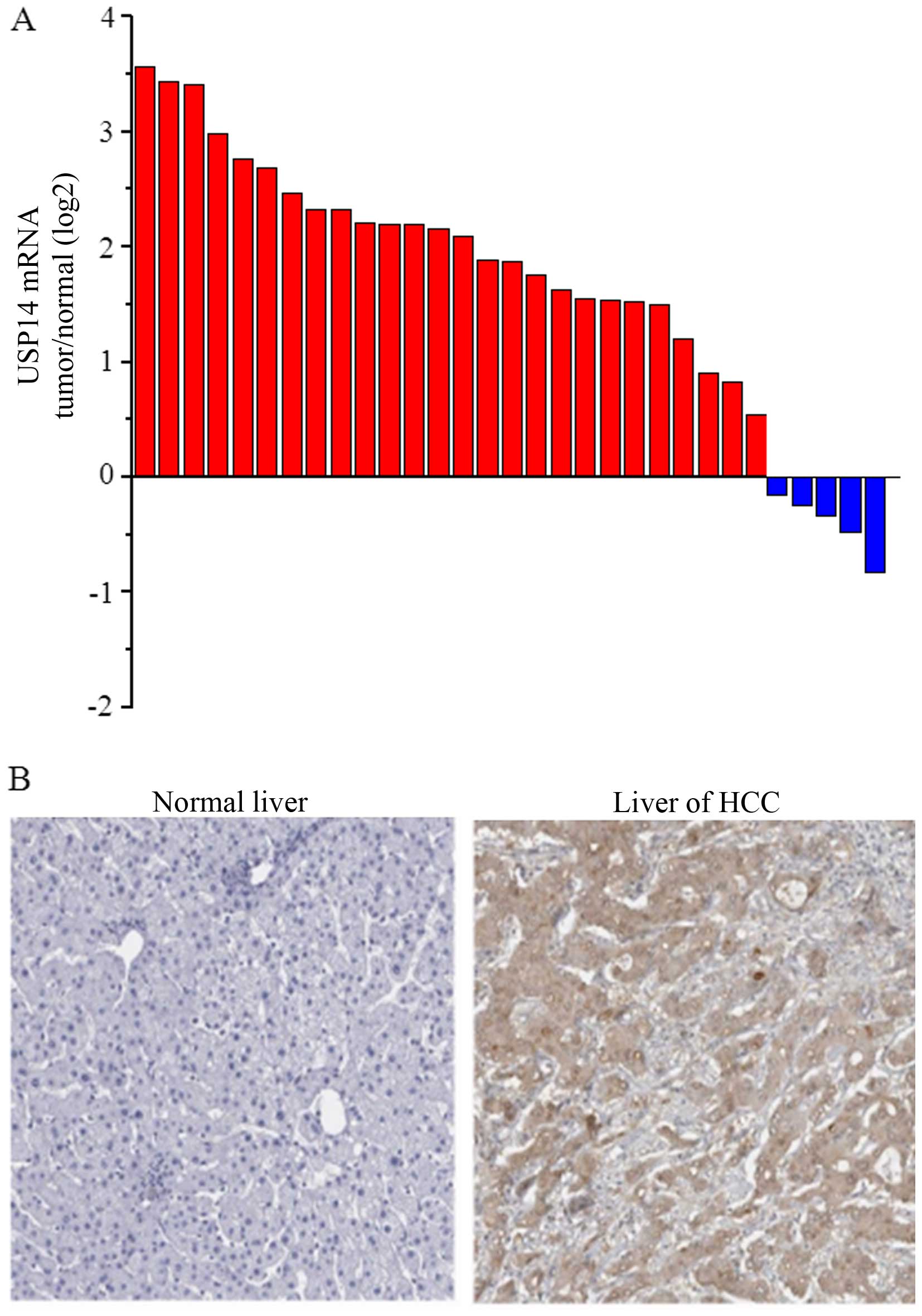
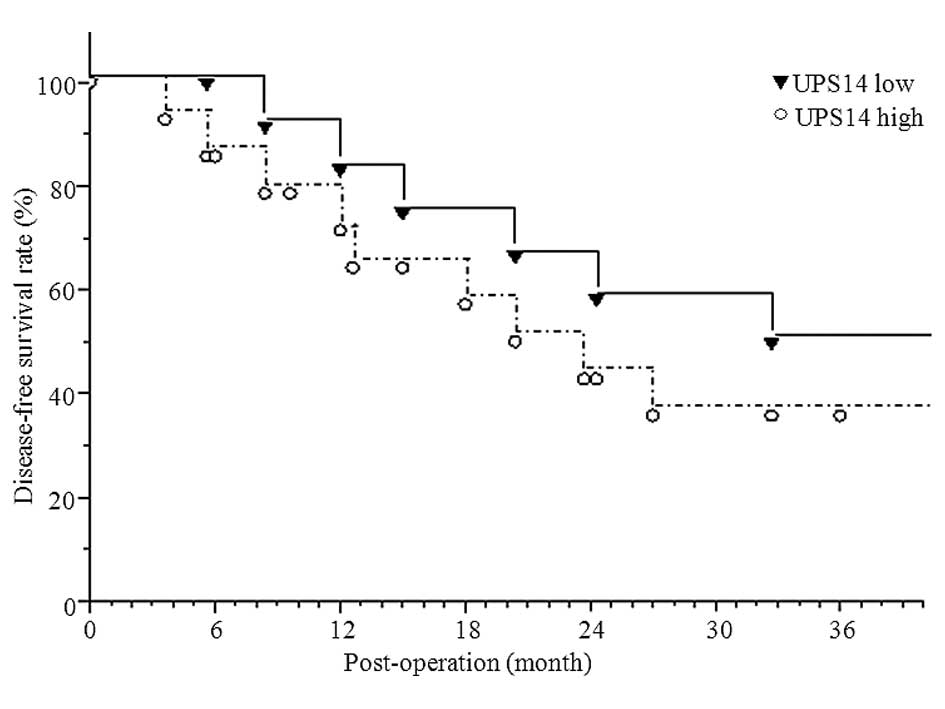
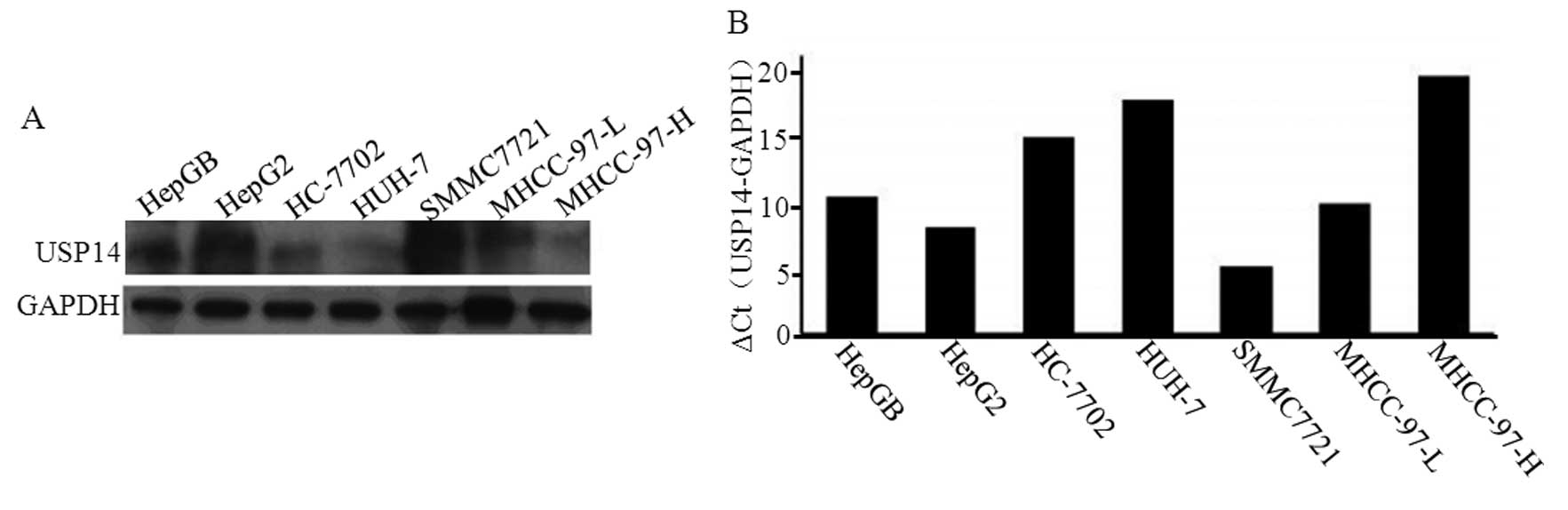
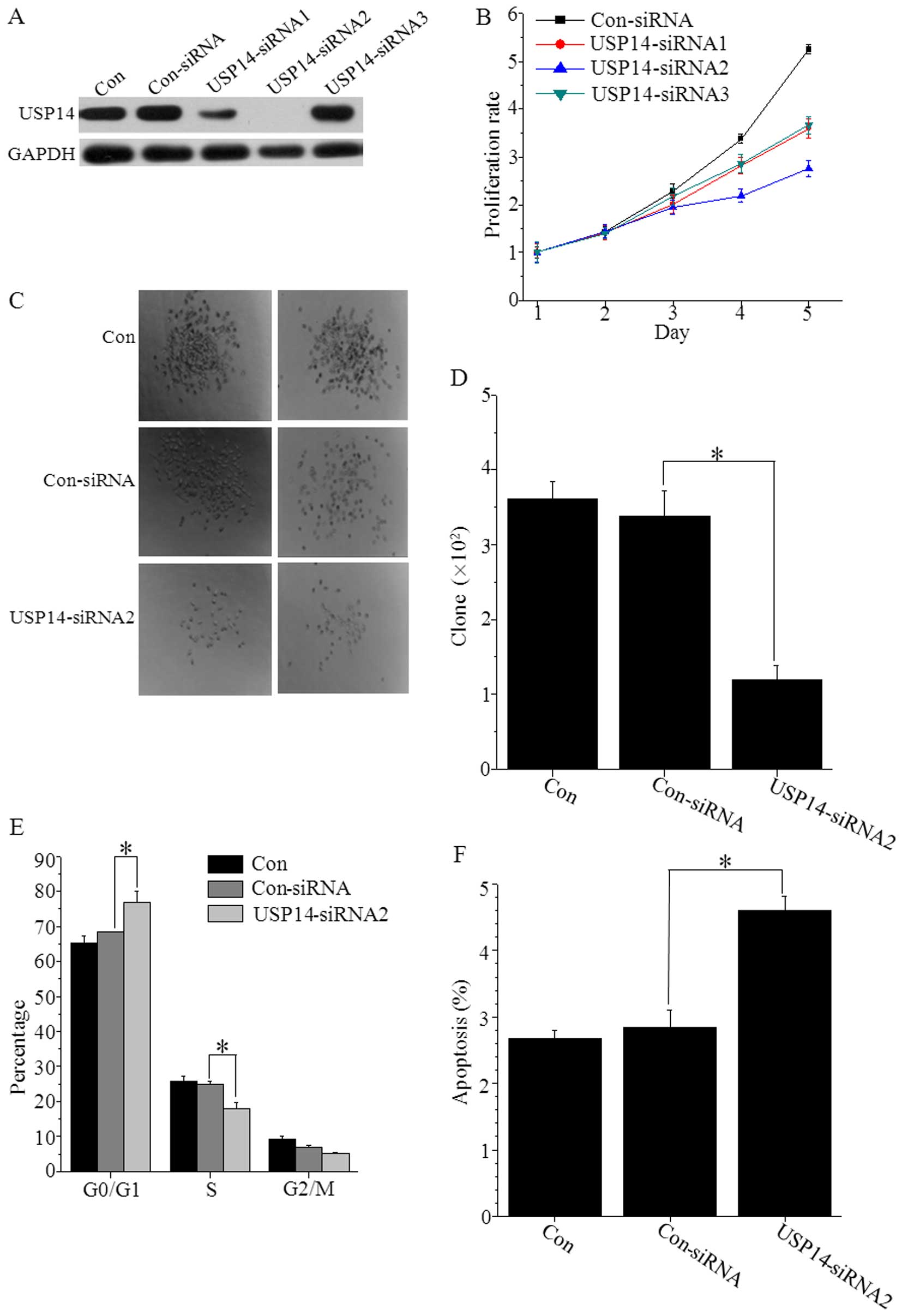
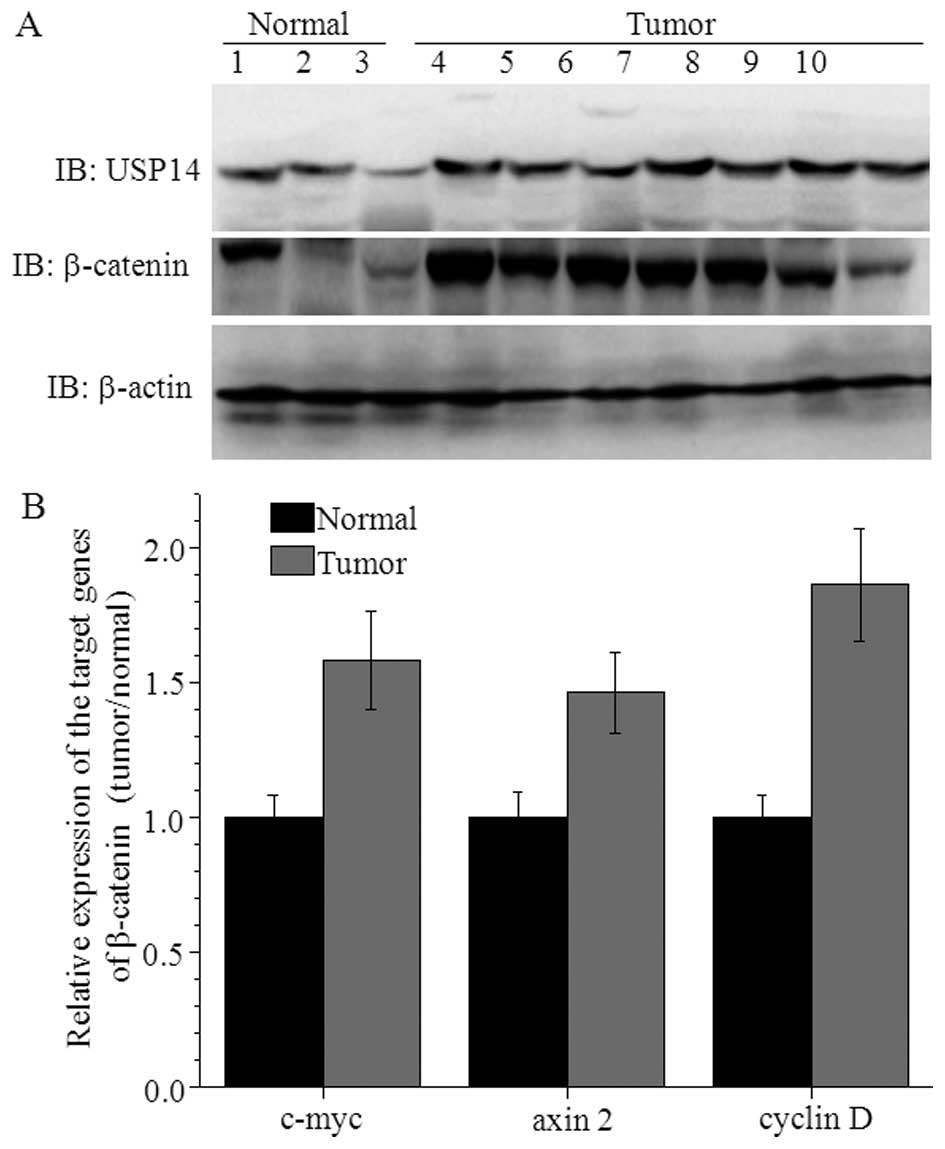
To elucidate the molecular mechanisms underlying the pathogenesis and treatment of human primary hepatocellular carcinoma (HCC), it is important to explore novel HCC-associated genes. In the present study, we examined the expression of ubiquitin-specific peptidase 14 (USP14) in patients with HCC using quantitative PCR and immunohistochemical techniques. The expression of USP14 in tumor tissues of patients with HCC was significantly higher than that in adjacent non-cancerous and normal liver tissues. It was also determined whether the expression profile of USP14 was associated with the clinical characteristics of HCC. Increased USP14 expression was associated with some clinicopatho­logical variables, such as advancing tumor stage. A Kaplan-Meier curve analysis demonstrated that patients with HCC having a high USP14 expression had a significantly poorer prognosis after surgery than patients with lower USP14 expression levels. Knockdown of USP14 with the lentiviral vector delivery of shRNA in human hepatocarcinoma SMMC7721 cells suppressed cell proliferation, altered the cell cycle and induced cell apoptosis. Additionally, the Wnt/β-catenin pathway was activated in HCC patients with USP14 overexpression. These findings strongly suggested that USP14 activation plays an oncogenic role in promoting tumor progression in HCC. Thus, our findings suggested that USP14 is involved in the progression of HCC and may be a useful therapeutic target in HCC. These findings likely reflect the key role that USP14 plays in the pathogenesis of HCC. Therefore, the identification of USP14 and USP14-driven genes may promote the investigation of its functional role to develop more effective therapies for HCC, especially advanced HCC.
View Figures

Figure 1

Figure 2

Figure 3

Figure 4

Figure 5

View References

1 

Kamangar F, Dores GM and Anderson WF: Patterns of cancer incidence, mortality, and prevalence across five continents: Defining priorities to reduce cancer disparities in different geographic regions of the world. J Clin oncol. 24:2137–2150. 2006. View Article : Google Scholar : PubMed/NCBI

2 

El-Serag HB and Rudolph KL: Hepatocellular carcinoma: Epidemiology and molecular carcinogenesis. Gastroenterology. 132:2557–2576. 2007. View Article : Google Scholar : PubMed/NCBI

3 

El-Serag HB: Epidemiology of viral hepatitis and hepatocellular carcinoma. Gastroenterology. 142:1264–1273. 2012. View Article : Google Scholar : PubMed/NCBI

4 

Gao J, Xie L, Yang WS, Zhang W, Gao S, Wang J and Xiang YB: Risk factors of hepatocellular carcinoma - current status and perspectives. Asian Pac J Cancer Prev. 13:743–752. 2012. View Article : Google Scholar

5 

Jemal A, Murray T, Ward E, Samuels A, Tiwari RC, Ghafoor A, Feuer EJ and Thun MJ: Cancer statistics, 2005. CA Cancer J Clin. 55:10–30. 2005. View Article : Google Scholar : PubMed/NCBI

6 

Sakamoto M: Early HCC: Diagnosis and molecular markers. J Gastroenterol. 44(Suppl 19): 108–111. 2009. View Article : Google Scholar : PubMed/NCBI

7 

Portolani N, Coniglio A, Ghidoni S, Giovanelli M, Benetti A, Tiberio GA and Giulini SM: Early and late recurrence after liver resection for hepatocellular carcinoma: Prognostic and therapeutic implications. Ann Surg. 243:229–235. 2006. View Article : Google Scholar : PubMed/NCBI

8 

Giordano S and Columbano A: Met as a therapeutic target in HCC: Facts and hopes. J Hepatol. 60:442–452. 2014. View Article : Google Scholar

9 

Llovet JM and Bruix J: Molecular targeted therapies in hepatocellular carcinoma. Hepatology. 48:1312–1327. 2008. View Article : Google Scholar : PubMed/NCBI

10 

Newell P, Villanueva A and Llovet JM: Molecular targeted therapies in hepatocellular carcinoma: From pre-clinical models to clinical trials. J Hepatol. 49:1–5. 2008. View Article : Google Scholar : PubMed/NCBI

11 

Azoulay D: Resection for hepatocellular carcinoma with hepatic vein tumour thrombus: Pushing the limits beyond the guidelines frontiers. J Hepatol. 61:462–463. 2014. View Article : Google Scholar : PubMed/NCBI

12 

Cucchetti A, Djulbegovic B, Tsalatsanis A, Vitale A, Hozo I, Piscaglia F, Cescon M, Ercolani G, Tuci F, Cillo U, et al: When to perform hepatic resection for intermediate-stage hepatocellular carcinoma. Hepatology. 61:905–914. 2015. View Article : Google Scholar

13 

Borodovsky A, Kessler BM, Casagrande R, Overkleeft HS, Wilkinson KD and Ploegh HL: A novel active site-directed probe specific for deubiquitylating enzymes reveals proteasome association of USP14. EMBO J. 20:5187–5196. 2001. View Article : Google Scholar : PubMed/NCBI

14 

Hu M, Li P, Song L, Jeffrey PD, Chenova TA, Wilkinson KD, Cohen RE and Shi Y: Structure and mechanisms of the proteasome-associated deubiquitinating enzyme USP14. EMBO J. 24:3747–3756. 2005. View Article : Google Scholar : PubMed/NCBI

15 

Peth A, Besche HC and Goldberg AL: Ubiquitinated proteins activate the proteasome by binding to Usp14/Ubp6, which causes 20S gate opening. Mol Cell. 36:794–804. 2009. View Article : Google Scholar : PubMed/NCBI

16 

Glickman MH and Ciechanover A: The ubiquitin-proteasome proteolytic pathway: Destruction for the sake of construction. Physiol Rev. 82:373–428. 2002. View Article : Google Scholar : PubMed/NCBI

17 

Kimura Y, Yashiroda H, Kudo T, Koitabashi S, Murata S, Kakizuka A and Tanaka K: An inhibitor of a deubiquitinating enzyme regulates ubiquitin homeostasis. Cell. 137:549–559. 2009. View Article : Google Scholar : PubMed/NCBI

18 

Love KR, Catic A, Schlieker C and Ploegh HL: Mechanisms, biology and inhibitors of deubiquitinating enzymes. Nat Chem Biol. 3:697–705. 2007. View Article : Google Scholar : PubMed/NCBI

19 

Sheaff RJ, Singer JD, Swanger J, Smitherman M, Roberts JM and Clurman BE: Proteasomal turnover of p21Cip1 does not require p21Cip1 ubiquitination. Mol Cell. 5:403–410. 2000. View Article : Google Scholar : PubMed/NCBI

20 

Maki CG, Huibregtse JM and Howley PM: In vivo ubiquitination and proteasome-mediated degradation of p53(1). Cancer Res. 56:2649–2654. 1996.PubMed/NCBI

21 

Huang TT, Nijman SM, Mirchandani KD, Galardy PJ, Cohn MA, Haas W, Gygi SP, Ploegh HL, Bernards R and D'Andrea AD: Regulation of monoubiquitinated PCNA by DUB autocleavage. Nat Cell Biol. 8:339–347. 2006. View Article : Google Scholar : PubMed/NCBI

22 

Schwickart M, Huang X, Lill JR, Liu J, Ferrando R, French DM, Maecker H, O'Rourke K, Bazan F, Eastham-Anderson J, et al: Deubiquitinase USP9X stabilizes MCL1 and promotes tumour cell survival. Nature. 463:103–107. 2010. View Article : Google Scholar

23 

Popov N, Wanzel M, Madiredjo M, Zhang D, Beijersbergen R, Bernards R, Moll R, Elledge SJ and Eilers M: The ubiquitin-specific protease USP28 is required for MYC stability. Nat Cell Biol. 9:765–774. 2007. View Article : Google Scholar : PubMed/NCBI

24 

Kim AH, Puram SV, Bilimoria PM, Ikeuchi Y, Keough S, Wong M, Rowitch D and Bonni A: A centrosomal Cdc20-APC pathway controls dendrite morphogenesis in postmitotic neurons. Cell. 136:322–336. 2009. View Article : Google Scholar : PubMed/NCBI

25 

Ishiwata S, Ozawa Y, Katayama J, Kaneko S, Shindo H, Tomioka Y, Ishiwata T, Asano G, Ikegawa S and Mizugaki M: Elevated expression level of 60-kDa subunit of tRNA-guanine transglycosylase in colon cancer. Cancer Lett. 212:113–119. 2004. View Article : Google Scholar : PubMed/NCBI

26 

Shinji S, Naito Z, Ishiwata S, Ishiwata T, Tanaka N, Furukawa K, Suzuki H, Seya T, Matsuda A, Katsuta M, et al: Ubiquitin-specific protease 14 expression in colorectal cancer is associated with liver and lymph node metastases. Oncol Rep. 15:539–543. 2006.PubMed/NCBI

27 

Wada T, Yamashita Y, Saga Y, Takahashi K, Koinuma K, Choi YL, Kaneda R, Fujiwara S, Soda M, Watanabe H, et al: Screening for genetic abnormalities involved in ovarian carcino genesis using retroviral expression libraries. Int J Oncol. 35:973–976. 2009.PubMed/NCBI

28 

Wu N, Liu C, Bai C, Han YP, Cho WC and Li Q: Overexpression of deubiquitinating enzyme USP14 in lung adenocarcinoma promotes proliferation through the accumulation of β-catenin. Int J Mol Sci. 14:10749–10760. 2013. View Article : Google Scholar : PubMed/NCBI

29 

Chuensumran U, Saelee P, Punyarit P, Wongkham S, Pairojkul C, Chauin S and Petmitr S: Ubiquitin-specific protease 14 expression associated with intrahepatic cholangiocarcinoma cell differentiation. Asian Pac J Cancer Prev. 12:775–779. 2011.PubMed/NCBI

30 

Zhang C, Ling Y, Zhang C, Xu Y, Gao L, Li R, Zhu J, Fan L and Wei L: The silencing of RECK gene is associated with promoter hypermethylation and poor survival in hepatocellular carcinoma. Int J Biol Sci. 8:451–458. 2012. View Article : Google Scholar : PubMed/NCBI

31 

Dong LW, Hou YJ, Tan YX, Tang L, Pan YF, Wang M and Wang HY: Prognostic significance of Beclin 1 in intrahepatic cholangiocellular carcinoma. Autophagy. 7:1222–1229. 2011. View Article : Google Scholar : PubMed/NCBI

32 

Wang Q, Tan YX, Ren YB, Dong LW, Xie ZF, Tang L, Cao D, Zhang WP, Hu HP and Wang HY: Zinc finger protein ZBTB20 expression is increased in hepatocellular carcinoma and associated with poor prognosis. BMC Cancer. 11:2712011. View Article : Google Scholar : PubMed/NCBI

33 

Jung H, Kim BG, Han WH, Lee JH, Cho JY, Park WS, Maurice MM, Han JK, Lee MJ, Finley D, et al: Deubiquitination of Dishevelled by Usp14 is required for Wnt signaling. Oncogenesis. 2:e642013. View Article : Google Scholar : PubMed/NCBI

34 

Germano D and Daniele B: Systemic therapy of hepatocellular carcinoma: Current status and future perspectives. World J Gastroenterol. 20:3087–3099. 2014. View Article : Google Scholar : PubMed/NCBI

35 

Ishiwata S, Katayama J, Shindo H, Ozawa Y, Itoh K and Mizugaki M: Increased expression of queuosine synthesizing enzyme, tRNA-guanine transglycosylase, and queuosine levels in tRNA of leukemic cells. J Biochem. 129:13–17. 2001. View Article : Google Scholar : PubMed/NCBI

36 

D'Arcy P, Brnjic S, Olofsson MH, Fryknäs M, Lindsten K, De Cesare M, Perego P, Sadeghi B, Hassan M, Larsson R, et al: Inhibition of proteasome deubiquitinating activity as a new cancer therapy. Nat Med. 17:1636–1640. 2011. View Article : Google Scholar : PubMed/NCBI

37 

Lee BH, Lee MJ, Park S, Oh DC, Elsasser S, Chen PC, Gartner C, Dimova N, Hanna J, Gygi SP, et al: Enhancement of proteasome activity by a small-molecule inhibitor of USP14. Nature. 467:179–184. 2010. View Article : Google Scholar : PubMed/NCBI

38 

Liu N, Li X, Huang H, Zhao C, Liao S, Yang C, Liu S, Song W, Lu X, Lan X, et al: Clinically used antirheumatic agent auranofin is a proteasomal deubiquitinase inhibitor and inhibits tumor growth. Oncotarget. 5:5453–5471. 2014. View Article : Google Scholar : PubMed/NCBI

39 

Chen X, Shi X, Zhao C, Li X, Lan X, Liu S, Huang H, Liu N, Liao S, Zang D, et al: Anti-rheumatic agent auranofin induced apoptosis in chronic myeloid leukemia cells resistant to imatinib through both Bcr/Abl-dependent and -independent mechanisms. Oncotarget. 5:9118–9132. 2014. View Article : Google Scholar : PubMed/NCBI

40 

Nakayama KI and Nakayama K: Ubiquitin ligases: cell-cycle control and cancer. Nat Rev cancer. 6:369–381. 2006. View Article : Google Scholar : PubMed/NCBI

41 

Husdal A, Bukholm G and Bukholm IR: The prognostic value and overexpression of cyclin A is correlated with gene amplification of both cyclin A and cyclin E in breast cancer patient. Cell Oncol. 28:107–116. 2006.PubMed/NCBI

42 

Nauman A, Turowska O, Poplawski P, Master A, Tanski Z and Puzianowska-Kuznicka M: Elevated cyclin E level in human clear cell renal cell carcinoma: Possible causes and consequences. Acta Biochim Pol. 54:595–602. 2007.PubMed/NCBI

43 

Chang KC, Chang Y, Jones D and Su IJ: Aberrant expression of cyclin a correlates with morphogenesis of reed-sternberg cells in Hodgkin lymphoma. Am J Clin Pathol. 132:50–59. 2009. View Article : Google Scholar : PubMed/NCBI

44 

Cooley A, Zelivianski S and Jeruss JS: Impact of cyclin E overexpression on Smad3 activity in breast cancer cell lines. Cell Cycle. 9:4900–4907. 2010. View Article : Google Scholar : PubMed/NCBI

45 

Wang LH, Huang W, Lai MD and Su IJ: Aberrant cyclin A expression and centrosome overduplication induced by hepatitis B virus pre-S2 mutants and its implication in hepatocarcinogenesis. Carcinogenesis. 33:466–472. 2012. View Article : Google Scholar

46 

Freije A, Ceballos L, Coisy M, Barnes L, Rosa M, De Diego E, Blanchard JM and Gandarillas A: Cyclin E drives human keratinocyte growth into differentiation. Oncogene. 31:5180–5192. 2012. View Article : Google Scholar : PubMed/NCBI

47 

Richardson PG, Barlogie B, Berenson J, Singhal S, Jagannath S, Irwin D, Rajkumar SV, Srkalovic G, Alsina M, Alexanian R, et al: A phase 2 study of bortezomib in relapsed, refractory myeloma. N Engl J Med. 348:2609–2617. 2003. View Article : Google Scholar : PubMed/NCBI

48 

Thompson JL: Carfilzomib: A second-generation proteasome inhibitor for the treatment of relapsed and refractory multiple myeloma. Ann Pharmacother. 47:56–62. 2013. View Article : Google Scholar : PubMed/NCBI

49 

Richardson PG, Mitsiades C, Hideshima T and Anderson KC: Bortezomib: Proteasome inhibition as an effective anticancer therapy. Annu Rev Med. 57:33–47. 2006. View Article : Google Scholar : PubMed/NCBI

50 

Cavo M: Proteasome inhibitor bortezomib for the treatment of multiple myeloma. Leukemia. 20:1341–1352. 2006. View Article : Google Scholar : PubMed/NCBI

51 

Liu N, Liu C, Li X, Liao S, Song W, Yang C, Zhao C, Huang H, Guan L, Zhang P, et al: A novel proteasome inhibitor suppresses tumor growth via targeting both 19S proteasome deubiquitinases and 20S proteolytic peptidases. Sci Rep. 4:52402014.PubMed/NCBI

Related Articles

  • Abstract
  • View
  • Download
  • Twitter
Copy and paste a formatted citation
Spandidos Publications style
Huang G, Li L and Zhou W: USP14 activation promotes tumor progression in hepatocellular carcinoma. Oncol Rep 34: 2917-2924, 2015.
APA
Huang, G., Li, L., & Zhou, W. (2015). USP14 activation promotes tumor progression in hepatocellular carcinoma. Oncology Reports, 34, 2917-2924. https://doi.org/10.3892/or.2015.4296
MLA
Huang, G., Li, L., Zhou, W."USP14 activation promotes tumor progression in hepatocellular carcinoma". Oncology Reports 34.6 (2015): 2917-2924.
Chicago
Huang, G., Li, L., Zhou, W."USP14 activation promotes tumor progression in hepatocellular carcinoma". Oncology Reports 34, no. 6 (2015): 2917-2924. https://doi.org/10.3892/or.2015.4296
Copy and paste a formatted citation
x
Spandidos Publications style
Huang G, Li L and Zhou W: USP14 activation promotes tumor progression in hepatocellular carcinoma. Oncol Rep 34: 2917-2924, 2015.
APA
Huang, G., Li, L., & Zhou, W. (2015). USP14 activation promotes tumor progression in hepatocellular carcinoma. Oncology Reports, 34, 2917-2924. https://doi.org/10.3892/or.2015.4296
MLA
Huang, G., Li, L., Zhou, W."USP14 activation promotes tumor progression in hepatocellular carcinoma". Oncology Reports 34.6 (2015): 2917-2924.
Chicago
Huang, G., Li, L., Zhou, W."USP14 activation promotes tumor progression in hepatocellular carcinoma". Oncology Reports 34, no. 6 (2015): 2917-2924. https://doi.org/10.3892/or.2015.4296
Follow us
  • Twitter
  • LinkedIn
  • Facebook
About
  • Spandidos Publications
  • Careers
  • Cookie Policy
  • Privacy Policy
How can we help?
  • Help
  • Live Chat
  • Contact
  • Email to our Support Team