Spandidos Publications Logo
  • About
    • About Spandidos
    • Aims and Scopes
    • Abstracting and Indexing
    • Editorial Policies
    • Reprints and Permissions
    • Job Opportunities
    • Terms and Conditions
    • Contact
  • Journals
    • All Journals
    • Oncology Letters
      • Oncology Letters
      • Information for Authors
      • Editorial Policies
      • Editorial Board
      • Aims and Scope
      • Abstracting and Indexing
      • Bibliographic Information
      • Archive
    • International Journal of Oncology
      • International Journal of Oncology
      • Information for Authors
      • Editorial Policies
      • Editorial Board
      • Aims and Scope
      • Abstracting and Indexing
      • Bibliographic Information
      • Archive
    • Molecular and Clinical Oncology
      • Molecular and Clinical Oncology
      • Information for Authors
      • Editorial Policies
      • Editorial Board
      • Aims and Scope
      • Abstracting and Indexing
      • Bibliographic Information
      • Archive
    • Experimental and Therapeutic Medicine
      • Experimental and Therapeutic Medicine
      • Information for Authors
      • Editorial Policies
      • Editorial Board
      • Aims and Scope
      • Abstracting and Indexing
      • Bibliographic Information
      • Archive
    • International Journal of Molecular Medicine
      • International Journal of Molecular Medicine
      • Information for Authors
      • Editorial Policies
      • Editorial Board
      • Aims and Scope
      • Abstracting and Indexing
      • Bibliographic Information
      • Archive
    • Biomedical Reports
      • Biomedical Reports
      • Information for Authors
      • Editorial Policies
      • Editorial Board
      • Aims and Scope
      • Abstracting and Indexing
      • Bibliographic Information
      • Archive
    • Oncology Reports
      • Oncology Reports
      • Information for Authors
      • Editorial Policies
      • Editorial Board
      • Aims and Scope
      • Abstracting and Indexing
      • Bibliographic Information
      • Archive
    • Molecular Medicine Reports
      • Molecular Medicine Reports
      • Information for Authors
      • Editorial Policies
      • Editorial Board
      • Aims and Scope
      • Abstracting and Indexing
      • Bibliographic Information
      • Archive
    • World Academy of Sciences Journal
      • World Academy of Sciences Journal
      • Information for Authors
      • Editorial Policies
      • Editorial Board
      • Aims and Scope
      • Abstracting and Indexing
      • Bibliographic Information
      • Archive
    • International Journal of Functional Nutrition
      • International Journal of Functional Nutrition
      • Information for Authors
      • Editorial Policies
      • Editorial Board
      • Aims and Scope
      • Abstracting and Indexing
      • Bibliographic Information
      • Archive
    • International Journal of Epigenetics
      • International Journal of Epigenetics
      • Information for Authors
      • Editorial Policies
      • Editorial Board
      • Aims and Scope
      • Abstracting and Indexing
      • Bibliographic Information
      • Archive
    • Medicine International
      • Medicine International
      • Information for Authors
      • Editorial Policies
      • Editorial Board
      • Aims and Scope
      • Abstracting and Indexing
      • Bibliographic Information
      • Archive
  • Articles
  • Information
    • Information for Authors
    • Information for Reviewers
    • Information for Librarians
    • Information for Advertisers
    • Conferences
  • Language Editing
Spandidos Publications Logo
  • About
    • About Spandidos
    • Aims and Scopes
    • Abstracting and Indexing
    • Editorial Policies
    • Reprints and Permissions
    • Job Opportunities
    • Terms and Conditions
    • Contact
  • Journals
    • All Journals
    • Biomedical Reports
      • Information for Authors
      • Editorial Policies
      • Editorial Board
      • Aims and Scope
      • Abstracting and Indexing
      • Bibliographic Information
      • Archive
    • Experimental and Therapeutic Medicine
      • Information for Authors
      • Editorial Policies
      • Editorial Board
      • Aims and Scope
      • Abstracting and Indexing
      • Bibliographic Information
      • Archive
    • International Journal of Epigenetics
      • Information for Authors
      • Editorial Policies
      • Editorial Board
      • Aims and Scope
      • Abstracting and Indexing
      • Bibliographic Information
      • Archive
    • International Journal of Functional Nutrition
      • Information for Authors
      • Editorial Policies
      • Editorial Board
      • Aims and Scope
      • Abstracting and Indexing
      • Bibliographic Information
      • Archive
    • International Journal of Molecular Medicine
      • Information for Authors
      • Editorial Policies
      • Editorial Board
      • Aims and Scope
      • Abstracting and Indexing
      • Bibliographic Information
      • Archive
    • International Journal of Oncology
      • Information for Authors
      • Editorial Policies
      • Editorial Board
      • Aims and Scope
      • Abstracting and Indexing
      • Bibliographic Information
      • Archive
    • Medicine International
      • Information for Authors
      • Editorial Policies
      • Editorial Board
      • Aims and Scope
      • Abstracting and Indexing
      • Bibliographic Information
      • Archive
    • Molecular and Clinical Oncology
      • Information for Authors
      • Editorial Policies
      • Editorial Board
      • Aims and Scope
      • Abstracting and Indexing
      • Bibliographic Information
      • Archive
    • Molecular Medicine Reports
      • Information for Authors
      • Editorial Policies
      • Editorial Board
      • Aims and Scope
      • Abstracting and Indexing
      • Bibliographic Information
      • Archive
    • Oncology Letters
      • Information for Authors
      • Editorial Policies
      • Editorial Board
      • Aims and Scope
      • Abstracting and Indexing
      • Bibliographic Information
      • Archive
    • Oncology Reports
      • Information for Authors
      • Editorial Policies
      • Editorial Board
      • Aims and Scope
      • Abstracting and Indexing
      • Bibliographic Information
      • Archive
    • World Academy of Sciences Journal
      • Information for Authors
      • Editorial Policies
      • Editorial Board
      • Aims and Scope
      • Abstracting and Indexing
      • Bibliographic Information
      • Archive
  • Articles
  • Information
    • For Authors
    • For Reviewers
    • For Librarians
    • For Advertisers
    • Conferences
  • Language Editing
Login Register Submit
  • This site uses cookies
  • You can change your cookie settings at any time by following the instructions in our Cookie Policy. To find out more, you may read our Privacy Policy.

    I agree
Search articles by DOI, keyword, author or affiliation
Search
Advanced Search
presentation
Oncology Reports
Join Editorial Board Propose a Special Issue
Print ISSN: 1021-335X Online ISSN: 1791-2431
Journal Cover
December-2016 Volume 36 Issue 6

Full Size Image

Sign up for eToc alerts
Recommend to Library

Journals

International Journal of Molecular Medicine

International Journal of Molecular Medicine

International Journal of Molecular Medicine is an international journal devoted to molecular mechanisms of human disease.

International Journal of Oncology

International Journal of Oncology

International Journal of Oncology is an international journal devoted to oncology research and cancer treatment.

Molecular Medicine Reports

Molecular Medicine Reports

Covers molecular medicine topics such as pharmacology, pathology, genetics, neuroscience, infectious diseases, molecular cardiology, and molecular surgery.

Oncology Reports

Oncology Reports

Oncology Reports is an international journal devoted to fundamental and applied research in Oncology.

Experimental and Therapeutic Medicine

Experimental and Therapeutic Medicine

Experimental and Therapeutic Medicine is an international journal devoted to laboratory and clinical medicine.

Oncology Letters

Oncology Letters

Oncology Letters is an international journal devoted to Experimental and Clinical Oncology.

Biomedical Reports

Biomedical Reports

Explores a wide range of biological and medical fields, including pharmacology, genetics, microbiology, neuroscience, and molecular cardiology.

Molecular and Clinical Oncology

Molecular and Clinical Oncology

International journal addressing all aspects of oncology research, from tumorigenesis and oncogenes to chemotherapy and metastasis.

World Academy of Sciences Journal

World Academy of Sciences Journal

Multidisciplinary open-access journal spanning biochemistry, genetics, neuroscience, environmental health, and synthetic biology.

International Journal of Functional Nutrition

International Journal of Functional Nutrition

Open-access journal combining biochemistry, pharmacology, immunology, and genetics to advance health through functional nutrition.

International Journal of Epigenetics

International Journal of Epigenetics

Publishes open-access research on using epigenetics to advance understanding and treatment of human disease.

Medicine International

Medicine International

An International Open Access Journal Devoted to General Medicine.

Journal Cover
December-2016 Volume 36 Issue 6

Full Size Image

Sign up for eToc alerts
Recommend to Library

  • Article
  • Citations
    • Cite This Article
    • Download Citation
    • Create Citation Alert
    • Remove Citation Alert
    • Cited By
  • Similar Articles
    • Related Articles (in Spandidos Publications)
    • Similar Articles (Google Scholar)
    • Similar Articles (PubMed)
  • Download PDF
  • Download XML
  • View XML
Article

Gambogenic acid induces proteasomal degradation of CIP2A and sensitizes hepatocellular carcinoma to anticancer agents

  • Authors:
    • Xian‑Jun Yu
    • Qun Zhao
    • Xuan‑Bin Wang
    • Jing‑Xuan Zhang
    • Xiao‑Bo Wang
  • View Affiliations / Copyright

    Affiliations: Laboratory of Chinese Herbal Pharmacology, Oncology Center, Renmin Hospital and School of Basic Medical Sciences, Hubei University of Medicine, Shiyan, Hubei 442000, P.R. China, Key Laboratory of Nutrition and Metabolism, Institute for Nutritional Sciences, Shanghai Institutes for Biological Sciences, Graduate School of the Chinese Academy of Sciences, Chinese Academy of Sciences, Shanghai 200031, P.R. China, Center for Translational Medicine, Suizhou Hospital, Hubei University of Medicine, Suizhou, Hubei 441300, P.R. China
  • Pages: 3611-3618
    |
    Published online on: October 20, 2016
       https://doi.org/10.3892/or.2016.5188
  • Expand metrics +
Metrics: Total Views: 0 (Spandidos Publications: | PMC Statistics: )
Metrics: Total PDF Downloads: 0 (Spandidos Publications: | PMC Statistics: )
Cited By (CrossRef): 0 citations Loading Articles...

This article is mentioned in:


Abstract

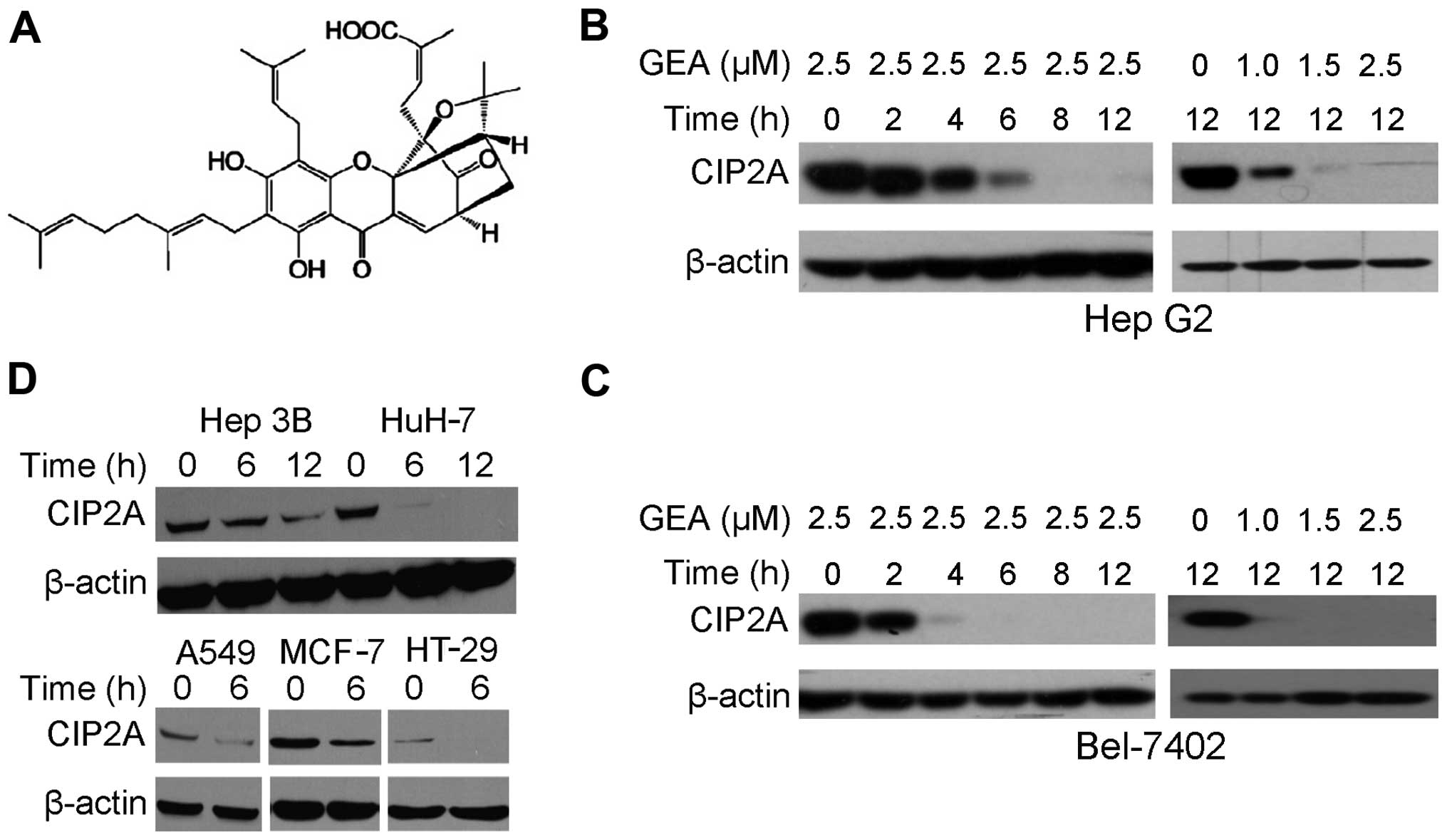
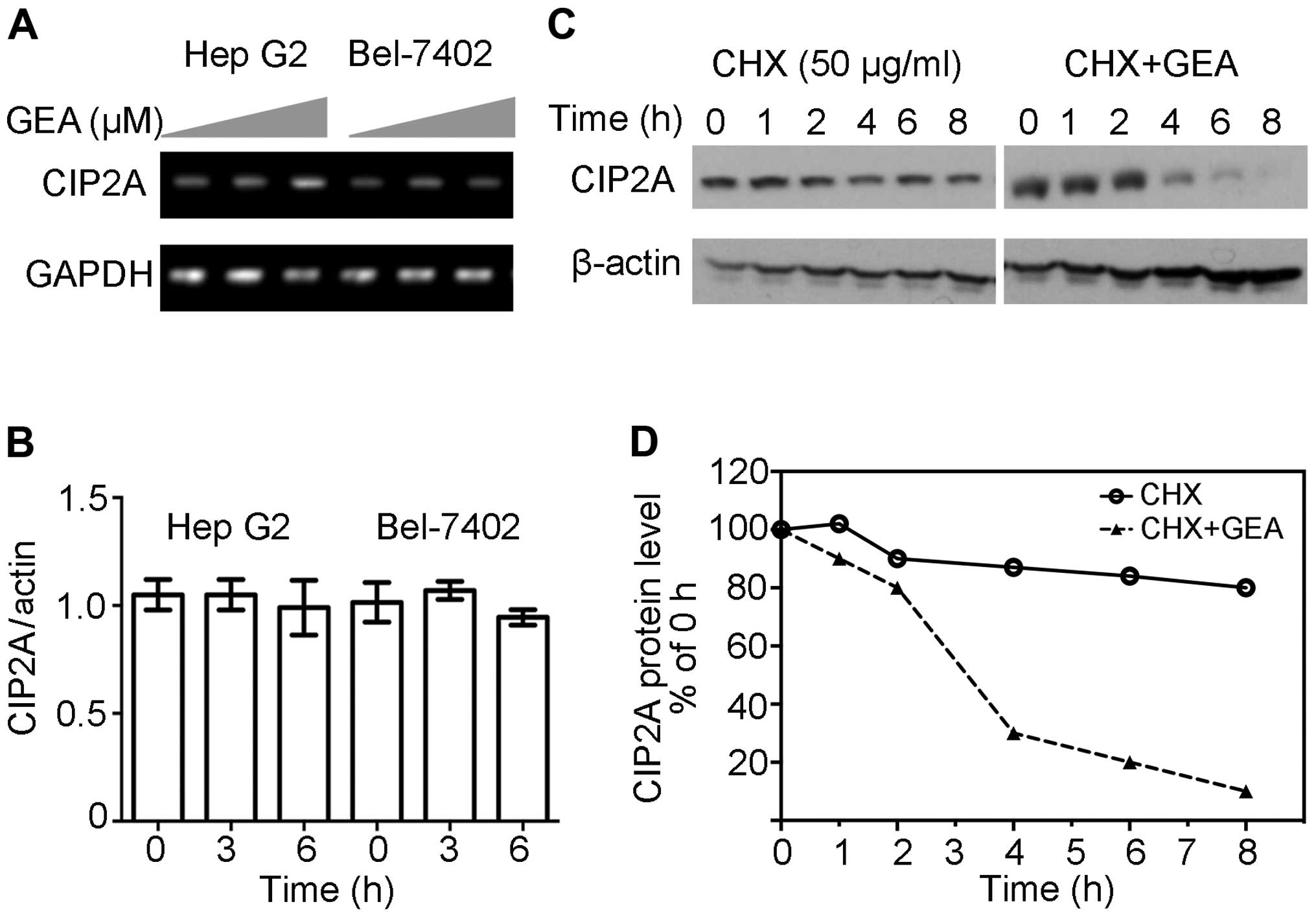
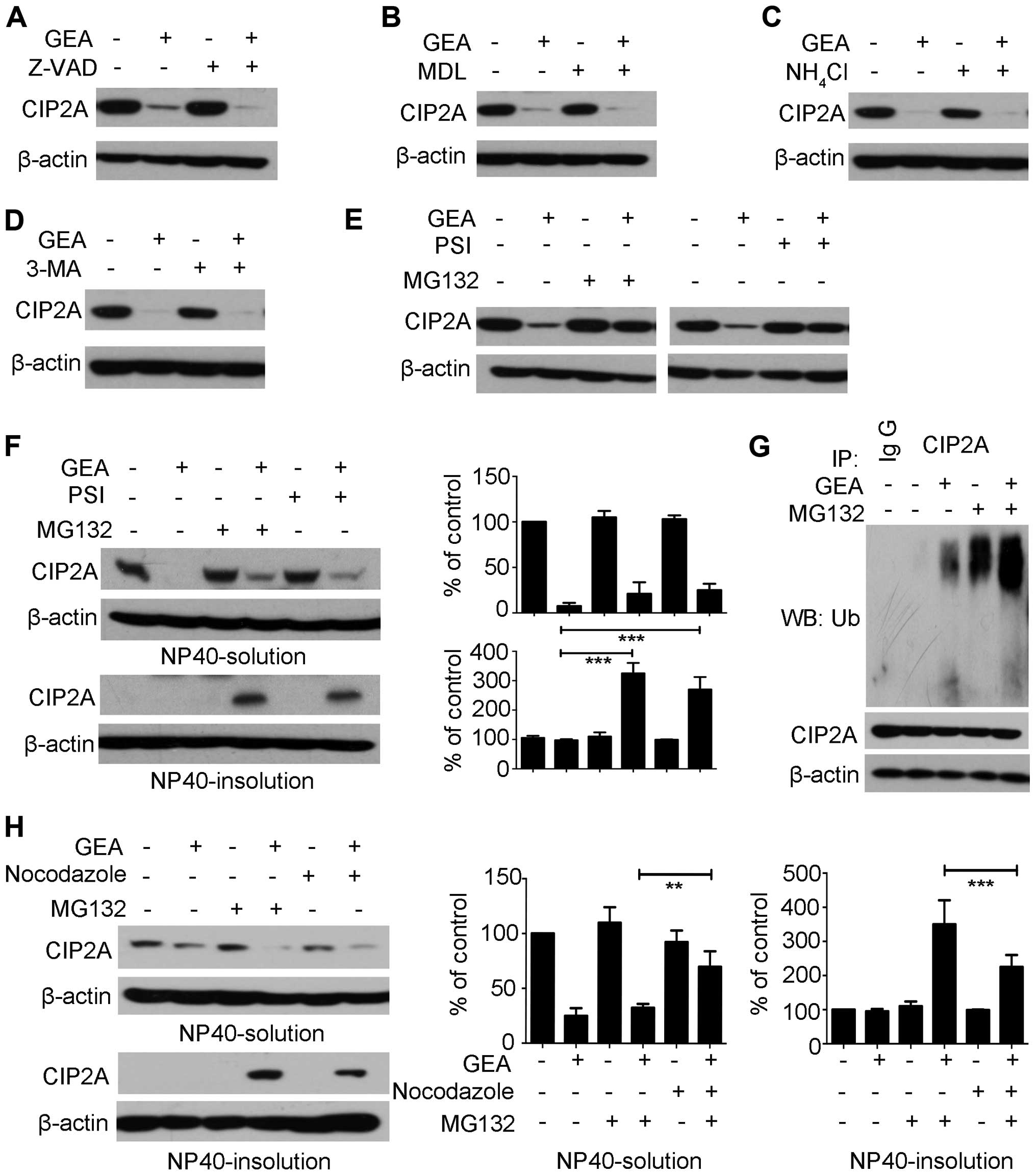
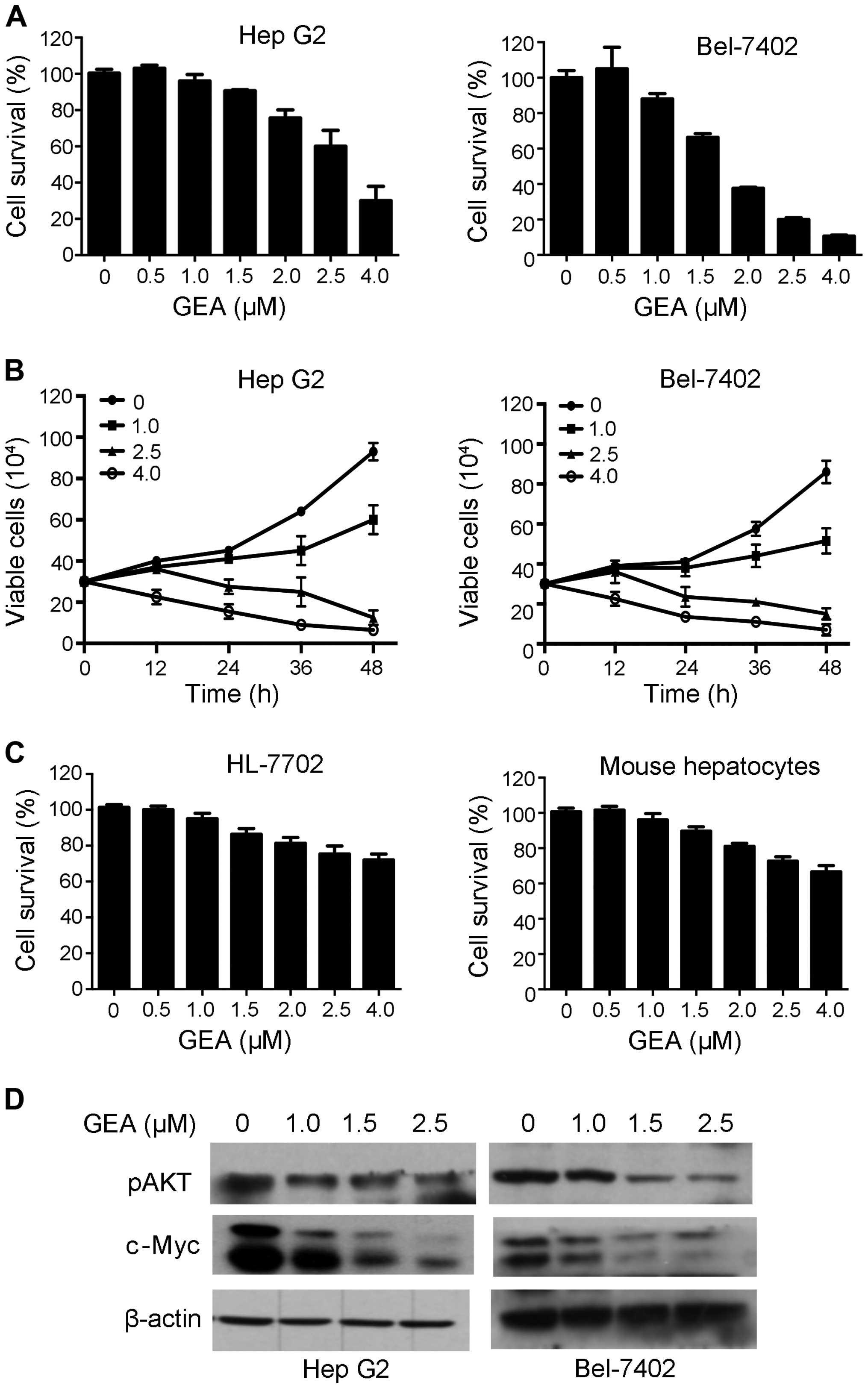
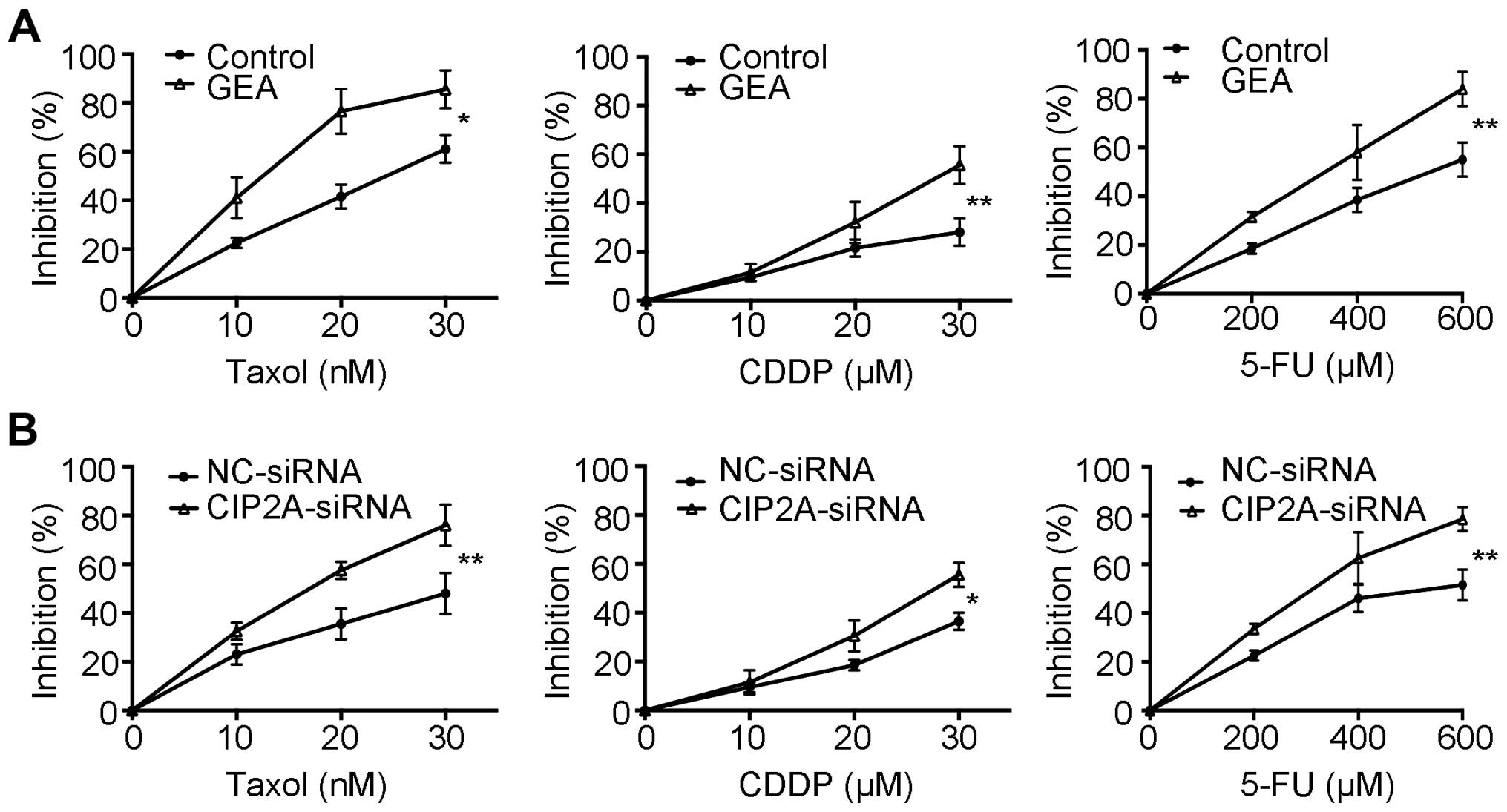
Cancerous inhibitor of protein phosphatase 2A (CIP2A) is an oncoprotein that is overexpressed in many human malignancies. It regulates phosphorylated AKT and stabilizes c‑Myc in cell proliferation and tumor formation, suggesting that CIP2A plays an essential role in the development of cancer. In the present study, we report that a natural compound, gambogenic acid (GEA), induced the degradation of CIP2A via the ubiquitin‑proteasome pathway. Interestingly, the combination of GEA and proteasome inhibitors potentiated the accumulation of ubiquitinated CIP2A and aggresome formation. In addition, GEA exhibited an inhibitory effect on cell proliferation and CIP2A‑downstream signaling molecules (c‑Myc and pAKT). Furthermore, GEA and CIP2A silencing enhanced the chemosensitivity of hepatocellular carcinoma cells to anticancer agents, suggesting that a combination of a CIP2A inhibitor and anticancer agents could be a valuable clinical therapeutic strategy. These results indicate that GEA is a CIP2A inhibitor that interferes with the ubiquitination and destabilization of CIP2A, providing a promising strategy to enhance the combinational therapy for hepatocellular carcinoma.
View Figures

Figure 1

Figure 2

Figure 3

Figure 4

Figure 5

View References

1 

Wang X, Zhang A and Sun H: Power of metabolomics in diagnosis and biomarker discovery of hepatocellular carcinoma. Hepatology. 57:2072–2077. 2013. View Article : Google Scholar : PubMed/NCBI

2 

Fattovich G, Giustina G, Christensen E, Pantalena M, Zagni I, Realdi G and Schalm SW: Influence of hepatitis delta virus infection on morbidity and mortality in compensated cirrhosis type B. The European Concerted Action on Viral Hepatitis (Eurohep). Gut. 46:420–426. 2000. View Article : Google Scholar : PubMed/NCBI

3 

El Tayebi HM, Omar K, Hegy S, El Maghrabi M, El Brolosy M, Hosny KA, Esmat G and Abdelaziz AI: Repression of miR-17-5p with elevated expression of E2F-1 and c-MYC in non-metastatic hepatocellular carcinoma and enhancement of cell growth upon reversing this expression pattern. Biochem Biophys Res Commun. 434:421–427. 2013. View Article : Google Scholar : PubMed/NCBI

4 

Fujino H, Kimura T, Aikata H, Miyaki D, Kawaoka T, Kan H, Fukuhara T, Kobayashi T, Naeshiro N, Honda Y, et al: Role of 3-D conformal radiotherapy for major portal vein tumor thrombosis combined with hepatic arterial infusion chemotherapy for advanced hepatocellular carcinoma. Hepatol Res. 45:607–617. 2015. View Article : Google Scholar : PubMed/NCBI

5 

Junttila MR, Puustinen P, Niemelä M, Ahola R, Arnold H, Böttzauw T, Ala-aho R, Nielsen C, Ivaska J, Taya Y, et al: CIP2A inhibits PP2A in human malignancies. Cell. 130:51–62. 2007. View Article : Google Scholar : PubMed/NCBI

6 

Li W, Ge Z, Liu C, Liu Z, Björkholm M, Jia J and Xu D: CIP2A is overexpressed in gastric cancer and its depletion leads to impaired clonogenicity, senescence, or differentiation of tumor cells. Clin Cancer Res. 14:3722–3728. 2008. View Article : Google Scholar : PubMed/NCBI

7 

Côme C, Laine A, Chanrion M, Edgren H, Mattila E, Liu X, Jonkers J, Ivaska J, Isola J, Darbon JM, et al: CIP2A is associated with human breast cancer aggressivity. Clin Cancer Res. 15:5092–5100. 2009. View Article : Google Scholar : PubMed/NCBI

8 

Basile JR and Czerninski R: The role of CIP2A in oral squamous cell carcinoma. Cancer Biol Ther. 10:700–702. 2010. View Article : Google Scholar : PubMed/NCBI

9 

Huang LP, Savoly D, Sidi AA, Adelson ME, Mordechai E and Trama JP: CIP2A protein expression in high-grade, high-stage bladder cancer. Cancer Med. 1:76–81. 2012. View Article : Google Scholar : PubMed/NCBI

10 

Ma L, Wen ZS, Liu Z, Hu Z, Ma J, Chen XQ, Liu YQ, Pu JX, Xiao WL, Sun HD, et al: Overexpression and small molecule-triggered downregulation of CIP2A in lung cancer. PLoS One. 6:e201592011. View Article : Google Scholar : PubMed/NCBI

11 

Ren J, Li W, Yan L, Jiao W, Tian S, Li D, Tang Y, Gu G, Liu H and Xu Z: Expression of CIP2A in renal cell carcinomas correlates with tumour invasion, metastasis and patients' survival. Br J Cancer. 105:1905–1911. 2011. View Article : Google Scholar : PubMed/NCBI

12 

Huang CY, Wei CC, Chen KC, Chen HJ, Cheng AL and Chen KF: Bortezomib enhances radiation-induced apoptosis in solid tumors by inhibiting CIP2A. Cancer Lett. 317:9–15. 2012. View Article : Google Scholar : PubMed/NCBI

13 

Liu Z, Ma L, Wen ZS, Cheng YX and Zhou GB: Ethoxysanguinarine induces inhibitory effects and downregulates CIP2A in lung cancer cells. ACS Med Chem Lett. 5:113–118. 2014. View Article : Google Scholar : PubMed/NCBI

14 

Liu Z, Ma L, Wen ZS, Hu Z, Wu FQ, Li W, Liu J and Zhou GB: Cancerous inhibitor of PP2A is targeted by natural compound celastrol for degradation in non-small-cell lung cancer. Carcinogenesis. 35:905–914. 2014. View Article : Google Scholar : PubMed/NCBI

15 

Pandey MK, Sung B, Ahn KS, Kunnumakkara AB, Chaturvedi MM and Aggarwal BB: Gambogic acid, a novel ligand for transferrin receptor, potentiates TNF-induced apoptosis through modulation of the nuclear factor-kappaB signaling pathway. Blood. 110:3517–3525. 2007. View Article : Google Scholar : PubMed/NCBI

16 

Wang X, Chen Y, Han QB, Chan CY, Wang H, Liu Z, Cheng CH, Yew DT, Lin MC, He ML, et al: Proteomic identification of molecular targets of gambogic acid: Role of stathmin in hepatocellular carcinoma. Proteomics. 9:242–253. 2009. View Article : Google Scholar : PubMed/NCBI

17 

Wang J, Chi Y, Zhan XK, Xie GR, Wang ZZ, Xiao W, Wang YG, Hu JF, Yu H, Yang L, et al: An open-labeled, randomized, multicentered, phase IIa study for advanced cancer treatment by gambogic acid injection (THS). J Clin Oncol. 29:e130952011.

18 

Chi Y, Wang J, Zhan X, Xie G, Wang Z, Xiao W, Wang Y, Hu J, Yu H, Yang L, et al: p53 open-label, randomised, multicentre, phase 2a study of gambogic acid injection (THS) for treatment of advanced cancer. EJC Suppl. 9:212011. View Article : Google Scholar

19 

Yu X, Zhao Q, Zhang H, Fan C, Zhang X, Xie Q, Xu C, Liu Y, Wu X, Han Q, et al: Gambogenic acid inhibits LPS-simulated inflammatory response by suppressing NF-κB and MAPK in macrophages. Acta Biochim Biophys Sin (Shanghai). 48:454–461. 2016. View Article : Google Scholar : PubMed/NCBI

20 

Han QB, Wang YL, Yang L, Tso TF, Qiao CF, Song JZ, Xu LJ, Chen SL, Yang DJ and Xu HX: Cytotoxic polyprenylated xanthones from the resin of Garcinia hanburyi. Chem Pharm Bull (Tokyo). 54:265–267. 2006. View Article : Google Scholar : PubMed/NCBI

21 

Li Q, Cheng H, Zhu G, Yang L, Zhou A, Wang X, Fang N, Xia L, Su J, Wang M, et al: Gambogenic acid inhibits proliferation of A549 cells through apoptosis-inducing and cell cycle arresting. Biol Pharm Bull. 33:415–420. 2010. View Article : Google Scholar : PubMed/NCBI

22 

Yu XJ, Han QB, Wen ZS, Ma L, Gao J and Zhou GB: Gambogenic acid induces G1 arrest via GSK3β-dependent cyclin D1 degradation and triggers autophagy in lung cancer cells. Cancer Lett. 322:185–194. 2012. View Article : Google Scholar : PubMed/NCBI

23 

Cheng H, Su JJ, Peng JY, Wang M, Wang XC, Yan FG, Wang XS and Li QL: Gambogenic acid inhibits proliferation of A549 cells through apoptosis inducing through up-regulation of the p38 MAPK cascade. J Asian Nat Prod Res. 13:993–1002. 2011. View Article : Google Scholar : PubMed/NCBI

24 

Yan F, Wang M, Chen H, Su J, Wang X, Wang F, Xia L and Li Q: Gambogenic acid mediated apoptosis through the mitochondrial oxidative stress and inactivation of Akt signaling pathway in human nasopharyngeal carcinoma CNE-1 cells. Eur J Pharmacol. 652:23–32. 2011. View Article : Google Scholar : PubMed/NCBI

25 

Chen HB, Zhou LZ, Mei L, Shi XJ, Wang XS, Li QL and Huang L: Gambogenic acid-induced time- and dose-dependent growth inhibition and apoptosis involving Akt pathway inactivation in U251 glioblastoma cells. J Nat Med. 66:62–69. 2012. View Article : Google Scholar : PubMed/NCBI

26 

Yan F, Wang M, Li J, Cheng H, Su J, Wang X, Wu H, Xia L, Li X, Chang HC, et al: Gambogenic acid induced mitochondrial-dependent apoptosis and referred to phospho-Erk1/2 and phospho-p38 MAPK in human hepatoma HepG2 cells. Environ Toxicol Pharmacol. 33:181–190. 2012. View Article : Google Scholar : PubMed/NCBI

27 

Zhou J, Luo YH, Wang JR, Lu BB, Wang KM and Tian Y: Gambogenic acid induction of apoptosis in a breast cancer cell line. Asian Pac J Cancer Prev. 14:7601–7605. 2013. View Article : Google Scholar : PubMed/NCBI

28 

Mei W, Dong C, Hui C, Bin L, Fenggen Y, Jingjing S, Cheng P, Meiling S, Yawen H, Xiaoshan W, et al: Gambogenic acid kills lung cancer cells through aberrant autophagy. PLoS One. 9:e836042014. View Article : Google Scholar : PubMed/NCBI

29 

Su J, Cheng H, Zhang D, Wang M, Xie C, Hu Y, Chang HC and Li Q: Synergistic effects of 5-fluorouracil and gambogenic acid on A549 cells: Activation of cell death caused by apoptotic and necroptotic mechanisms via the ROS-mitochondria pathway. Biol Pharm Bull. 37:1259–1268. 2014. View Article : Google Scholar : PubMed/NCBI

30 

He Y, Ding J, Lin Y, Li J, Shi Y, Wang J, Zhu Y, Wang K and Hu X: Gambogenic acid alters chemosensitivity of breast cancer cells to Adriamycin. BMC Complement Altern Med. 15:1812015. View Article : Google Scholar : PubMed/NCBI

31 

Wang Y and Zhang Y: Regulation of TET protein stability by calpains. Cell Reports. 6:278–284. 2014. View Article : Google Scholar : PubMed/NCBI

32 

Cohen GM: Caspases: The executioners of apoptosis. Biochem J. 326:1–16. 1997. View Article : Google Scholar : PubMed/NCBI

33 

Storr SJ, Carragher NO, Frame MC, Parr T and Martin SG: The calpain system and cancer. Nat Rev Cancer. 11:364–374. 2011. View Article : Google Scholar : PubMed/NCBI

34 

Medina DL, Di Paola S, Peluso I, Armani A, De Stefani D, Venditti R, Montefusco S, Scotto-Rosato A, Prezioso C, Forrester A, et al: Lysosomal calcium signalling regulates autophagy through calcineurin and TFEB. Nat Cell Biol. 17:288–299. 2015. View Article : Google Scholar : PubMed/NCBI

35 

Shen M, Schmitt S, Buac D and Dou QP: Targeting the ubiquitin-proteasome system for cancer therapy. Expert Opin Ther Targets. 17:1091–1108. 2013. View Article : Google Scholar : PubMed/NCBI

36 

Ciechanover A: Proteolysis: From the lysosome to ubiquitin and the proteasome. Nat Rev Mol Cell Biol. 6:79–87. 2005. View Article : Google Scholar : PubMed/NCBI

37 

Wang J, Zhao Q, Qi Q, Gu HY, Rong JJ, Mu R, Zou MJ, Tao L, You QD and Guo QL: Gambogic acid-induced degradation of mutant p53 is mediated by proteasome and related to CHIP. J Cell Biochem. 112:509–519. 2011. View Article : Google Scholar : PubMed/NCBI

38 

Johnston JA, Ward CL and Kopito RR: Aggresomes: A cellular response to misfolded proteins. J Cell Biol. 143:1883–1898. 1998. View Article : Google Scholar : PubMed/NCBI

39 

Bence NF, Sampat RM and Kopito RR: Impairment of the ubiquitin-proteasome system by protein aggregation. Science. 292:1552–1555. 2001. View Article : Google Scholar : PubMed/NCBI

40 

Khanna A, Rane JK, Kivinummi KK, Urbanucci A, Helenius MA, Tolonen TT, Saramäki OR, Latonen L, Manni V, Pimanda JE, et al: CIP2A is a candidate therapeutic target in clinically challenging prostate cancer cell populations. Oncotarget. 6:19661–19670. 2015. View Article : Google Scholar : PubMed/NCBI

41 

Khanna A, Böckelman C, Hemmes A, Junttila MR, Wiksten JP, Lundin M, Junnila S, Murphy DJ, Evan GI, Haglund C, et al: MYC-dependent regulation and prognostic role of CIP2A in gastric cancer. J Natl Cancer Inst. 101:793–805. 2009. View Article : Google Scholar : PubMed/NCBI

42 

Choi YA, Park JS, Park MY, Oh KS, Lee MS, Lim JS, Kim KI, Kim KY, Kwon J, Yoon DY, et al: Increase in CIP2A expression is associated with doxorubicin resistance. FEBS Lett. 585:755–760. 2011. View Article : Google Scholar : PubMed/NCBI

43 

Jiao M and Nan KJ: Activation of PI3 kinase/Akt/HIF-1α pathway contributes to hypoxia-induced epithelial-mesenchymal transition and chemoresistance in hepatocellular carcinoma. Int J Oncol. 40:461–468. 2012.PubMed/NCBI

44 

Zhao D, Liu Z, Ding J, Li W, Sun Y, Yu H, Zhou Y, Zeng J, Chen C and Jia J: Helicobacter pylori CagA upregulation of CIP2A is dependent on the Src and MEK/ERK pathways. J Med Microbiol. 59:259–265. 2010. View Article : Google Scholar : PubMed/NCBI

Related Articles

  • Abstract
  • View
  • Download
  • Twitter
Copy and paste a formatted citation
Spandidos Publications style
Yu XJ, Zhao Q, Wang XB, Zhang JX and Wang XB: Gambogenic acid induces proteasomal degradation of CIP2A and sensitizes hepatocellular carcinoma to anticancer agents. Oncol Rep 36: 3611-3618, 2016.
APA
Yu, X., Zhao, Q., Wang, X., Zhang, J., & Wang, X. (2016). Gambogenic acid induces proteasomal degradation of CIP2A and sensitizes hepatocellular carcinoma to anticancer agents. Oncology Reports, 36, 3611-3618. https://doi.org/10.3892/or.2016.5188
MLA
Yu, X., Zhao, Q., Wang, X., Zhang, J., Wang, X."Gambogenic acid induces proteasomal degradation of CIP2A and sensitizes hepatocellular carcinoma to anticancer agents". Oncology Reports 36.6 (2016): 3611-3618.
Chicago
Yu, X., Zhao, Q., Wang, X., Zhang, J., Wang, X."Gambogenic acid induces proteasomal degradation of CIP2A and sensitizes hepatocellular carcinoma to anticancer agents". Oncology Reports 36, no. 6 (2016): 3611-3618. https://doi.org/10.3892/or.2016.5188
Copy and paste a formatted citation
x
Spandidos Publications style
Yu XJ, Zhao Q, Wang XB, Zhang JX and Wang XB: Gambogenic acid induces proteasomal degradation of CIP2A and sensitizes hepatocellular carcinoma to anticancer agents. Oncol Rep 36: 3611-3618, 2016.
APA
Yu, X., Zhao, Q., Wang, X., Zhang, J., & Wang, X. (2016). Gambogenic acid induces proteasomal degradation of CIP2A and sensitizes hepatocellular carcinoma to anticancer agents. Oncology Reports, 36, 3611-3618. https://doi.org/10.3892/or.2016.5188
MLA
Yu, X., Zhao, Q., Wang, X., Zhang, J., Wang, X."Gambogenic acid induces proteasomal degradation of CIP2A and sensitizes hepatocellular carcinoma to anticancer agents". Oncology Reports 36.6 (2016): 3611-3618.
Chicago
Yu, X., Zhao, Q., Wang, X., Zhang, J., Wang, X."Gambogenic acid induces proteasomal degradation of CIP2A and sensitizes hepatocellular carcinoma to anticancer agents". Oncology Reports 36, no. 6 (2016): 3611-3618. https://doi.org/10.3892/or.2016.5188
Follow us
  • Twitter
  • LinkedIn
  • Facebook
About
  • Spandidos Publications
  • Careers
  • Cookie Policy
  • Privacy Policy
How can we help?
  • Help
  • Live Chat
  • Contact
  • Email to our Support Team