Spandidos Publications Logo
  • About
    • About Spandidos
    • Aims and Scopes
    • Abstracting and Indexing
    • Editorial Policies
    • Reprints and Permissions
    • Job Opportunities
    • Terms and Conditions
    • Contact
  • Journals
    • All Journals
    • Oncology Letters
      • Oncology Letters
      • Information for Authors
      • Editorial Policies
      • Editorial Board
      • Aims and Scope
      • Abstracting and Indexing
      • Bibliographic Information
      • Archive
    • International Journal of Oncology
      • International Journal of Oncology
      • Information for Authors
      • Editorial Policies
      • Editorial Board
      • Aims and Scope
      • Abstracting and Indexing
      • Bibliographic Information
      • Archive
    • Molecular and Clinical Oncology
      • Molecular and Clinical Oncology
      • Information for Authors
      • Editorial Policies
      • Editorial Board
      • Aims and Scope
      • Abstracting and Indexing
      • Bibliographic Information
      • Archive
    • Experimental and Therapeutic Medicine
      • Experimental and Therapeutic Medicine
      • Information for Authors
      • Editorial Policies
      • Editorial Board
      • Aims and Scope
      • Abstracting and Indexing
      • Bibliographic Information
      • Archive
    • International Journal of Molecular Medicine
      • International Journal of Molecular Medicine
      • Information for Authors
      • Editorial Policies
      • Editorial Board
      • Aims and Scope
      • Abstracting and Indexing
      • Bibliographic Information
      • Archive
    • Biomedical Reports
      • Biomedical Reports
      • Information for Authors
      • Editorial Policies
      • Editorial Board
      • Aims and Scope
      • Abstracting and Indexing
      • Bibliographic Information
      • Archive
    • Oncology Reports
      • Oncology Reports
      • Information for Authors
      • Editorial Policies
      • Editorial Board
      • Aims and Scope
      • Abstracting and Indexing
      • Bibliographic Information
      • Archive
    • Molecular Medicine Reports
      • Molecular Medicine Reports
      • Information for Authors
      • Editorial Policies
      • Editorial Board
      • Aims and Scope
      • Abstracting and Indexing
      • Bibliographic Information
      • Archive
    • World Academy of Sciences Journal
      • World Academy of Sciences Journal
      • Information for Authors
      • Editorial Policies
      • Editorial Board
      • Aims and Scope
      • Abstracting and Indexing
      • Bibliographic Information
      • Archive
    • International Journal of Functional Nutrition
      • International Journal of Functional Nutrition
      • Information for Authors
      • Editorial Policies
      • Editorial Board
      • Aims and Scope
      • Abstracting and Indexing
      • Bibliographic Information
      • Archive
    • International Journal of Epigenetics
      • International Journal of Epigenetics
      • Information for Authors
      • Editorial Policies
      • Editorial Board
      • Aims and Scope
      • Abstracting and Indexing
      • Bibliographic Information
      • Archive
    • Medicine International
      • Medicine International
      • Information for Authors
      • Editorial Policies
      • Editorial Board
      • Aims and Scope
      • Abstracting and Indexing
      • Bibliographic Information
      • Archive
  • Articles
  • Information
    • Information for Authors
    • Information for Reviewers
    • Information for Librarians
    • Information for Advertisers
    • Conferences
  • Language Editing
Spandidos Publications Logo
  • About
    • About Spandidos
    • Aims and Scopes
    • Abstracting and Indexing
    • Editorial Policies
    • Reprints and Permissions
    • Job Opportunities
    • Terms and Conditions
    • Contact
  • Journals
    • All Journals
    • Biomedical Reports
      • Information for Authors
      • Editorial Policies
      • Editorial Board
      • Aims and Scope
      • Abstracting and Indexing
      • Bibliographic Information
      • Archive
    • Experimental and Therapeutic Medicine
      • Information for Authors
      • Editorial Policies
      • Editorial Board
      • Aims and Scope
      • Abstracting and Indexing
      • Bibliographic Information
      • Archive
    • International Journal of Epigenetics
      • Information for Authors
      • Editorial Policies
      • Editorial Board
      • Aims and Scope
      • Abstracting and Indexing
      • Bibliographic Information
      • Archive
    • International Journal of Functional Nutrition
      • Information for Authors
      • Editorial Policies
      • Editorial Board
      • Aims and Scope
      • Abstracting and Indexing
      • Bibliographic Information
      • Archive
    • International Journal of Molecular Medicine
      • Information for Authors
      • Editorial Policies
      • Editorial Board
      • Aims and Scope
      • Abstracting and Indexing
      • Bibliographic Information
      • Archive
    • International Journal of Oncology
      • Information for Authors
      • Editorial Policies
      • Editorial Board
      • Aims and Scope
      • Abstracting and Indexing
      • Bibliographic Information
      • Archive
    • Medicine International
      • Information for Authors
      • Editorial Policies
      • Editorial Board
      • Aims and Scope
      • Abstracting and Indexing
      • Bibliographic Information
      • Archive
    • Molecular and Clinical Oncology
      • Information for Authors
      • Editorial Policies
      • Editorial Board
      • Aims and Scope
      • Abstracting and Indexing
      • Bibliographic Information
      • Archive
    • Molecular Medicine Reports
      • Information for Authors
      • Editorial Policies
      • Editorial Board
      • Aims and Scope
      • Abstracting and Indexing
      • Bibliographic Information
      • Archive
    • Oncology Letters
      • Information for Authors
      • Editorial Policies
      • Editorial Board
      • Aims and Scope
      • Abstracting and Indexing
      • Bibliographic Information
      • Archive
    • Oncology Reports
      • Information for Authors
      • Editorial Policies
      • Editorial Board
      • Aims and Scope
      • Abstracting and Indexing
      • Bibliographic Information
      • Archive
    • World Academy of Sciences Journal
      • Information for Authors
      • Editorial Policies
      • Editorial Board
      • Aims and Scope
      • Abstracting and Indexing
      • Bibliographic Information
      • Archive
  • Articles
  • Information
    • For Authors
    • For Reviewers
    • For Librarians
    • For Advertisers
    • Conferences
  • Language Editing
Login Register Submit
  • This site uses cookies
  • You can change your cookie settings at any time by following the instructions in our Cookie Policy. To find out more, you may read our Privacy Policy.

    I agree
Search articles by DOI, keyword, author or affiliation
Search
Advanced Search
presentation
Oncology Reports
Join Editorial Board Propose a Special Issue
Print ISSN: 1021-335X Online ISSN: 1791-2431
Journal Cover
June-2017 Volume 37 Issue 6

Full Size Image

Sign up for eToc alerts
Recommend to Library

Journals

International Journal of Molecular Medicine

International Journal of Molecular Medicine

International Journal of Molecular Medicine is an international journal devoted to molecular mechanisms of human disease.

International Journal of Oncology

International Journal of Oncology

International Journal of Oncology is an international journal devoted to oncology research and cancer treatment.

Molecular Medicine Reports

Molecular Medicine Reports

Covers molecular medicine topics such as pharmacology, pathology, genetics, neuroscience, infectious diseases, molecular cardiology, and molecular surgery.

Oncology Reports

Oncology Reports

Oncology Reports is an international journal devoted to fundamental and applied research in Oncology.

Experimental and Therapeutic Medicine

Experimental and Therapeutic Medicine

Experimental and Therapeutic Medicine is an international journal devoted to laboratory and clinical medicine.

Oncology Letters

Oncology Letters

Oncology Letters is an international journal devoted to Experimental and Clinical Oncology.

Biomedical Reports

Biomedical Reports

Explores a wide range of biological and medical fields, including pharmacology, genetics, microbiology, neuroscience, and molecular cardiology.

Molecular and Clinical Oncology

Molecular and Clinical Oncology

International journal addressing all aspects of oncology research, from tumorigenesis and oncogenes to chemotherapy and metastasis.

World Academy of Sciences Journal

World Academy of Sciences Journal

Multidisciplinary open-access journal spanning biochemistry, genetics, neuroscience, environmental health, and synthetic biology.

International Journal of Functional Nutrition

International Journal of Functional Nutrition

Open-access journal combining biochemistry, pharmacology, immunology, and genetics to advance health through functional nutrition.

International Journal of Epigenetics

International Journal of Epigenetics

Publishes open-access research on using epigenetics to advance understanding and treatment of human disease.

Medicine International

Medicine International

An International Open Access Journal Devoted to General Medicine.

Journal Cover
June-2017 Volume 37 Issue 6

Full Size Image

Sign up for eToc alerts
Recommend to Library

  • Article
  • Citations
    • Cite This Article
    • Download Citation
    • Create Citation Alert
    • Remove Citation Alert
    • Cited By
  • Similar Articles
    • Related Articles (in Spandidos Publications)
    • Similar Articles (Google Scholar)
    • Similar Articles (PubMed)
  • Download PDF
  • Download XML
  • View XML
Article

Optimization of antitumor treatment conditions for transcutaneous CO2 application: An in vivo study

  • Authors:
    • Takeshi Ueha
    • Teruya Kawamoto
    • Yasuo Onishi
    • Risa Harada
    • Masaya Minoda
    • Mitsunori Toda
    • Hitomi Hara
    • Naomasa Fukase
    • Masahiro Kurosaka
    • Ryosuke Kuroda
    • Toshihiro Akisue
    • Yoshitada Sakai
  • View Affiliations / Copyright

    Affiliations: Division of Rehabilitation Medicine, Kobe University Graduate School of Medicine, Kobe, Japan, Department of Orthopaedic Surgery, Kobe University Graduate School of Medicine, Kobe, Japan
  • Pages: 3688-3694
    |
    Published online on: April 20, 2017
       https://doi.org/10.3892/or.2017.5591
  • Expand metrics +
Metrics: Total Views: 0 (Spandidos Publications: | PMC Statistics: )
Metrics: Total PDF Downloads: 0 (Spandidos Publications: | PMC Statistics: )
Cited By (CrossRef): 0 citations Loading Articles...

This article is mentioned in:


Abstract

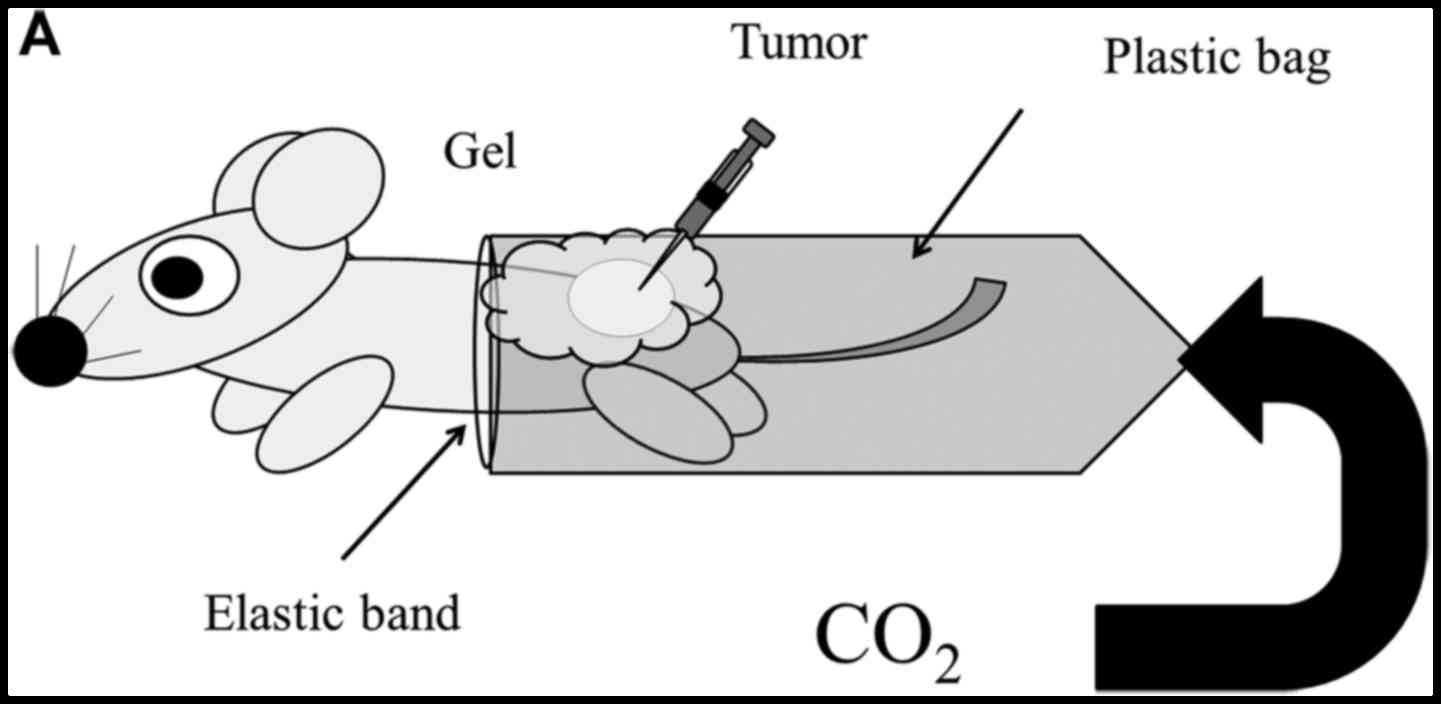
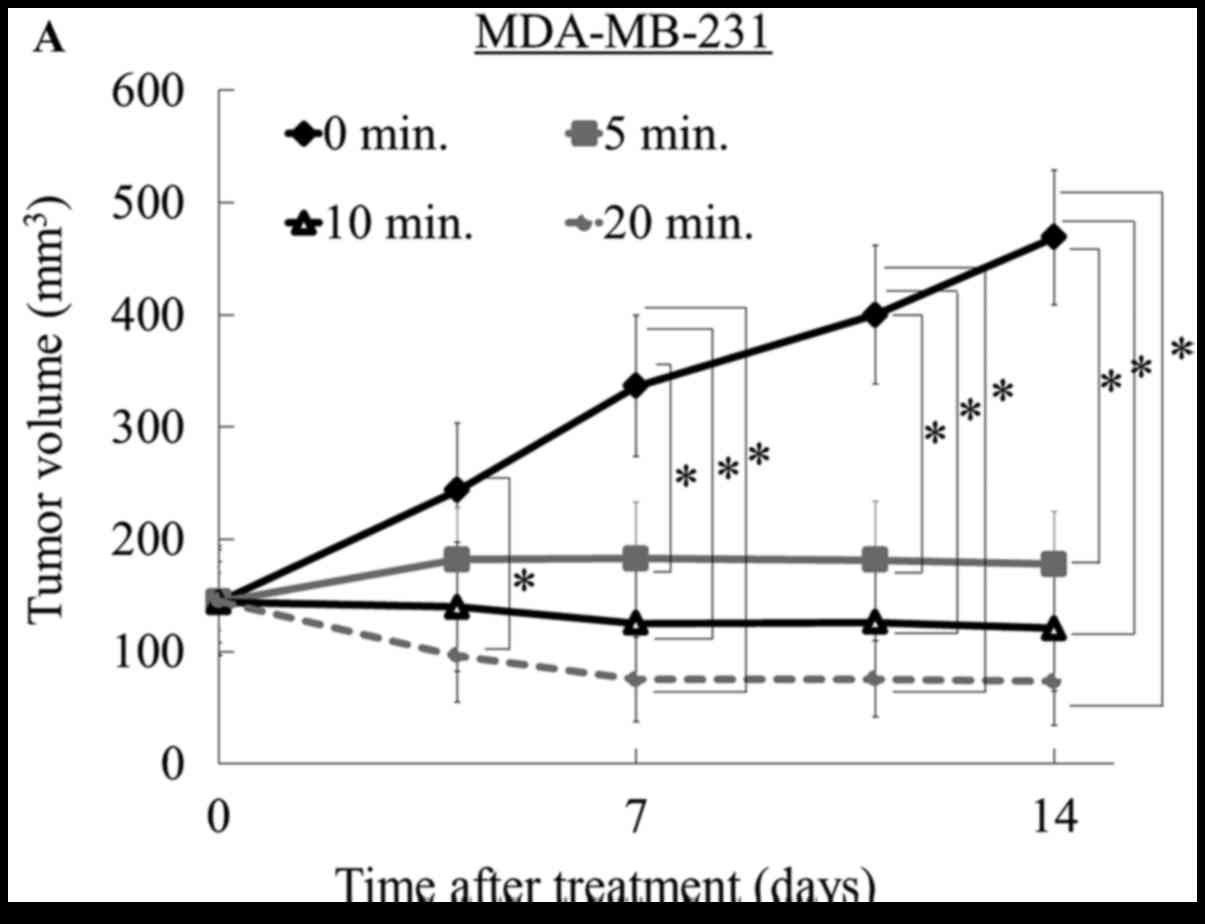
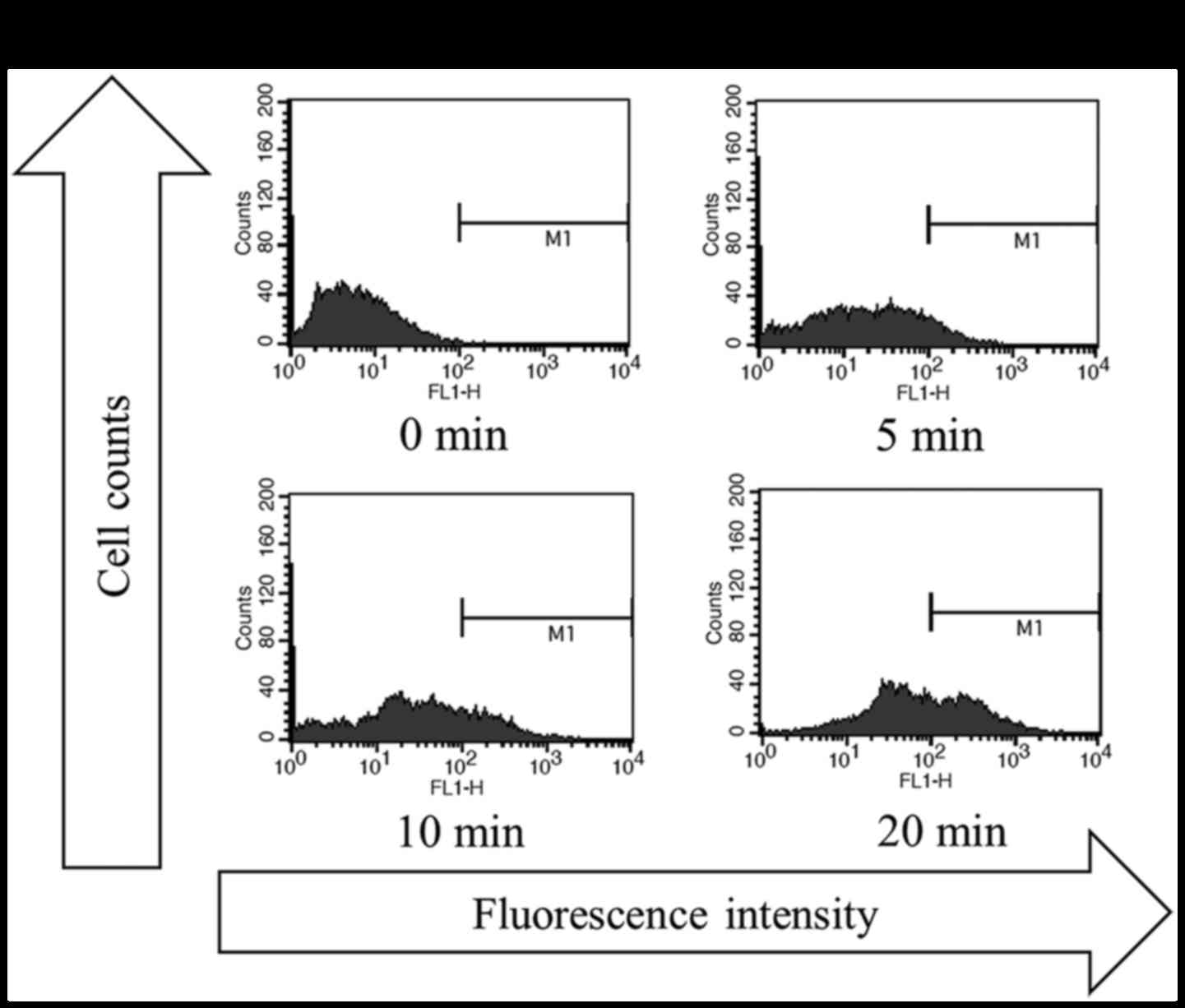
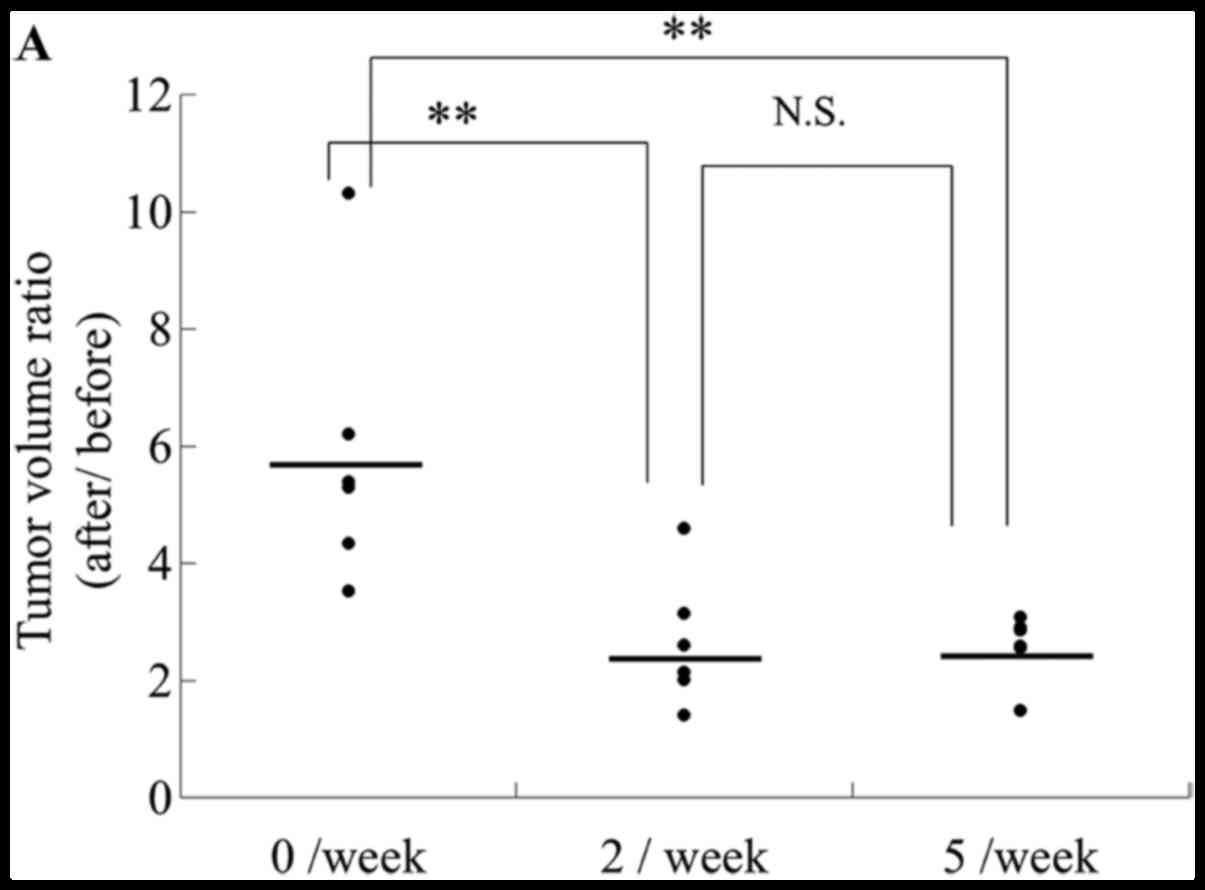
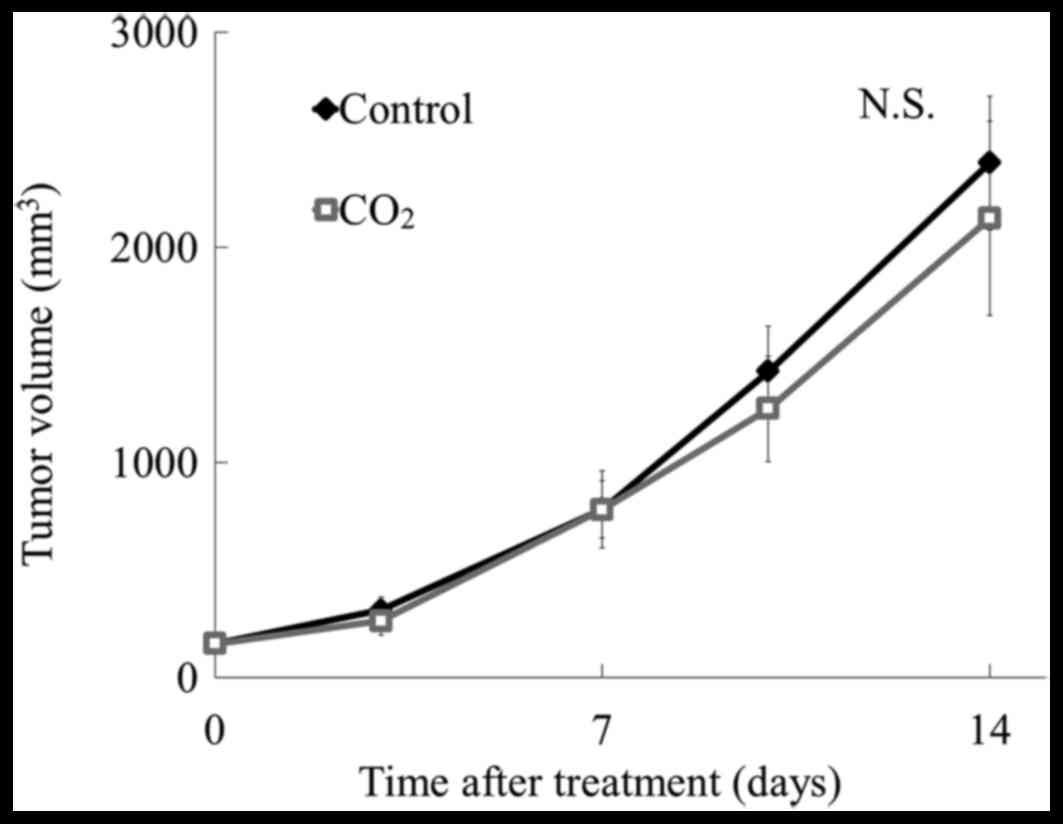
Carbon dioxide (CO2) therapy can be applied to treat a variety of disorders. We previously found that transcutaneous application of CO2 with a hydrogel decreased the tumor volume of several types of tumors and induced apoptosis via the mitochondrial pathway. However, only one condition of treatment intensity has been tested. For widespread application in clinical antitumor therapy, the conditions must be optimized. In the present study, we investigated the relationship between the duration, frequency, and treatment interval of transcutaneous CO2 application and antitumor effects in murine xenograft models. Murine xenograft models of three types of human tumors (breast cancer, osteosarcoma, and malignant fibrous histiocytoma/undifferentiated pleomorphic sarcoma) were used to assess the antitumor effects of transcutaneous CO2 application of varying durations, frequencies, and treatment intervals. In all human tumor xenografts, apoptosis was significantly induced by CO2 treatment for ≥10 min, and a significant decrease in tumor volume was observed with CO2 treatments of >5 min. The effect on tumor volume was not dependent on the frequency of CO2 application, i.e., twice or five times per week. However, treatment using 3- and 4-day intervals was more effective at decreasing tumor volume than treatment using 2- and 5-day intervals. The optimal conditions of transcutaneous CO2 application to obtain the best antitumor effect in various tumors were as follows: greater than 10 min per application, twice per week, with 3- and 4-day intervals, and application to the site of the tumor. The results suggest that this novel transcutaneous CO2 application might be useful to treat primary tumors, while mitigating some side effects, and therefore could be safe for clinical trials.
View Figures

Figure 1

Figure 2

Figure 3

Figure 4

Figure 5

View References

1 

Bray F and Soerjomataram I: The changing global burden of cancer: transitions in human development and implications for cancer prevention and control, disease control prioritiesCancer: Disease Control Priorities. 3. 3rd. Gelband H, Jha P, Sankaranarayanan R and Horton S: The International Bank for Reconstruction and Development/The World Bank; Washington, DC: pp. 23–44. 2015

2 

Parkin DM, Bray F, Ferlay J and Pisani P: Global cancer statistics, 2002. CA Cancer J Clin. 55:74–108. 2005. View Article : Google Scholar : PubMed/NCBI

3 

DeSantis CE, Lin CC, Mariotto AB, Siegel RL, Stein KD, Kramer JL, Alteri R, Robbins AS and Jemal A: Cancer treatment and survivorship statistics, 2014. CA Cancer J Clin. 64:252–271. 2014. View Article : Google Scholar : PubMed/NCBI

4 

Maurel J, López-Pousa A, de Las Peñas R, Fra J, Martín J, Cruz J, Casado A, Poveda A, Martínez-Trufero J, Balañá C, et al: Efficacy of sequential high-dose doxorubicin and ifosfamide compared with standard-dose doxorubicin in patients with advanced soft tissue sarcoma: An open-label randomized phase II study of the Spanish group for research on sarcomas. J Clin Oncol. 27:1893–1898. 2009. View Article : Google Scholar : PubMed/NCBI

5 

Dogliotti G, Galliera E, Iorio E, De Bernardi Di Valserra M, Solimene U and Corsi MM: Effect of immersion in CO2-enriched water on free radical release and total antioxidant status in peripheral arterial occlusive disease. Int Angiol. 30:12–17. 2011.PubMed/NCBI

6 

Hartmann BR, Bassenge E, Pittler M and Hartmann BR: Effect of carbon dioxide-enriched water and fresh water on the cutaneous microcirculation and oxygen tension in the skin of the foot. Angiology. 48:337–343. 1997. View Article : Google Scholar : PubMed/NCBI

7 

Joly F, Galoppin L, Bordat P, Cousse H and Neuzil E: Calcium and bicarbonate ions mediate the inhibition of mast cell histamine release by Avène spa water. Fundam Clin Pharmacol. 14:611–613. 2000. View Article : Google Scholar : PubMed/NCBI

8 

Toriyama T, Kumada Y, Matsubara T, Murata A, Ogino A, Hayashi H, Nakashima H, Takahashi H, Matsuo H and Kawahara H: Effect of artificial carbon dioxide foot bathing on critical limb ischemia (Fontaine IV) in peripheral arterial disease patients. Int Angiol. 21:367–373. 2002.PubMed/NCBI

9 

Irie H, Tatsumi T, Takamiya M, Zen K, Takahashi T, Azuma A, Tateishi K, Nomura T, Hayashi H, Nakajima N, et al: Carbon dioxide-rich water bathing enhances collateral blood flow in ischemic hindlimb via mobilization of endothelial progenitor cells and activation of NO-cGMP system. Circulation. 111:1523–1529. 2005. View Article : Google Scholar : PubMed/NCBI

10 

Bohr C, Hasselbach K and Krogh A: Ueber emen in biologischen Bezuehung wichtigen Einfluss, den die Kohlen saurespannung des Blutes anf dessen Samerstoffbinding ubt (In German). Arch Physiol. 16:402–412. 1904. View Article : Google Scholar

11 

Sakai Y, Miwa M, Oe K, Ueha T, Koh A, Niikura T, Iwakura T, Lee SY, Tanaka M and Kurosaka M: A novel system for transcutaneous application of carbon dioxide causing an ‘artificial Bohr effect’ in the human body. PLoS One. 6:e241372011. View Article : Google Scholar : PubMed/NCBI

12 

Oe K, Ueha T, Sakai Y, Niikura T, Lee SY, Koh A, Hasegawa T, Tanaka M, Miwa M and Kurosaka M: The effect of transcutaneous application of carbon dioxide (CO2) on skeletal muscle. Biochem Biophys Res Commun. 407:148–152. 2011. View Article : Google Scholar : PubMed/NCBI

13 

Onishi Y, Kawamoto T, Ueha T, Kishimoto K, Hara H, Fukase N, Toda M, Harada R, Minoda M, Sakai Y, et al: Transcutaneous application of carbon dioxide (CO2) induces mitochondrial apoptosis in human malignant fibrous histiocytoma in vivo. PLoS One. 7:e491892012. View Article : Google Scholar : PubMed/NCBI

14 

Takeda D, Hasegawa T, Ueha T, Imai Y, Sakakibara A, Minoda M, Kawamoto T, Minamikawa T, Shibuya Y, Akisue T, et al: Transcutaneous carbon dioxide induces mitochondrial apoptosis and suppresses metastasis of oral squamous cell carcinoma in vivo. PLoS One. 9:e1005302014. View Article : Google Scholar : PubMed/NCBI

15 

Harada R, Kawamoto T, Ueha T, Minoda M, Toda M, Onishi Y, Fukase N, Hara H, Sakai Y, Miwa M, et al: Reoxygenation using a novel CO2 therapy decreases the metastatic potential of osteosarcoma cells. Exp Cell Res. 319:1988–1997. 2013. View Article : Google Scholar : PubMed/NCBI

16 

Zheng Q, Banaszak L, Fracci S, Basali D, Dunlap SM, Hursting SD, Rich JN, Hjlemeland AB, Vasanji A, Berger NA, et al: Leptin receptor maintains cancer stem-like properties in triple negative breast cancer cells. Endocr Relat Cancer. 20:797–808. 2013. View Article : Google Scholar : PubMed/NCBI

17 

Muñoz M, Berger M, Rosso M, Gonzalez-Ortega A, Carranza A and Coveñas R: Antitumor activity of neurokinin-1 receptor antagonists in MG-63 human osteosarcoma xenografts. Int J Oncol. 44:137–146. 2014.PubMed/NCBI

18 

Minoda M, Kawamoto T, Ueha T, Kamata E, Morishita M, Harada R, Toda M, Onishi Y, Hara H, Kurosaka M, et al: Antitumor effect of YM155, a novel small-molecule survivin suppressant, via mitochondrial apoptosis in human MFH/UPS. Int J Oncol. 47:891–899. 2015.PubMed/NCBI

19 

Foote SO and Coleman JR: Medication administration: The implementation process of bar-coding for medication administration to enhance medication safety. Nurs Econ. 26:207–210. 2008.PubMed/NCBI

20 

Ueshima E, Yamaguchi M, Ueha T, Muradi A, Okada T, Idoguchi K, Sofue K, Akisue T, Miwa M, Fujii M, et al: Inhibition of growth in a rabbit VX2 thigh tumor model with intraarterial infusion of carbon dioxide-saturated solution. J Vasc Interv Radiol. 25:469–476. 2014. View Article : Google Scholar : PubMed/NCBI

21 

Moding EJ, Kastan MB and Kirsch DG: Strategies for optimizing the response of cancer and normal tissues to radiation. Nat Rev Drug Discov. 12:526–542. 2013. View Article : Google Scholar : PubMed/NCBI

22 

Judson I, Verweij J, Gelderblom H, Hartmann JT, Schöffski P, Blay JY, Kerst JM, Sufliarsky J, Whelan J, Hohenberger P, et al: European Organisation and Treatment of Cancer Soft Tissue and Bone Sarcoma Group: Doxorubicin alone versus intensified doxorubicin plus ifosfamide for first-line treatment of advanced or metastatic soft-tissue sarcoma: A randomised controlled phase 3 trial. Lancet Oncol. 15:415–423. 2014. View Article : Google Scholar : PubMed/NCBI

23 

Roila F, Herrstedt J, Aapro M, Gralla RJ, Einhorn LH, Ballatori E, Bria E, Clark-Snow RA, Espersen BT, Feyer P, et al: ESMO/MASCC Guidelines Working Group: Guideline update for MASCC and ESMO in the prevention of chemotherapy- and radiotherapy-induced nausea and vomiting: Results of the Perugia consensus conference. Ann Oncol. 21 Suppl 5:v232–v243. 2010. View Article : Google Scholar : PubMed/NCBI

24 

Kumar S, Juresic E, Barton M and Shafiq J: Management of skin toxicity during radiation therapy: A review of the evidence. J Med Imaging Radiat Oncol. 54:264–279. 2010. View Article : Google Scholar : PubMed/NCBI

25 

Stubbe CE and Valero M: Complementary strategies for the management of radiation therapy side effects. J Adv Pract Oncol. 4:219–231. 2013.PubMed/NCBI

26 

Onishi Y, Kawamoto T, Ueha T, Hara H, Fukase N, Toda M, Harada R, Sakai Y, Miwa M, Nishida K, et al: Transcutaneous application of carbon dioxide (CO2) enhances chemosensitivity by reducing hypoxic conditions in human malignant fibrous histiocytoma. J Cancer Sci Ther. 4:174–181. 2012. View Article : Google Scholar

27 

Onishi Y, Akisue T, Kawamoto T, Ueha T, Hara H, Toda M, Harada R, Minoda M, Morishita M, Sasaki R, et al: Transcutaneous application of CO2 enhances the antitumor effect of radiation therapy in human malignant fibrous histiocytoma. Int J Oncol. 45:732–738. 2014.PubMed/NCBI

Related Articles

  • Abstract
  • View
  • Download
  • Twitter
Copy and paste a formatted citation
Spandidos Publications style
Ueha T, Kawamoto T, Onishi Y, Harada R, Minoda M, Toda M, Hara H, Fukase N, Kurosaka M, Kuroda R, Kuroda R, et al: Optimization of antitumor treatment conditions for transcutaneous CO2 application: An in vivo study. Oncol Rep 37: 3688-3694, 2017.
APA
Ueha, T., Kawamoto, T., Onishi, Y., Harada, R., Minoda, M., Toda, M. ... Sakai, Y. (2017). Optimization of antitumor treatment conditions for transcutaneous CO2 application: An in vivo study. Oncology Reports, 37, 3688-3694. https://doi.org/10.3892/or.2017.5591
MLA
Ueha, T., Kawamoto, T., Onishi, Y., Harada, R., Minoda, M., Toda, M., Hara, H., Fukase, N., Kurosaka, M., Kuroda, R., Akisue, T., Sakai, Y."Optimization of antitumor treatment conditions for transcutaneous CO2 application: An in vivo study". Oncology Reports 37.6 (2017): 3688-3694.
Chicago
Ueha, T., Kawamoto, T., Onishi, Y., Harada, R., Minoda, M., Toda, M., Hara, H., Fukase, N., Kurosaka, M., Kuroda, R., Akisue, T., Sakai, Y."Optimization of antitumor treatment conditions for transcutaneous CO2 application: An in vivo study". Oncology Reports 37, no. 6 (2017): 3688-3694. https://doi.org/10.3892/or.2017.5591
Copy and paste a formatted citation
x
Spandidos Publications style
Ueha T, Kawamoto T, Onishi Y, Harada R, Minoda M, Toda M, Hara H, Fukase N, Kurosaka M, Kuroda R, Kuroda R, et al: Optimization of antitumor treatment conditions for transcutaneous CO2 application: An in vivo study. Oncol Rep 37: 3688-3694, 2017.
APA
Ueha, T., Kawamoto, T., Onishi, Y., Harada, R., Minoda, M., Toda, M. ... Sakai, Y. (2017). Optimization of antitumor treatment conditions for transcutaneous CO2 application: An in vivo study. Oncology Reports, 37, 3688-3694. https://doi.org/10.3892/or.2017.5591
MLA
Ueha, T., Kawamoto, T., Onishi, Y., Harada, R., Minoda, M., Toda, M., Hara, H., Fukase, N., Kurosaka, M., Kuroda, R., Akisue, T., Sakai, Y."Optimization of antitumor treatment conditions for transcutaneous CO2 application: An in vivo study". Oncology Reports 37.6 (2017): 3688-3694.
Chicago
Ueha, T., Kawamoto, T., Onishi, Y., Harada, R., Minoda, M., Toda, M., Hara, H., Fukase, N., Kurosaka, M., Kuroda, R., Akisue, T., Sakai, Y."Optimization of antitumor treatment conditions for transcutaneous CO2 application: An in vivo study". Oncology Reports 37, no. 6 (2017): 3688-3694. https://doi.org/10.3892/or.2017.5591
Follow us
  • Twitter
  • LinkedIn
  • Facebook
About
  • Spandidos Publications
  • Careers
  • Cookie Policy
  • Privacy Policy
How can we help?
  • Help
  • Live Chat
  • Contact
  • Email to our Support Team