Spandidos Publications Logo
  • About
    • About Spandidos
    • Aims and Scopes
    • Abstracting and Indexing
    • Editorial Policies
    • Reprints and Permissions
    • Job Opportunities
    • Terms and Conditions
    • Contact
  • Journals
    • All Journals
    • Oncology Letters
      • Oncology Letters
      • Information for Authors
      • Editorial Policies
      • Editorial Board
      • Aims and Scope
      • Abstracting and Indexing
      • Bibliographic Information
      • Archive
    • International Journal of Oncology
      • International Journal of Oncology
      • Information for Authors
      • Editorial Policies
      • Editorial Board
      • Aims and Scope
      • Abstracting and Indexing
      • Bibliographic Information
      • Archive
    • Molecular and Clinical Oncology
      • Molecular and Clinical Oncology
      • Information for Authors
      • Editorial Policies
      • Editorial Board
      • Aims and Scope
      • Abstracting and Indexing
      • Bibliographic Information
      • Archive
    • Experimental and Therapeutic Medicine
      • Experimental and Therapeutic Medicine
      • Information for Authors
      • Editorial Policies
      • Editorial Board
      • Aims and Scope
      • Abstracting and Indexing
      • Bibliographic Information
      • Archive
    • International Journal of Molecular Medicine
      • International Journal of Molecular Medicine
      • Information for Authors
      • Editorial Policies
      • Editorial Board
      • Aims and Scope
      • Abstracting and Indexing
      • Bibliographic Information
      • Archive
    • Biomedical Reports
      • Biomedical Reports
      • Information for Authors
      • Editorial Policies
      • Editorial Board
      • Aims and Scope
      • Abstracting and Indexing
      • Bibliographic Information
      • Archive
    • Oncology Reports
      • Oncology Reports
      • Information for Authors
      • Editorial Policies
      • Editorial Board
      • Aims and Scope
      • Abstracting and Indexing
      • Bibliographic Information
      • Archive
    • Molecular Medicine Reports
      • Molecular Medicine Reports
      • Information for Authors
      • Editorial Policies
      • Editorial Board
      • Aims and Scope
      • Abstracting and Indexing
      • Bibliographic Information
      • Archive
    • World Academy of Sciences Journal
      • World Academy of Sciences Journal
      • Information for Authors
      • Editorial Policies
      • Editorial Board
      • Aims and Scope
      • Abstracting and Indexing
      • Bibliographic Information
      • Archive
    • International Journal of Functional Nutrition
      • International Journal of Functional Nutrition
      • Information for Authors
      • Editorial Policies
      • Editorial Board
      • Aims and Scope
      • Abstracting and Indexing
      • Bibliographic Information
      • Archive
    • International Journal of Epigenetics
      • International Journal of Epigenetics
      • Information for Authors
      • Editorial Policies
      • Editorial Board
      • Aims and Scope
      • Abstracting and Indexing
      • Bibliographic Information
      • Archive
    • Medicine International
      • Medicine International
      • Information for Authors
      • Editorial Policies
      • Editorial Board
      • Aims and Scope
      • Abstracting and Indexing
      • Bibliographic Information
      • Archive
  • Articles
  • Information
    • Information for Authors
    • Information for Reviewers
    • Information for Librarians
    • Information for Advertisers
    • Conferences
  • Language Editing
Spandidos Publications Logo
  • About
    • About Spandidos
    • Aims and Scopes
    • Abstracting and Indexing
    • Editorial Policies
    • Reprints and Permissions
    • Job Opportunities
    • Terms and Conditions
    • Contact
  • Journals
    • All Journals
    • Biomedical Reports
      • Information for Authors
      • Editorial Policies
      • Editorial Board
      • Aims and Scope
      • Abstracting and Indexing
      • Bibliographic Information
      • Archive
    • Experimental and Therapeutic Medicine
      • Information for Authors
      • Editorial Policies
      • Editorial Board
      • Aims and Scope
      • Abstracting and Indexing
      • Bibliographic Information
      • Archive
    • International Journal of Epigenetics
      • Information for Authors
      • Editorial Policies
      • Editorial Board
      • Aims and Scope
      • Abstracting and Indexing
      • Bibliographic Information
      • Archive
    • International Journal of Functional Nutrition
      • Information for Authors
      • Editorial Policies
      • Editorial Board
      • Aims and Scope
      • Abstracting and Indexing
      • Bibliographic Information
      • Archive
    • International Journal of Molecular Medicine
      • Information for Authors
      • Editorial Policies
      • Editorial Board
      • Aims and Scope
      • Abstracting and Indexing
      • Bibliographic Information
      • Archive
    • International Journal of Oncology
      • Information for Authors
      • Editorial Policies
      • Editorial Board
      • Aims and Scope
      • Abstracting and Indexing
      • Bibliographic Information
      • Archive
    • Medicine International
      • Information for Authors
      • Editorial Policies
      • Editorial Board
      • Aims and Scope
      • Abstracting and Indexing
      • Bibliographic Information
      • Archive
    • Molecular and Clinical Oncology
      • Information for Authors
      • Editorial Policies
      • Editorial Board
      • Aims and Scope
      • Abstracting and Indexing
      • Bibliographic Information
      • Archive
    • Molecular Medicine Reports
      • Information for Authors
      • Editorial Policies
      • Editorial Board
      • Aims and Scope
      • Abstracting and Indexing
      • Bibliographic Information
      • Archive
    • Oncology Letters
      • Information for Authors
      • Editorial Policies
      • Editorial Board
      • Aims and Scope
      • Abstracting and Indexing
      • Bibliographic Information
      • Archive
    • Oncology Reports
      • Information for Authors
      • Editorial Policies
      • Editorial Board
      • Aims and Scope
      • Abstracting and Indexing
      • Bibliographic Information
      • Archive
    • World Academy of Sciences Journal
      • Information for Authors
      • Editorial Policies
      • Editorial Board
      • Aims and Scope
      • Abstracting and Indexing
      • Bibliographic Information
      • Archive
  • Articles
  • Information
    • For Authors
    • For Reviewers
    • For Librarians
    • For Advertisers
    • Conferences
  • Language Editing
Login Register Submit
  • This site uses cookies
  • You can change your cookie settings at any time by following the instructions in our Cookie Policy. To find out more, you may read our Privacy Policy.

    I agree
Search articles by DOI, keyword, author or affiliation
Search
Advanced Search
presentation
Oncology Reports
Join Editorial Board Propose a Special Issue
Print ISSN: 1021-335X Online ISSN: 1791-2431
Journal Cover
August-2017 Volume 38 Issue 2

Full Size Image

Sign up for eToc alerts
Recommend to Library

Journals

International Journal of Molecular Medicine

International Journal of Molecular Medicine

International Journal of Molecular Medicine is an international journal devoted to molecular mechanisms of human disease.

International Journal of Oncology

International Journal of Oncology

International Journal of Oncology is an international journal devoted to oncology research and cancer treatment.

Molecular Medicine Reports

Molecular Medicine Reports

Covers molecular medicine topics such as pharmacology, pathology, genetics, neuroscience, infectious diseases, molecular cardiology, and molecular surgery.

Oncology Reports

Oncology Reports

Oncology Reports is an international journal devoted to fundamental and applied research in Oncology.

Experimental and Therapeutic Medicine

Experimental and Therapeutic Medicine

Experimental and Therapeutic Medicine is an international journal devoted to laboratory and clinical medicine.

Oncology Letters

Oncology Letters

Oncology Letters is an international journal devoted to Experimental and Clinical Oncology.

Biomedical Reports

Biomedical Reports

Explores a wide range of biological and medical fields, including pharmacology, genetics, microbiology, neuroscience, and molecular cardiology.

Molecular and Clinical Oncology

Molecular and Clinical Oncology

International journal addressing all aspects of oncology research, from tumorigenesis and oncogenes to chemotherapy and metastasis.

World Academy of Sciences Journal

World Academy of Sciences Journal

Multidisciplinary open-access journal spanning biochemistry, genetics, neuroscience, environmental health, and synthetic biology.

International Journal of Functional Nutrition

International Journal of Functional Nutrition

Open-access journal combining biochemistry, pharmacology, immunology, and genetics to advance health through functional nutrition.

International Journal of Epigenetics

International Journal of Epigenetics

Publishes open-access research on using epigenetics to advance understanding and treatment of human disease.

Medicine International

Medicine International

An International Open Access Journal Devoted to General Medicine.

Journal Cover
August-2017 Volume 38 Issue 2

Full Size Image

Sign up for eToc alerts
Recommend to Library

  • Article
  • Citations
    • Cite This Article
    • Download Citation
    • Create Citation Alert
    • Remove Citation Alert
    • Cited By
  • Similar Articles
    • Related Articles (in Spandidos Publications)
    • Similar Articles (Google Scholar)
    • Similar Articles (PubMed)
  • Download PDF
  • Download XML
  • View XML
Article Open Access

The homologous recombination protein RAD51 is a promising therapeutic target for cervical carcinoma

  • Authors:
    • Qian Chen
    • Dongge Cai
    • Mu Li
    • Xiaoling Wu
  • View Affiliations / Copyright

    Affiliations: Department of Obstetrics and Gynecology, The Second Affiliated Hospital of Xi'an Jiaotong University, Xi'an, Shaanxi 710004, P.R. China
    Copyright: © Chen et al. This is an open access article distributed under the terms of Creative Commons Attribution License.
  • Pages: 767-774
    |
    Published online on: June 15, 2017
       https://doi.org/10.3892/or.2017.5724
  • Expand metrics +
Metrics: Total Views: 0 (Spandidos Publications: | PMC Statistics: )
Metrics: Total PDF Downloads: 0 (Spandidos Publications: | PMC Statistics: )
Cited By (CrossRef): 0 citations Loading Articles...

This article is mentioned in:


Abstract

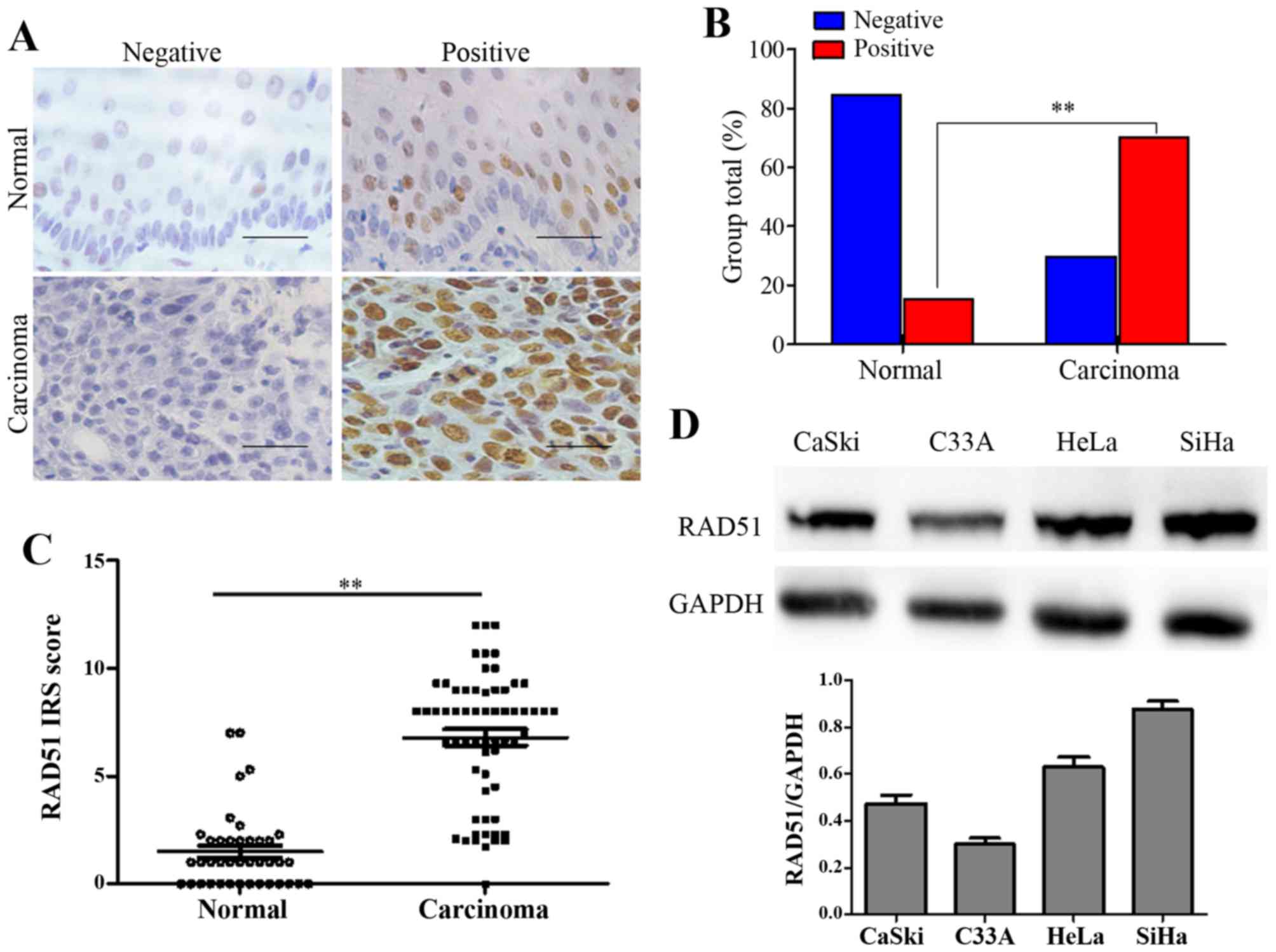
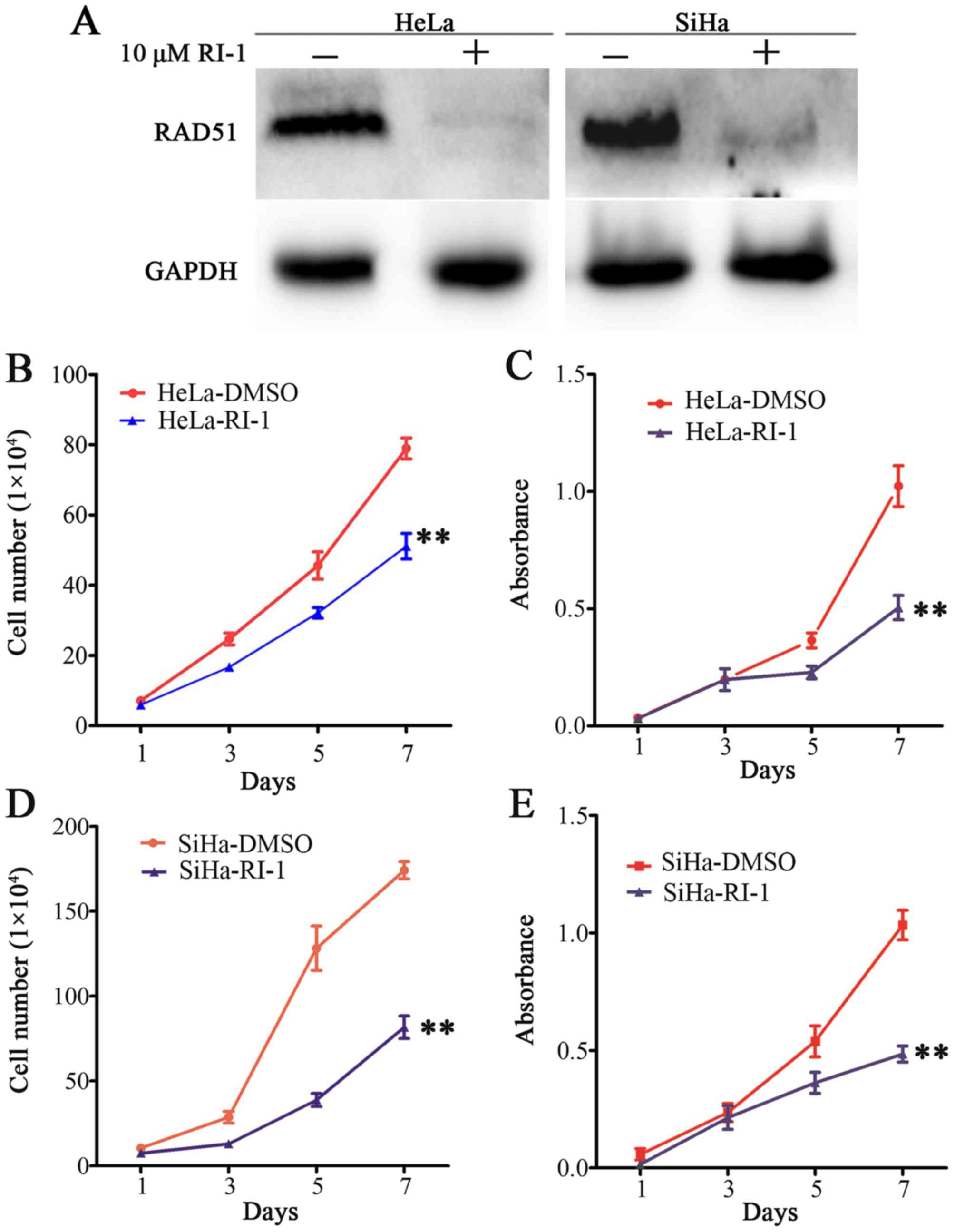
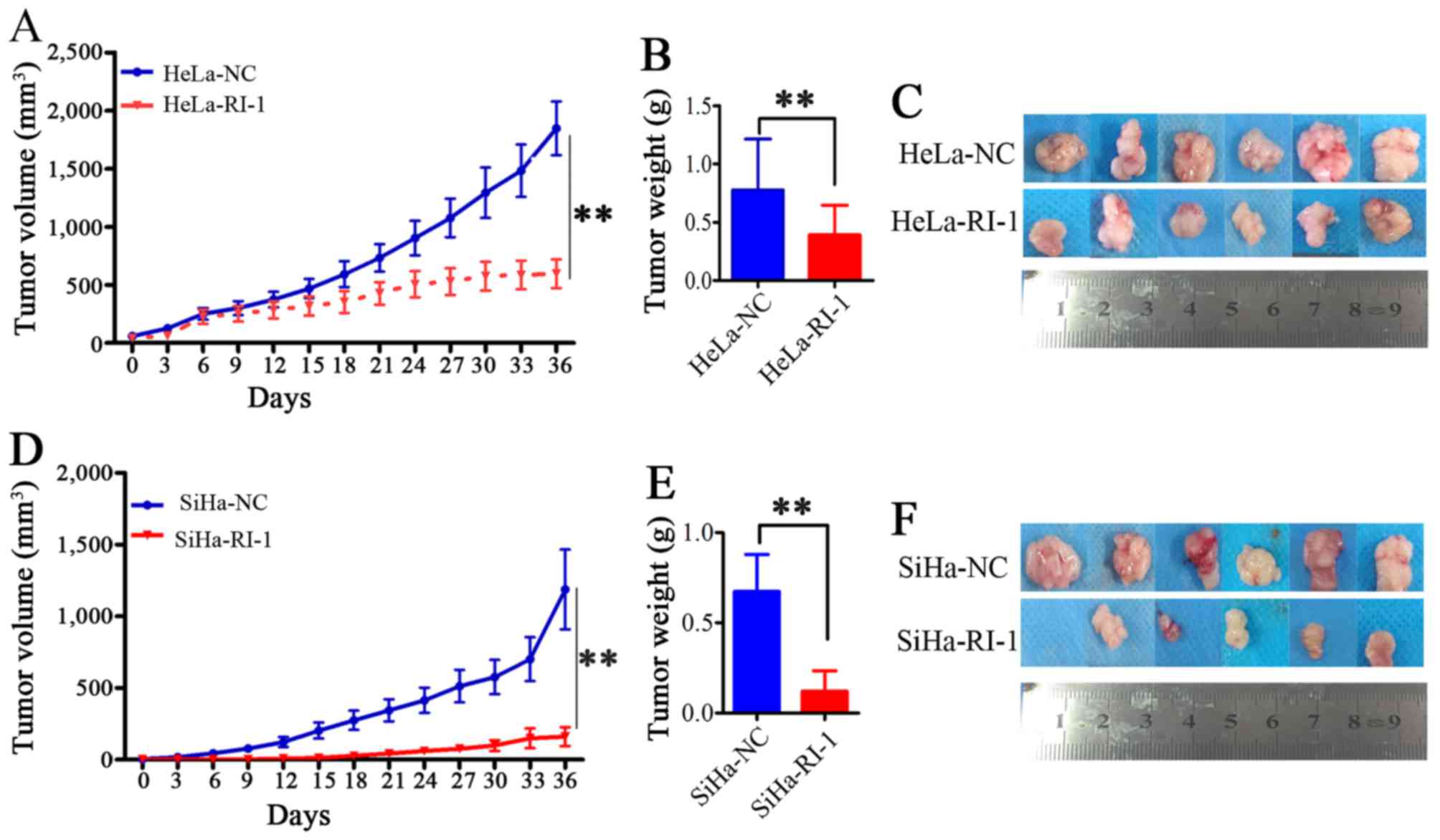
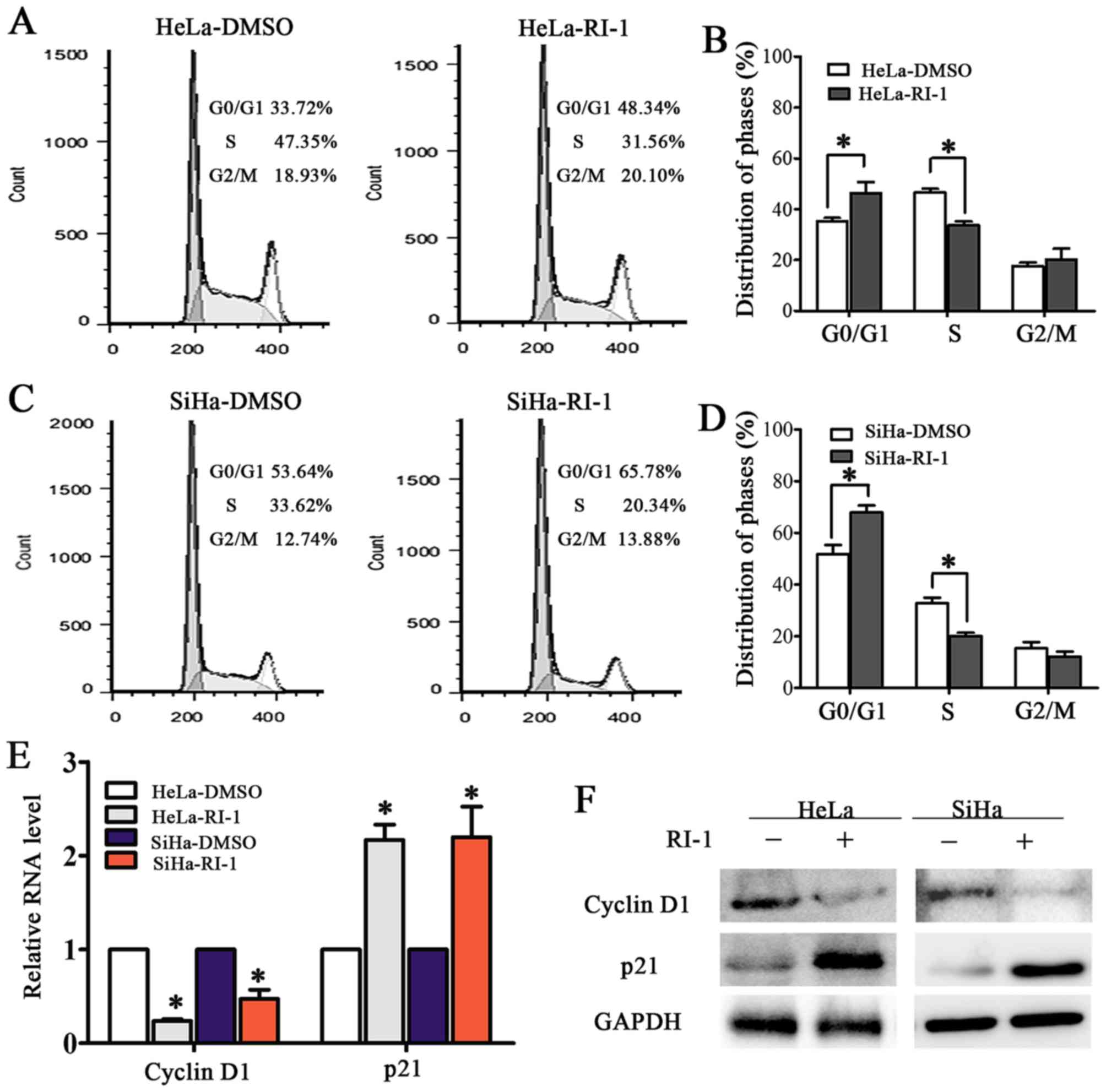
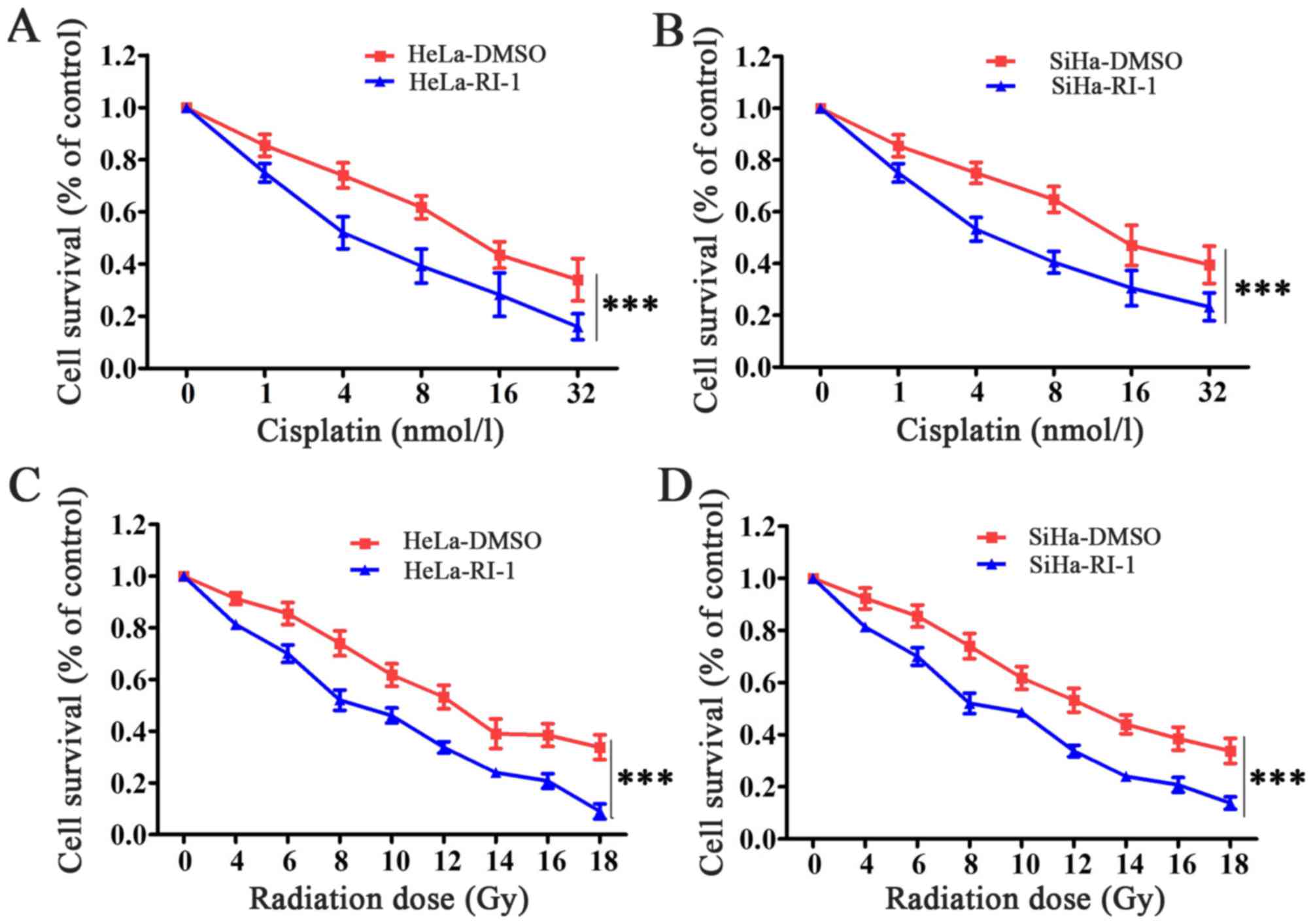
RAD51 is one of the pivotal enzymes for DNA double-strand break (DSB) repair by the homologous recombination (HR) pathway, which implies it as a promising and novel target for cancer therapy. Recent findings have indicated RAD51 protein is overexpressed in a variety of tumors. The high-expression of RAD51 is related to poor prognosis. RAD51 is involved in the repair of DNA damage and the generation of genetic diversity by an evolutionarily conserved mechanism. However, the exact mechanism of Rad51 in the progression of cervical cancer remains unclear. RI-1 is a small molecule that inhibits the central recombination protein RAD51. In this study, we found that RAD51 was highly expressed in invasive squamous cervical cancer (SCC). The administration of RI-1 inhibited cell growth in vitro and reduced growth of tumor xenografts in vivo with cervical cancer cells (HeLa and SiHa). Further investigation suggested that RAD51 protein significantly promoted the cell cycle transition from the G0/G1 to S phase. In addition, the inhibition of RAD51 reduced the level of the cell cycle related protein cyclin D1, but increased the levels of p21 mRNA and protein. As a DNA DSB repair enzyme, the expression of RAD51 in tumor cells possibly affects their sensitivity to anti-cancer agents. Additionally, in experiments using cisplatin and ionizing radiation, RI-1 treated cervical cancer cells, HeLa and SiHa, were sensitized to a greater extent than the untreated control. Thus, HR inhibition of RAD51 may provide yet another mechanism of therapeutic target for the chemosensitization and radiosensitization of cervical cancer with RI-1. Collectively, our data demonstrated for the first time that inhibition of RAD51 suppressed the cervical cancer cell proliferation and the growth of cervical cancer xenografts by attenuating cell cycle transition, which could be a functional link between RAD51 and cyclin D1 and p21.
View Figures

Figure 1

Figure 2

Figure 3

Figure 4

Figure 5

View References

1 

Torre LA, Bray F, Siegel RL, Ferlay J, Lortet-Tieulent J and Jemal A: Global cancer statistics, 2012. CA Cancer J Clin. 65:87–108. 2015. View Article : Google Scholar : PubMed/NCBI

2 

Walboomers JM, Jacobs MV, Manos MM, Bosch FX, Kummer JA, Shah KV, Snijders PJ, Peto J, Meijer CJ and Muñoz N: Human papillomavirus is a necessary cause of invasive cervical cancer worldwide. J Pathol. 189:12–19. 1999. View Article : Google Scholar : PubMed/NCBI

3 

Zhang L, Wu J, Ling MT, Zhao L and Zhao KN: The role of the PI3K/Akt/mTOR signalling pathway in human cancers induced by infection with human papillomaviruses. Mol Cancer. 14:872015. View Article : Google Scholar : PubMed/NCBI

4 

Qureshi R, Arora H and Rizvi MA: EMT in cervical cancer: Its role in tumour progression and response to therapy. Cancer Lett. 356:321–331. 2015. View Article : Google Scholar : PubMed/NCBI

5 

Kowalczykowski SC: Biochemistry of genetic recombination: Energetics and mechanism of DNA strand exchange. Annu Rev Biophys Biophys Chem. 20:539–575. 1991. View Article : Google Scholar : PubMed/NCBI

6 

Paulíková S, Chmelařová M, Petera J, Palička V and Paulík A: Hypermethylation of RAD51L3 and XRCC2 genes to predict late toxicity in chemoradiotherapy-treated cervical cancer patients. Folia Biol (Praha). 59:240–245. 2013.PubMed/NCBI

7 

Takenaka T, Yoshino I, Kouso H, Ohba T, Yohena T, Osoegawa A, Shoji F and Maehara Y: Combined evaluation of Rad51 and ERCC1 expressions for sensitivity to platinum agents in non-small cell lung cancer. Int J Cancer. 121:895–900. 2007. View Article : Google Scholar : PubMed/NCBI

8 

Maacke H, Opitz S, Jost K, Hamdorf W, Henning W, Krüger S, Feller AC, Lopens A, Diedrich K, Schwinger E, et al: Over-expression of wild-type Rad51 correlates with histological grading of invasive ductal breast cancer. Int J Cancer. 88:907–913. 2000. View Article : Google Scholar : PubMed/NCBI

9 

Liu G, Yang D, Rupaimoole R, Pecot CV, Sun Y, Mangala LS, Li X, Ji P, Cogdell D, Hu L, et al: Augmentation of response to chemotherapy by microRNA-506 through regulation of RAD51 in serous ovarian cancers. J Natl Cancer Inst. 107:1072015. View Article : Google Scholar

10 

Maacke H, Jost K, Opitz S, Miska S, Yuan Y, Hasselbach L, Lüttges J, Kalthoff H and Stürzbecher HW: DNA repair and recombination factor Rad51 is over-expressed in human pancreatic adenocarcinoma. Oncogene. 19:2791–2795. 2000. View Article : Google Scholar : PubMed/NCBI

11 

Raderschall E, Stout K, Freier S, Suckow V, Schweiger S and Haaf T: Elevated levels of Rad51 recombination protein in tumor cells. Cancer Res. 62:219–225. 2002.PubMed/NCBI

12 

Hine CM, Seluanov A and Gorbunova V: Use of the Rad51 promoter for targeted anti-cancer therapy. Proc Natl Acad Sci USA. 105:20810–20815. 2008. View Article : Google Scholar : PubMed/NCBI

13 

Nagathihalli NS and Nagaraju G: RAD51 as a potential biomarker and therapeutic target for pancreatic cancer. Biochim Biophys Acta. 1816:209–218. 2011.PubMed/NCBI

14 

Wang AT, Kim T, Wagner JE, Conti BA, Lach FP, Huang AL, Molina H, Sanborn EM, Zierhut H, Cornes BK, et al: A dominant mutation in human RAD51 reveals its function in DNA interstrand crosslink repair independent of homologous recombination. Mol Cell. 59:478–490. 2015. View Article : Google Scholar : PubMed/NCBI

15 

Budke B, Logan HL, Kalin JH, Zelivianskaia AS, McGuire Cameron W, Miller LL, Stark JM, Kozikowski AP, Bishop DK and Connell PP: RI-1: A chemical inhibitor of RAD51 that disrupts homologous recombination in human cells. Nucleic Acids Res. 40:7347–7357. 2012. View Article : Google Scholar : PubMed/NCBI

16 

Hong KJ, Hsu MC and Hung WC: RECK impedes DNA repair by inhibiting the erbB/JAB1/Rad51 signaling axis and enhances chemosensitivity of breast cancer cells. Am J Cancer Res. 5:2422–2430. 2015.PubMed/NCBI

17 

Choudhury A, Zhao H, Jalali F, Al Rashid S, Ran J, Supiot S, Kiltie AE and Bristow RG: Targeting homologous recombination using imatinib results in enhanced tumor cell chemosensitivity and radiosensitivity. Mol Cancer Ther. 8:203–213. 2009. View Article : Google Scholar : PubMed/NCBI

18 

Kübler HR, van Randenborgh H, Treiber U, Wutzler S, Battistel C, Lehmer A, Wagenpfeil S, Hartung R and Paul R: In vitro cytotoxic effects of imatinib in combination with anticancer drugs in human prostate cancer cell lines. Prostate. 63:385–394. 2005. View Article : Google Scholar : PubMed/NCBI

19 

Wang B, Hou D, Liu Q, Wu T, Guo H, Zhang X, Zou Y, Liu Z, Liu J, Wei J, et al: Artesunate sensitizes ovarian cancer cells to cisplatin by downregulating RAD51. Cancer Biol Ther. 16:1548–1556. 2015. View Article : Google Scholar : PubMed/NCBI

20 

Cortez MA, Valdecanas D, Niknam S, Peltier HJ, Diao L, Giri U, Komaki R, Calin GA, Gomez DR, Chang JY, et al: In vivo delivery of miR-34a sensitizes lung tumors to radiation through RAD51 regulation. Mol Ther Nucleic Acids. 4:e2702015. View Article : Google Scholar : PubMed/NCBI

21 

Ohnishi T, Taki T, Hiraga S, Arita N and Morita T: In vitro and in vivo potentiation of radiosensitivity of malignant gliomas by antisense inhibition of the RAD51 gene. Biochem Biophys Res Commun. 245:319–324. 1998. View Article : Google Scholar : PubMed/NCBI

22 

Mueller AC, Sun D and Dutta A: The miR-99 family regulates the DNA damage response through its target SNF2H. Oncogene. 32:1164–1172. 2013. View Article : Google Scholar : PubMed/NCBI

23 

Martinez SF, Renodon-Cornière A, Nomme J, Eveillard D, Fleury F, Takahashi M and Weigel P: Targeting human Rad51 by specific DNA aptamers induces inhibition of homologous recombination. Biochimie. 92:1832–1838. 2010. View Article : Google Scholar : PubMed/NCBI

24 

Parplys AC, Seelbach JI, Becker S, Behr M, Wrona A, Jend C, Mansour WY, Joosse SA, Stuerzbecher HW, Pospiech H, et al: High levels of RAD51 perturb DNA replication elongation and cause unscheduled origin firing due to impaired CHK1 activation. Cell Cycle. 14:3190–3202. 2015. View Article : Google Scholar : PubMed/NCBI

25 

Mitra A, Jameson C, Barbachano Y, Sanchez L, Kote-Jarai Z, Peock S, Sodha N, Bancroft E, Fletcher A, Cooper C, et al: IMPACT Steering Committee and IMPACT and EMBRACE Collaborators: Overexpression of RAD51 occurs in aggressive prostatic cancer. Histopathology. 55:696–704. 2009. View Article : Google Scholar : PubMed/NCBI

26 

Ko JC, Wang TJ, Chang PY, Syu JJ, Chen JC, Chen CY, Jian YT, Jian YJ, Zheng HY, Chen WC, et al: Minocycline enhances mitomycin C-induced cytotoxicity through down-regulating ERK1/2-mediated Rad51 expression in human non-small cell lung cancer cells. Biochem Pharmacol. 97:331–340. 2015. View Article : Google Scholar : PubMed/NCBI

27 

Deng C, Zhang P, Harper JW, Elledge SJ and Leder P: Mice lacking p21CIP1/WAF1 undergo normal development, but are defective in G1 checkpoint control. Cell. 82:675–684. 1995. View Article : Google Scholar : PubMed/NCBI

28 

Tashiro S, Walter J, Shinohara A, Kamada N and Cremer T: Rad51 accumulation at sites of DNA damage and in postreplicative chromatin. J Cell Biol. 150:283–291. 2000. View Article : Google Scholar : PubMed/NCBI

Related Articles

  • Abstract
  • View
  • Download
  • Twitter
Copy and paste a formatted citation
Spandidos Publications style
Chen Q, Cai D, Li M and Wu X: The homologous recombination protein RAD51 is a promising therapeutic target for cervical carcinoma. Oncol Rep 38: 767-774, 2017.
APA
Chen, Q., Cai, D., Li, M., & Wu, X. (2017). The homologous recombination protein RAD51 is a promising therapeutic target for cervical carcinoma. Oncology Reports, 38, 767-774. https://doi.org/10.3892/or.2017.5724
MLA
Chen, Q., Cai, D., Li, M., Wu, X."The homologous recombination protein RAD51 is a promising therapeutic target for cervical carcinoma". Oncology Reports 38.2 (2017): 767-774.
Chicago
Chen, Q., Cai, D., Li, M., Wu, X."The homologous recombination protein RAD51 is a promising therapeutic target for cervical carcinoma". Oncology Reports 38, no. 2 (2017): 767-774. https://doi.org/10.3892/or.2017.5724
Copy and paste a formatted citation
x
Spandidos Publications style
Chen Q, Cai D, Li M and Wu X: The homologous recombination protein RAD51 is a promising therapeutic target for cervical carcinoma. Oncol Rep 38: 767-774, 2017.
APA
Chen, Q., Cai, D., Li, M., & Wu, X. (2017). The homologous recombination protein RAD51 is a promising therapeutic target for cervical carcinoma. Oncology Reports, 38, 767-774. https://doi.org/10.3892/or.2017.5724
MLA
Chen, Q., Cai, D., Li, M., Wu, X."The homologous recombination protein RAD51 is a promising therapeutic target for cervical carcinoma". Oncology Reports 38.2 (2017): 767-774.
Chicago
Chen, Q., Cai, D., Li, M., Wu, X."The homologous recombination protein RAD51 is a promising therapeutic target for cervical carcinoma". Oncology Reports 38, no. 2 (2017): 767-774. https://doi.org/10.3892/or.2017.5724
Follow us
  • Twitter
  • LinkedIn
  • Facebook
About
  • Spandidos Publications
  • Careers
  • Cookie Policy
  • Privacy Policy
How can we help?
  • Help
  • Live Chat
  • Contact
  • Email to our Support Team