Introduction
Esophageal carcinoma is a common malignant solid
tumor of the digestive tract. An acidic extracellular
microenvironment is an important characteristic of solid tumors
(1), and acidification of the
extracellular environment (even mild acidification) influences cell
signaling pathways that affect apoptosis and proliferation. Recent
studies revealed that extracellular acidification and the
expression of various ion exchange channels in tumor cells were
associated with tumor cell hypoxia and played an important role in
the progression of tumors.
Our previous studies and other related studies have
indicated that V-ATPase is a proton pump that is closely related to
establishment and maintenance of an acidic microenvironment, and is
expressed highly in tumor tissues (2,3).
Diphyllin is a natural component of traditional Chinese medicine,
which belongs to the lignan compounds and has good antitumor
activity with relatively few side-effects. However, the exact
mechanism is not yet clear. In a previous study, we found
inhibition of V-ATPase expression in the human gastric cancer cell
line SGC7901 by diphyllin (3). In
the present study, we investigated whether diphyllin inhibits
V-ATPase activity in esophageal cancer and further explored its
role in malignant behavior.
Metastasis of esophageal cancer is the main reason
for poor prognoses, and blood circulation is the major pathway of
metastasis (4). Vascular
endothelial growth factors (VEGFs), including VEGF-A, VEGF-C and
VEGF-D, play an important role in the formation of new blood
vessels and are related to the mechanism (5,6).
Hypoxia-inducible factor-1α (HIF-1α) is an upstream gene of VEGF,
which regulates the formation of new vessels. Our previous study
revealed that HIF-1α expression in esophageal cancer was correlated
with VEGF-C/-D expression and was closely related to the metastasis
of esophageal cancer (7,8). In addition, mammalian target of
rapamycin (mTOR) is an important regulator of the upstream
molecules of HIF-1α (9,10). mTOR forms two complexes, namely
mTORC1 and mTORC2, which play important roles by affecting
different signaling pathways. Among them, mTORC1 regulates HIF-1α
(11). Therefore,
mTORC1/HIF-1α/VEGF signaling is a major regulatory signal in the
metastasis of cancer.
Previous studies have indicated a significantly
lower pH in lysosomes of tumor cells in vitro than in normal
cells, which is conducive to increase autophagy and intracellular
free amino acids, thus activating mTORC1 signaling. Furthermore,
mature lysosomes and extracellular acidic maintenance are closely
related to the role of V-ATPase. Therefore, we hypothesized that
diphyllin may inhibit the activity of V-ATPase and
mTORC1/HIF-1α/VEGF signaling. In the present study, we tested our
hypothesis and explored the possible mechanism of diphyllin in the
inhibition of esophageal cancer metastasis.
Materials and methods
Drugs
Diphyllin was kindly provided by Dr Zhaoyu (Nantong
University, Jiangsu, China). Diphyllin and bafilomycin A1 (Sigma,
St. Louis, MO, USA) were dissolved in dimethyl sulfoxide (DMSO;
Sigma) and stored at −20°C.
Cell lines and culture
Human esophageal squamous cancer cell lines TE-1 and
ECA-109 purchased from the American Type Culture Collection (ATCC;
Manassas, VA, USA) were maintained in Dulbecco's modified Eagle's
medium (DMEM; HyClone, Logan, UT, USA) supplemented with 10% fetal
bovine serum (FBS; ScienCell, Carlsbad, CA, USA). Reagents for cell
culture were purchased from Gibco (Grand Island, NY, USA). The
cells were incubated at 37°C with 5% CO2.
In vitro cytotoxicity assay of
diphyllin
TE-1 and ECA-109 cells were seeded into a 96-well
clear polystyrene microplate (Corning, Corning, NY, USA USA) at
4,000 cells/well at 20 h prior to the experiment. Diphyllin was
2-fold serially diluted in culture medium and added to the cell
monolayer in triplicate. The final DMSO concentration was no
>0.5% in all wells. After 2 days, the culture supernatant was
removed and 100 µl DMEM with 10 µl Cell Counting Kit-8 (CCK-8)
reagent was added to each well, followed by incubation at 37°C for
4 h. The absorbance values were assessed at 430 nm with a reference
wavelength of 490 nm on a Bio-Rad iMark (Bio-Rad, Hercules, CA,
USA). Control cells (without diphyllin/bafilomycin A1 treatment)
were assumed to represent 100% cell viability. Normalized cell
viability data were plotted against diphyllin concentrations and
fitted to a non-linear regression curve using GraphPad Prism
(GraphPad Software, San Diego, CA, USA). The 50% cytotoxicity
concentration (IC50; the concentration of diphyllin at
which cellular viability was reduced to 50%) was accordingly
obtained.
Enzyme-linked immunosorbent assay
(ELISA)
TE-1 and ECA-109 cells were grown into a 6-well
clear polystyrene microplate with culture medium at pH 6.6. The
levels of VEGF-C in the culture supernatants of TE-1/ECA-109 cells
were assessed using a human ELISA kit (Cloud-Clone Corp., Houston,
TX, USA) after treatments with diphyllin/bafilomycin A1 for 6, 12,
24 and 48 h.
Colony formation assay
Cells (400/well) were seeded into 6-well plates with
2 ml DMEM containing 10% FBS in the presence or absence of various
concentrations of diphyllin at 37°C. After culture for 11 days,
colonies with cell numbers of >50 were counted under a
microscope.
Cell cycle detection
Cell cycle detection was performed using a propidium
iodide (PI) staining detection kit (KeyGen Biotech, Nanjing, China)
by MoFlo XDP (Beckman Coulter, Inc., Brea, CA, USA). Briefly, the
cells were trypsinized, washed with phosphate-buffered saline
(PBS), centrifuged and fixed with 70% cold ethanol (500 µl) for 2
h, and then washed with PBS. The cells were incubated with 100 µl
RNase A solution for 30 min at 37°C. PI (400 µl) was added and the
cells were incubated for another 30 min at 4°C. The samples were
analyzed within 1 h by MoFlo XDP with Summit software. The data
were analyzed by ModFit LT (4.1).
Transwell and scratch wound
assays
Transwell chambers (Corning cat. no. 3422l; 6.5-mm
Transwell with an 8.0-µm pore polycarbonate membrane insert) were
placed in 24-well plates (Corning), and 1×10⁴ ECA-109
cells were cultured/well. Diphyllin/bafilomycin A1 were added after
20 h, and then cell migration was observed after 48 h of
treatment.
TE-1 and ECA-109 cells were grown into 6-well plates
(Corning) at 4×10⁵ cells/well 20 h prior to experiments.
A scratch wound was made along the bottom of the well with a
pipette tip, the scratch area, and then the cells were washed with
PBS. After adding fresh medium, cell migration was detected at 12,
24 and 48 h.
V-ATPase activity assay
We employed a colorimetric assay to assess V-ATPase
activity using a spectrophotometer to detect the release of
phosphate, according to the manufacturer's instructions (V-ATPase
assay kit; Genmed Scientifics Inc., Arlington, MA, USA). Briefly,
the cells were cultured in complete DMEM at 37°C with 5%
CO2. With different solubility of drug-treated cells,
the cells were cultured for 48 h and then collected. The activity
of V-ATPase was determined in a quartz cuvette. The sample
absorbance at 340 nm was detected at 0 and 20 min. The experiment
was repeated three times.
Real-time quantitative PCR
Total RNA was isolated from ECA-109 cells using
TRIzol reagent (Invitrogen, Carlsbad, CA, USA) according to the
manufacturer's instructions. Reverse transcription reactions were
conducted with a Transcriptor First Strand cDNA Synthesis kit
(Takara, Otsu, Japan). PCR primers were designed by BGI (China).
Real-time PCR with SYBR-Green PCR Master Mix (Takara) was performed
using a CFX96 (Bio-Rad). Fluorescence signals were assessed during
the extension phase. Cq values of the sample were calculated, and
transcript levels were calculated using the 2−ΔΔCq
method.
Detection of proliferation, migration
and tube formation of human umbilical vein endothelial cells
(HUVECs) cultured in various culture supernatants
Cells were seeded in 12-well culture plates at
2×10⁶ cells/well. After treatment with diphyllin or
bafilomycin for 12, 24 and 48 h culture supernatants were
collected, centrifuged and stored at −80°C. HUVECs were seeded in
96-well culture plates at 8×10³ cells/well in 100 µl of
culture supernatant. Cell proliferation and migration were detected
as described above. HUVECs were seeded in 12-well culture plates at
1×10⁵ cells/well. After 6 h of culture, migration and
the formation of tube-like structures were observed under a
microscope, and the number of lumens was statistically
calculated.
Statistical analysis
Statistical comparisons were performed using SPSS
16.0 software package (SPSS, Inc., Chicago, IL, USA), using the
Student's t-test for paired observations or one-way analysis of
variance with Student-Newman-Keuls, for least significant
difference, and Dunnett's tests. All data are presented as the mean
± standard deviation (SD). P<0.05 was considered as
statistically significant (P<0.05, P<0.01). Mean values and
SD were calculated for experiments carried out in triplicate.
Results
Growth inhibition of TE-1 and ECA-109
cells by diphyllin
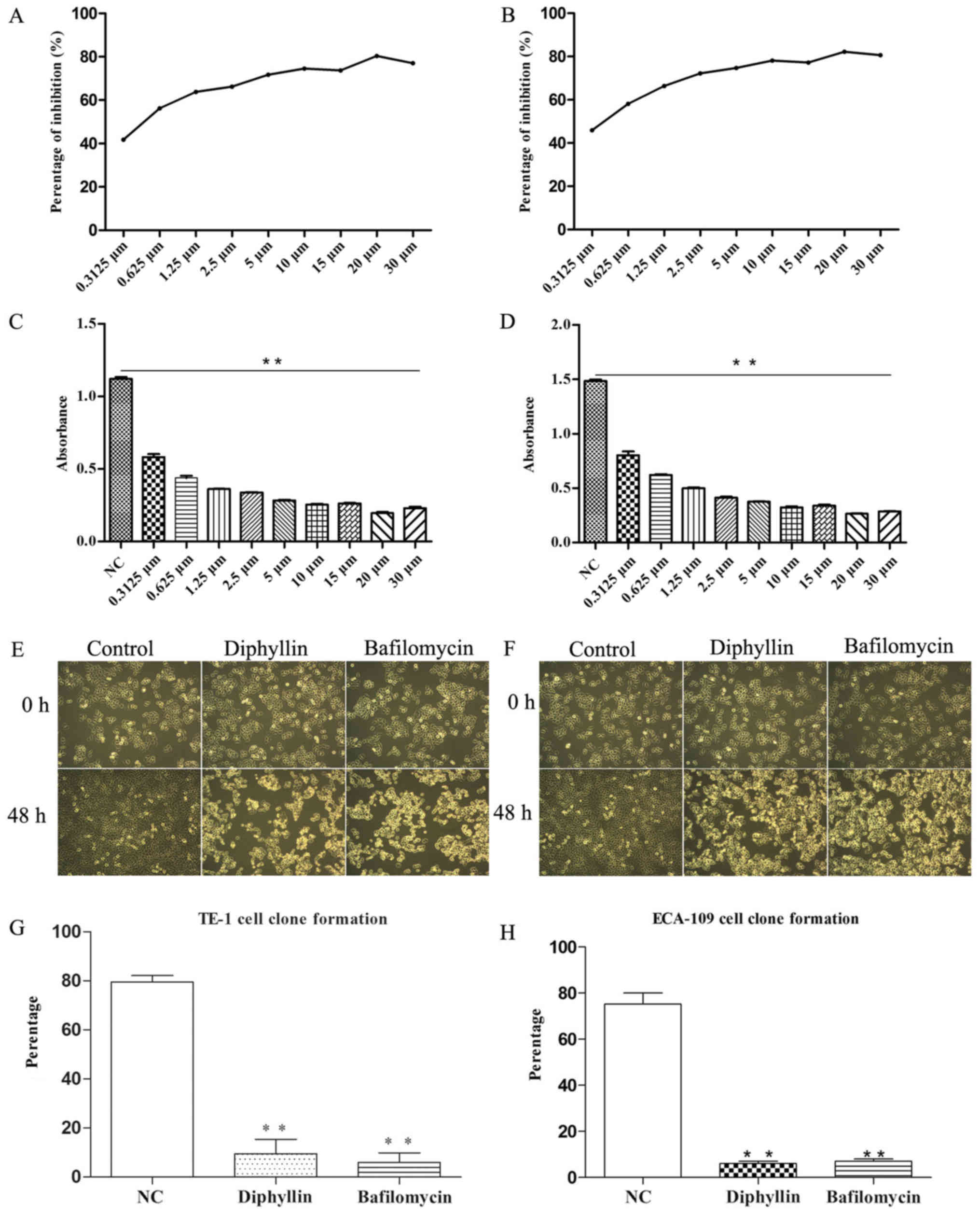
A standard CCK-8 assay was used to determine the
proliferation (Fig. 1C and F) and
cytotoxicity (Fig. 1A and B) of
diphyllin in TE-1 and ECA-109 cells. After 48 h of incubation, the
IC50 value of diphyllin was 0.2792 µM in ECA-109 cells
and 0.2058 µM in TE-1 cells (Fig. 1A
and B).
Next, we assessed the effect of diphyllin on colony
formation of ECA-109 and TE-1 cells. On day 11 post-treatment,
diphyllin suppressed colony formation of the cells (Fig. 1G and H).
Cell cycle distribution after
diphyllin treatment
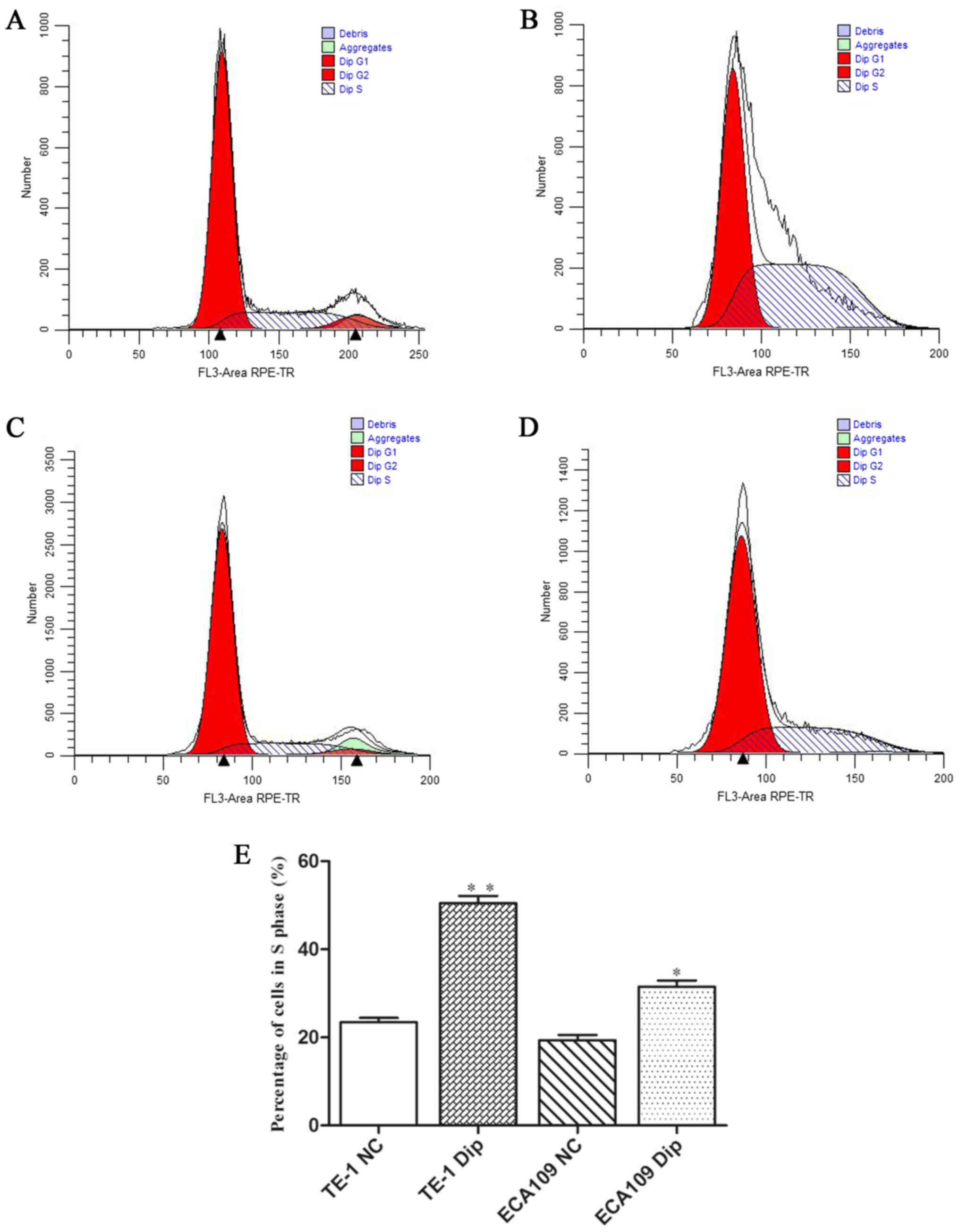
To determine the role of diphyllin in cell cycle
distribution, flow cytometric analysis was performed. The results
revealed that the diphyllin group exhibited significant S arrest
compared with the normal group both in TE-1 and ECA-109 cells
(Fig. 2).
Migration of TE-1 and ECA-109 cells
treated with diphyllin
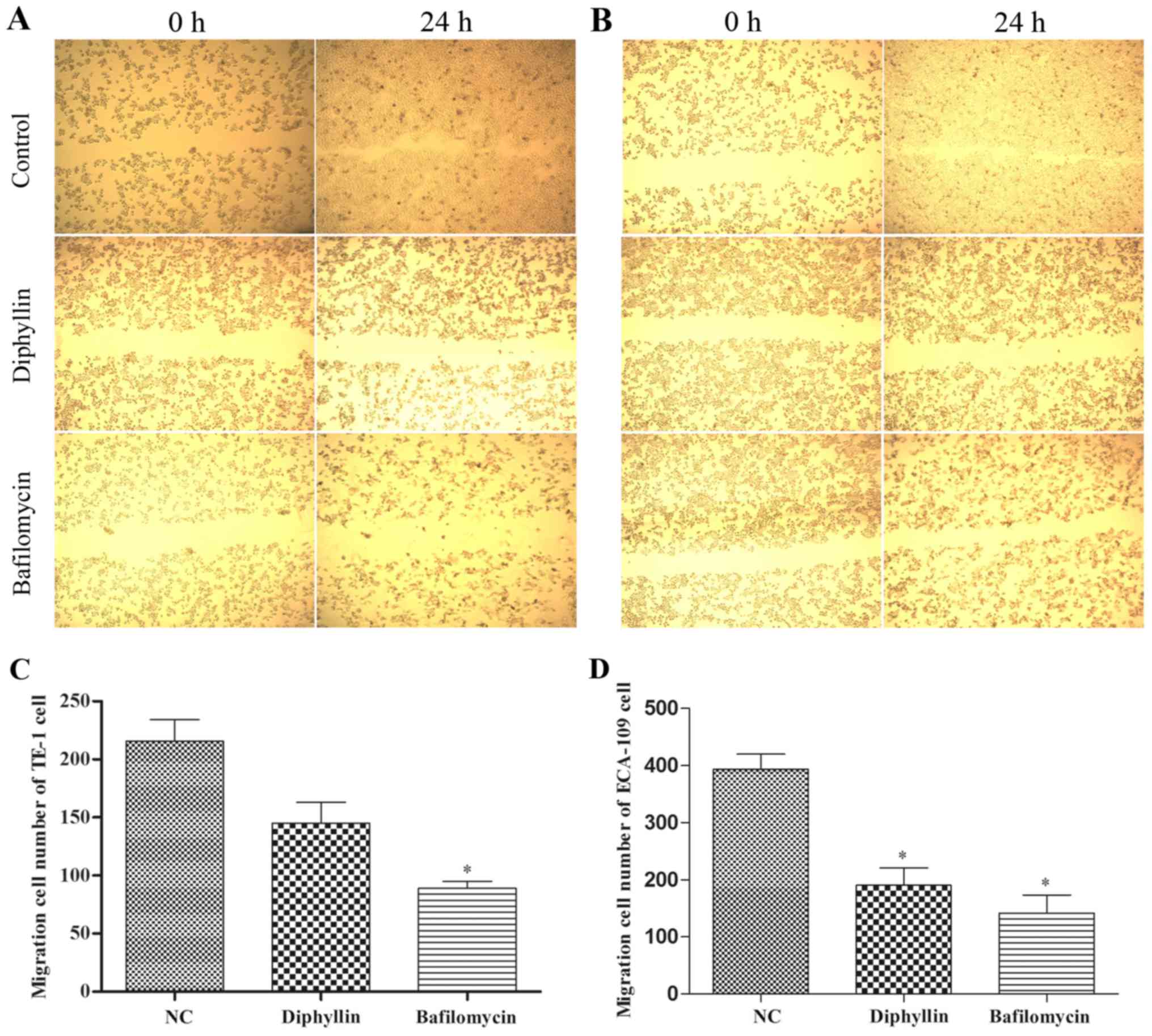
We investigated cell migration and found a decrease
induced by diphyllin treatment in the Transwell assay. In addition,
the scratch wound assay revealed inhibition of lateral cell
migration (Fig. 3). These results
demonstrated that diphyllin inhibited the migration of TE-1 and
ECA-109 cells.
Effects of diphyllin on V-ATPase
activity
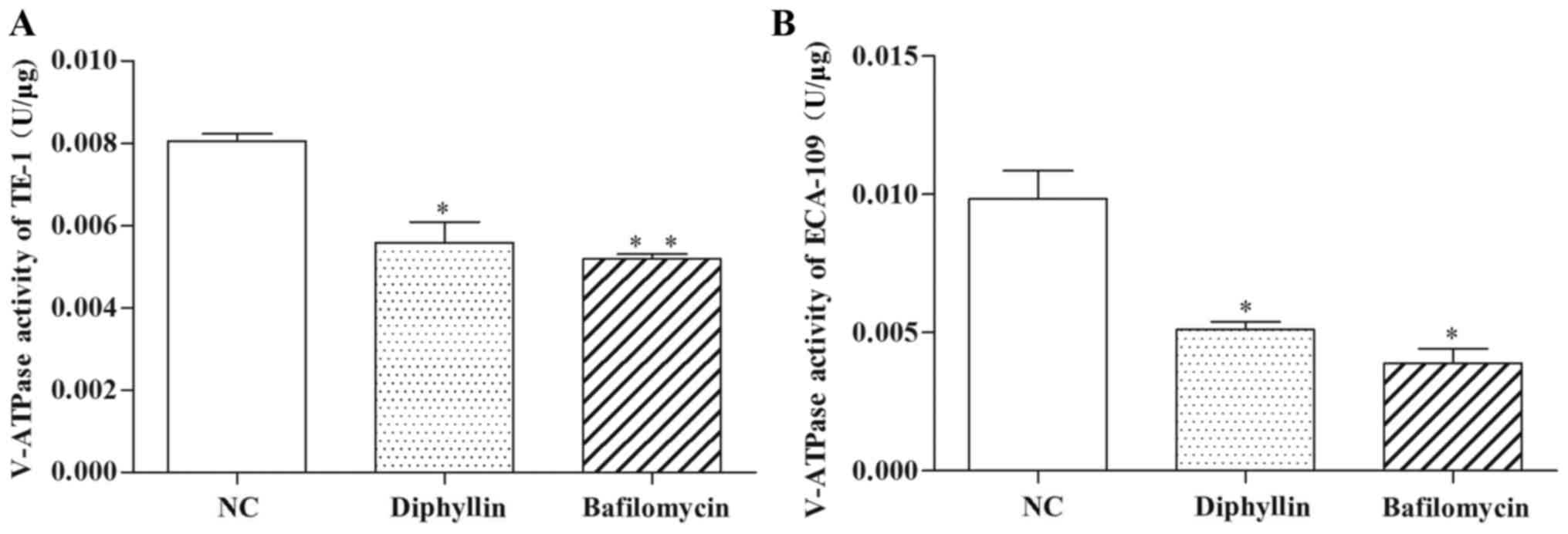
We assessed the inhibitory effects of V-ATPase
activity. ECA-109 and TE-1 cells treated with diphyllin for 48 h
were assessed for V-ATPase activity using a V-ATPase assay kit.
After diphyllin treatment at various concentrations, the activity
of V-ATPase was altered compared with the NC group. The activities
of V-ATPase in 0.3 µM diphyllin groups were significantly less than
in the NC group (P<0.05). The activity of V-ATPase was also
significantly decreased in cells treated with the same
concentrations of bafilomycin for 48 h (Fig. 4).
Role of diphyllin in
mTORC1/HIF-1α/VEGF signaling
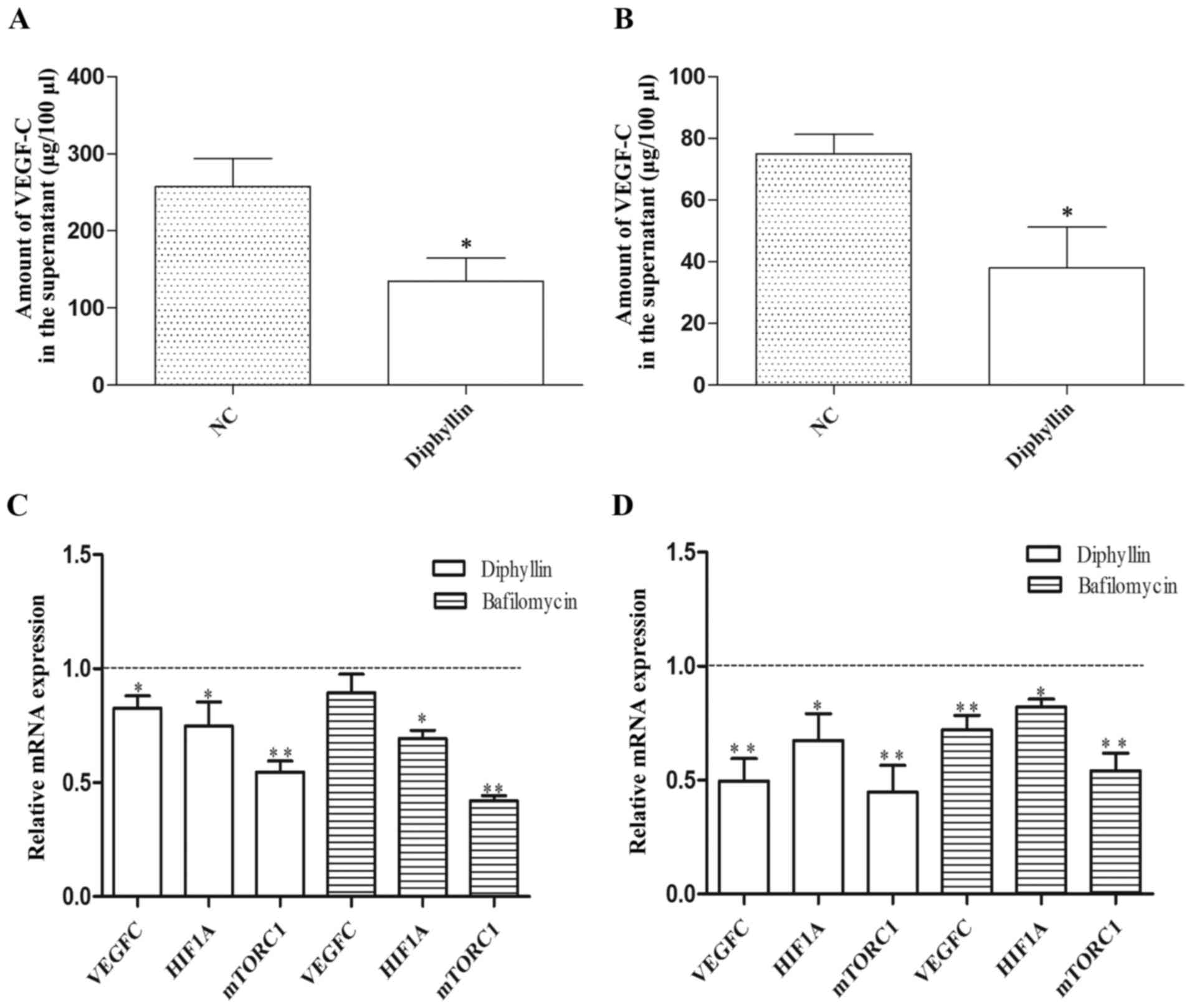
We further detected exocrine VEGF-C expression of
cells treated with diphyllin. After 24 h of diphyllin treatment,
VEGF-C levels were decreased in culture supernatants (Fig. 5A and B). Then, we detected the mRNA
expression of VEGF-C, HIF-1α and mTORC1 in TE-1 and ECA-109 cells
treated with diphyllin or bafilomycin. The results revealed that
diphyllin inhibited mTORC1, HIF-1α and VEGF-C mRNA expression
(Fig. 5C and D).
Proliferation of HUVECs treated with
various culture supernatants
TE-1 and ECA-109 cells were treated for 24 h with
diphyllin or bafilomycin, and their culture supernatants were used
to treat HUVECs for 24 h. The proliferation, migration and tube
formation of HUVECs were detected. The results revealed that HUVEC
proliferation, migration and tube formation ability were decreased
significantly in the drug treatment groups compared with the
control group.
Discussion
Diphyllin is a natural component of traditional
Chinese medicine with a naphthalene and one hydroxyl lignans
(12–14), which promotes blood circulation and
exerts a detoxicating detumescence effect. Recent studies have
found that diphyllin also possesses an antitumor effect with few
side-effects, but its exact mechanism of action is unclear. We
treated esophageal TE-1 and ECA-109 cells with diphyllin and found
inhibition of their proliferation and migration as well as
induction of cell cycle arrest. These results revealed that
diphyllin can be used as a tumor suppressor in esophageal
cancer.
Regulation of lymphangiogenesis by VEGF signaling is
an important mechanism of tumor metastasis (6,7,13).
When tumor cells proliferate to a certain extent, they secrete a
number of lymphatic growth regulators of which the most important
is VEGF. In the present study, we found that diphyllin inhibited
VEGF expression in esophageal cancer cells, indicating that
diphyllin inhibits metastasis through VEGF signaling, but the
mechanism remains to be elucidated.
Recent studies revealed that mTOR regulates the
secretion of VEGF in tumor cells by HIF-1α, thereby affecting the
formation of new tumor vessels (9,15,16).
mTOR forms two protein complexes with different structures and
functions (mTORC1 and mTORC2), and mTORC1 plays a role in
regulation of HIF-1α (15,16). Lysosomal pH value within tumor cells
is significantly lower than in normal cells, which is conducive to
increased cell autophagy and intracellular free amino acids,
thereby activating mTORC1 signaling, regulating HIF-1α, and
promoting lymphangiogenesis and secretion of VEGF. Conversely, when
the acidic environment of lysosomes within tumor cells is
decreased, autophagy diminishes, intracellular free amino acid
content decreases, and mTORC1 signaling is suppressed, thereby
preventing tumor metastasis and accelerating lymphatic tumor cell
death (10,17). Studies have shown that maintenance
of the acidity of mature lysosomes is closely related to V-ATPase
(5,6,23).
Recent studies indicate that diphyllin inhibits the
activity of V-ATPase (18,19), but there are no studies on
esophageal cancer cells. V-ATPase expression in the cell membrane
and membrane vesicles of tumor cells are significantly higher than
that in normal tissue (3).
H+ is pumped out or into vesicles, causing extracellular
vesicle and lysosomal acidification to maintain the acidic
environment of tumor cells and vesicles, thereby limiting damage by
H+ and promoting proliferation, invasion, and metastasis
(20–23). We determined that treatment of
esophageal cancer cell lines TE-1 and ECA-109 with diphyllin led to
a decrease in V-ATPase activity, inhibition of mTORC1, HIF-1α, and
VEGF mRNA expression, and a decrease in secreted VEGF-C protein
levels. Therefore, we hypothesized that diphyllin may inhibit
metastasis through the V-ATPase/mTORC1/HIF-1α/VEGF pathway. To test
our hypothesis, we treated TE-1 and ECA-109 cells with diphyllin
and used the culture supernatants to treat HUVECs. Thus, diphyllin
inhibited their proliferation, migration and tube formation.
In conclusion, diphyllin can be used as a tumor
inhibitor to inhibit esophageal cancer cell proliferation and
migration. As a new V-ATPase inhibitor, diphyllin may suppress
metastasis of esophageal cancer. Its mechanism may be related to
blocking the mTORC1/HIF-1α/VEGF pathway inhibiting the formation of
tumor vessels, but the specific mechanism remains to be
elucidated.
Acknowledgements
The present study was supported by grants from the
National Natural Science Foundation of China (General Program)
(grant no. 31670857), the Jiangsu Provincial Natural Science
Foundation of China (grant nos. BK20161152 and BK20171157), and the
Open Research Fund of Jiangsu Key Laboratory of New Drug Research
and Clinical Pharmacy (KF-XY201405).
Competing interests
The authors declare that they have no competing
interests.
References
|
1
|
Zhang X, Lin Y and Gillies RJ: Tumor pH
and its measurement. J Nucl Med. 51:1167–1170. 2010. View Article : Google Scholar : PubMed/NCBI
|
|
2
|
Hernandez A, Serrano-Bueno G,
Perez-Castineira JR and Serrano A: Intracellular proton pumps as
targets in chemotherapy: V-ATPases and cancer. Curr Pharm Des.
18:1383–1394. 2012. View Article : Google Scholar : PubMed/NCBI
|
|
3
|
Shen W, Zou X, Chen M, Liu P, Shen Y,
Huang S, Guo H and Zhang L: Effects of diphyllin as a novel
V-ATPase inhibitor on gastric adenocarcinoma. Eur J Pharmacol.
667:330–338. 2011. View Article : Google Scholar : PubMed/NCBI
|
|
4
|
Siegel R, Naishadham D and Jemal A: Cancer
statistics, 2013. CA Cancer J Clin. 63:11–30. 2013. View Article : Google Scholar : PubMed/NCBI
|
|
5
|
Gomes FG, Nedel F, Alves AM, Nör JE and
Tarquinio SB: Tumor angiogenesis and lymphangiogenesis:
Tumor/endothelial crosstalk and cellular/microenvironmental
signaling mechanisms. Life Sci. 92:101–107. 2013. View Article : Google Scholar : PubMed/NCBI
|
|
6
|
Liu P, Chen W, Zhu H, Liu B, Song S, Shen
W, Wang F, Tucker S, Zhong B and Wang D: Expression of VEGF-C
correlates with a poor prognosis based on analysis of prognostic
factors in 73 patients with esophageal squamous cell carcinomas.
Jpn J Clin Oncol. 39:644–650. 2009. View Article : Google Scholar : PubMed/NCBI
|
|
7
|
Liu P, Zhou J, Zhu H, Xie L, Wang F, Liu
B, Shen W, Ye W, Xiang B, Zhu X, et al: VEGF-C promotes the
development of esophageal cancer via regulating CNTN-1 expression.
Cytokine. 55:8–17. 2011. View Article : Google Scholar : PubMed/NCBI
|
|
8
|
Shin J, Lee HJ, Jung DB, Jung JH, Lee HJ,
Lee EO, Lee SG, Shim BS, Choi SH, Ko SG, et al: Suppression of
STAT3 and HIF-1 alpha mediates anti-angiogenic activity of
betulinic acid in hypoxic PC-3 prostate cancer cells. PLoS One.
6:e214922011. View Article : Google Scholar : PubMed/NCBI
|
|
9
|
Elias AP and Dias S: Microenvironment
changes (in pH) affect VEGF alternative splicing. Cancer
Microenviron. 1:131–139. 2008. View Article : Google Scholar : PubMed/NCBI
|
|
10
|
Kraut JA and Madias NE: Metabolic
acidosis: Pathophysiology, diagnosis and management. Nat Rev
Nephrol. 6:274–285. 2010. View Article : Google Scholar : PubMed/NCBI
|
|
11
|
Le Tourneau C, Faivre S, Serova M and
Raymond E: mTORC1 inhibitors: Is temsirolimus in renal cancer
telling us how they really work? Br J Cancer. 99:1197–1203. 2008.
View Article : Google Scholar : PubMed/NCBI
|
|
12
|
Liu P, Chen H, Han L, Zhou X and Shen W:
Expression and role of V1A subunit of V-ATPase in gastric cancer
cells. Int J Clin Oncol. 20:725–735. 2015. View Article : Google Scholar : PubMed/NCBI
|
|
13
|
Das S, Ladell DS, Podgrabinska S,
Ponomarev V, Nagi C, Fallon JT and Skobe M: Vascular endothelial
growth factor-C induces lymphangitic carcinomatosis, an extremely
aggressive form of lung metastases. Cancer Res. 70:1814–1824. 2010.
View Article : Google Scholar : PubMed/NCBI
|
|
14
|
Wang Y, Xia C, Zhang W and Zhao Y:
Synthesis and biological evaluation of novel lignan glycosides as
anticancer agents. Chem Biol Drug Des. 88:562–567. 2016. View Article : Google Scholar : PubMed/NCBI
|
|
15
|
Efeyan A, Zoncu R, Sabatini DM, Wang S and
Sancak Y: Amino acids and mTORC1: From lysosomes to disease. Trends
Mol Med. 18:524–533. 2012. View Article : Google Scholar : PubMed/NCBI
|
|
16
|
Balgi AD, Diering GH, Donohue E, Lam KK,
Fonseca BD, Zimmerman C, Numata M and Roberge M: Regulation of
mTORC1 signaling by pH. PLoS One. 6:e215492011. View Article : Google Scholar : PubMed/NCBI
|
|
17
|
Naito T, Kuma A and Mizushima N:
Differential contribution of insulin and amino acids to the
mTORC1-autophagy pathway in the liver and muscle. J Biol Chem.
288:21074–21081. 2013. View Article : Google Scholar : PubMed/NCBI
|
|
18
|
Sørensen MG, Henriksen K, Neutzsky-Wulff
AV, Dziegiel MH and Karsdal MA: Diphyllin, a novel and naturally
potent V-ATPase inhibitor, abrogates acidification of the
osteoclastic resorption lacunae and bone resorption. J Bone Miner
Res. 22:1640–1648. 2007. View Article : Google Scholar : PubMed/NCBI
|
|
19
|
Zhao Y, Ni C, Zhang Y and Zhu L: Synthesis
and bioevaluation of diphyllin glycosides as novel anticancer
agents. Arch Pharm. 345:622–628. 2012. View Article : Google Scholar
|
|
20
|
Zoncu R, Bar-Peled L, Efeyan A, Wang S,
Sancak Y and Sabatini DM: mTORC1 senses lysosomal amino acids
through an inside-out mechanism that requires the vacuolar
H+-ATPase. Science. 334:678–683. 2011. View Article : Google Scholar : PubMed/NCBI
|
|
21
|
Zhou M, Morgner N, Barrera NP, Politis A,
Isaacson SC, Matak-Vinković D, Murata T, Bernal RA, Stock D and
Robinson CV: Mass spectrometry of intact V-type ATPases reveals
bound lipids and the effects of nucleotide binding. Science.
334:380–385. 2011. View Article : Google Scholar : PubMed/NCBI
|
|
22
|
Shen W, Zou X, Chen M, Shen Y, Huang S,
Guo H, Zhang L and Liu P: Effect of pantoprazole on human gastric
adenocarcinoma SGC7901 cells through regulation of phospho-LRP6
expression in Wnt/β-catenin signaling. Oncol Rep. 30:851–855. 2013.
View Article : Google Scholar : PubMed/NCBI
|
|
23
|
Zhao Y, Lu Y, Ma J and Zhu L: Synthesis
and evaluation of cleistanthin A derivatives as potent vacuolar
H+-ATPase inhibitors. Chem Biol Drug Des. 86:691–696.
2015. View Article : Google Scholar : PubMed/NCBI
|