Spandidos Publications Logo
  • About
    • About Spandidos
    • Aims and Scopes
    • Abstracting and Indexing
    • Editorial Policies
    • Reprints and Permissions
    • Job Opportunities
    • Terms and Conditions
    • Contact
  • Journals
    • All Journals
    • Oncology Letters
      • Oncology Letters
      • Information for Authors
      • Editorial Policies
      • Editorial Board
      • Aims and Scope
      • Abstracting and Indexing
      • Bibliographic Information
      • Archive
    • International Journal of Oncology
      • International Journal of Oncology
      • Information for Authors
      • Editorial Policies
      • Editorial Board
      • Aims and Scope
      • Abstracting and Indexing
      • Bibliographic Information
      • Archive
    • Molecular and Clinical Oncology
      • Molecular and Clinical Oncology
      • Information for Authors
      • Editorial Policies
      • Editorial Board
      • Aims and Scope
      • Abstracting and Indexing
      • Bibliographic Information
      • Archive
    • Experimental and Therapeutic Medicine
      • Experimental and Therapeutic Medicine
      • Information for Authors
      • Editorial Policies
      • Editorial Board
      • Aims and Scope
      • Abstracting and Indexing
      • Bibliographic Information
      • Archive
    • International Journal of Molecular Medicine
      • International Journal of Molecular Medicine
      • Information for Authors
      • Editorial Policies
      • Editorial Board
      • Aims and Scope
      • Abstracting and Indexing
      • Bibliographic Information
      • Archive
    • Biomedical Reports
      • Biomedical Reports
      • Information for Authors
      • Editorial Policies
      • Editorial Board
      • Aims and Scope
      • Abstracting and Indexing
      • Bibliographic Information
      • Archive
    • Oncology Reports
      • Oncology Reports
      • Information for Authors
      • Editorial Policies
      • Editorial Board
      • Aims and Scope
      • Abstracting and Indexing
      • Bibliographic Information
      • Archive
    • Molecular Medicine Reports
      • Molecular Medicine Reports
      • Information for Authors
      • Editorial Policies
      • Editorial Board
      • Aims and Scope
      • Abstracting and Indexing
      • Bibliographic Information
      • Archive
    • World Academy of Sciences Journal
      • World Academy of Sciences Journal
      • Information for Authors
      • Editorial Policies
      • Editorial Board
      • Aims and Scope
      • Abstracting and Indexing
      • Bibliographic Information
      • Archive
    • International Journal of Functional Nutrition
      • International Journal of Functional Nutrition
      • Information for Authors
      • Editorial Policies
      • Editorial Board
      • Aims and Scope
      • Abstracting and Indexing
      • Bibliographic Information
      • Archive
    • International Journal of Epigenetics
      • International Journal of Epigenetics
      • Information for Authors
      • Editorial Policies
      • Editorial Board
      • Aims and Scope
      • Abstracting and Indexing
      • Bibliographic Information
      • Archive
    • Medicine International
      • Medicine International
      • Information for Authors
      • Editorial Policies
      • Editorial Board
      • Aims and Scope
      • Abstracting and Indexing
      • Bibliographic Information
      • Archive
  • Articles
  • Information
    • Information for Authors
    • Information for Reviewers
    • Information for Librarians
    • Information for Advertisers
    • Conferences
  • Language Editing
Spandidos Publications Logo
  • About
    • About Spandidos
    • Aims and Scopes
    • Abstracting and Indexing
    • Editorial Policies
    • Reprints and Permissions
    • Job Opportunities
    • Terms and Conditions
    • Contact
  • Journals
    • All Journals
    • Biomedical Reports
      • Information for Authors
      • Editorial Policies
      • Editorial Board
      • Aims and Scope
      • Abstracting and Indexing
      • Bibliographic Information
      • Archive
    • Experimental and Therapeutic Medicine
      • Information for Authors
      • Editorial Policies
      • Editorial Board
      • Aims and Scope
      • Abstracting and Indexing
      • Bibliographic Information
      • Archive
    • International Journal of Epigenetics
      • Information for Authors
      • Editorial Policies
      • Editorial Board
      • Aims and Scope
      • Abstracting and Indexing
      • Bibliographic Information
      • Archive
    • International Journal of Functional Nutrition
      • Information for Authors
      • Editorial Policies
      • Editorial Board
      • Aims and Scope
      • Abstracting and Indexing
      • Bibliographic Information
      • Archive
    • International Journal of Molecular Medicine
      • Information for Authors
      • Editorial Policies
      • Editorial Board
      • Aims and Scope
      • Abstracting and Indexing
      • Bibliographic Information
      • Archive
    • International Journal of Oncology
      • Information for Authors
      • Editorial Policies
      • Editorial Board
      • Aims and Scope
      • Abstracting and Indexing
      • Bibliographic Information
      • Archive
    • Medicine International
      • Information for Authors
      • Editorial Policies
      • Editorial Board
      • Aims and Scope
      • Abstracting and Indexing
      • Bibliographic Information
      • Archive
    • Molecular and Clinical Oncology
      • Information for Authors
      • Editorial Policies
      • Editorial Board
      • Aims and Scope
      • Abstracting and Indexing
      • Bibliographic Information
      • Archive
    • Molecular Medicine Reports
      • Information for Authors
      • Editorial Policies
      • Editorial Board
      • Aims and Scope
      • Abstracting and Indexing
      • Bibliographic Information
      • Archive
    • Oncology Letters
      • Information for Authors
      • Editorial Policies
      • Editorial Board
      • Aims and Scope
      • Abstracting and Indexing
      • Bibliographic Information
      • Archive
    • Oncology Reports
      • Information for Authors
      • Editorial Policies
      • Editorial Board
      • Aims and Scope
      • Abstracting and Indexing
      • Bibliographic Information
      • Archive
    • World Academy of Sciences Journal
      • Information for Authors
      • Editorial Policies
      • Editorial Board
      • Aims and Scope
      • Abstracting and Indexing
      • Bibliographic Information
      • Archive
  • Articles
  • Information
    • For Authors
    • For Reviewers
    • For Librarians
    • For Advertisers
    • Conferences
  • Language Editing
Login Register Submit
  • This site uses cookies
  • You can change your cookie settings at any time by following the instructions in our Cookie Policy. To find out more, you may read our Privacy Policy.

    I agree
Search articles by DOI, keyword, author or affiliation
Search
Advanced Search
presentation
Oncology Reports
Join Editorial Board Propose a Special Issue
Print ISSN: 1021-335X Online ISSN: 1791-2431
Journal Cover
November-2018 Volume 40 Issue 5

Full Size Image

Sign up for eToc alerts
Recommend to Library

Journals

International Journal of Molecular Medicine

International Journal of Molecular Medicine

International Journal of Molecular Medicine is an international journal devoted to molecular mechanisms of human disease.

International Journal of Oncology

International Journal of Oncology

International Journal of Oncology is an international journal devoted to oncology research and cancer treatment.

Molecular Medicine Reports

Molecular Medicine Reports

Covers molecular medicine topics such as pharmacology, pathology, genetics, neuroscience, infectious diseases, molecular cardiology, and molecular surgery.

Oncology Reports

Oncology Reports

Oncology Reports is an international journal devoted to fundamental and applied research in Oncology.

Experimental and Therapeutic Medicine

Experimental and Therapeutic Medicine

Experimental and Therapeutic Medicine is an international journal devoted to laboratory and clinical medicine.

Oncology Letters

Oncology Letters

Oncology Letters is an international journal devoted to Experimental and Clinical Oncology.

Biomedical Reports

Biomedical Reports

Explores a wide range of biological and medical fields, including pharmacology, genetics, microbiology, neuroscience, and molecular cardiology.

Molecular and Clinical Oncology

Molecular and Clinical Oncology

International journal addressing all aspects of oncology research, from tumorigenesis and oncogenes to chemotherapy and metastasis.

World Academy of Sciences Journal

World Academy of Sciences Journal

Multidisciplinary open-access journal spanning biochemistry, genetics, neuroscience, environmental health, and synthetic biology.

International Journal of Functional Nutrition

International Journal of Functional Nutrition

Open-access journal combining biochemistry, pharmacology, immunology, and genetics to advance health through functional nutrition.

International Journal of Epigenetics

International Journal of Epigenetics

Publishes open-access research on using epigenetics to advance understanding and treatment of human disease.

Medicine International

Medicine International

An International Open Access Journal Devoted to General Medicine.

Journal Cover
November-2018 Volume 40 Issue 5

Full Size Image

Sign up for eToc alerts
Recommend to Library

  • Article
  • Citations
    • Cite This Article
    • Download Citation
    • Create Citation Alert
    • Remove Citation Alert
    • Cited By
  • Similar Articles
    • Related Articles (in Spandidos Publications)
    • Similar Articles (Google Scholar)
    • Similar Articles (PubMed)
  • Download PDF
  • Download XML
  • View XML
Article Open Access

The role of 17β‑estradiol‑induced upregulation of Piwi‑like 4 in modulating gene expression and motility in breast cancer cells

  • Authors:
    • Zealyn Shi Lin Heng
    • Jing Yi Lee
    • Charannya Sozheesvari Subhramanyam
    • Cheng Wang
    • Lal Zo Thanga
    • Qidong Hu
  • View Affiliations / Copyright

    Affiliations: Department of Anatomy, Yong Loo Lin School of Medicine, National University of Singapore, Singapore 117594, Republic of Singapore
    Copyright: © Heng et al. This is an open access article distributed under the terms of Creative Commons Attribution License.
  • Pages: 2525-2535
    |
    Published online on: August 31, 2018
       https://doi.org/10.3892/or.2018.6676
  • Expand metrics +
Metrics: Total Views: 0 (Spandidos Publications: | PMC Statistics: )
Metrics: Total PDF Downloads: 0 (Spandidos Publications: | PMC Statistics: )
Cited By (CrossRef): 0 citations Loading Articles...

This article is mentioned in:


Abstract

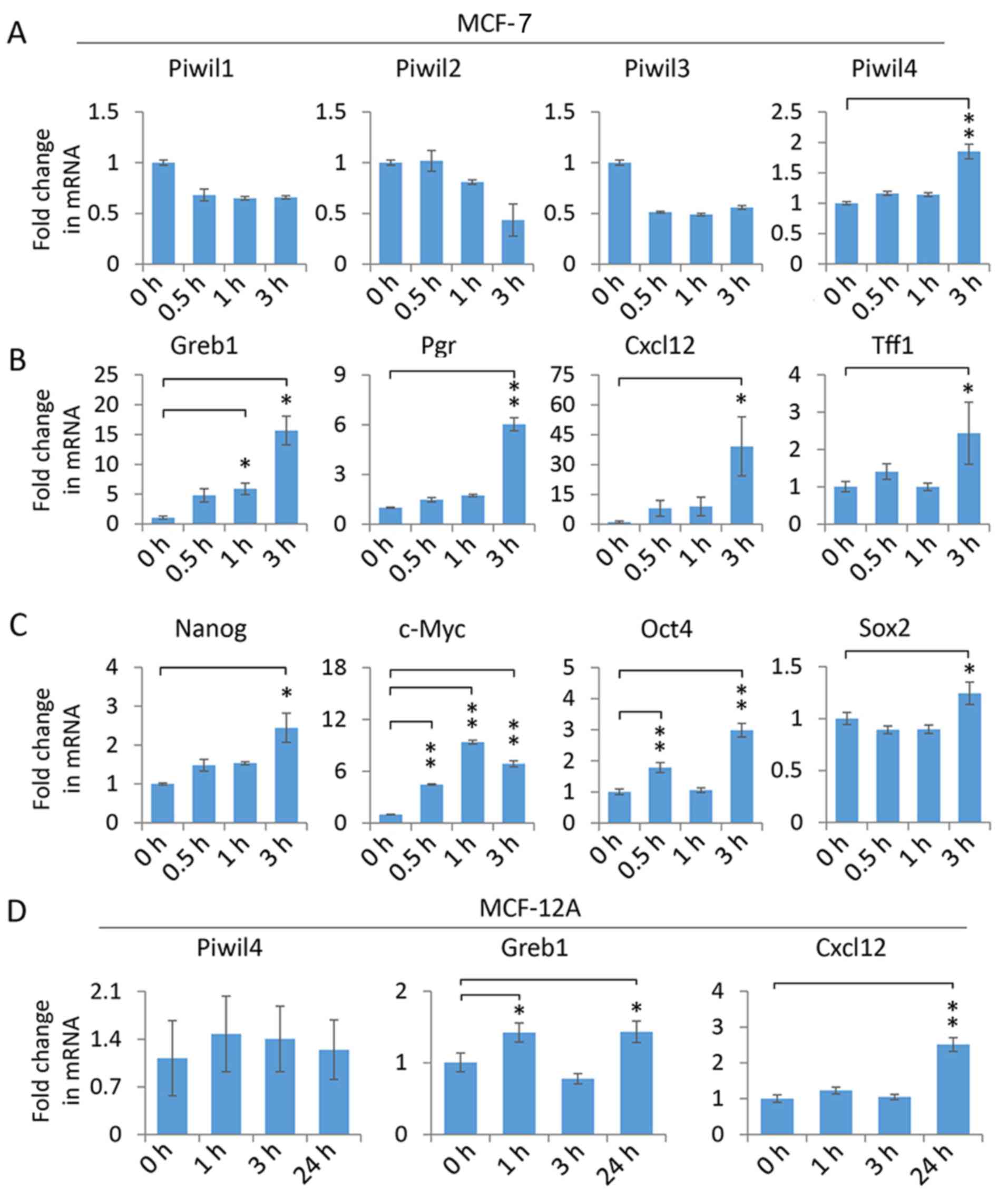
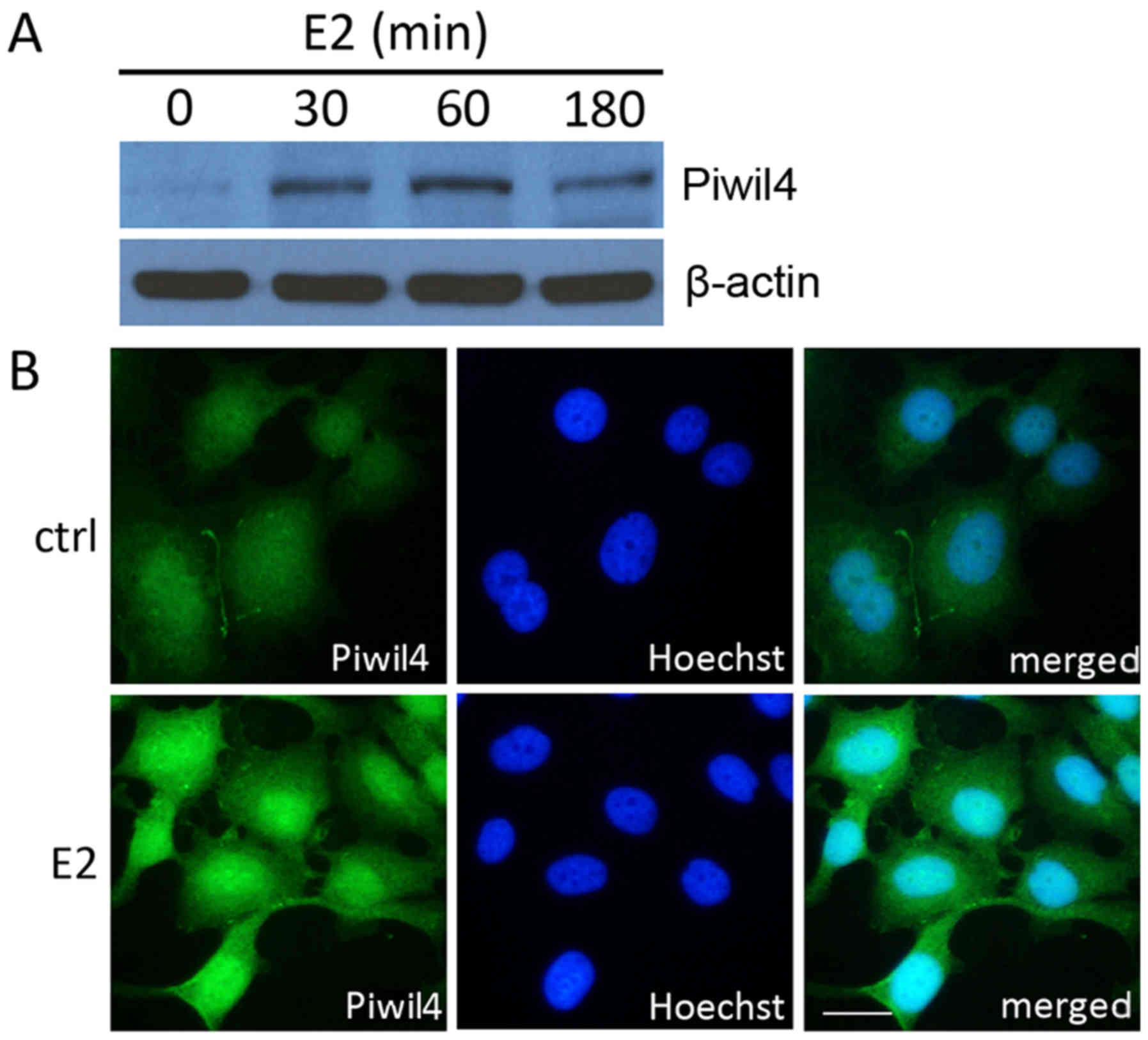
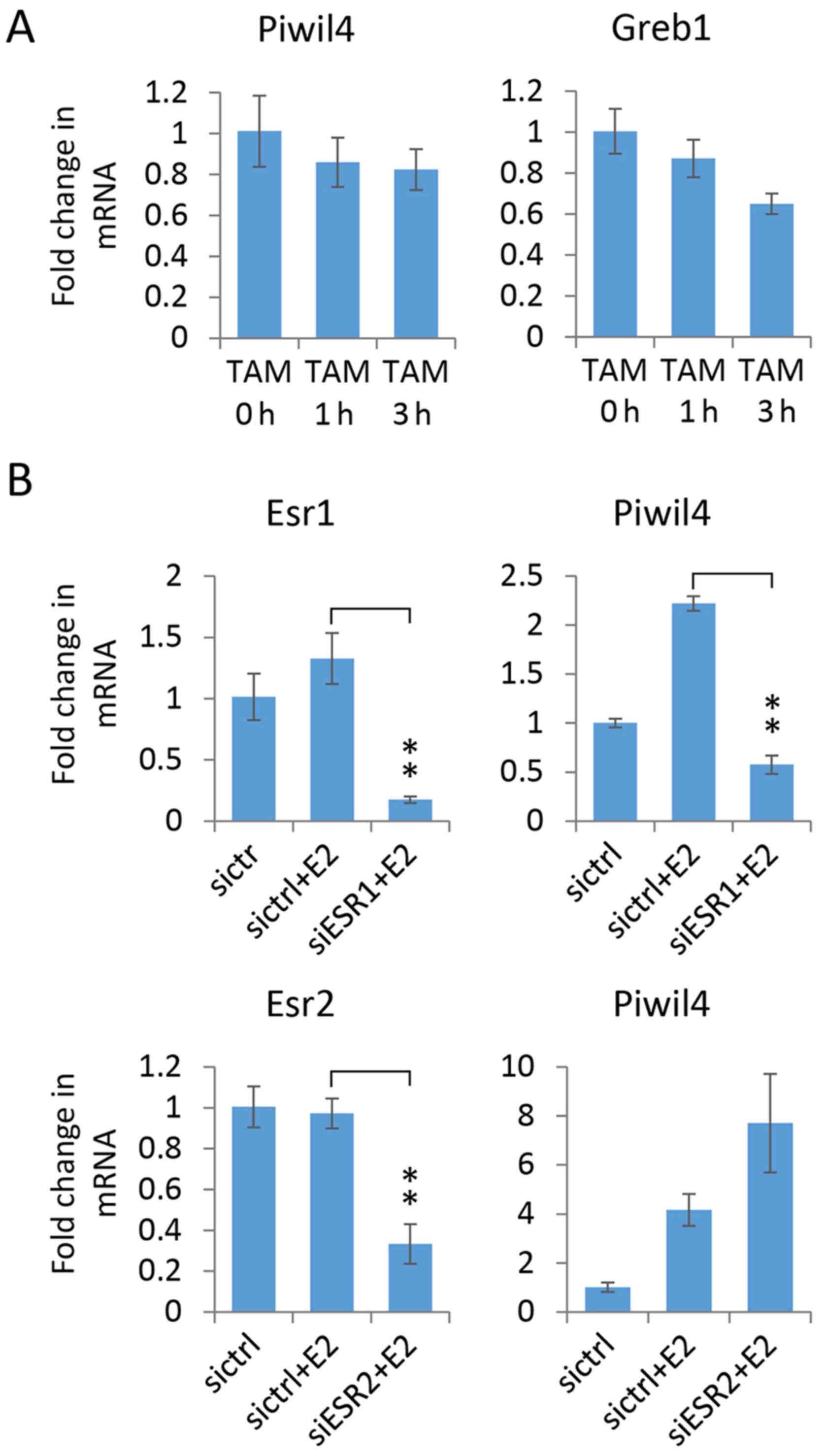
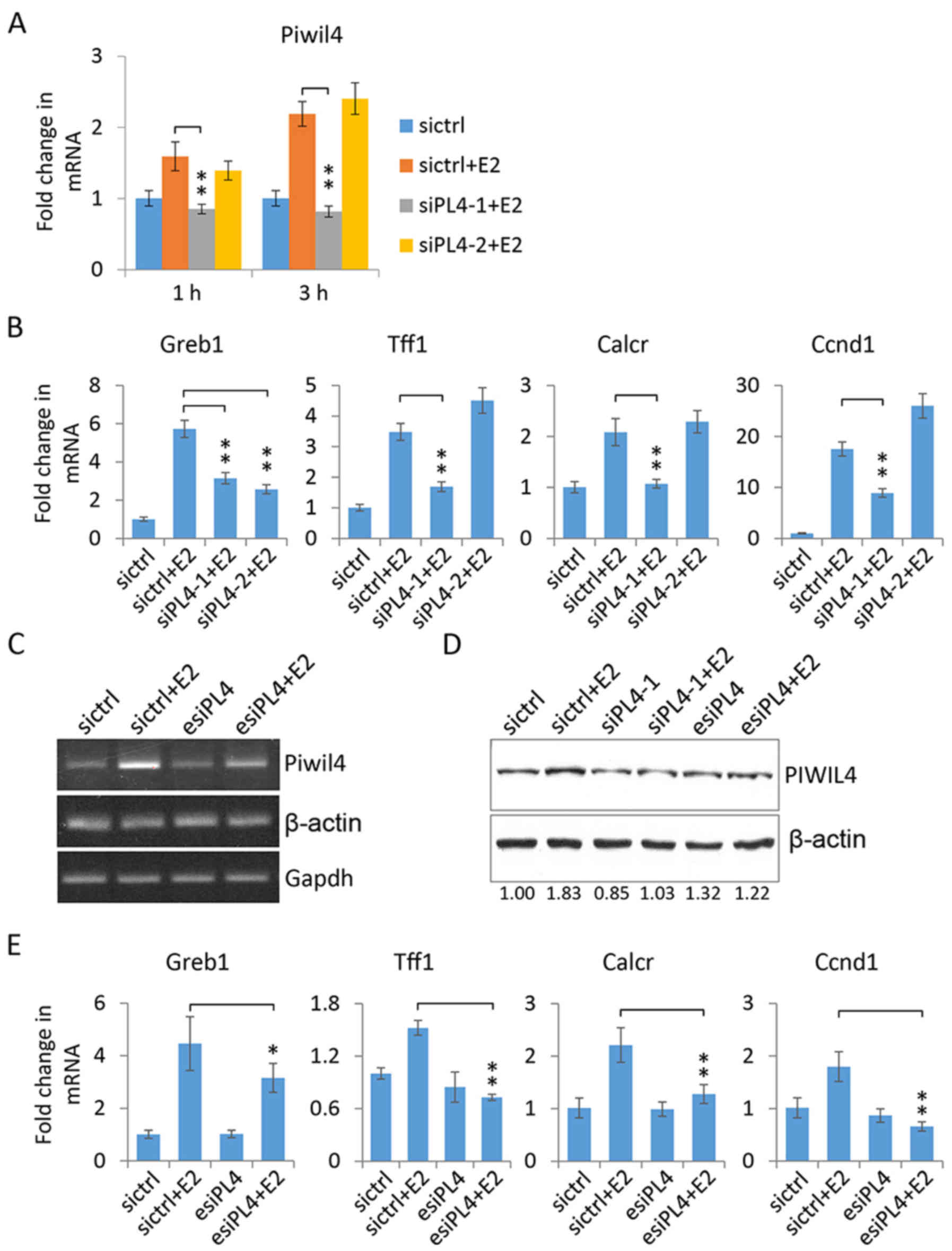
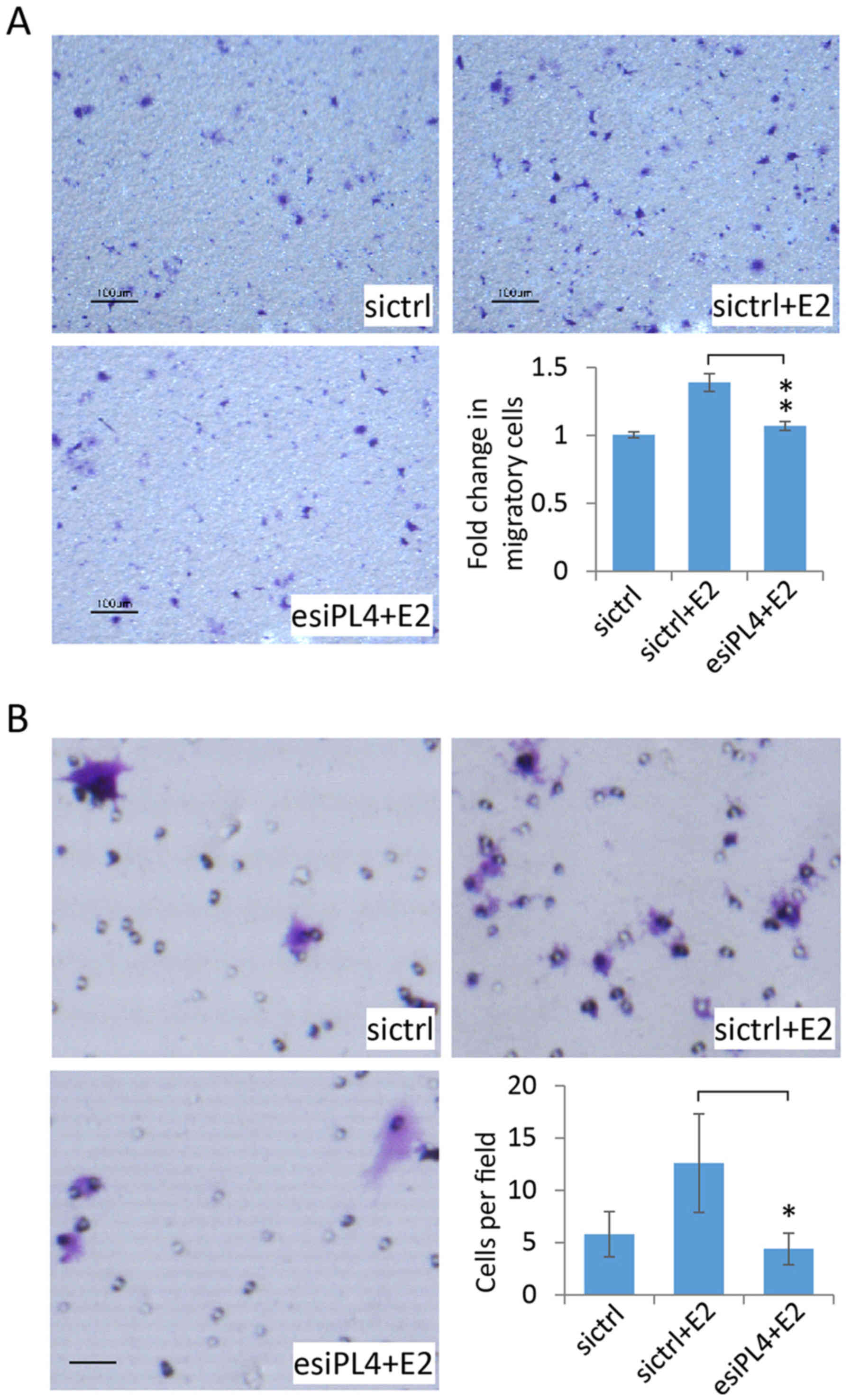
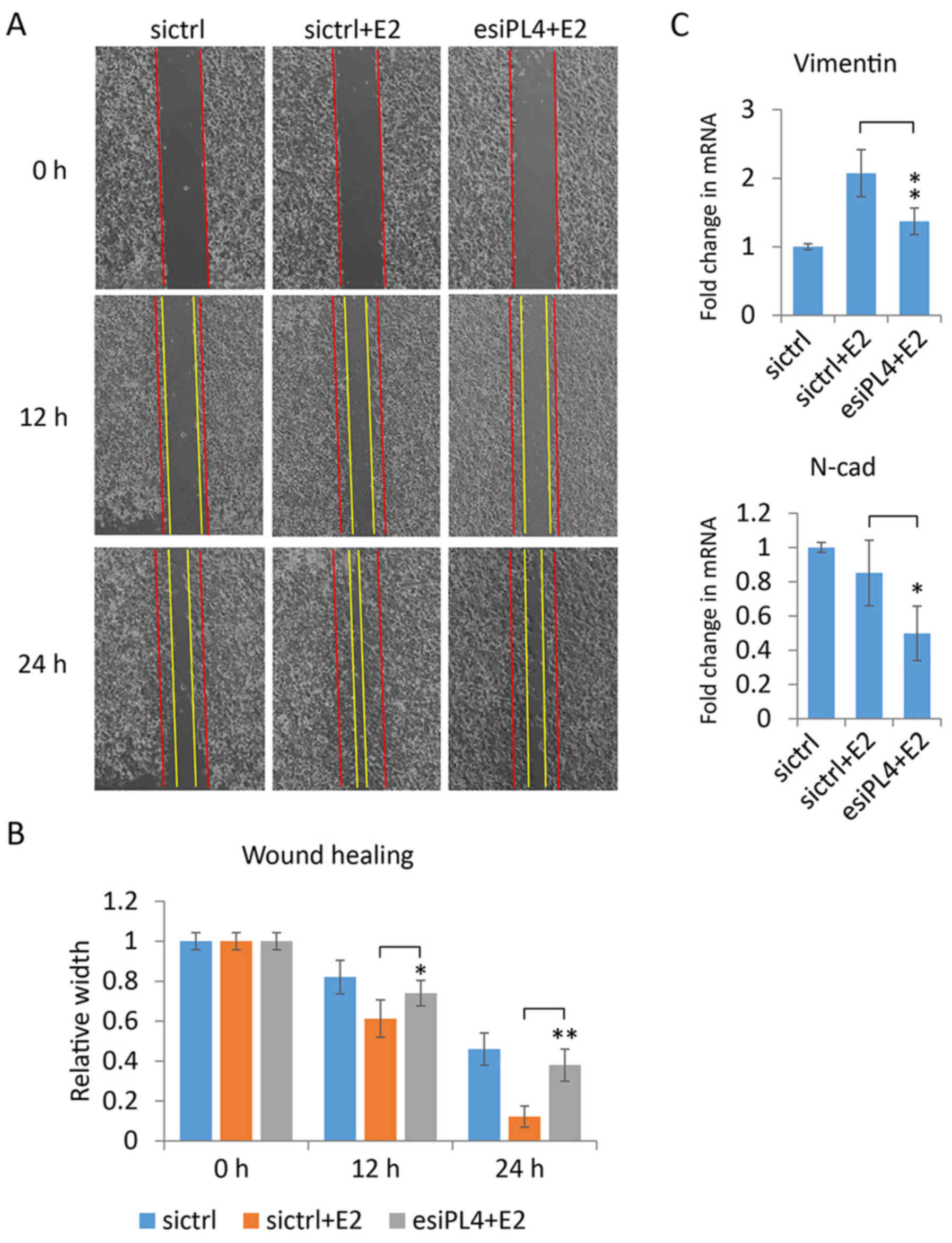
A majority of breast cancer cases are positive for the estrogen receptor (ER), which means that they can respond to the estrogen hormone to achieve growth. Hence, the ER signaling pathway has been extensively targeted in pharmaceutical research and development in order to suppress tumor growth. However, prevalent hormone therapy and targeted therapy often become ineffective as cancer cells ultimately develop resistance, suggesting that there could be unidentified signaling molecules and events that regulate breast cancer growth. Notably, recent studies have uncovered that Piwi‑like (Piwil) proteins, which were initially found in germline cells, are expressed in a wide spectrum of human cancers, including breast cancers. Although Piwil proteins have been well established to silence retrotransposons and to promote heterochromatin formation in germline cells, their somatic functions in cancer cells remain largely unknown. In the present study, we profiled the expression of four Piwi homologs in an ER‑positive breast cancer cell line, MCF‑7, and found that only Piwil4 was upregulated by 17β‑estradiol treatment. Notably, Piwil4 upregulation was not observed in an ER‑positive but non‑tumorigenic breast cancer cell line, MCF‑12A. In addition, the induced expression of Piwil4 was dependent on estrogen/ERα signaling. To explore the biological significance of Piwil4 in breast cancer growth, we knocked down Piwil4 with multiple siRNAs and observed the suppressed expression of some canonical targets of ER. The knockdown of Piwil4 expression also decreased the migration and invasion capabilities of MCF‑7 cells. Furthermore, the loss‑of‑function of Piwil4 reduced the motility of MCF‑7 cells in wound‑healing assays, which could be associated to decreased expression of vimentin and N‑cadherin. Collectively, these findings revealed that Piwil4 is a novel regulator of ER signaling that could be targeted to inhibit breast cancer growth and migration.
View Figures

Figure 1

Figure 2

Figure 3

Figure 4

Figure 5

Figure 6

View References

1 

DeSantis C, Ma J, Bryan L and Jemal A: Breast cancer statistics, 2013. CA Cancer J Clin. 64:52–62. 2014. View Article : Google Scholar : PubMed/NCBI

2 

Wiggans RG, Woolley PV, Smythe T, Hoth D, Macdonald JS, Green L and Schein PS: Phase-II tlial of tamoxifen in advanced breast cancer. Cancer Chemother Pharmacol. 3:45–48. 1979. View Article : Google Scholar : PubMed/NCBI

3 

Carey LA, Dees EC, Sawyer L, Gatti L, Moore DT, Collichio F, Ollila DW, Sartor CI, Graham ML and Perou CM: The triple negative paradox: Primary tumor chemosensitivity of breast cancer subtypes. Clin Cancer Res. 13:2329–2334. 2007. View Article : Google Scholar : PubMed/NCBI

4 

Higgins MJ and Baselga J: Targeted therapies for breast cancer. J Clin Invest. 121:3797–3803. 2011. View Article : Google Scholar : PubMed/NCBI

5 

Lehmann BD, Bauer JA, Chen X, Sanders ME, Chakravarthy AB, Shyr Y and Pietenpol JA: Identification of human triple-negative breast cancer subtypes and preclinical models for selection of targeted therapies. J Clin Invest. 121:2750–2767. 2011. View Article : Google Scholar : PubMed/NCBI

6 

Fisher B, Costantino JP, Wickerham DL, Cecchini RS, Cronin WM, Robidoux A, Bevers TB, Kavanah MT, Atkins JN, Margolese RG, et al: Tamoxifen for prevention of breast cancer: Report of the national surgical adjuvant breast and bowel project P-1 study. J Natl Cancer Inst. 97:1652–1662. 2005. View Article : Google Scholar : PubMed/NCBI

7 

Seth P, Krop I, Porter D and Polyak K: Novel estrogen and tamoxifen induced genes identified by SAGE (Serial Analysis of Gene Expression). Oncogene. 21:836–843. 2002. View Article : Google Scholar : PubMed/NCBI

8 

Jaiyesimi IA, Buzdar AU, Decker DA and Hortobagyi GN: Use of tamoxifen for breast cancer: Twenty-eight years later. J Clin Oncol. 13:513–529. 1995. View Article : Google Scholar : PubMed/NCBI

9 

Ross RJ, Weiner MM and Lin H: PIWI proteins and PIWI-interacting RNAs in the soma. Nature. 505:353–359. 2014. View Article : Google Scholar : PubMed/NCBI

10 

Meister G: Argonaute proteins: Functional insights and emerging roles. Nat Rev Genet. 14:447–459. 2013. View Article : Google Scholar : PubMed/NCBI

11 

Suzuki R, Honda S and Kirino Y: PIWI expression and function in cancer. Front Genet. 3:2042012. View Article : Google Scholar : PubMed/NCBI

12 

Cox DN, Chao A, Baker J, Chang L, Qiao D and Lin H: A novel class of evolutionarily conserved genes defined by piwi are essential for stem cell self-renewal. Genes Dev. 12:3715–3727. 1998. View Article : Google Scholar : PubMed/NCBI

13 

Deng W and Lin H: miwi, a murine homolog of piwi, encodes a cytoplasmic protein essential for spermatogenesis. Dev Cell. 2:819–830. 2002. View Article : Google Scholar : PubMed/NCBI

14 

Sasaki T, Shiohama A, Minoshima S and Shimizu N: Identification of eight members of the argonaute family in the human genome. Genomics. 82:323–330. 2003. View Article : Google Scholar : PubMed/NCBI

15 

Thomson T and Lin H: The biogenesis and function PIWI proteins and piRNAs: Progress and prospect. Annu Rev Cell Dev Biol. 25:355–376. 2009. View Article : Google Scholar : PubMed/NCBI

16 

Qiao D, Zeeman AM, Deng W, Looijenga LH and Lin H: Molecular characterization of hiwi, a human member of the piwi gene family whose overexpression is correlated to seminomas. Oncogene. 21:3988–3999. 2002. View Article : Google Scholar : PubMed/NCBI

17 

He G, Chen L, Ye Y, Xiao Y, Hua K, Jarjoura D, Nakano T, Barsky SH, Shen R and Gao JX: Piwil2 expressed in various stages of cervical neoplasia is a potential complementary marker for p16INK4a. Am J Transl Res. 2:156–169. 2010.PubMed/NCBI

18 

Lee JH, Jung C, Javadian-Elyaderani P, Schweyer S, Schütte D, Shoukier M, Karimi-Busheri F, Weinfeld M, Rasouli-Nia A, Hengstler JG, et al: Pathways of proliferation and antiapoptosis driven in breast cancer stem cells by stem cell protein piwil2. Cancer Res. 70:4569–4579. 2010. View Article : Google Scholar : PubMed/NCBI

19 

Liu W, Jiang X and Zhang Z: Expression of PSCA, PIWIL1, and TBX2 in endometrial adenocarcinoma. Onkologie. 33:241–245. 2010. View Article : Google Scholar : PubMed/NCBI

20 

Lu Y, Zhang K, Li C, Yao Y, Tao D, Liu Y, Zhang S and Ma Y: Piwil2 suppresses p53 by inducing phosphorylation of signal transducer and activator of transcription 3 in tumor cells. PLoS One. 7:e309992012. View Article : Google Scholar : PubMed/NCBI

21 

Wang Z, Liu N, Shi S, Liu S and Lin H: The role of PIWIL4, an argonaute family protein, in breast cancer. J Biol Chem. 291:10646–10658. 2016. View Article : Google Scholar : PubMed/NCBI

22 

Sugimoto K, Kage H, Aki N, Sano A, Kitagawa H, Nagase T, Yatomi Y, Ohishi N and Takai D: The induction of H3K9 methylation by PIWIL4 at the p16Ink4a locus. Biochem Biophys Res Commun. 359:497–502. 2007. View Article : Google Scholar : PubMed/NCBI

23 

He X, Chen X, Zhang X, Duan X, Pan T, Hu Q, Zhang Y, Zhong F, Liu J, Zhang H, et al: An Lnc RNA (GAS5)/SnoRNA-derived piRNA induces activation of TRAIL gene by site-specifically recruiting MLL/COMPASS-like complexes. Nucleic Acids Res. 43:3712–3725. 2015. View Article : Google Scholar : PubMed/NCBI

24 

Wu D, Fu H, Zhou H, Su J, Zhang F and Shen J: Effects of Novel ncRNA molecules, p15-piRNAs, on the methylation of DNA and histone H3 of the CDKN2B promoter region in U937 cells. J Cell Biochem. 116:2744–2754. 2015. View Article : Google Scholar : PubMed/NCBI

25 

Zhong F, Zhou N, Wu K, Guo Y, Tan W, Zhang H, Zhang X, Geng G, Pan T, Luo H, et al: A SnoRNA-derived piRNA interacts with human interleukin-4 pre-mRNA and induces its decay in nuclear exosomes. Nucleic Acids Res. 43:10474–10491. 2015.PubMed/NCBI

26 

Jiang S, Zhao L, Lu Y, Wang M, Chen Y, Tao D, Liu Y, Sun H, Zhang S and Ma Y: Piwil2 inhibits keratin 8 degradation through promoting p38-induced phosphorylation to resist Fas-mediated apoptosis. Mol Cell Biol. 34:3928–3938. 2014. View Article : Google Scholar : PubMed/NCBI

27 

Krishnan P, Ghosh S, Graham K, Mackey JR, Kovalchuk O and Damaraju S: Piwi-interacting RNAs and PIWI genes as novel prognostic markers for breast cancer. Oncotarget. 7:37944–37956. 2016. View Article : Google Scholar : PubMed/NCBI

28 

Livak KJ and Schmittgen TD: Analysis of relative gene expression data using real-time quantitative PCR and the 2−ΔΔCT method. Methods. 25:402–408. 2001. View Article : Google Scholar : PubMed/NCBI

29 

Horwitz KB, Koseki Y and McGuire WL: Estrogen control of progesterone receptor in human breast cancer: Role of estradiol and antiestrogen. Endocrinology. 103:1742–1751. 1978. View Article : Google Scholar : PubMed/NCBI

30 

Henry JA, Nicholson S, Hennessy C, Lennard TW, May FE and Westley BR: Expression of the oestrogen regulated pNR-2 mRNA in human breast cancer: Relation to oestrogen receptor mRNA levels and response to tamoxifen therapy. Br J Cancer. 61:32–38. 1990. View Article : Google Scholar : PubMed/NCBI

31 

Frasor J, Danes JM, Komm B, Chang KC, Lyttle CR and Katzenellenbogen BS: Profiling of estrogen up- and down-regulated gene expression in human breast cancer cells: Insights into gene networks and pathways underlying estrogenic control of proliferation and cell phenotype. Endocrinology. 144:4562–4574. 2003. View Article : Google Scholar : PubMed/NCBI

32 

Journé F, Body JJ, Leclercq G, Nonclercq D and Laurent G: Estrogen responsiveness of IBEP-2, a new human cell line derived from breast carcinoma. Breast Cancer Res Treat. 86:39–53. 2004. View Article : Google Scholar : PubMed/NCBI

33 

Rae JM, Johnson MD, Scheys JO, Cordero KE, Larios JM and Lippman ME: GREB 1 is a critical regulator of hormone dependent breast cancer growth. Breast Cancer Res Treat. 92:141–149. 2005. View Article : Google Scholar : PubMed/NCBI

34 

Jung JW, Park SB, Lee SJ, Seo MS, Trosko JE and Kang KS: Metformin represses self-renewal of the human breast carcinoma stem cells via inhibition of estrogen receptor-mediated OCT4 expression. PLoS One. 6:e280682011. View Article : Google Scholar : PubMed/NCBI

35 

Wang C, Mayer JA, Mazumdar A, Fertuck K, Kim H, Brown M and Brown PH: Estrogen induces c-myc gene expression via an upstream enhancer activated by the estrogen receptor and the AP-1 transcription factor. Mol Endocrinol. 25:1527–1538. 2011. View Article : Google Scholar : PubMed/NCBI

36 

Sun Y, Wang Y, Fan C, Gao P, Wang X, Wei G and Wei J: Estrogen promotes stemness and invasiveness of ER-positive breast cancer cells through Gli1 activation. Mol Cancer. 13:1372014. View Article : Google Scholar : PubMed/NCBI

37 

Van Zijl C, Lottering ML, Steffens F and Joubert A: In vitro effects of 2-methoxyestradiol on MCF-12A and MCF-7 cell growth, morphology and mitotic spindle formation. Cell Biochem Funct. 26:632–642. 2008. View Article : Google Scholar : PubMed/NCBI

38 

Treeck O, Lattrich C, Springwald A and Ortmann O: Estrogen receptor beta exerts growth-inhibitory effects on human mammary epithelial cells. Breast Cancer Res Treat. 120:557–565. 2010. View Article : Google Scholar : PubMed/NCBI

39 

Paruthiyil S, Parmar H, Kerekatte V, Cunha GR, Firestone GL and Leitman DC: Estrogen receptor beta inhibits human breast cancer cell proliferation and tumor formation by causing a G2 cell cycle arrest. Cancer Res. 64:423–428. 2004. View Article : Google Scholar : PubMed/NCBI

40 

Prest SJ, May FE and Westley BR: The estrogen-regulated protein, TFF1, stimulates migration of human breast cancer cells. FASEB J. 16:592–594. 2002. View Article : Google Scholar : PubMed/NCBI

41 

Wang X, Nakamura M, Mori I, Takeda K, Nakamura Y, Utsunomiya H, Yoshimura G, Sakurai T and Kakudo K: Calcitonin receptor gene and breast cancer: Quantitative analysis with laser capture microdissection. Breast Cancer Res Treat. 83:109–117. 2004. View Article : Google Scholar : PubMed/NCBI

42 

Arnold A and Papanikolaou A: Cyclin D1 in breast cancer pathogenesis. J Clin Oncol. 23:4215–4224. 2005. View Article : Google Scholar : PubMed/NCBI

43 

Roy PG and Thompson AM: Cyclin D1 and breast cancer. Breast. 15:718–727. 2006. View Article : Google Scholar : PubMed/NCBI

44 

Mathew AC, Rajah TT, Hurt GM, Abidi Abbas SM, Dmytryk JJ and Pento JT: Influence of antiestrogens on the migration of breast cancer cells using an in vitro wound model. Clin Exp Metastasis. 15:393–399. 1997. View Article : Google Scholar : PubMed/NCBI

45 

Malek D, Gust R and Kleuser B: 17-Beta-estradiol inhibits transforming-growth-factor-beta-induced MCF-7 cell migration by Smad3-repression. Eur J Pharmacol. 534:39–47. 2006. View Article : Google Scholar : PubMed/NCBI

46 

Zheng S, Huang J, Zhou K, Zhang C, Xiang Q, Tan Z, Wang T and Fu X: 17β-Estradiol enhances breast cancer cell motility and invasion via extra-nuclear activation of actin-binding protein ezrin. PLoS One. 6:e224392011. View Article : Google Scholar : PubMed/NCBI

47 

Li CL, Yang D, Cao X, Wang F, Hong DY, Wang J, Shen XC and Chen Y: Fibronectin induces epithelial-mesenchymal transition in human breast cancer MCF-7 cells via activation of calpain. Oncol Lett. 13:3889–3895. 2017. View Article : Google Scholar : PubMed/NCBI

48 

Park SJ, Kim JG, Kim ND, Yang K, Shim JW and Heo K: Estradiol, TGF-β1 and hypoxia promote breast cancer stemness and EMT-mediated breast cancer migration. Oncol Lett. 11:1895–1902. 2016. View Article : Google Scholar : PubMed/NCBI

49 

Mendez MG, Kojima S and Goldman RD: Vimentin induces changes in cell shape, motility, and adhesion during the epithelial to mesenchymal transition. FASEB J. 24:1838–1851. 2010. View Article : Google Scholar : PubMed/NCBI

50 

Liu CY, Lin HH, Tang MJ and Wang YK: Vimentin contributes to epithelial-mesenchymal transition cancer cell mechanics by mediating cytoskeletal organization and focal adhesion maturation. Oncotarget. 6:15966–15983. 2015.PubMed/NCBI

51 

Gross JM and Yee D: How does the estrogen receptor work? Breast Cancer Res. 4:62–64. 2002. View Article : Google Scholar : PubMed/NCBI

52 

Dahlman-Wright K, Qiao Y, Jonsson P, Gustafsson JÅ, Williams C and Zhao C: Interplay between AP-1 and estrogen receptor α in regulating gene expression and proliferation networks in breast cancer cells. Carcinogenesis. 33:1684–1691. 2012. View Article : Google Scholar : PubMed/NCBI

53 

Dong J, Tsai-Morris CH and Dufau ML: A novel estradiol/estrogen receptor alpha-dependent transcriptional mechanism controls expression of the human prolactin receptor. J Biol Chem. 281:18825–18836. 2006. View Article : Google Scholar : PubMed/NCBI

54 

Kalet BT, Anglin SR, Handschy A, O'Donoghue LE, Halsey C, Chubb L, Korch C and Duval DL: Transcription factor Ets1 cooperates with estrogen receptor α to stimulate estradiol-dependent growth in breast cancer cells and tumors. PLoS One. 8:e688152013. View Article : Google Scholar : PubMed/NCBI

55 

Simoncini T, Mannella P, Fornari L, Caruso A, Varone G and Genazzani AR: Genomic and non-genomic effects of estrogens on endothelial cells. Steroids. 69:537–542. 2004. View Article : Google Scholar : PubMed/NCBI

56 

Huan J, Wang L, Xing L, Qin X, Feng L, Pan X and Zhu L: Insights into significant pathways and gene interaction networks underlying breast cancer cell line MCF-7 treated with 17β-Estradiol (E2). Gene. 533:346–355. 2014. View Article : Google Scholar : PubMed/NCBI

57 

Raffo D, Pontiggia O, de Kier Joffé Bal E and Simian M: Non-genomic actions of estradiol and 4-OH-tamoxifen on murine breast cancer cells. Oncol Rep. 33:439–447. 2015. View Article : Google Scholar : PubMed/NCBI

Related Articles

  • Abstract
  • View
  • Download
  • Twitter
Copy and paste a formatted citation
Spandidos Publications style
Heng Z, Lee J, Subhramanyam C, Wang C, Thanga L and Hu Q: The role of 17β‑estradiol‑induced upregulation of Piwi‑like 4 in modulating gene expression and motility in breast cancer cells. Oncol Rep 40: 2525-2535, 2018.
APA
Heng, Z., Lee, J., Subhramanyam, C., Wang, C., Thanga, L., & Hu, Q. (2018). The role of 17β‑estradiol‑induced upregulation of Piwi‑like 4 in modulating gene expression and motility in breast cancer cells. Oncology Reports, 40, 2525-2535. https://doi.org/10.3892/or.2018.6676
MLA
Heng, Z., Lee, J., Subhramanyam, C., Wang, C., Thanga, L., Hu, Q."The role of 17β‑estradiol‑induced upregulation of Piwi‑like 4 in modulating gene expression and motility in breast cancer cells". Oncology Reports 40.5 (2018): 2525-2535.
Chicago
Heng, Z., Lee, J., Subhramanyam, C., Wang, C., Thanga, L., Hu, Q."The role of 17β‑estradiol‑induced upregulation of Piwi‑like 4 in modulating gene expression and motility in breast cancer cells". Oncology Reports 40, no. 5 (2018): 2525-2535. https://doi.org/10.3892/or.2018.6676
Copy and paste a formatted citation
x
Spandidos Publications style
Heng Z, Lee J, Subhramanyam C, Wang C, Thanga L and Hu Q: The role of 17β‑estradiol‑induced upregulation of Piwi‑like 4 in modulating gene expression and motility in breast cancer cells. Oncol Rep 40: 2525-2535, 2018.
APA
Heng, Z., Lee, J., Subhramanyam, C., Wang, C., Thanga, L., & Hu, Q. (2018). The role of 17β‑estradiol‑induced upregulation of Piwi‑like 4 in modulating gene expression and motility in breast cancer cells. Oncology Reports, 40, 2525-2535. https://doi.org/10.3892/or.2018.6676
MLA
Heng, Z., Lee, J., Subhramanyam, C., Wang, C., Thanga, L., Hu, Q."The role of 17β‑estradiol‑induced upregulation of Piwi‑like 4 in modulating gene expression and motility in breast cancer cells". Oncology Reports 40.5 (2018): 2525-2535.
Chicago
Heng, Z., Lee, J., Subhramanyam, C., Wang, C., Thanga, L., Hu, Q."The role of 17β‑estradiol‑induced upregulation of Piwi‑like 4 in modulating gene expression and motility in breast cancer cells". Oncology Reports 40, no. 5 (2018): 2525-2535. https://doi.org/10.3892/or.2018.6676
Follow us
  • Twitter
  • LinkedIn
  • Facebook
About
  • Spandidos Publications
  • Careers
  • Cookie Policy
  • Privacy Policy
How can we help?
  • Help
  • Live Chat
  • Contact
  • Email to our Support Team