Spandidos Publications Logo
  • About
    • About Spandidos
    • Aims and Scopes
    • Abstracting and Indexing
    • Editorial Policies
    • Reprints and Permissions
    • Job Opportunities
    • Terms and Conditions
    • Contact
  • Journals
    • All Journals
    • Oncology Letters
      • Oncology Letters
      • Information for Authors
      • Editorial Policies
      • Editorial Board
      • Aims and Scope
      • Abstracting and Indexing
      • Bibliographic Information
      • Archive
    • International Journal of Oncology
      • International Journal of Oncology
      • Information for Authors
      • Editorial Policies
      • Editorial Board
      • Aims and Scope
      • Abstracting and Indexing
      • Bibliographic Information
      • Archive
    • Molecular and Clinical Oncology
      • Molecular and Clinical Oncology
      • Information for Authors
      • Editorial Policies
      • Editorial Board
      • Aims and Scope
      • Abstracting and Indexing
      • Bibliographic Information
      • Archive
    • Experimental and Therapeutic Medicine
      • Experimental and Therapeutic Medicine
      • Information for Authors
      • Editorial Policies
      • Editorial Board
      • Aims and Scope
      • Abstracting and Indexing
      • Bibliographic Information
      • Archive
    • International Journal of Molecular Medicine
      • International Journal of Molecular Medicine
      • Information for Authors
      • Editorial Policies
      • Editorial Board
      • Aims and Scope
      • Abstracting and Indexing
      • Bibliographic Information
      • Archive
    • Biomedical Reports
      • Biomedical Reports
      • Information for Authors
      • Editorial Policies
      • Editorial Board
      • Aims and Scope
      • Abstracting and Indexing
      • Bibliographic Information
      • Archive
    • Oncology Reports
      • Oncology Reports
      • Information for Authors
      • Editorial Policies
      • Editorial Board
      • Aims and Scope
      • Abstracting and Indexing
      • Bibliographic Information
      • Archive
    • Molecular Medicine Reports
      • Molecular Medicine Reports
      • Information for Authors
      • Editorial Policies
      • Editorial Board
      • Aims and Scope
      • Abstracting and Indexing
      • Bibliographic Information
      • Archive
    • World Academy of Sciences Journal
      • World Academy of Sciences Journal
      • Information for Authors
      • Editorial Policies
      • Editorial Board
      • Aims and Scope
      • Abstracting and Indexing
      • Bibliographic Information
      • Archive
    • International Journal of Functional Nutrition
      • International Journal of Functional Nutrition
      • Information for Authors
      • Editorial Policies
      • Editorial Board
      • Aims and Scope
      • Abstracting and Indexing
      • Bibliographic Information
      • Archive
    • International Journal of Epigenetics
      • International Journal of Epigenetics
      • Information for Authors
      • Editorial Policies
      • Editorial Board
      • Aims and Scope
      • Abstracting and Indexing
      • Bibliographic Information
      • Archive
    • Medicine International
      • Medicine International
      • Information for Authors
      • Editorial Policies
      • Editorial Board
      • Aims and Scope
      • Abstracting and Indexing
      • Bibliographic Information
      • Archive
  • Articles
  • Information
    • Information for Authors
    • Information for Reviewers
    • Information for Librarians
    • Information for Advertisers
    • Conferences
  • Language Editing
Spandidos Publications Logo
  • About
    • About Spandidos
    • Aims and Scopes
    • Abstracting and Indexing
    • Editorial Policies
    • Reprints and Permissions
    • Job Opportunities
    • Terms and Conditions
    • Contact
  • Journals
    • All Journals
    • Biomedical Reports
      • Information for Authors
      • Editorial Policies
      • Editorial Board
      • Aims and Scope
      • Abstracting and Indexing
      • Bibliographic Information
      • Archive
    • Experimental and Therapeutic Medicine
      • Information for Authors
      • Editorial Policies
      • Editorial Board
      • Aims and Scope
      • Abstracting and Indexing
      • Bibliographic Information
      • Archive
    • International Journal of Epigenetics
      • Information for Authors
      • Editorial Policies
      • Editorial Board
      • Aims and Scope
      • Abstracting and Indexing
      • Bibliographic Information
      • Archive
    • International Journal of Functional Nutrition
      • Information for Authors
      • Editorial Policies
      • Editorial Board
      • Aims and Scope
      • Abstracting and Indexing
      • Bibliographic Information
      • Archive
    • International Journal of Molecular Medicine
      • Information for Authors
      • Editorial Policies
      • Editorial Board
      • Aims and Scope
      • Abstracting and Indexing
      • Bibliographic Information
      • Archive
    • International Journal of Oncology
      • Information for Authors
      • Editorial Policies
      • Editorial Board
      • Aims and Scope
      • Abstracting and Indexing
      • Bibliographic Information
      • Archive
    • Medicine International
      • Information for Authors
      • Editorial Policies
      • Editorial Board
      • Aims and Scope
      • Abstracting and Indexing
      • Bibliographic Information
      • Archive
    • Molecular and Clinical Oncology
      • Information for Authors
      • Editorial Policies
      • Editorial Board
      • Aims and Scope
      • Abstracting and Indexing
      • Bibliographic Information
      • Archive
    • Molecular Medicine Reports
      • Information for Authors
      • Editorial Policies
      • Editorial Board
      • Aims and Scope
      • Abstracting and Indexing
      • Bibliographic Information
      • Archive
    • Oncology Letters
      • Information for Authors
      • Editorial Policies
      • Editorial Board
      • Aims and Scope
      • Abstracting and Indexing
      • Bibliographic Information
      • Archive
    • Oncology Reports
      • Information for Authors
      • Editorial Policies
      • Editorial Board
      • Aims and Scope
      • Abstracting and Indexing
      • Bibliographic Information
      • Archive
    • World Academy of Sciences Journal
      • Information for Authors
      • Editorial Policies
      • Editorial Board
      • Aims and Scope
      • Abstracting and Indexing
      • Bibliographic Information
      • Archive
  • Articles
  • Information
    • For Authors
    • For Reviewers
    • For Librarians
    • For Advertisers
    • Conferences
  • Language Editing
Login Register Submit
  • This site uses cookies
  • You can change your cookie settings at any time by following the instructions in our Cookie Policy. To find out more, you may read our Privacy Policy.

    I agree
Search articles by DOI, keyword, author or affiliation
Search
Advanced Search
presentation
Oncology Reports
Join Editorial Board Propose a Special Issue
Print ISSN: 1021-335X Online ISSN: 1791-2431
Journal Cover
January-2019 Volume 41 Issue 1

Full Size Image

Sign up for eToc alerts
Recommend to Library

Journals

International Journal of Molecular Medicine

International Journal of Molecular Medicine

International Journal of Molecular Medicine is an international journal devoted to molecular mechanisms of human disease.

International Journal of Oncology

International Journal of Oncology

International Journal of Oncology is an international journal devoted to oncology research and cancer treatment.

Molecular Medicine Reports

Molecular Medicine Reports

Covers molecular medicine topics such as pharmacology, pathology, genetics, neuroscience, infectious diseases, molecular cardiology, and molecular surgery.

Oncology Reports

Oncology Reports

Oncology Reports is an international journal devoted to fundamental and applied research in Oncology.

Experimental and Therapeutic Medicine

Experimental and Therapeutic Medicine

Experimental and Therapeutic Medicine is an international journal devoted to laboratory and clinical medicine.

Oncology Letters

Oncology Letters

Oncology Letters is an international journal devoted to Experimental and Clinical Oncology.

Biomedical Reports

Biomedical Reports

Explores a wide range of biological and medical fields, including pharmacology, genetics, microbiology, neuroscience, and molecular cardiology.

Molecular and Clinical Oncology

Molecular and Clinical Oncology

International journal addressing all aspects of oncology research, from tumorigenesis and oncogenes to chemotherapy and metastasis.

World Academy of Sciences Journal

World Academy of Sciences Journal

Multidisciplinary open-access journal spanning biochemistry, genetics, neuroscience, environmental health, and synthetic biology.

International Journal of Functional Nutrition

International Journal of Functional Nutrition

Open-access journal combining biochemistry, pharmacology, immunology, and genetics to advance health through functional nutrition.

International Journal of Epigenetics

International Journal of Epigenetics

Publishes open-access research on using epigenetics to advance understanding and treatment of human disease.

Medicine International

Medicine International

An International Open Access Journal Devoted to General Medicine.

Journal Cover
January-2019 Volume 41 Issue 1

Full Size Image

Sign up for eToc alerts
Recommend to Library

  • Article
  • Citations
    • Cite This Article
    • Download Citation
    • Create Citation Alert
    • Remove Citation Alert
    • Cited By
  • Similar Articles
    • Related Articles (in Spandidos Publications)
    • Similar Articles (Google Scholar)
    • Similar Articles (PubMed)
  • Download PDF
  • Download XML
  • View XML
Article

Ginkgolic acid suppresses the invasion of HepG2 cells via downregulation of HGF/c‑Met signaling

  • Authors:
    • Hua Li
    • Xiaofen Meng
    • Di Zhang
    • Xin Xu
    • Shunle Li
    • Yiming Li
  • View Affiliations / Copyright

    Affiliations: Department of General Surgery, The Second Affiliated Hospital of Xi'an Jiaotong University, Xi'an, Shaanxi 710004, P.R. China
  • Pages: 369-376
    |
    Published online on: October 12, 2018
       https://doi.org/10.3892/or.2018.6786
  • Expand metrics +
Metrics: Total Views: 0 (Spandidos Publications: | PMC Statistics: )
Metrics: Total PDF Downloads: 0 (Spandidos Publications: | PMC Statistics: )
Cited By (CrossRef): 0 citations Loading Articles...

This article is mentioned in:


Abstract

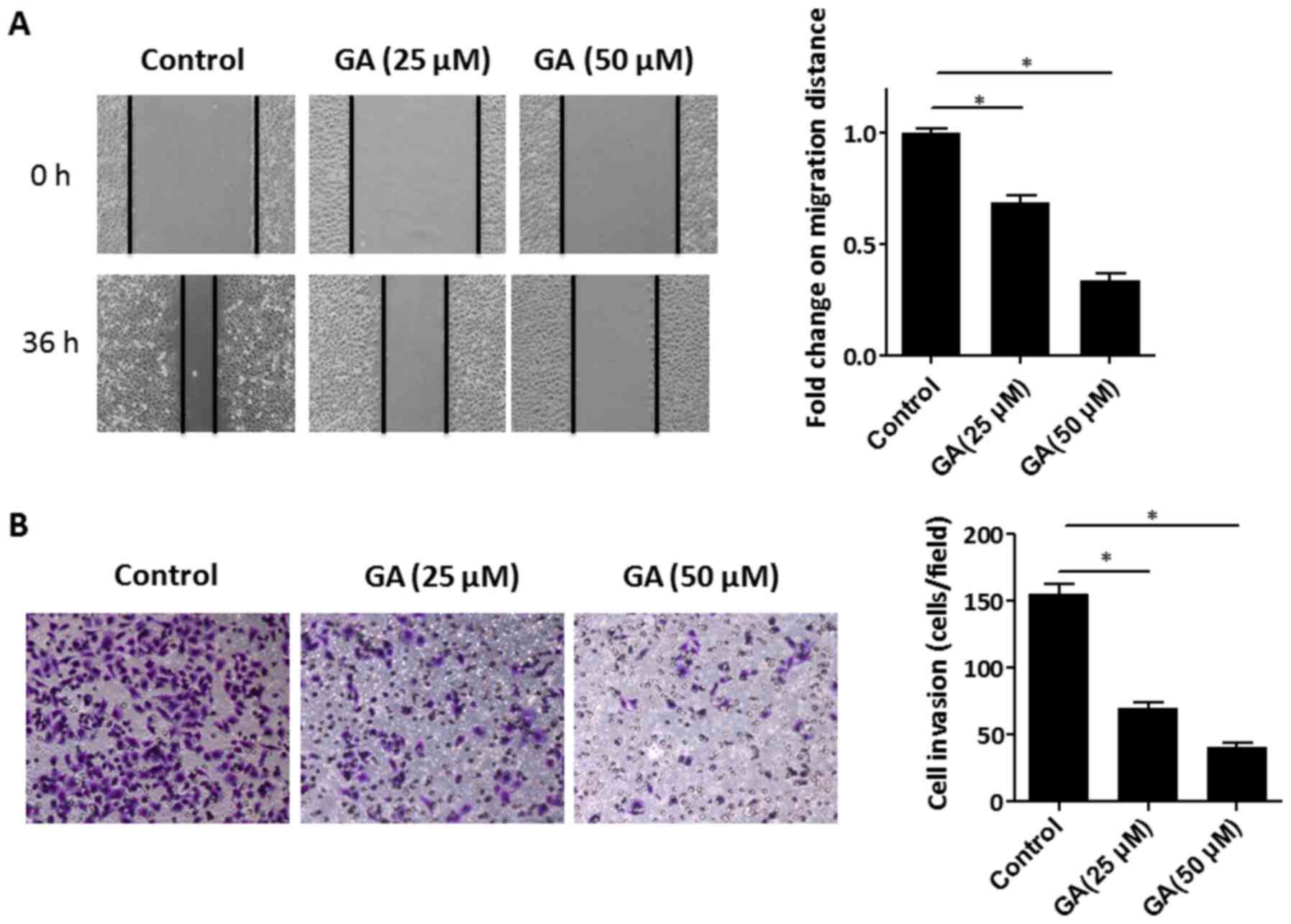
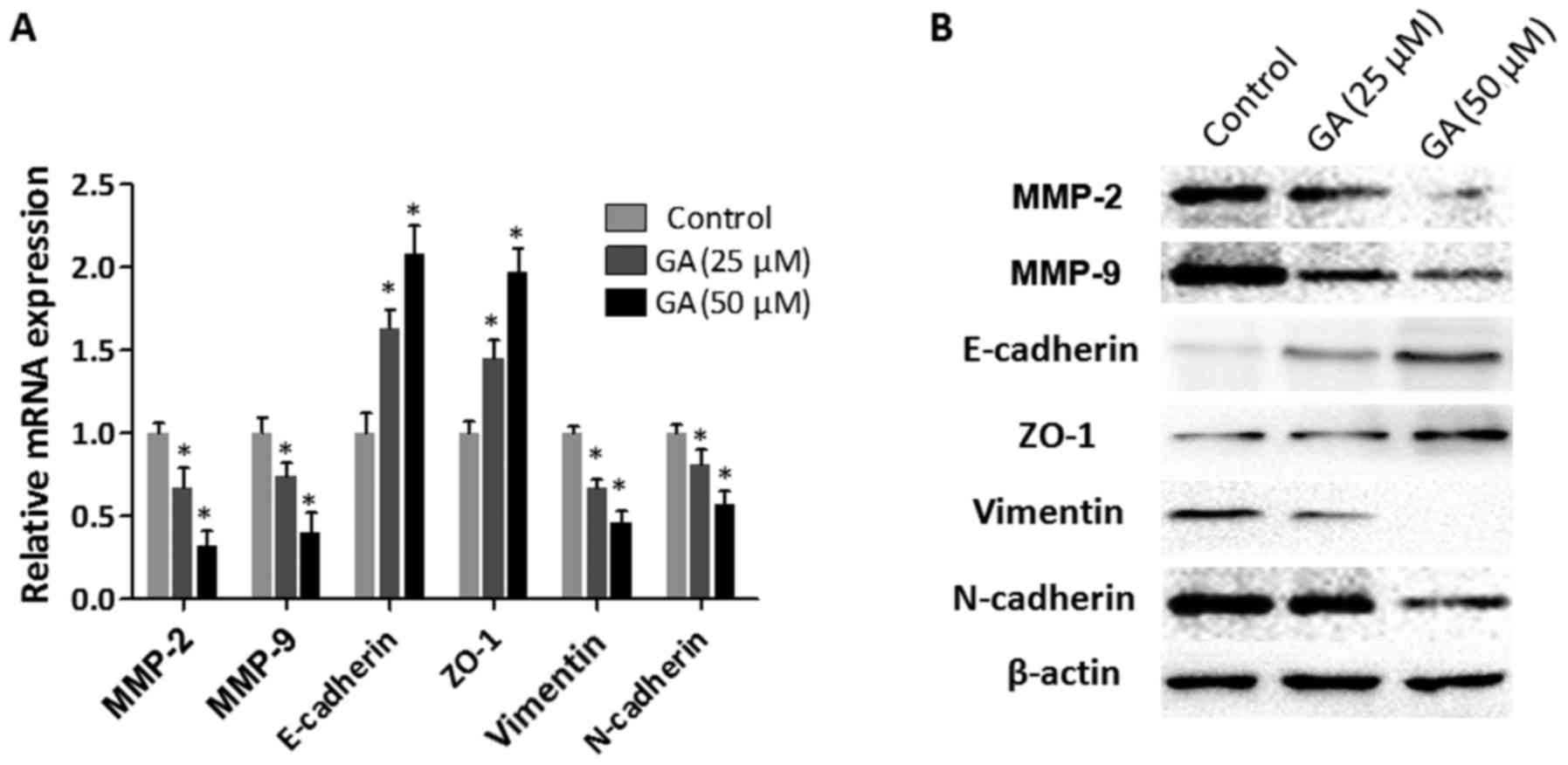
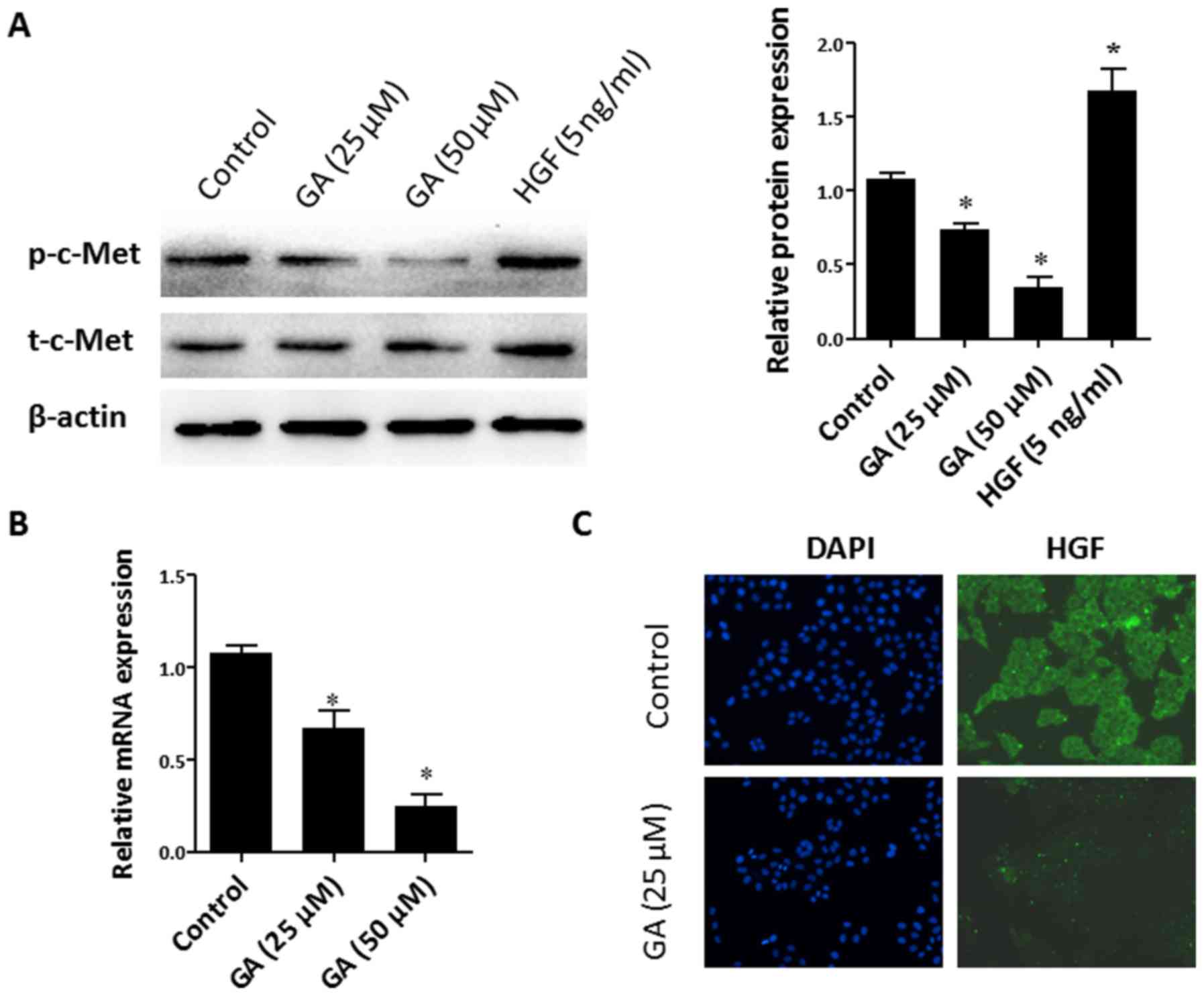
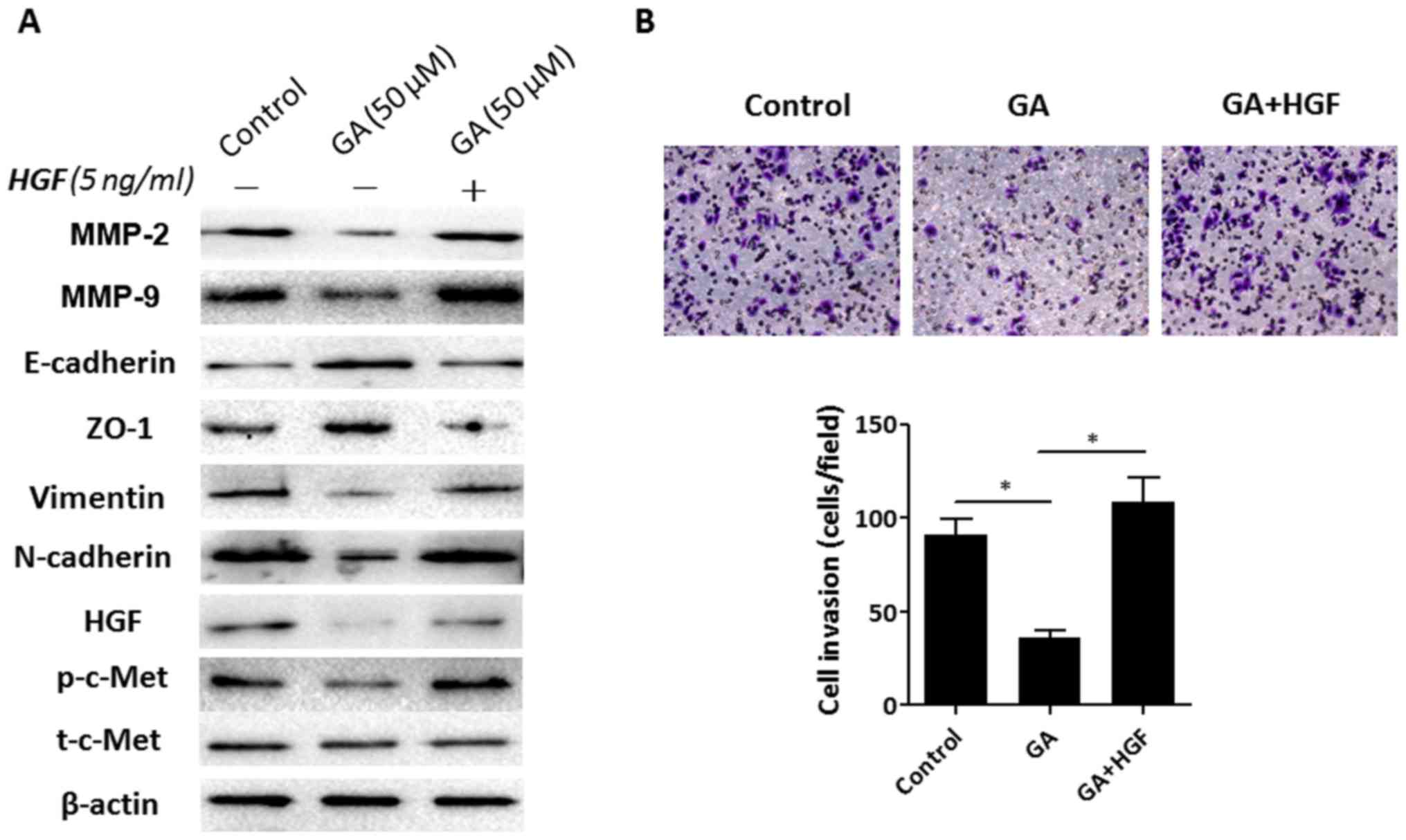
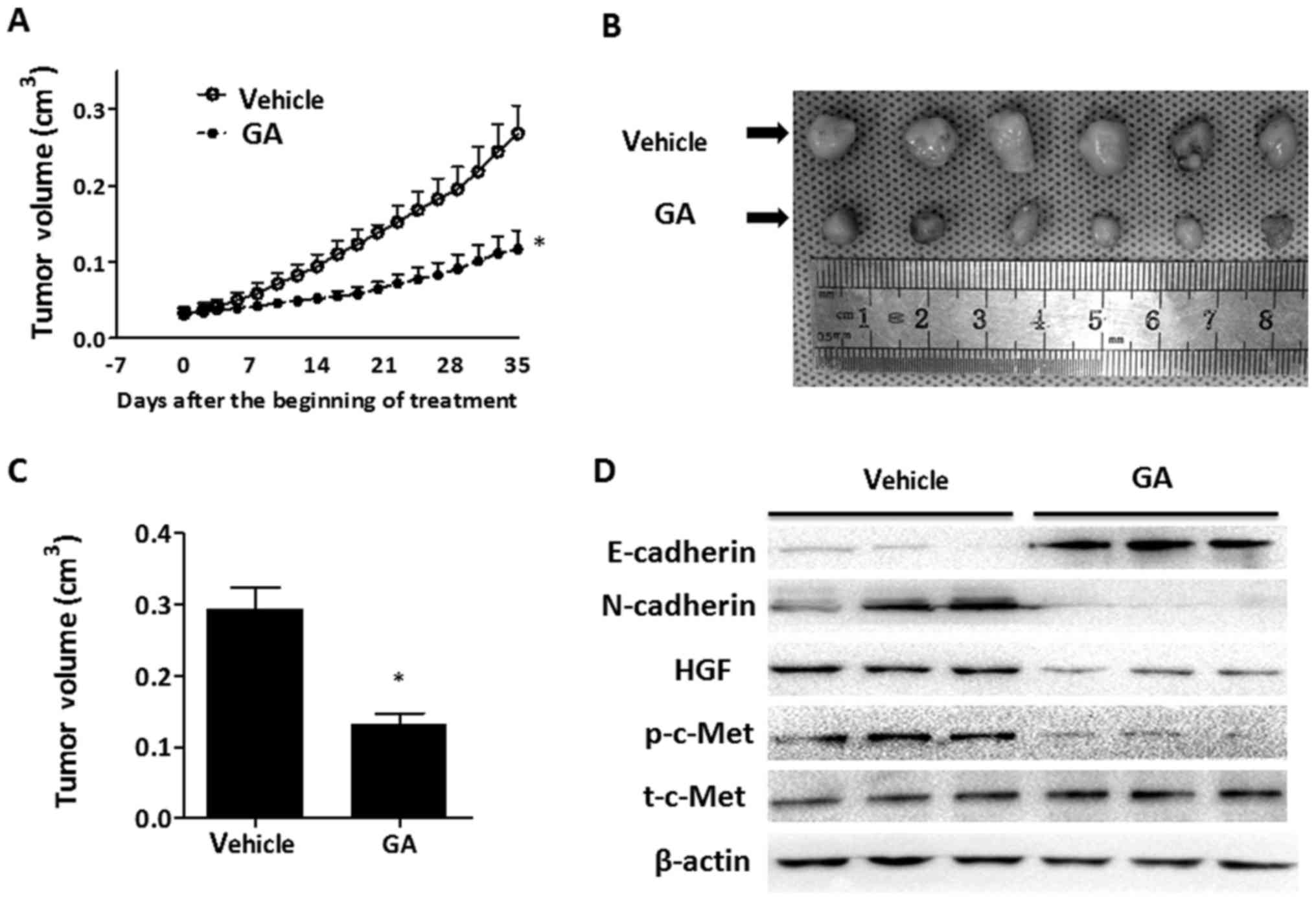
Liver cancer is one of the most devastating types of cancer worldwide. Despite years of improvements in treatment, the prognosis of patients with this type of malignancy remains poor due to frequent recurrence and metastasis after surgical resection. Ginkgolic acid (GA) is a botanical drug extracted from the seed coat of Ginkgo biloba L. that possesses a wide range of bioactive properties. However, to the best of our knowledge, whether GA can inhibit the invasion of liver cancer cells and the underlying mechanisms remains unknown. The aim of the present study was to investigate the effects of GA on the migration and invasion abilities of liver cancer cells and the underlying molecular mechanism. The results revealed that GA suppressed the migration and invasion abilities of HepG2 cells. In addition, GA treatment inhibited the expression of invasion‑related molecules (MMP‑2 and MMP‑9) and prevented the epithelial‑mesenchymal transition (EMT) of HepG2 cells. Further experiments revealed that GA‑reduced hepatocyte growth factor (HGF) production and suppressed c‑Met phosphorylation may be the underlying mechanisms. Exogenous recombinant HGF supplementation improved the cell invasion ability impaired by GA. Moreover, the in vivo experiment revealed that GA inhibited the tumor growth of liver cancer and prevented EMT. Collectively, these data indicated that GA effectively suppressed the invasion and EMT of HepG2 cells via downregulation of HGF/c‑Met signaling, thus GA may serve as a novel chemotherapeutic agent for the treatment of HCC.
View Figures

Figure 1

Figure 2

Figure 3

Figure 4

Figure 5

Figure 6

View References

1 

Forner A, Reig M and Bruix J: Hepatocellular carcinoma. Lancet. 391:1301–1314. 2018. View Article : Google Scholar : PubMed/NCBI

2 

Siegel RL, Miller KD and Jemal A: Cancer statistics, 2017. CA Cancer J Clin. 67:7–30. 2017. View Article : Google Scholar : PubMed/NCBI

3 

Llovet JM, Ricci S, Mazzaferro V, Hilgard P, Gane E, Blanc JF, de Oliveira AC, Santoro A, Raoul JL, Forner A, et al: Sorafenib in advanced hepatocellular carcinoma. N Engl J Med. 359:378–390. 2008. View Article : Google Scholar : PubMed/NCBI

4 

Birchmeier C and Gherardi E: Developmental roles of HGF/SF and its receptor, the c-Met tyrosine kinase. Trends Cell Biol. 8:404–410. 1998. View Article : Google Scholar : PubMed/NCBI

5 

Huh CG, Factor VM, Sánchez A, Uchida K, Conner EA and Thorgeirsson SS: Hepatocyte growth factor/c-met signaling pathway is required for efficient liver regeneration and repair. Proc Natl Acad Sci USA. 101:4477–4482. 2004. View Article : Google Scholar : PubMed/NCBI

6 

Suzuki K, Hayashi N, Yamada Y, Yoshihara H, Miyamoto Y, Ito Y, Ito T, Katayama K, Sasaki Y, Ito A, et al: Expression of the c-met protooncogene in human hepatocellular carcinoma. Hepatology. 20:1231–1236. 1994. View Article : Google Scholar : PubMed/NCBI

7 

Kiss A, Wang NJ, Xie JP and Thorgeirsson SS: Analysis of transforming growth factor (TGF)-alpha/epidermal growth factor receptor, hepatocyte growth Factor/c-met, TGF-beta receptor type II, and p53 expression in human hepatocellular carcinomas. Clin Cancer Res. 3:1059–1066. 1997.PubMed/NCBI

8 

Suárez-Causado A, Caballero-Díaz D, Bertrán E, Roncero C, Addante A, García-Álvaro M, Fernández M, Herrera B, Porras A, Fabregat I and Sánchez A: HGF/c-Met signaling promotes liver progenitor cell migration and invasion by an epithelial-mesenchymal transition-independent, phosphatidyl inositol-3 kinase-dependent pathway in an in vitro model. Biochim Biophys Acta. 1853:2453–2463. 2015. View Article : Google Scholar : PubMed/NCBI

9 

Gherardi E, Birchmeier W, Birchmeier C and Vande Woude G: Targeting MET in cancer: Rationale and progress. Nat Rev Cancer. 12:89–103. 2012. View Article : Google Scholar : PubMed/NCBI

10 

Goyal L, Muzumdar MD and Zhu AX: Targeting the HGF/c-MET pathway in hepatocellular carcinoma. Clin Cancer Res. 19:2310–2318. 2013. View Article : Google Scholar : PubMed/NCBI

11 

Hua Z, Wu C, Fan G, Tang Z and Cao F: The antibacterial activity and mechanism of ginkgolic acid C15:1. BMC Biotechnol. 17:52017. View Article : Google Scholar : PubMed/NCBI

12 

Lü JM, Yan S, Jamaluddin S, Weakley SM, Liang Z, Siwak EB, Yao Q and Chen C: Ginkgolic acid inhibits HIV protease activity and HIV infection in vitro. Med Sci Monit. 18:BR293–BR298. 2012. View Article : Google Scholar : PubMed/NCBI

13 

Li R, Shen Y, Zhang X, Ma M, Chen B and van Beek TA: Efficient purification of ginkgolic acids from Ginkgo biloba leaves by selective adsorption on Fe3O4 magnetic nanoparticles. J Nat Prod. 77:571–575. 2014. View Article : Google Scholar : PubMed/NCBI

14 

Li L, Yao QQ, Xu SY, Hu HH, Shen Q, Tian Y, Pan LY, Zhou H, Jiang HD, Lu C, et al: Cyclosporin A affects the bioavailability of ginkgolic acids via inhibition of P-gp and BCRP. Eur J Pharm Biopharm. 88:759–767. 2014. View Article : Google Scholar : PubMed/NCBI

15 

Ma J, Duan W, Han S, Lei J, Xu Q, Chen X, Jiang Z, Nan L, Li J, Chen K, et al: Ginkgolic acid suppresses the development of pancreatic cancer by inhibiting pathways driving lipogenesis. Oncotarget. 6:20993–21003. 2015.PubMed/NCBI

16 

Liu Y, Yang B, Zhang L, Cong X, Liu Z, Hu Y, Zhang J and Hu H: Ginkgolic acid induces interplay between apoptosis and autophagy regulated by ROS generation in colon cancer. Biochem Biophys Res Commun. 498:246–253. 2018. View Article : Google Scholar : PubMed/NCBI

17 

Qiao L, Zheng J, Jin X, Wei G, Wang G, Sun X and Li X: Ginkgolic acid inhibits the invasiveness of colon cancer cells through AMPK activation. Oncol Lett. 14:5831–5838. 2017.PubMed/NCBI

18 

Hamdoun S and Efferth T: Ginkgolic acids inhibit migration in breast cancer cells by inhibition of NEMO sumoylation and NF-κB activity. Oncotarget. 8:35103–35115. 2017. View Article : Google Scholar : PubMed/NCBI

19 

Venepalli NK and Goff L: Targeting the HGF-cMET axis in hepatocellular carcinoma. Int J Hepatol. 2013:3416362013. View Article : Google Scholar : PubMed/NCBI

20 

Livak KJ and Schmittgen TD: Analysis of relative gene expression data using real-time quantitative PCR and the 2(-Delta Delta C(T)) method. Methods. 25:402–408. 2001. View Article : Google Scholar : PubMed/NCBI

21 

Illam SP, Narayanankutty A, Mathew SE, Valsalakumari R, Jacob RM and Raghavamenon AC: Epithelial mesenchymal transition in cancer progression: Prev entive phytochemicals. Recent Pat Anticancer Drug Discov. 12:234–246. 2017. View Article : Google Scholar : PubMed/NCBI

22 

Cha C, Fong Y, Jarnagin WR, Blumgart LH and DeMatteo RP: Predictors and patterns of recurrence after resection of hepatocellular carcinoma. J Am Coll Surg. 197:753–758. 2003. View Article : Google Scholar : PubMed/NCBI

23 

Martínez Ares D, Suárez López FJ, Souto Ruzo J, Otero Ferreiro A, Gómez Gutiérrez M, González Conde B, Fernández Sellés C, Gala López B, Arnal Monreal F and Vázquez Iglesias JL: Liver transplantation in patients with hepatocellular carcinoma: Factors implicated in tumor relapse. Rev Esp Enferm Dig. 96:22–31. 2004.(In English, Spanish). PubMed/NCBI

24 

Yap TA, Sandhu SK, Alam SM and de Bono JS: HGF/c-MET targeted therapeutics: Novel strategies for cancer medicine. Curr Drug Targets. 12:2045–2058. 2011. View Article : Google Scholar : PubMed/NCBI

25 

Comoglio PM, Giordano S and Trusolino L: Drug development of MET inhibitors: Targeting oncogene addiction and expedience. Nat Rev Drug Discov. 7:504–516. 2008. View Article : Google Scholar : PubMed/NCBI

26 

Kaposi-Novak P, Lee JS, Gòmez-Quiroz L, Coulouarn C, Factor VM and Thorgeirsson SS: Met-regulated expression signature defines a subset of human hepatocellular carcinomas with poor prognosis and aggressive phenotype. J Clin Invest. 116:1582–1595. 2006. View Article : Google Scholar : PubMed/NCBI

27 

Wu FS, Zheng SS, Wu LJ, Ding W, Ma ZM, Wang ZM, Teng LS and Zhao WH: Study on the prognostic value of hepatocyte growth factor and c-met for patients with hepatocellular carcinoma. Zhonghua Wai Ke Za Zhi. 44:603–608. 2006.(In Chinese). PubMed/NCBI

28 

Munshi N, Jeay S, Li Y, Chen CR, France DS, Ashwell MA, Hill J, Moussa MM, Leggett DS and Li CJ: ARQ 197, a novel and selective inhibitor of the human c-Met receptor tyrosine kinase with antitumor activity. Mol Cancer Ther. 9:1544–1553. 2010. View Article : Google Scholar : PubMed/NCBI

29 

Santoro A, Rimassa L, Borbath I, Daniele B, Salvagni S, Van Laethem JL, Van Vlierberghe H, Trojan J, Kolligs FT, Weiss A, et al: Tivantinib for second-line treatment of advanced hepatocellular carcinoma: A randomised, placebo-controlled phase 2 study. Lancet Oncol. 14:55–63. 2013. View Article : Google Scholar : PubMed/NCBI

30 

Acloque H, Adams MS, Fishwick K, Bronner-Fraser M and Nieto MA: Epithelial-mesenchymal transitions: The importance of changing cell state in development and disease. J Clin Invest. 119:1438–1449. 2009. View Article : Google Scholar : PubMed/NCBI

31 

Thiery JP, Acloque H, Huang RY and Nieto MA: Epithelial-mesenchymal transitions in development and disease. Cell. 139:871–90. 2009. View Article : Google Scholar : PubMed/NCBI

32 

Brabletz T, Kalluri R, Nieto MA and Weinberg RA: EMT in cancer. Nat Rev Cancer. 18:128–134. 2018. View Article : Google Scholar : PubMed/NCBI

33 

Ye LY, Chen W, Bai XL, Xu XY, Zhang Q, Xia XF, Sun X, Li GG, Hu QD, Fu QH and Liang TB: Hypoxia-induced epithelial-to-mesenchymal transition in hepatocellular carcinoma induces an immunosuppressive tumor microenvironment to promote metastasis. Cancer Res. 76:818–830. 2016. View Article : Google Scholar : PubMed/NCBI

34 

Arumugam T, Ramachandran V, Fournier KF, Wang H, Marquis L, Abbruzzese JL, Gallick GE, Logsdon CD, McConkey DJ and Choi W: Epithelial to mesenchymal transition contributes to drug resistance in pancreatic cancer. Cancer Res. 69:5820–5828. 2009. View Article : Google Scholar : PubMed/NCBI

35 

Christiansen JJ and Rajasekaran AK: Reassessing epithelial to mesenchymal transition as a prerequisite for carcinoma invasion and metastasis. Cancer Res. 66:8319–8326. 2006. View Article : Google Scholar : PubMed/NCBI

36 

Ogunwobi OO and Liu C: Hepatocyte growth factor upregulation promotes carcinogenesis and epithelial-mesenchymal transition in hepatocellular carcinoma via Akt and COX-2 pathways. Clin Exp Metastasis. 28:721–731. 2011. View Article : Google Scholar : PubMed/NCBI

37 

Baek SH, Ko JH, Lee JH, Kim C, Lee H, Nam D, Lee J, Lee SG, Yang WM, Um JY, et al: Ginkgolic acid inhibits invasion and migration and TGF-β-induced EMT of lung cancer cells through PI3K/Akt/mTOR inactivation. J Cell Physiol. 232:346–354. 2017. View Article : Google Scholar : PubMed/NCBI

38 

Zhou C, Li X, Du W, Feng Y, Kong X, Li Y, Xiao L and Zhang P: Antitumor effects of ginkgolic acid in human cancer cell occur via cell cycle arrest and decrease the Bcl-2/Bax ratio to induce apoptosis. Chemotherapy. 56:393–402. 2010. View Article : Google Scholar : PubMed/NCBI

Related Articles

  • Abstract
  • View
  • Download
  • Twitter
Copy and paste a formatted citation
Spandidos Publications style
Li H, Meng X, Zhang D, Xu X, Li S and Li Y: Ginkgolic acid suppresses the invasion of HepG2 cells via downregulation of HGF/c‑Met signaling. Oncol Rep 41: 369-376, 2019.
APA
Li, H., Meng, X., Zhang, D., Xu, X., Li, S., & Li, Y. (2019). Ginkgolic acid suppresses the invasion of HepG2 cells via downregulation of HGF/c‑Met signaling. Oncology Reports, 41, 369-376. https://doi.org/10.3892/or.2018.6786
MLA
Li, H., Meng, X., Zhang, D., Xu, X., Li, S., Li, Y."Ginkgolic acid suppresses the invasion of HepG2 cells via downregulation of HGF/c‑Met signaling". Oncology Reports 41.1 (2019): 369-376.
Chicago
Li, H., Meng, X., Zhang, D., Xu, X., Li, S., Li, Y."Ginkgolic acid suppresses the invasion of HepG2 cells via downregulation of HGF/c‑Met signaling". Oncology Reports 41, no. 1 (2019): 369-376. https://doi.org/10.3892/or.2018.6786
Copy and paste a formatted citation
x
Spandidos Publications style
Li H, Meng X, Zhang D, Xu X, Li S and Li Y: Ginkgolic acid suppresses the invasion of HepG2 cells via downregulation of HGF/c‑Met signaling. Oncol Rep 41: 369-376, 2019.
APA
Li, H., Meng, X., Zhang, D., Xu, X., Li, S., & Li, Y. (2019). Ginkgolic acid suppresses the invasion of HepG2 cells via downregulation of HGF/c‑Met signaling. Oncology Reports, 41, 369-376. https://doi.org/10.3892/or.2018.6786
MLA
Li, H., Meng, X., Zhang, D., Xu, X., Li, S., Li, Y."Ginkgolic acid suppresses the invasion of HepG2 cells via downregulation of HGF/c‑Met signaling". Oncology Reports 41.1 (2019): 369-376.
Chicago
Li, H., Meng, X., Zhang, D., Xu, X., Li, S., Li, Y."Ginkgolic acid suppresses the invasion of HepG2 cells via downregulation of HGF/c‑Met signaling". Oncology Reports 41, no. 1 (2019): 369-376. https://doi.org/10.3892/or.2018.6786
Follow us
  • Twitter
  • LinkedIn
  • Facebook
About
  • Spandidos Publications
  • Careers
  • Cookie Policy
  • Privacy Policy
How can we help?
  • Help
  • Live Chat
  • Contact
  • Email to our Support Team