Spandidos Publications Logo
  • About
    • About Spandidos
    • Aims and Scopes
    • Abstracting and Indexing
    • Editorial Policies
    • Reprints and Permissions
    • Job Opportunities
    • Terms and Conditions
    • Contact
  • Journals
    • All Journals
    • Oncology Letters
      • Oncology Letters
      • Information for Authors
      • Editorial Policies
      • Editorial Board
      • Aims and Scope
      • Abstracting and Indexing
      • Bibliographic Information
      • Archive
    • International Journal of Oncology
      • International Journal of Oncology
      • Information for Authors
      • Editorial Policies
      • Editorial Board
      • Aims and Scope
      • Abstracting and Indexing
      • Bibliographic Information
      • Archive
    • Molecular and Clinical Oncology
      • Molecular and Clinical Oncology
      • Information for Authors
      • Editorial Policies
      • Editorial Board
      • Aims and Scope
      • Abstracting and Indexing
      • Bibliographic Information
      • Archive
    • Experimental and Therapeutic Medicine
      • Experimental and Therapeutic Medicine
      • Information for Authors
      • Editorial Policies
      • Editorial Board
      • Aims and Scope
      • Abstracting and Indexing
      • Bibliographic Information
      • Archive
    • International Journal of Molecular Medicine
      • International Journal of Molecular Medicine
      • Information for Authors
      • Editorial Policies
      • Editorial Board
      • Aims and Scope
      • Abstracting and Indexing
      • Bibliographic Information
      • Archive
    • Biomedical Reports
      • Biomedical Reports
      • Information for Authors
      • Editorial Policies
      • Editorial Board
      • Aims and Scope
      • Abstracting and Indexing
      • Bibliographic Information
      • Archive
    • Oncology Reports
      • Oncology Reports
      • Information for Authors
      • Editorial Policies
      • Editorial Board
      • Aims and Scope
      • Abstracting and Indexing
      • Bibliographic Information
      • Archive
    • Molecular Medicine Reports
      • Molecular Medicine Reports
      • Information for Authors
      • Editorial Policies
      • Editorial Board
      • Aims and Scope
      • Abstracting and Indexing
      • Bibliographic Information
      • Archive
    • World Academy of Sciences Journal
      • World Academy of Sciences Journal
      • Information for Authors
      • Editorial Policies
      • Editorial Board
      • Aims and Scope
      • Abstracting and Indexing
      • Bibliographic Information
      • Archive
    • International Journal of Functional Nutrition
      • International Journal of Functional Nutrition
      • Information for Authors
      • Editorial Policies
      • Editorial Board
      • Aims and Scope
      • Abstracting and Indexing
      • Bibliographic Information
      • Archive
    • International Journal of Epigenetics
      • International Journal of Epigenetics
      • Information for Authors
      • Editorial Policies
      • Editorial Board
      • Aims and Scope
      • Abstracting and Indexing
      • Bibliographic Information
      • Archive
    • Medicine International
      • Medicine International
      • Information for Authors
      • Editorial Policies
      • Editorial Board
      • Aims and Scope
      • Abstracting and Indexing
      • Bibliographic Information
      • Archive
  • Articles
  • Information
    • Information for Authors
    • Information for Reviewers
    • Information for Librarians
    • Information for Advertisers
    • Conferences
  • Language Editing
Spandidos Publications Logo
  • About
    • About Spandidos
    • Aims and Scopes
    • Abstracting and Indexing
    • Editorial Policies
    • Reprints and Permissions
    • Job Opportunities
    • Terms and Conditions
    • Contact
  • Journals
    • All Journals
    • Biomedical Reports
      • Information for Authors
      • Editorial Policies
      • Editorial Board
      • Aims and Scope
      • Abstracting and Indexing
      • Bibliographic Information
      • Archive
    • Experimental and Therapeutic Medicine
      • Information for Authors
      • Editorial Policies
      • Editorial Board
      • Aims and Scope
      • Abstracting and Indexing
      • Bibliographic Information
      • Archive
    • International Journal of Epigenetics
      • Information for Authors
      • Editorial Policies
      • Editorial Board
      • Aims and Scope
      • Abstracting and Indexing
      • Bibliographic Information
      • Archive
    • International Journal of Functional Nutrition
      • Information for Authors
      • Editorial Policies
      • Editorial Board
      • Aims and Scope
      • Abstracting and Indexing
      • Bibliographic Information
      • Archive
    • International Journal of Molecular Medicine
      • Information for Authors
      • Editorial Policies
      • Editorial Board
      • Aims and Scope
      • Abstracting and Indexing
      • Bibliographic Information
      • Archive
    • International Journal of Oncology
      • Information for Authors
      • Editorial Policies
      • Editorial Board
      • Aims and Scope
      • Abstracting and Indexing
      • Bibliographic Information
      • Archive
    • Medicine International
      • Information for Authors
      • Editorial Policies
      • Editorial Board
      • Aims and Scope
      • Abstracting and Indexing
      • Bibliographic Information
      • Archive
    • Molecular and Clinical Oncology
      • Information for Authors
      • Editorial Policies
      • Editorial Board
      • Aims and Scope
      • Abstracting and Indexing
      • Bibliographic Information
      • Archive
    • Molecular Medicine Reports
      • Information for Authors
      • Editorial Policies
      • Editorial Board
      • Aims and Scope
      • Abstracting and Indexing
      • Bibliographic Information
      • Archive
    • Oncology Letters
      • Information for Authors
      • Editorial Policies
      • Editorial Board
      • Aims and Scope
      • Abstracting and Indexing
      • Bibliographic Information
      • Archive
    • Oncology Reports
      • Information for Authors
      • Editorial Policies
      • Editorial Board
      • Aims and Scope
      • Abstracting and Indexing
      • Bibliographic Information
      • Archive
    • World Academy of Sciences Journal
      • Information for Authors
      • Editorial Policies
      • Editorial Board
      • Aims and Scope
      • Abstracting and Indexing
      • Bibliographic Information
      • Archive
  • Articles
  • Information
    • For Authors
    • For Reviewers
    • For Librarians
    • For Advertisers
    • Conferences
  • Language Editing
Login Register Submit
  • This site uses cookies
  • You can change your cookie settings at any time by following the instructions in our Cookie Policy. To find out more, you may read our Privacy Policy.

    I agree
Search articles by DOI, keyword, author or affiliation
Search
Advanced Search
presentation
Oncology Reports
Join Editorial Board Propose a Special Issue
Print ISSN: 1021-335X Online ISSN: 1791-2431
Journal Cover
November-2019 Volume 42 Issue 5

Full Size Image

Sign up for eToc alerts
Recommend to Library

Journals

International Journal of Molecular Medicine

International Journal of Molecular Medicine

International Journal of Molecular Medicine is an international journal devoted to molecular mechanisms of human disease.

International Journal of Oncology

International Journal of Oncology

International Journal of Oncology is an international journal devoted to oncology research and cancer treatment.

Molecular Medicine Reports

Molecular Medicine Reports

Covers molecular medicine topics such as pharmacology, pathology, genetics, neuroscience, infectious diseases, molecular cardiology, and molecular surgery.

Oncology Reports

Oncology Reports

Oncology Reports is an international journal devoted to fundamental and applied research in Oncology.

Experimental and Therapeutic Medicine

Experimental and Therapeutic Medicine

Experimental and Therapeutic Medicine is an international journal devoted to laboratory and clinical medicine.

Oncology Letters

Oncology Letters

Oncology Letters is an international journal devoted to Experimental and Clinical Oncology.

Biomedical Reports

Biomedical Reports

Explores a wide range of biological and medical fields, including pharmacology, genetics, microbiology, neuroscience, and molecular cardiology.

Molecular and Clinical Oncology

Molecular and Clinical Oncology

International journal addressing all aspects of oncology research, from tumorigenesis and oncogenes to chemotherapy and metastasis.

World Academy of Sciences Journal

World Academy of Sciences Journal

Multidisciplinary open-access journal spanning biochemistry, genetics, neuroscience, environmental health, and synthetic biology.

International Journal of Functional Nutrition

International Journal of Functional Nutrition

Open-access journal combining biochemistry, pharmacology, immunology, and genetics to advance health through functional nutrition.

International Journal of Epigenetics

International Journal of Epigenetics

Publishes open-access research on using epigenetics to advance understanding and treatment of human disease.

Medicine International

Medicine International

An International Open Access Journal Devoted to General Medicine.

Journal Cover
November-2019 Volume 42 Issue 5

Full Size Image

Sign up for eToc alerts
Recommend to Library

  • Article
  • Citations
    • Cite This Article
    • Download Citation
    • Create Citation Alert
    • Remove Citation Alert
    • Cited By
  • Similar Articles
    • Related Articles (in Spandidos Publications)
    • Similar Articles (Google Scholar)
    • Similar Articles (PubMed)
  • Download PDF
  • Download XML
  • View XML

  • Supplementary Files
    • Supplementary_Data.pdf
Article

EMX2 is epigenetically silenced and suppresses epithelial‑mesenchymal transition in human esophageal adenocarcinoma

  • Authors:
    • Lei Wang
    • Joy Jin
    • Yong Zhou
    • Ziqiang Tian
    • Biao He
    • Yueyan Huang
    • Feng Ding
  • View Affiliations / Copyright

    Affiliations: Department of Thoracic Surgery, Fourth Hospital of Hebei Medical University, Shijiazhuang, Hebei 050011, P.R. China, Thoracic Oncology Program, Department of Surgery, Helen Diller Family Comprehensive Cancer Center, University of California, San Francisco, San Francisco, CA 94115, USA, Department of Pharmacology, Medical College of Jiaxing University, Jiaxing, Zhejiang 314000, P.R. China, Department of Biotechnology and Biomedicine, Zhejiang Provincial Key Laboratory of Applied Enzymology and Jiaxing ACCB Diagnostics, Yangze Delta Region Institute of Tsinghua University Zhejiang, Jiaxing, Zhejiang 314006, P.R. China
  • Pages: 2169-2178
    |
    Published online on: August 20, 2019
       https://doi.org/10.3892/or.2019.7284
  • Expand metrics +
Metrics: Total Views: 0 (Spandidos Publications: | PMC Statistics: )
Metrics: Total PDF Downloads: 0 (Spandidos Publications: | PMC Statistics: )
Cited By (CrossRef): 0 citations Loading Articles...

This article is mentioned in:


Abstract

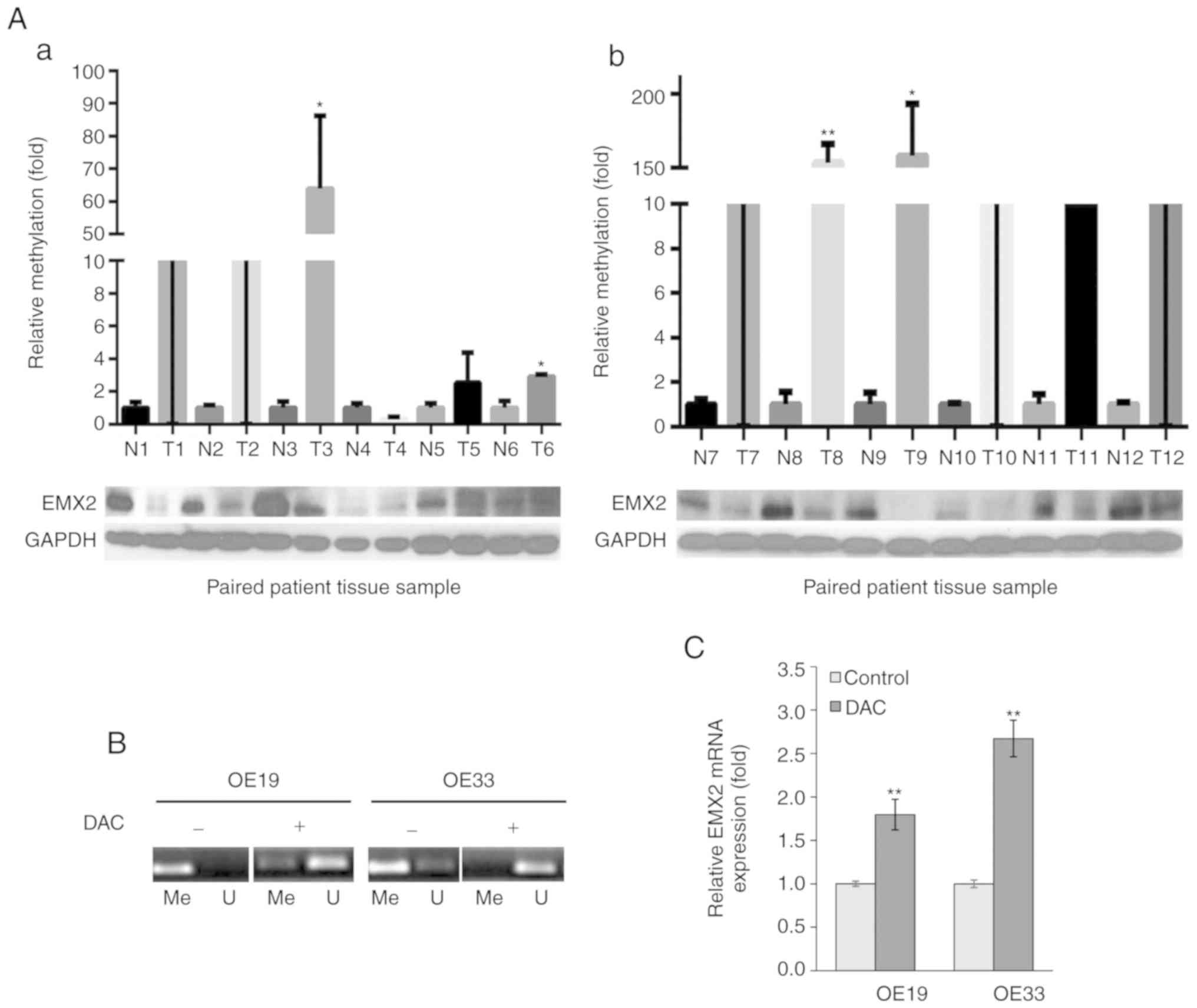
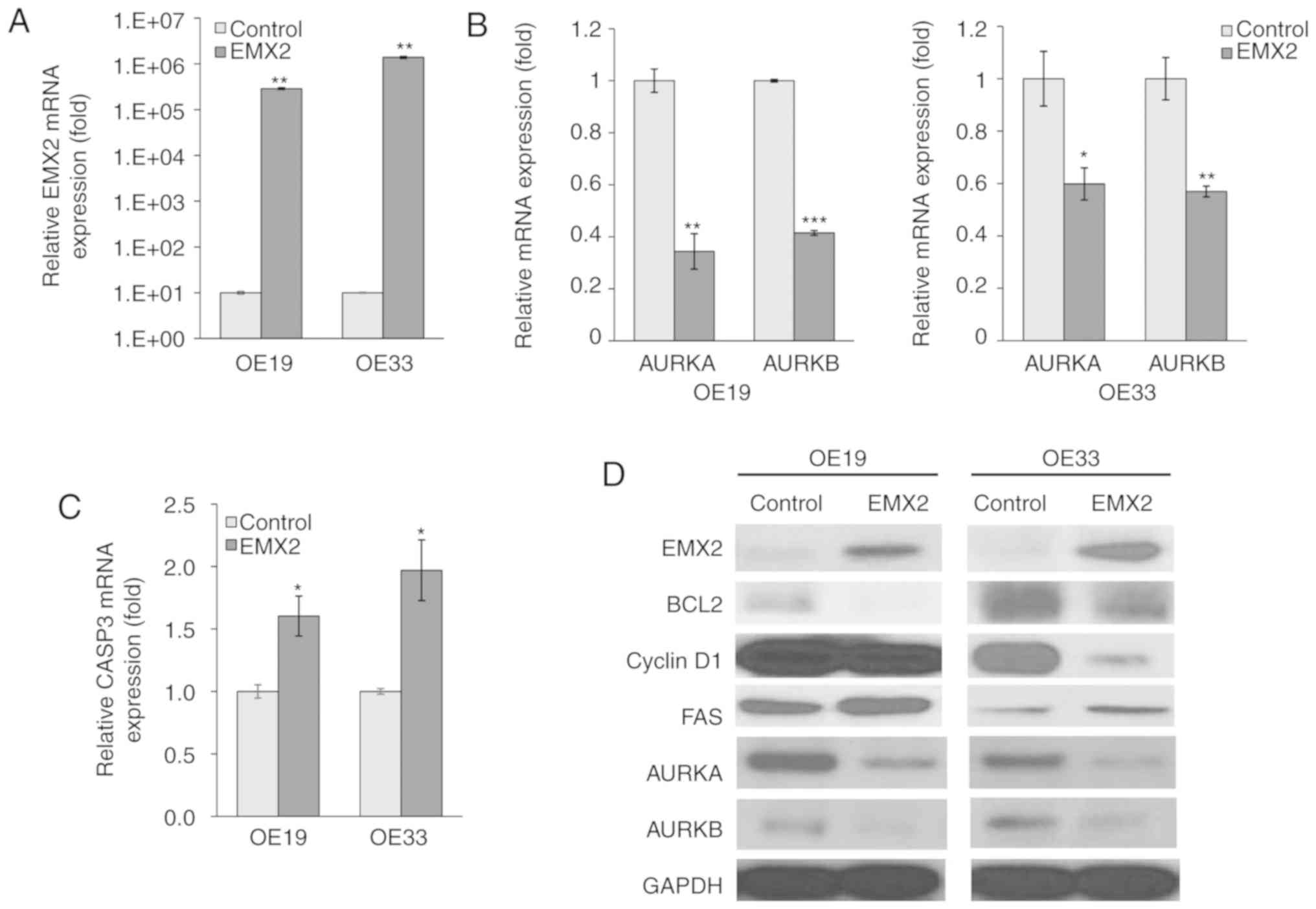
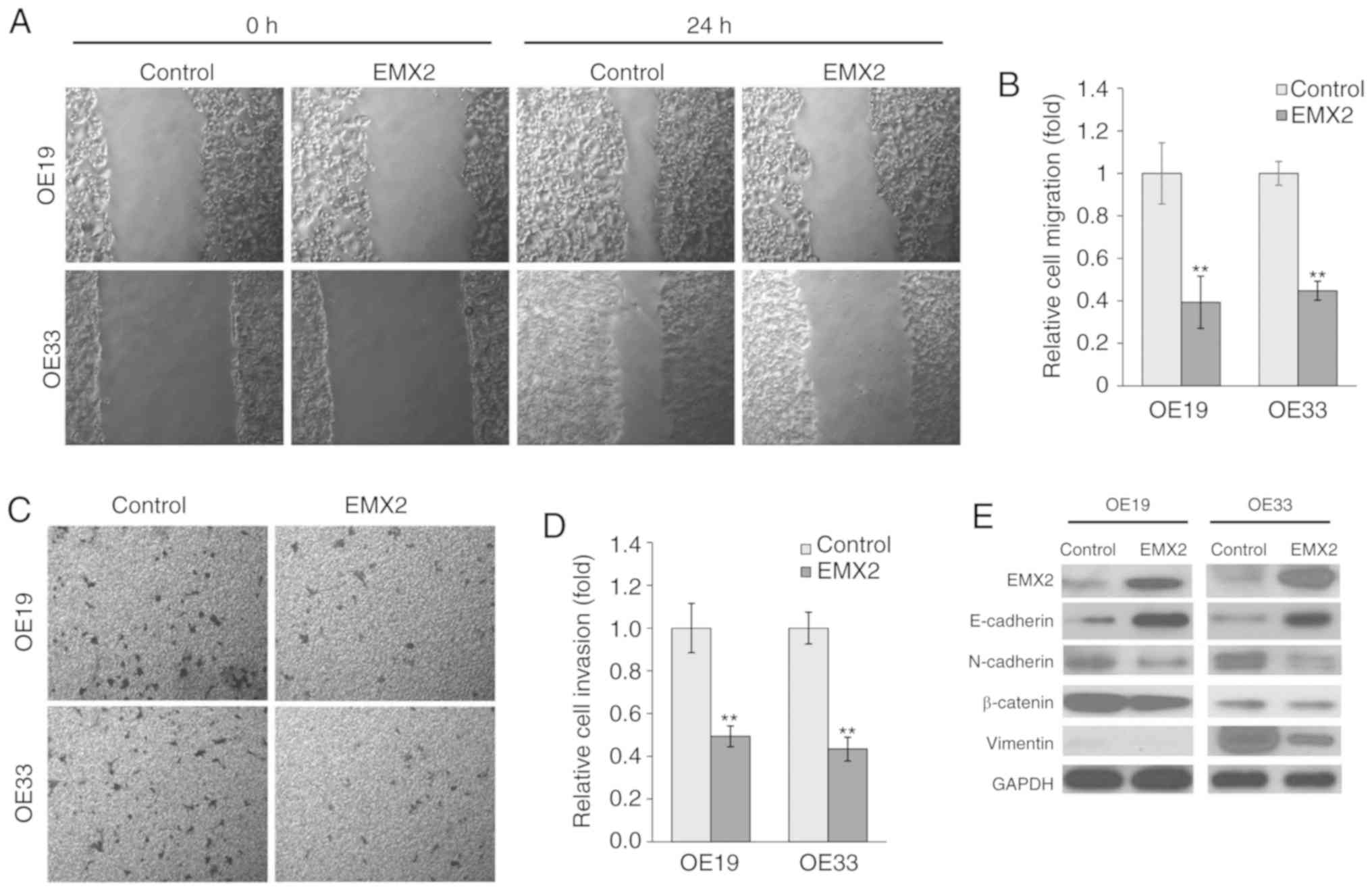
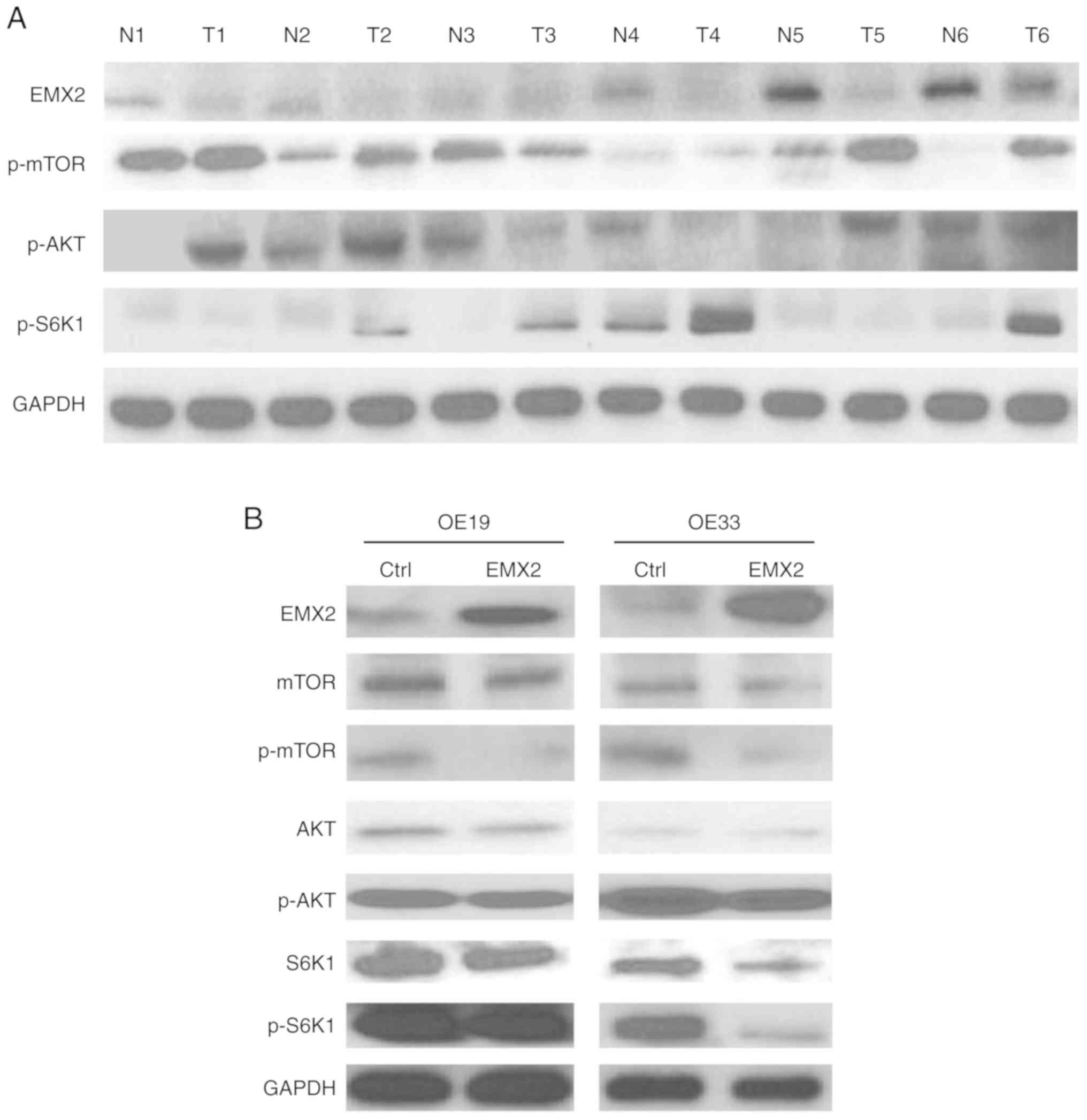
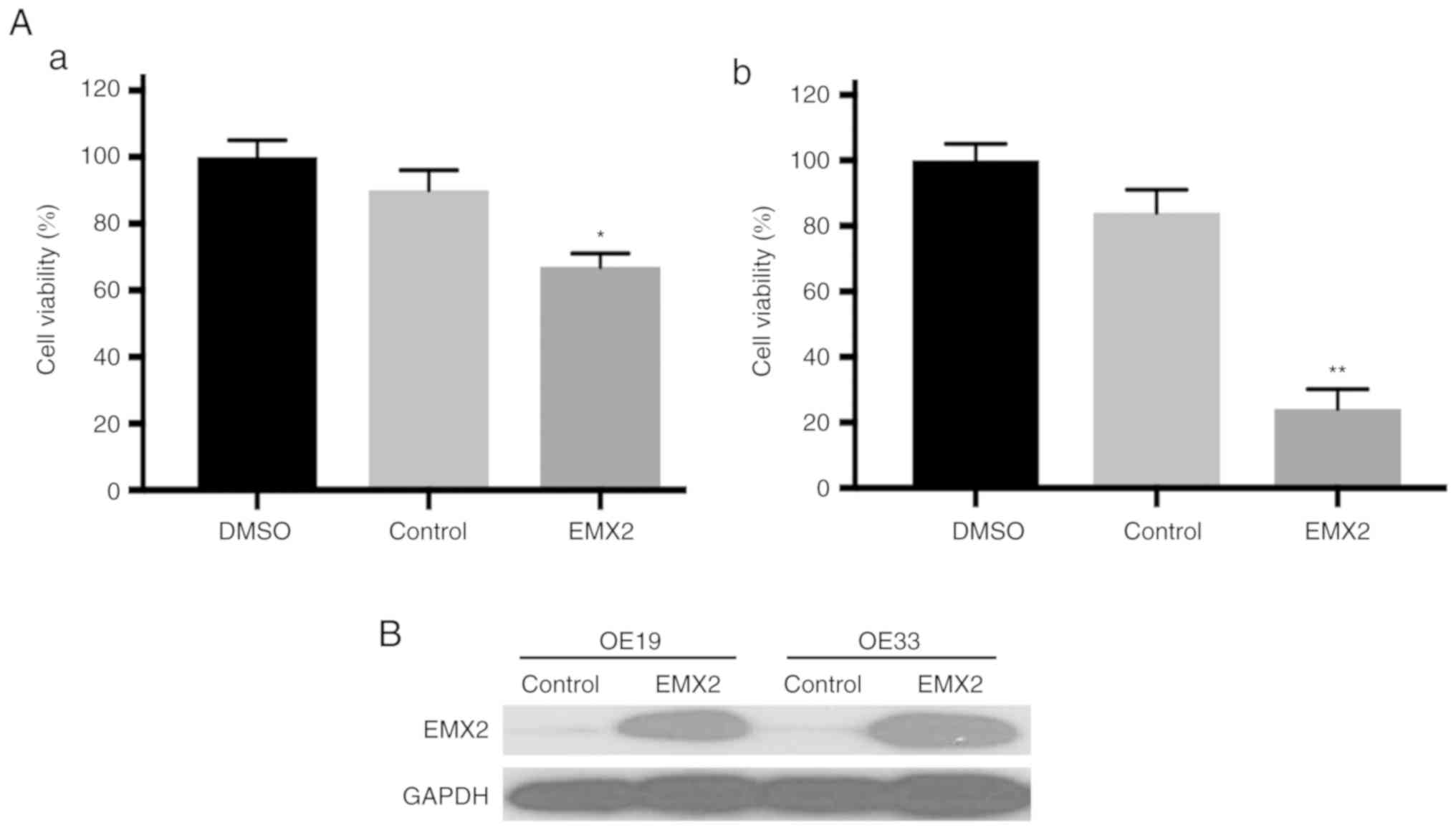
Esophageal adenocarcinoma (EAC) is an aggressive and challenging disease to treat, with an overall five‑year survival rate of <20%. Early malignant cell dissemination contributes to this poor prognosis. Epithelial‑mesenchymal transition (EMT) induces the invasion and metastasis of carcinoma cells. Empty spiracles homeobox 2 (EMX2) is a homeodomain‑containing transcription factor, which is associated with numerous cancer types, and has been demonstrated to regulate EMT. In the present study, 48 pairs of EAC and adjacent normal tissues were analyzed. The results revealed that EMX2 was downregulated in EAC tissues, and its expression was negatively correlated with the DNA hypermethylation of its promoter. Additionally, the OE19 and OE33 EAC cell lines were treated with the DNA methyltransferase inhibitor 5‑aza‑2'‑deoxycytidine, and the results indicated that EMX2 expression was increased. Overexpressing EMX2 in EAC cell lines enhanced the expression of apoptotic markers, inhibited cell migration and invasion, led to the upregulation of E‑cadherin and the downregulation of mesenchymal markers, and suppressed AKT, mTOR and S6K phosphorylation. Furthermore, EMX2 overexpression sensitized EAC cells to cisplatin. These results demonstrated that EMX2 inhibited the AKT/mTOR/S6K signaling pathway and decreased EMT. However, the downregulation of EMX2 was revealed to be associated with EMT in EAC, indicating that EMX2 may be a potential target for the management of EAC.
View Figures

Figure 1

Figure 2

Figure 3

Figure 4

Figure 5

View References

1 

Ferlay J, Soerjomataram I, Dikshit R, Eser S, Mathers C, Rebelo M, Parkin DM, Forman D and Bray F: Cancer incidence and mortality worldwide: Sources, methods and major patterns in GLOBOCAN 2012. Int J Cancer. 136:E359–E386. 2015. View Article : Google Scholar : PubMed/NCBI

2 

Cancer Genome Atlas Research Network; Analysis Working Group: Asan University; BC Cancer Agency; Brigham and Women's Hospital; Broad Institute; Brown University; Case Western Reserve University; Dana-Farber Cancer Institute; Duke University; Greater Poland Cancer Centre, et al, . Integrated genomic characterization of oesophageal carcinoma. Nature. 541:169–175. 2017. View Article : Google Scholar : PubMed/NCBI

3 

Arnold M, Soerjomataram I, Ferlay J and Forman D: Global incidence of oesophageal cancer by histological subtype in 2012. Gut. 64:381–387. 2015. View Article : Google Scholar : PubMed/NCBI

4 

Siegel RL, Miller KD and Jemal A: Cancer statistics, 2018. CA Cancer J Clin. 68:7–30. 2018. View Article : Google Scholar : PubMed/NCBI

5 

Lagarde SM, ten Kate FJ, Richel DJ, Offerhaus GJ and van Lanschot JJ: Molecular prognostic factors in adenocarcinoma of the esophagus and gastroesophageal junction. Ann Surg Oncol. 14:977–991. 2007. View Article : Google Scholar : PubMed/NCBI

6 

Nieto MA, Huang RY, Jackson RA and Thiery JP: Emt: 2016. Cell. 166:21–45. 2016. View Article : Google Scholar : PubMed/NCBI

7 

Polyak K and Weinberg RA: Transitions between epithelial and mesenchymal states: Acquisition of malignant and stem cell traits. Nat Rev Cancer. 9:265–273. 2009. View Article : Google Scholar : PubMed/NCBI

8 

Thiery JP, Acloque H, Huang RY and Nieto MA: Epithelial-mesenchymal transitions in development and disease. Cell. 139:871–890. 2009. View Article : Google Scholar : PubMed/NCBI

9 

Tsai JH and Yang J: Epithelial-mesenchymal plasticity in carcinoma metastasis. Genes Dev. 27:2192–2206. 2013. View Article : Google Scholar : PubMed/NCBI

10 

Rees JR, Onwuegbusi BA, Save VE, Alderson D and Fitzgerald RC: In vivo and in vitro evidence for transforming growth factor-beta1-mediated epithelial to mesenchymal transition in esophageal adenocarcinoma. Cancer Res. 66:9583–9590. 2006. View Article : Google Scholar : PubMed/NCBI

11 

Kestens C, Siersema PD, Offerhaus GJ and van Baal JW: BMP4 signaling is able to induce an epithelial-mesenchymal transition-like phenotype in Barrett's esophagus and esophageal adenocarcinoma through induction of SNAIL2. PLoS One. 11:e01557542016. View Article : Google Scholar : PubMed/NCBI

12 

Wang L, Jin JQ, Zhou Y, Tian Z, Jablons DM and He B: Gli is activated and promotes epithelial-mesenchymal transition in human esophageal adenocarcinoma. Oncotarget. 9:853–865. 2017.PubMed/NCBI

13 

Jethwa P, Naqvi M, Hardy RG, Hotchin NA, Roberts S, Spychal R and Tselepis C: Overexpression of slug is associated with malignant progression of esophageal adenocarcinoma. World J Gastroenterol. 14:1044–1052. 2008. View Article : Google Scholar : PubMed/NCBI

14 

Allott EH, Morine MJ, Lysaght J, McGarrigle SA, Donohoe CL, Reynolds JV, Roche HM and Pidgeon GP: Elevated tumor expression of PAI-1 and SNAI2 in obese esophageal adenocarcinoma patients and impact on prognosis. Clin Transl Gastroenterol. 3:e122012. View Article : Google Scholar : PubMed/NCBI

15 

Abate-Shen C: Deregulated homeobox gene expression in cancer: Cause or consequence? Nat Rev Cancer. 2:777–785. 2002. View Article : Google Scholar : PubMed/NCBI

16 

Cecchi C: Emx2: A gene responsible for cortical development, regionalization and area specification. Gene. 291:1–9. 2002. View Article : Google Scholar : PubMed/NCBI

17 

Brancaccio M, Pivetta C, Granzotto M, Filippis C and Mallamaci A: Emx2 and Foxg1 inhibit gliogenesis and promote neuronogenesis. Stem Cells. 28:1206–1218. 2010.PubMed/NCBI

18 

Falcone C, Filippis C, Granzotto M and Mallamaci A: Emx2 expression levels in NSCs modulate astrogenesis rates by regulating EgfR and Fgf9. Glia. 63:412–422. 2015. View Article : Google Scholar : PubMed/NCBI

19 

Holley M, Rhodes C, Kneebone A, Herde MK, Fleming M and Steel KP: Emx2 and early hair cell development in the mouse inner ear. Dev Biol. 340:547–556. 2010. View Article : Google Scholar : PubMed/NCBI

20 

Jiang T, Kindt K and Wu DK: Transcription factor Emx2 controls stereociliary bundle orientation of sensory hair cells. Elife. 6:e236612017. View Article : Google Scholar : PubMed/NCBI

21 

Taylor HS and Fei X: Emx2 regulates mammalian reproduction by altering endometrial cell proliferation. Mol Endocrinol. 19:2839–2846. 2005. View Article : Google Scholar : PubMed/NCBI

22 

Giroux Leprieur E, Hirata T, Mo M, Chen Z, Okamoto J, Clement G, Li H, Wislez M, Jablons DM and He B: The homeobox gene EMX2 is a prognostic and predictive marker in malignant pleural mesothelioma. Lung Cancer. 85:465–471. 2014. View Article : Google Scholar : PubMed/NCBI

23 

Okamoto J, Hirata T, Chen Z, Zhou HM, Mikami I, Li H, Yagui-Beltran A, Johansson M, Coussens LM, Clement G, et al: EMX2 is epigenetically silenced and suppresses growth in human lung cancer. Oncogene. 29:5969–5975. 2010. View Article : Google Scholar : PubMed/NCBI

24 

Okamoto J, Kratz JR, Hirata T, Mikami I, Raz D, Segal M, Chen Z, Zhou HM, Pham P, Li H, et al: Downregulation of EMX2 is associated with clinical outcomes in lung adenocarcinoma patients. Clin Lung Cancer. 12:237–244. 2011. View Article : Google Scholar : PubMed/NCBI

25 

Yue D, Li H, Che J, Zhang Y, Tolani B, Mo M, Zhang H, Zheng Q, Yang Y, Cheng R, et al: EMX2 is a predictive marker for adjuvant chemotherapy in lung squamous cell carcinomas. PLoS One. 10:e01321342015. View Article : Google Scholar : PubMed/NCBI

26 

Li J, Mo M, Chen Z, Chen Z, Sheng Q, Mu H, Zhang F, Zhang Y, Zhi XY, Li H, et al: Adenoviral delivery of the EMX2 gene suppresses growth in human gastric cancer. PLoS One. 7:e459702012. View Article : Google Scholar : PubMed/NCBI

27 

Qiu H, Yan Q, Luo X, Zhang H, Bao W and Wan X: EMX2 is downregulated in endometrial cancer and correlated with tumor progression. Int J Gynecol Pathol. 32:193–198. 2013. View Article : Google Scholar : PubMed/NCBI

28 

Aykut B, Ochs M, Radhakrishnan P, Brill A, Höcker H, Schwarz S, Weissinger D, Kehm R, Kulu Y, Ulrich A and Schneider M: EMX2 gene expression predicts liver metastasis and survival in colorectal cancer. BMC Cancer. 17:5552017. View Article : Google Scholar : PubMed/NCBI

29 

Zhang Y, Cao G, Yuan QG, Li JH and Yang WB: Empty spiracles homeobox 2 (EMX2) inhibits the invasion and tumorigenesis in colorectal cancer cells. Oncol Res. 25:537–544. 2017. View Article : Google Scholar : PubMed/NCBI

30 

Livak KJ and Schmittgen TD: Analysis of relative gene expression data using real-time quantitative PCR and the 2(-Delta Delta C(T)) method. Methods. 25:402–408. 2001. View Article : Google Scholar : PubMed/NCBI

31 

Raman V, Tamori A, Vali M, Zeller K, Korz D and Sukumar S: HOXA5 regulates expression of the progesterone receptor. J Biol Chem. 275:26551–26555. 2000. View Article : Google Scholar : PubMed/NCBI

32 

Lind GE, Skotheim RI, Fraga MF, Abeler VM, Esteller M and Lothe RA: Novel epigenetically deregulated genes in testicular cancer include homeobox genes and SCGB3A1 (HIN-1). J Pathol. 210:441–449. 2006. View Article : Google Scholar : PubMed/NCBI

33 

Galm O and Herman JG: Methylation-specific polymerase chain reaction. Methods Mol Med. 113:279–291. 2005.PubMed/NCBI

34 

Andrews PD, Knatko E, Moore WJ and Swedlow JR: Mitotic mechanics: The auroras come into view. Curr Opin Cell Biol. 15:672–683. 2003. View Article : Google Scholar : PubMed/NCBI

35 

Gavriilidis P, Giakoustidis A and Giakoustidis D: Aurora kinases and potential medical applications of aurora kinase inhibitors: A review. J Clin Med Res. 7:742–751. 2015. View Article : Google Scholar : PubMed/NCBI

36 

Goldenson B and Crispino JD: The aurora kinases in cell cycle and leukemia. Oncogene. 34:537–545. 2015. View Article : Google Scholar : PubMed/NCBI

37 

Kirkin V, Joos S and Zornig M: The role of Bcl-2 family members in tumorigenesis. Biochim Biophys Acta. 1644:229–249. 2004. View Article : Google Scholar : PubMed/NCBI

38 

Zinkel S, Gross A and Yang E: BCL2 family in DNA damage and cell cycle control. Cell Death Differ. 13:1351–1359. 2006. View Article : Google Scholar : PubMed/NCBI

39 

Alao JP: The regulation of cyclin D1 degradation: Roles in cancer development and the potential for therapeutic invention. Mol Cancer. 6:242007. View Article : Google Scholar : PubMed/NCBI

40 

Musgrove EA, Caldon CE, Barraclough J, Stone A and Sutherland RL: Cyclin D as a therapeutic target in cancer. Nat Rev Cancer. 11:558–572. 2011. View Article : Google Scholar : PubMed/NCBI

41 

O'Brien DI, Nally K, Kelly RG, O'Connor TM, Shanahan F and O'Connell J: Targeting the Fas/Fas ligand pathway in cancer. Expert Opin Ther Targets. 9:1031–1044. 2005. View Article : Google Scholar : PubMed/NCBI

42 

Peter ME, Hadji A, Murmann AE, Brockway S, Putzbach W, Pattanayak A and Ceppi P: The role of CD95 and CD95 ligand in cancer. Cell Death Differ. 22:885–886. 2015. View Article : Google Scholar : PubMed/NCBI

43 

Krishnadath KK, Tilanus HW, van Blankenstein M, Hop WC, Kremers ED, Dinjens WN and Bosman FT: Reduced expression of the cadherin-catenin complex in oesophageal adenocarcinoma correlates with poor prognosis. J Pathol. 182:331–338. 1997. View Article : Google Scholar : PubMed/NCBI

44 

Saeed N, Shridhar R, Hoffe S, Almhanna K and Meredith KL: AKT expression is associated with degree of pathologic response in adenocarcinoma of the esophagus treated with neoadjuvant therapy. J Gastrointest Oncol. 7:158–165. 2016.PubMed/NCBI

45 

Rubenstein JH and Shaheen NJ: Epidemiology, diagnosis, and management of esophageal adenocarcinoma. Gastroenterology. 149:302–317 e301. 2015. View Article : Google Scholar : PubMed/NCBI

46 

Rodrigues MF, Esteves CM, Xavier FC and Nunes FD: Methylation status of homeobox genes in common human cancers. Genomics. 108:185–193. 2016. View Article : Google Scholar : PubMed/NCBI

47 

Kikuchi M, Katoh H, Waraya M, Tanaka Y, Ishii S, Tanaka T, Nishizawa N, Yokoi K, Minatani N, Ema A, et al: Epigenetic silencing of HOPX contributes to cancer aggressiveness in breast cancer. Cancer Lett. 384:70–78. 2017. View Article : Google Scholar : PubMed/NCBI

48 

Polivka J Jr and Janku F: Molecular targets for cancer therapy in the PI3K/AKT/mTOR pathway. Pharmacol Ther. 142:164–175. 2014. View Article : Google Scholar : PubMed/NCBI

49 

Saxton RA and Sabatini DM: mTOR signaling in growth, metabolism, and disease. Cell. 169:361–371. 2017. View Article : Google Scholar : PubMed/NCBI

50 

Zarogoulidis P, Lampaki S, Turner JF, Huang H, Kakolyris S, Syrigos K and Zarogoulidis K: mTOR pathway: A current, up-to-date mini-review (Review). Oncol Lett. 8:2367–2370. 2014. View Article : Google Scholar : PubMed/NCBI

51 

Zhou H and Huang S: Role of mTOR signaling in tumor cell motility, invasion and metastasis. Curr Protein Pept Sci. 12:30–42. 2011. View Article : Google Scholar : PubMed/NCBI

52 

Grille SJ, Bellacosa A, Upson J, Klein-Szanto AJ, van Roy F, Lee-Kwon W, Donowitz M, Tsichlis PN and Larue L: The protein kinase Akt induces epithelial mesenchymal transition and promotes enhanced motility and invasiveness of squamous cell carcinoma lines. Cancer Res. 63:2172–2178. 2003.PubMed/NCBI

53 

Julien S, Puig I, Caretti E, Bonaventure J, Nelles L, van Roy F, Dargemont C, de Herreros AG, Bellacosa A and Larue L: Activation of NF-kappaB by Akt upregulates Snail expression and induces epithelium mesenchyme transition. Oncogene. 26:7445–7456. 2007. View Article : Google Scholar : PubMed/NCBI

54 

Hong KO, Kim JH, Hong JS, Yoon HJ, Lee JI, Hong SP and Hong SD: Inhibition of Akt activity induces the mesenchymal-to-epithelial reverting transition with restoring E-cadherin expression in KB and KOSCC-25B oral squamous cell carcinoma cells. J Exp Clin Cancer Res. 28:282009. View Article : Google Scholar : PubMed/NCBI

55 

Wang Y, Ding Q, Yen CJ, Xia W, Izzo JG, Lang JY, Li CW, Hsu JL, Miller SA, Wang X, et al: The crosstalk of mTOR/S6K1 and hedgehog pathways. Cancer Cell. 21:374–387. 2012. View Article : Google Scholar : PubMed/NCBI

56 

Varnat F, Duquet A, Malerba M, Zbinden M, Mas C, Gervaz P, Ruiz I and Altaba A: Human colon cancer epithelial cells harbour active HEDGEHOG-GLI signalling that is essential for tumour growth, recurrence, metastasis and stem cell survival and expansion. EMBO Mol Med. 1:338–351. 2009. View Article : Google Scholar : PubMed/NCBI

57 

Neelakantan D, Zhou H, Oliphant MUJ, Zhang X, Simon LM, Henke DM, Shaw CA, Wu MF, Hilsenbeck SG, White LD, et al: EMT cells increase breast cancer metastasis via paracrine GLI activation in neighbouring tumour cells. Nat Commun. 8:157732017. View Article : Google Scholar : PubMed/NCBI

58 

Falcone C, Daga A, Leanza G and Mallamaci A: Emx2 as a novel tool to suppress glioblastoma. Oncotarget. 7:41005–41016. 2016. View Article : Google Scholar : PubMed/NCBI

59 

Fischer KR, Durrans A, Lee S, Sheng J, Li F, Wong ST, Choi H, El Rayes T, Ryu S, Troeger J, et al: Epithelial-to-mesenchymal transition is not required for lung metastasis but contributes to chemoresistance. Nature. 527:472–476. 2015. View Article : Google Scholar : PubMed/NCBI

60 

Wang J, Wei Q, Wang X, Tang S, Liu H, Zhang F, Mohammed MK, Huang J, Guo D, Lu M, et al: Transition to resistance: An unexpected role of the EMT in cancer chemoresistance. Genes Dis. 3:3–6. 2016. View Article : Google Scholar : PubMed/NCBI

61 

Zheng X, Carstens JL, Kim J, Scheible M, Kaye J, Sugimoto H, Wu CC, LeBleu VS and Kalluri R: Epithelial-to-mesenchymal transition is dispensable for metastasis but induces chemoresistance in pancreatic cancer. Nature. 527:525–530. 2015. View Article : Google Scholar : PubMed/NCBI

Related Articles

  • Abstract
  • View
  • Download
  • Twitter
Copy and paste a formatted citation
Spandidos Publications style
Wang L, Jin J, Zhou Y, Tian Z, He B, Huang Y and Ding F: EMX2 is epigenetically silenced and suppresses epithelial‑mesenchymal transition in human esophageal adenocarcinoma. Oncol Rep 42: 2169-2178, 2019.
APA
Wang, L., Jin, J., Zhou, Y., Tian, Z., He, B., Huang, Y., & Ding, F. (2019). EMX2 is epigenetically silenced and suppresses epithelial‑mesenchymal transition in human esophageal adenocarcinoma. Oncology Reports, 42, 2169-2178. https://doi.org/10.3892/or.2019.7284
MLA
Wang, L., Jin, J., Zhou, Y., Tian, Z., He, B., Huang, Y., Ding, F."EMX2 is epigenetically silenced and suppresses epithelial‑mesenchymal transition in human esophageal adenocarcinoma". Oncology Reports 42.5 (2019): 2169-2178.
Chicago
Wang, L., Jin, J., Zhou, Y., Tian, Z., He, B., Huang, Y., Ding, F."EMX2 is epigenetically silenced and suppresses epithelial‑mesenchymal transition in human esophageal adenocarcinoma". Oncology Reports 42, no. 5 (2019): 2169-2178. https://doi.org/10.3892/or.2019.7284
Copy and paste a formatted citation
x
Spandidos Publications style
Wang L, Jin J, Zhou Y, Tian Z, He B, Huang Y and Ding F: EMX2 is epigenetically silenced and suppresses epithelial‑mesenchymal transition in human esophageal adenocarcinoma. Oncol Rep 42: 2169-2178, 2019.
APA
Wang, L., Jin, J., Zhou, Y., Tian, Z., He, B., Huang, Y., & Ding, F. (2019). EMX2 is epigenetically silenced and suppresses epithelial‑mesenchymal transition in human esophageal adenocarcinoma. Oncology Reports, 42, 2169-2178. https://doi.org/10.3892/or.2019.7284
MLA
Wang, L., Jin, J., Zhou, Y., Tian, Z., He, B., Huang, Y., Ding, F."EMX2 is epigenetically silenced and suppresses epithelial‑mesenchymal transition in human esophageal adenocarcinoma". Oncology Reports 42.5 (2019): 2169-2178.
Chicago
Wang, L., Jin, J., Zhou, Y., Tian, Z., He, B., Huang, Y., Ding, F."EMX2 is epigenetically silenced and suppresses epithelial‑mesenchymal transition in human esophageal adenocarcinoma". Oncology Reports 42, no. 5 (2019): 2169-2178. https://doi.org/10.3892/or.2019.7284
Follow us
  • Twitter
  • LinkedIn
  • Facebook
About
  • Spandidos Publications
  • Careers
  • Cookie Policy
  • Privacy Policy
How can we help?
  • Help
  • Live Chat
  • Contact
  • Email to our Support Team