Spandidos Publications Logo
  • About
    • About Spandidos
    • Aims and Scopes
    • Abstracting and Indexing
    • Editorial Policies
    • Reprints and Permissions
    • Job Opportunities
    • Terms and Conditions
    • Contact
  • Journals
    • All Journals
    • Oncology Letters
      • Oncology Letters
      • Information for Authors
      • Editorial Policies
      • Editorial Board
      • Aims and Scope
      • Abstracting and Indexing
      • Bibliographic Information
      • Archive
    • International Journal of Oncology
      • International Journal of Oncology
      • Information for Authors
      • Editorial Policies
      • Editorial Board
      • Aims and Scope
      • Abstracting and Indexing
      • Bibliographic Information
      • Archive
    • Molecular and Clinical Oncology
      • Molecular and Clinical Oncology
      • Information for Authors
      • Editorial Policies
      • Editorial Board
      • Aims and Scope
      • Abstracting and Indexing
      • Bibliographic Information
      • Archive
    • Experimental and Therapeutic Medicine
      • Experimental and Therapeutic Medicine
      • Information for Authors
      • Editorial Policies
      • Editorial Board
      • Aims and Scope
      • Abstracting and Indexing
      • Bibliographic Information
      • Archive
    • International Journal of Molecular Medicine
      • International Journal of Molecular Medicine
      • Information for Authors
      • Editorial Policies
      • Editorial Board
      • Aims and Scope
      • Abstracting and Indexing
      • Bibliographic Information
      • Archive
    • Biomedical Reports
      • Biomedical Reports
      • Information for Authors
      • Editorial Policies
      • Editorial Board
      • Aims and Scope
      • Abstracting and Indexing
      • Bibliographic Information
      • Archive
    • Oncology Reports
      • Oncology Reports
      • Information for Authors
      • Editorial Policies
      • Editorial Board
      • Aims and Scope
      • Abstracting and Indexing
      • Bibliographic Information
      • Archive
    • Molecular Medicine Reports
      • Molecular Medicine Reports
      • Information for Authors
      • Editorial Policies
      • Editorial Board
      • Aims and Scope
      • Abstracting and Indexing
      • Bibliographic Information
      • Archive
    • World Academy of Sciences Journal
      • World Academy of Sciences Journal
      • Information for Authors
      • Editorial Policies
      • Editorial Board
      • Aims and Scope
      • Abstracting and Indexing
      • Bibliographic Information
      • Archive
    • International Journal of Functional Nutrition
      • International Journal of Functional Nutrition
      • Information for Authors
      • Editorial Policies
      • Editorial Board
      • Aims and Scope
      • Abstracting and Indexing
      • Bibliographic Information
      • Archive
    • International Journal of Epigenetics
      • International Journal of Epigenetics
      • Information for Authors
      • Editorial Policies
      • Editorial Board
      • Aims and Scope
      • Abstracting and Indexing
      • Bibliographic Information
      • Archive
    • Medicine International
      • Medicine International
      • Information for Authors
      • Editorial Policies
      • Editorial Board
      • Aims and Scope
      • Abstracting and Indexing
      • Bibliographic Information
      • Archive
  • Articles
  • Information
    • Information for Authors
    • Information for Reviewers
    • Information for Librarians
    • Information for Advertisers
    • Conferences
  • Language Editing
Spandidos Publications Logo
  • About
    • About Spandidos
    • Aims and Scopes
    • Abstracting and Indexing
    • Editorial Policies
    • Reprints and Permissions
    • Job Opportunities
    • Terms and Conditions
    • Contact
  • Journals
    • All Journals
    • Biomedical Reports
      • Information for Authors
      • Editorial Policies
      • Editorial Board
      • Aims and Scope
      • Abstracting and Indexing
      • Bibliographic Information
      • Archive
    • Experimental and Therapeutic Medicine
      • Information for Authors
      • Editorial Policies
      • Editorial Board
      • Aims and Scope
      • Abstracting and Indexing
      • Bibliographic Information
      • Archive
    • International Journal of Epigenetics
      • Information for Authors
      • Editorial Policies
      • Editorial Board
      • Aims and Scope
      • Abstracting and Indexing
      • Bibliographic Information
      • Archive
    • International Journal of Functional Nutrition
      • Information for Authors
      • Editorial Policies
      • Editorial Board
      • Aims and Scope
      • Abstracting and Indexing
      • Bibliographic Information
      • Archive
    • International Journal of Molecular Medicine
      • Information for Authors
      • Editorial Policies
      • Editorial Board
      • Aims and Scope
      • Abstracting and Indexing
      • Bibliographic Information
      • Archive
    • International Journal of Oncology
      • Information for Authors
      • Editorial Policies
      • Editorial Board
      • Aims and Scope
      • Abstracting and Indexing
      • Bibliographic Information
      • Archive
    • Medicine International
      • Information for Authors
      • Editorial Policies
      • Editorial Board
      • Aims and Scope
      • Abstracting and Indexing
      • Bibliographic Information
      • Archive
    • Molecular and Clinical Oncology
      • Information for Authors
      • Editorial Policies
      • Editorial Board
      • Aims and Scope
      • Abstracting and Indexing
      • Bibliographic Information
      • Archive
    • Molecular Medicine Reports
      • Information for Authors
      • Editorial Policies
      • Editorial Board
      • Aims and Scope
      • Abstracting and Indexing
      • Bibliographic Information
      • Archive
    • Oncology Letters
      • Information for Authors
      • Editorial Policies
      • Editorial Board
      • Aims and Scope
      • Abstracting and Indexing
      • Bibliographic Information
      • Archive
    • Oncology Reports
      • Information for Authors
      • Editorial Policies
      • Editorial Board
      • Aims and Scope
      • Abstracting and Indexing
      • Bibliographic Information
      • Archive
    • World Academy of Sciences Journal
      • Information for Authors
      • Editorial Policies
      • Editorial Board
      • Aims and Scope
      • Abstracting and Indexing
      • Bibliographic Information
      • Archive
  • Articles
  • Information
    • For Authors
    • For Reviewers
    • For Librarians
    • For Advertisers
    • Conferences
  • Language Editing
Login Register Submit
  • This site uses cookies
  • You can change your cookie settings at any time by following the instructions in our Cookie Policy. To find out more, you may read our Privacy Policy.

    I agree
Search articles by DOI, keyword, author or affiliation
Search
Advanced Search
presentation
Molecular Medicine Reports
Join Editorial Board Propose a Special Issue
Print ISSN: 1791-2997 Online ISSN: 1791-3004
Journal Cover
March 2013 Volume 7 Issue 3

Full Size Image

Sign up for eToc alerts
Recommend to Library

Journals

International Journal of Molecular Medicine

International Journal of Molecular Medicine

International Journal of Molecular Medicine is an international journal devoted to molecular mechanisms of human disease.

International Journal of Oncology

International Journal of Oncology

International Journal of Oncology is an international journal devoted to oncology research and cancer treatment.

Molecular Medicine Reports

Molecular Medicine Reports

Covers molecular medicine topics such as pharmacology, pathology, genetics, neuroscience, infectious diseases, molecular cardiology, and molecular surgery.

Oncology Reports

Oncology Reports

Oncology Reports is an international journal devoted to fundamental and applied research in Oncology.

Experimental and Therapeutic Medicine

Experimental and Therapeutic Medicine

Experimental and Therapeutic Medicine is an international journal devoted to laboratory and clinical medicine.

Oncology Letters

Oncology Letters

Oncology Letters is an international journal devoted to Experimental and Clinical Oncology.

Biomedical Reports

Biomedical Reports

Explores a wide range of biological and medical fields, including pharmacology, genetics, microbiology, neuroscience, and molecular cardiology.

Molecular and Clinical Oncology

Molecular and Clinical Oncology

International journal addressing all aspects of oncology research, from tumorigenesis and oncogenes to chemotherapy and metastasis.

World Academy of Sciences Journal

World Academy of Sciences Journal

Multidisciplinary open-access journal spanning biochemistry, genetics, neuroscience, environmental health, and synthetic biology.

International Journal of Functional Nutrition

International Journal of Functional Nutrition

Open-access journal combining biochemistry, pharmacology, immunology, and genetics to advance health through functional nutrition.

International Journal of Epigenetics

International Journal of Epigenetics

Publishes open-access research on using epigenetics to advance understanding and treatment of human disease.

Medicine International

Medicine International

An International Open Access Journal Devoted to General Medicine.

Journal Cover
March 2013 Volume 7 Issue 3

Full Size Image

Sign up for eToc alerts
Recommend to Library

  • Article
  • Citations
    • Cite This Article
    • Download Citation
    • Create Citation Alert
    • Remove Citation Alert
    • Cited By
  • Similar Articles
    • Related Articles (in Spandidos Publications)
    • Similar Articles (Google Scholar)
    • Similar Articles (PubMed)
  • Download PDF
  • Download XML
  • View XML
Article

Tanshinone IIA inhibits the growth of pancreatic cancer BxPC‑3 cells by decreasing protein expression of TCTP, MCL‑1 and Bcl‑xL

  • Authors:
    • Cheng‑Yen Huang
    • Tsung‑Lang Chiu
    • Shou‑Jen Kuo
    • Su‑Yu Chien
    • Dar‑Ren Chen
    • Chin‑Cheng Su
  • View Affiliations / Copyright

    Affiliations: Department of Surgery, Changhua Christian Hospital, Changhua 500‑06, Taiwan, R.O.C. , Tzu‑Chi University, Buddhist Tzu‑Chi General Hospital, Hualien 970, Taiwan, R.O.C., Department of Pharmacy, Changhua Christian Hospital, Changhua 500‑06, Taiwan, R.O.C.
  • Pages: 1045-1049
    |
    Published online on: January 25, 2013
       https://doi.org/10.3892/mmr.2013.1290
  • Expand metrics +
Metrics: Total Views: 0 (Spandidos Publications: | PMC Statistics: )
Metrics: Total PDF Downloads: 0 (Spandidos Publications: | PMC Statistics: )
Cited By (CrossRef): 0 citations Loading Articles...

This article is mentioned in:


Abstract

Pancreatic cancer remains a challenging disease worldwide. Tanshinone IIA (Tan‑IIA) is one of the active constituents of Danshen (Radix Salviae miltiorrhizae). Tan‑IIA has been hypothesized to inhibit numerous human cancer cells by various molecular mechanisms. However, the efficacy and molecular mechanism of Tan‑IIA action in pancreatic cancer has not been well studied. In the present study, the cytotoxicity of Tan‑IIA in human pancreatic cancer BxPC‑3 cells was evaluated by MTT assay. Cell cycle analysis of BxPC‑3 cells treated with Tan‑IIA was performed by flow cytometry (FACS). Protein expression levels of TCTP, Mcl‑1, Bcl‑xL, Bax and Caspase‑3 in BxPC‑3 cells were measured by western blot analysis. The results revealed that Tan‑IIA inhibited BxPC‑3 cells in a time‑ and dose‑dependent manner. FACS analysis demonstrated that Tan‑IIA increases the rate of sub‑G1 phase. BxPC‑3 cells treated with Tan‑IIA were identified to upregulate protein expression of Bax and Caspase‑3 and downregulate expression of TCTP, Mcl‑1 and Bcl‑xL. These results indicate that Tan‑IIA may inhibit BxPC‑3 human pancreatic cancer cells through the induction of apoptosis by decreasing protein expression of TCTP, Mcl‑1 and Bcl‑xL and increasing Bax expression in vitro. The chemotherapeutic potential of Tan‑IIA for human pancreatic cancer warrants further study.

Introduction

In 2008, the number of new cases of pancreatic cancer in developed countries was ranked ninth worldwide in males and females, however, the estimated number of mortalities was ranked fourth and fifth worldwide in females and males, respectively (1). Pancreatic cancer remains a challenging disease worldwide. In 2012, the mortality of pancreatic cancer continues to increase. Pancreatic cancer is the fourth leading cause of cancer mortality in the USA (2). These statistics indicate that current chemotherapeutic medicines are unsatisfactory and highlight the requirement for identification of new treatments. Traditional herbs are widely accepted as a valid method of treatment of various forms of human cancer and a considerable effort to develop alternative medicines is currently underway (3). Tanshinone IIA (Tan-IIA; C19H18O3) is one of the active constituents of Danshen (4,5). Tan-IIA is toxic to numerous human cancer cells, including Colo205 colon cancer (6), MDA-MB-231 breast cancer (7), A-549 non-small cell lung cancer (8), H-146 small cell lung cancer (9) and Hep-J5 hepatocellular carcinoma cells (10). Previously, it was reported that Tan-IIA has cytotoxic effects in MIAPaCa-2 human pancreatic tumor cell lines as the half-maximal inhibitory concentration (IC50) was calculated as 1.9 μM (11). However, the mechanism has not been established. In the present study, the efficacy and molecular mechanisms of Tan-IIA in human pancreatic cancer BxPC-3 cells was investigated.

Materials and methods

Chemicals and reagents

Tan-IIA was purchased from Sigma-Aldrich (no. 568-72-9; St. Louis, MO, USA). The BxPC-3 human pancreatic cancer cell line (BCRC no. 60283) was obtained from the Food Industry Research and Development Institute (Hsinchu, Taiwan). 3-(4,5-Dimethylthiazol-2-y1)-2,5-diphenyltetrazolium bromide (MTT), sodium deoxycholate, leupeptin, Triton X-100, Tris-HCl, ribonuclease-A, sodium orthovanadate, sodium pyruvate, HEPES, RPMI-1640 medium, trypsin-EDTA, mouse anti-β-actin and penicillin-streptomycin were obtained from Sigma-Aldrich. Dimethyl sulfoxide (DMSO), potassium phosphates and TE buffer were purchased from Merck Co. (Darmstadt, Germany). Fetal bovine serum (FBS) and glutamine were obtained from Gibco-BRL (Grand Island, NY, USA). Buffer (10X TG-SDS), Tween-20 and glycine were obtained from Amresco LLC (St. Louis, MO, USA). BioMax film was obtained from Kodak (Rochester, NY, USA). Antibodies against Bax (#2774), Bcl-xL (#2764), Bcl-2 (#2872), MCL-1 (#2764) and TCTP (#2764) were obtained from Cell Signaling Technology, Inc. (Danvers, MA, USA). Other materials and reagents not specified were obtained from Sigma-Aldrich or Merck Co.

Cell culture

BxPC-3 cells were maintained in RPMI-1640 medium containing 10% FBS, 1% penicillin-streptomycin (10,000 U/ml penicillin and 10 mg/ml streptomycin) at 37°C in a humidified atmosphere containing 5% CO2.

Cytotoxicity assay

Cells were plated in 96-well plates at a density of 1×10⁴ cells/well for 16 h. Following this, the cells were treated with various concentrations of Tan-IIA for 24 and 48 h. Following this, cells were incubated with 1 mg/ml MTT in fresh complete RPMI-1640 medium for 2 h. The surviving cells converted MTT to formazan by forming a blue-purple color when dissolved in DMSO. The intensity of formazan was measured at 590 nm using a microplate reader. The relative percentage of cell viability was calculated by dividing the absorbance of treated cells by that of the control in each experiment.

Cell cycle analysis

Cell cycle progression following treatment with Tan-IIA was measured by flow cytometry. The cells were plated at a density of 1×10⁶ cells/6-cm dish in complete medium for 16 h. Following treatment, the cells were collected and fixed with ice-cold 70% ethanol overnight at -20°C. Cells were centrifuged and the cell pellets were treated with 4 μg/ml PI solutions containing 100 μg/ml RNase at 37°C for 30 min. Subsequently, samples were analyzed in a Cytomics™ FC500 Flow Cytometer (Beckman Coulter, Miami, FL, USA). A minimum of 10,000 cells were analyzed for DNA content and the percentage of cell cycle phases was quantified.

Western blot analysis

Following drug treatment, cells were lysed in ice-cold whole cell extract buffer containing protease inhibitors. The lysate was agitated for 30 min at 4°C and centrifuged at 10,000 rpm for 10 min. Protein concentration was measured using a BCA protein assay kit (Pierce, Rockford, IL, USA). Equal amounts of protein was subjected to electrophoresis using 12% sodium dodecyl sulfate-polyacrylamide gels. To verify equal protein loading and transfer, proteins were then transferred to polyvinylidene difluoride membranes and the membranes were blocked overnight at 4°C using blocking buffer [5% non-fat dried milk in solution containing 50 mM Tris/HCl (pH 8.0), 2 mM CaCl2, 80 mM sodium chloride, 0.05% Tween-20 and 0.02% sodium azide]. Membranes were then incubated for 2 h at 25°C with specific primary antibodies followed by anti-rabbit or anti-mouse immunoglobulin G horseradish peroxidase-conjugated secondary antibodies. The membranes were washed three times for 10 min with washing solution. Finally, the protein bands were visualized on the X-ray film using an enhanced chemiluminescence detection system (Perkin-Elmer, Waltham, MA, USA).

Statistical analysis

Values are presented as the mean ± SD. The Student's t-test was used to analyze statistical significance. P<0.05 was considered to indicate a statistically significant difference.

Results and Discussion

Cytotoxicity of Tan-IIA in BxPC-3 cells

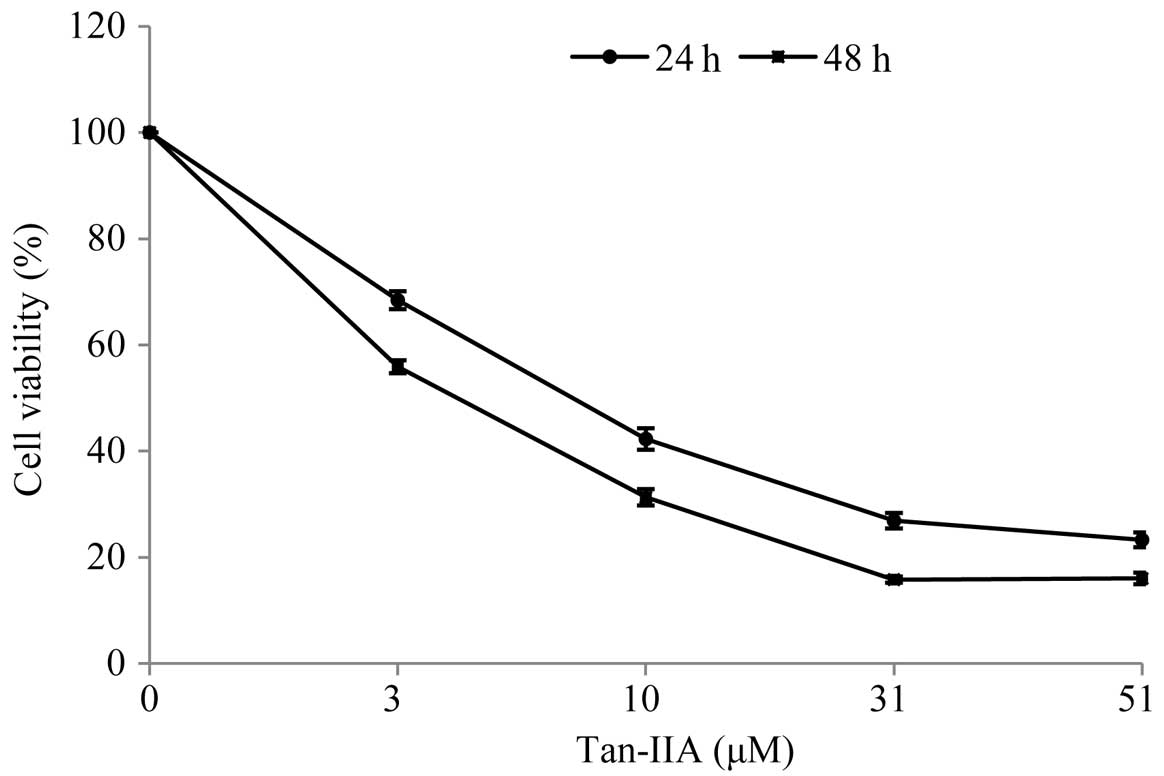
When cultured with various concentrations of Tan-IIA (0, 3, 10, 31 and 51 μM) for 24 and 48 h, the viable cell percentages relative to the control were 68.41±1.69, 42.3±2.02, 26.91±1.47 and 23.31±1.40% for 24 h and 55.90±1.20, 31.32±1.54, 15.83±0.56 and 16.04±1.09% for 48 h, respectively. During Tan-IIA treatment for 24 and 48 h, the half-maximum inhibitory concentration (IC50) was 8.5 and 4.0 μM, respectively. The results revealed that Tan-IIA inhibits the proliferation of human pancreatic cancer BxPC-3 cells in a time- and dose-dependent manner (Fig. 1).

Figure 1

Cytotoxicity of Tan-IIA in BxPC-3 cells was determined using the MTT assay. Tan-IIA significantly inhibited BxPC-3 cell proliferation in a time- and dose-dependent manner. Results are presented as the mean ± SD of three experiments. Tan-IIA, tanshinone IIA.

Tan-IIA induced apoptosis in BxPC-3 cells

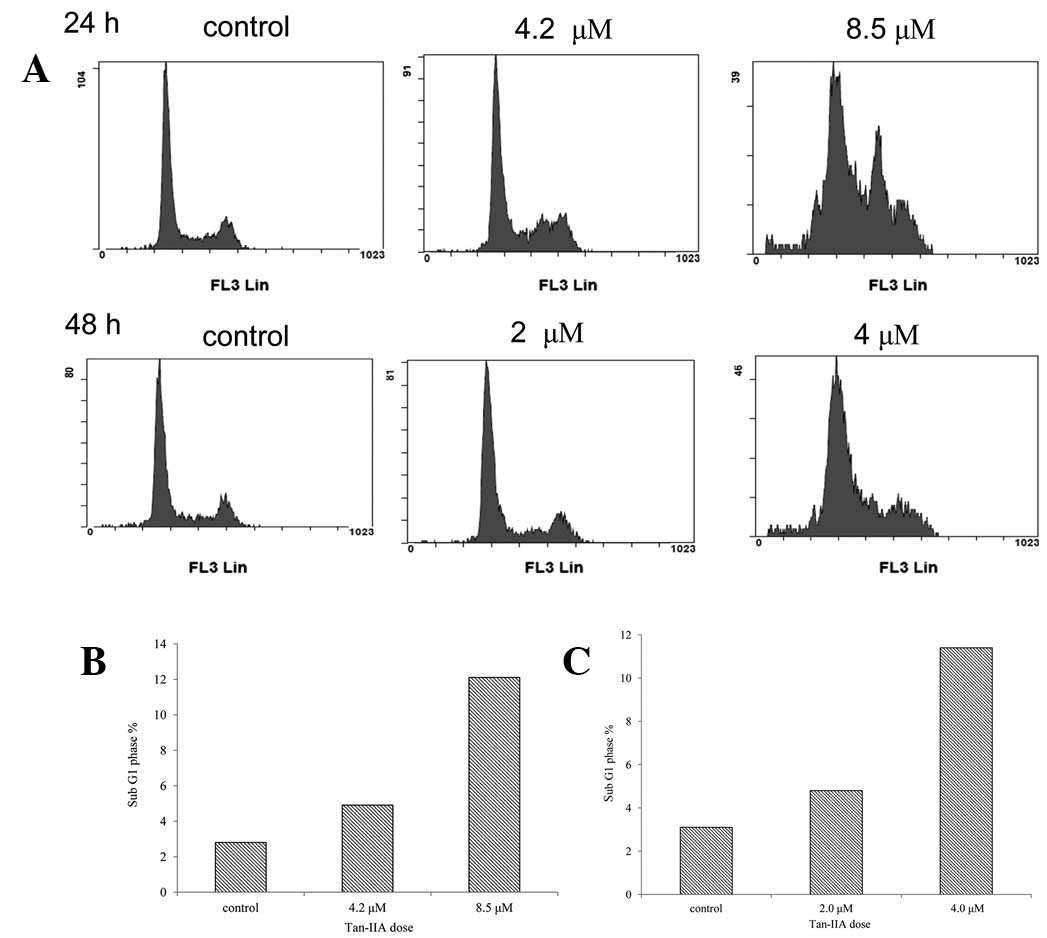
BxPC-3 cells were plated in 6-cm dishes at a density of 1×10⁶ cells and treated with Tan-IIA (0, 4.2 and 8.5 μM) for 24 h. Cell cycle analysis was performed by FACS (Fig. 2A). Results indicate that the percentages of sub-G1 cells were 2.8, 4.9 and 12.1, respectively (Fig. 2B). The BxPC-3 cells were plated in 6-cm dishes at a density of 1×10⁶ cells and then were treated with Tan-IIA (0, 2 and 4 μM) for 48 h. Percentages of sub-G1 cells were 3.1, 4.8 and 11.4%, respectively (Fig. 2C). These results demonstrate that Tan-IIA induces apoptosis in a time- and dose-dependent manner.

Figure 2

Cell cycle effect of Tan-IIA in BxPC-3 cells. Cells were treated with Tan-IIA (0, 4.2 and 8.5 μM) for 24 h or Tan-IIA (0, 2 and 4 μM) for 48 h. (A) The cell cycle was analyzed by FACS. Results indicate that the percentages of sub-G1 cells were (B) 2.8, 4.9 and 12.1% for 24 h, respectively; and (C) 3.1, 4.8 and 11.4% for 48 h, respectively and demonstrate Tan-IIA induces apoptosis in a time- and dose-dependent manner. Tan-IIA, tanshinone IIA.

Effect of Tan-IIA on protein expression of TCTP, MCL-1, Bcl-xl, Bax and Caspase-3 in BxPC-3 cells

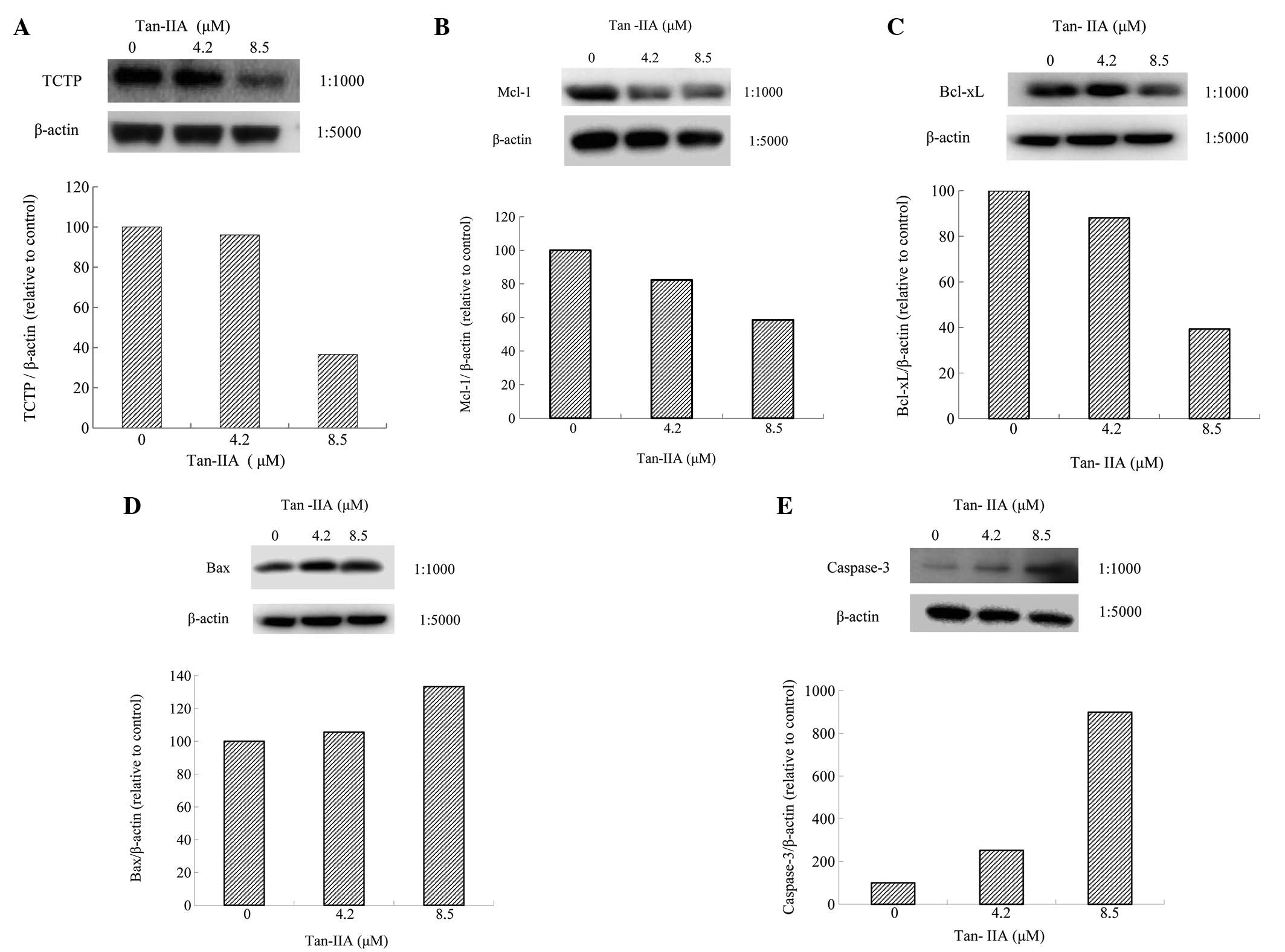
BxPC-3 cells were treated with various concentrations (0, 4.2 and 8.5 μM) of Tan-IIA for 24 h and the protein expression levels were evaluated by western blot analysis. The results revealed that Tan-IIA decreased expression of TCTP (Fig. 3A), MCL-1 (Fig. 3B) and Bcl-xl (Fig. 3C) and increased Bax (Fig. 3D) and Caspase-3 expression (Fig. 3E).

Figure 3

Protein expression of TCTP, MCL-1, Bcl-xL, Bax and Caspase-3 in BxPC-3 cells. Cells were treated with Tan-IIA (0, 4.2 and 8.5 μM) for 24 h and expression was evaluated by western blot analysis. Results revealed that Tan-IIA decreased expression of (A) TCTP, (B) Mcl-1 and (C) Bcl-xL and increased (D) Bax and (E) Caspase 3 expression. Tan-IIA, tanshinone IIA.

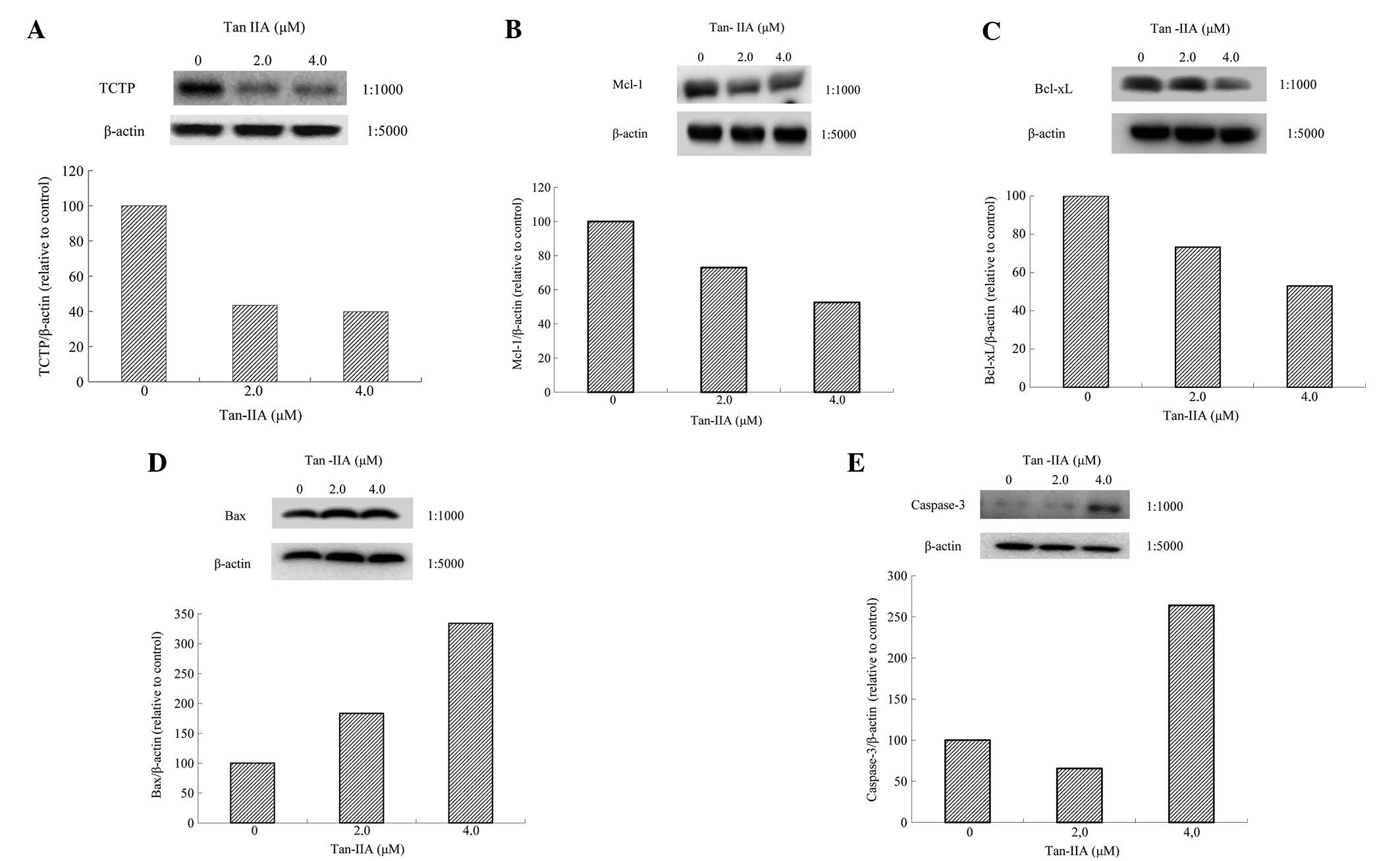
BxPC-3 cells were treated with various concentrations (0, 2.0 and 4.0 μM) of Tan-IIA for 48 h and protein expression was evaluated by western blot analysis. Tan-IIA decreased expression of TCTP (Fig. 4A), MCL-1 (Fig. 4B) and Bcl-xl (Fig. 4C) and increased Bax (Fig. 4D) and Caspase-3 expression (Fig. 4E).

Figure 4

Protein expression levels of TCTP, MCL-1, Bcl-xL, Bax and Caspase-3 in BxPC-3 cells. Cells were treated with Tan-IIA (0, 2.0 and 4.0 μM) for 48 h and expression was evaluated by western blot analysis. Results demonstrate that Tan-IIA decreased expression of (A) TCTP, (B) Mcl-1 and (C) Bcl-xL and increased (D) Bax and (E) Caspase-3 expression. Tan-IIA, tanshinone IIA.

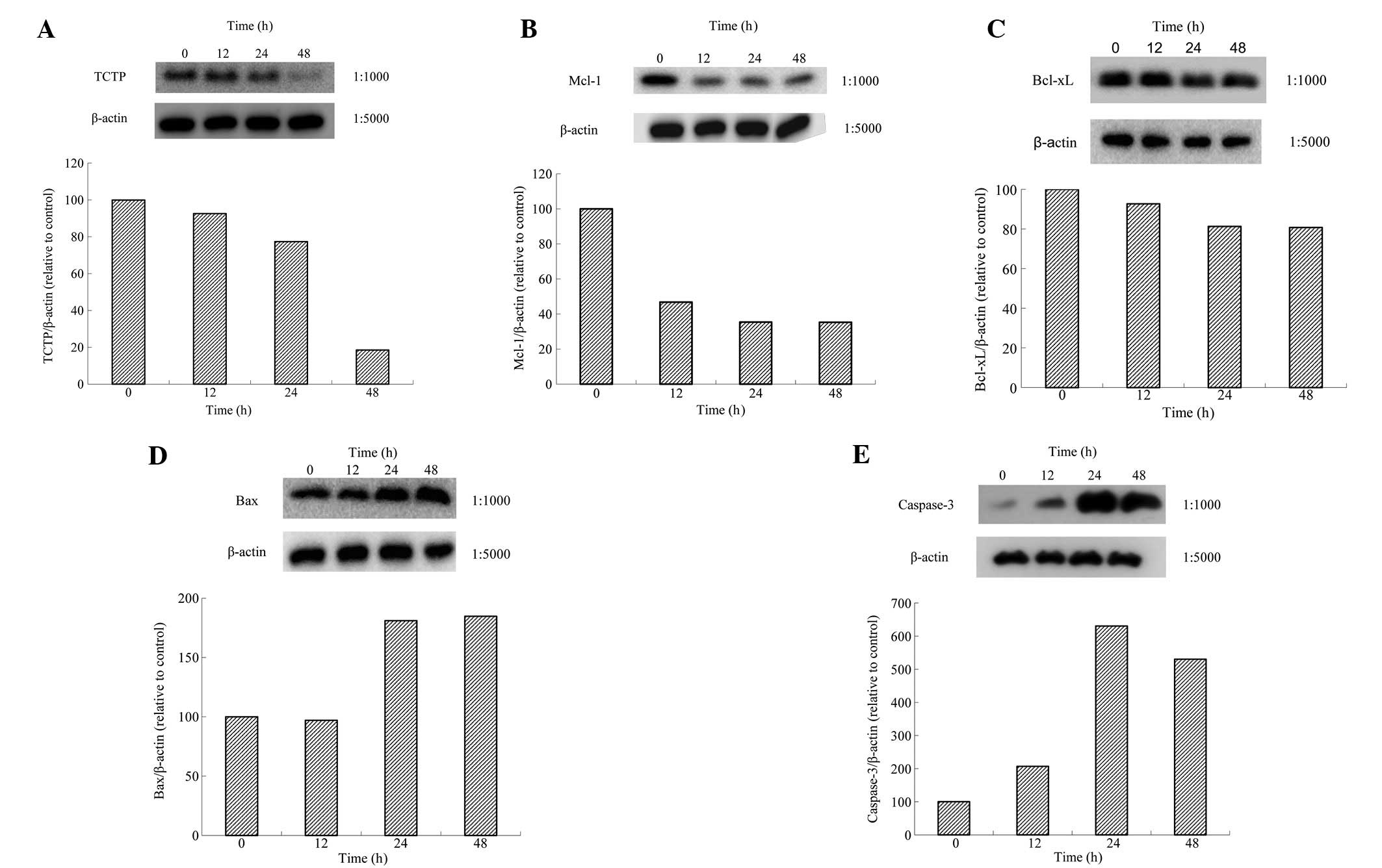
BxPC-3 cells were treated with Tan-IIA (8.5 μM) for various durations (0, 24, 48 and 72 h) and protein expression levels were evaluated by western blot analysis. Tan-IIA decreased expression of TCTP (Fig. 5A), MCL-1 (Fig. 5B) and Bcl-xl (Fig. 5C) and increased Bax (Fig. 5D) and Caspase-3 expression (Fig. 5E). Results demonstrate that Tan-IIA treatment of BxPC-3 cells inhibited TCTP, Bcl-xl and MCL-1 expression.

Figure 5

Protein expression levels of TCTP, Mcl-1, Bcl-xL, Bax and Caspase-3 in BxPC-3 cells. Cells were treated with Tan-IIA (8.5 μM) for various durations (0, 24, 48 and 72 h) and expression was evaluated by western blot analysis. Results revealed that Tan-IIA decreased expression (A) TCTP, (B) Mcl-1 and (C) Bcl-xL and increased (D) Bax and (E) Caspase-3 expression. Tan-IIA, tanshinone IIA.

TCTP is a 18-23-kDa hydrophilic protein, identified over 30 years ago in Ehrlich acites tumor cells (12-14). Overexpression of TCTP inhibits apoptosis and previous studies using antisense and siRNA knockdown identified increased apoptosis following knockdown of TCTP (15-17). It is well known that TCTP binds MCL-1 (16,18,19) and Bcl-xL (20) to inhibit apoptosis. In addition, the anti-apoptotic mechanism of TCTP has also been associated with antagonization of Bax (21). Tan-IIA also downregulates expression of the mitochondrial protective Bcl-2 family memeber MCL-1, inducing apoptosis in prostate cancer cells (22). These observations indicate that Tan-IIA inhibits protein expression of TCTP, MCL-1 and Bcl-xl to destroy mitochondrial function and increase Bax and Caspase-3 expression, inducing apoptosis in human pancreatic cancer BxPC-3 cells in vitro. The current study is the first to demonstrate inhibition of BxPC-3 cells by Tan-II through downregulation of TCTP, Bcl-xl and MCL-1 expression. The chemotherapeutic potential of Tan-IIA in human pancreatic cancer requires additional studies in the future.

Acknowledgements

The present study was supported by a grant from the Research Section of the Changhua Christian Hospital (Changhua, Taiwan; no. 101-CCH-IRP-11).

References

1 

Jemal A, Bray F, Center MM, et al: Global cancer statistics. CA Cancer J Clin. 61:69–90. 2011. View Article : Google Scholar

2 

Siegel R, Naishadham D and Jemal A: Cancer statistics, 2012. CA Cancer J Clin. 62:10–29. 2012. View Article : Google Scholar

3 

Verhoef MJ, Balneaves LG, Boon HS and Vroegindewey A: Reasons for and characteristics associated with complementary and alternative medicine use among adult cancer patients: a systematic review. Integr Cancer Ther. 4:274–286. 2005. View Article : Google Scholar : PubMed/NCBI

4 

Che AJ, Zhang JY, Li CH, Chen XF, Hu ZD and Chen XG: Separation and determination of active components in Radix Salviae miltiorrhizae and its medicinal preparations by nonaqueous capillary electrophoresis. J Sep Sci. 27:569–575. 2004.PubMed/NCBI

5 

Zhou L, Zuo Z and Chow MS: Danshen: an overview of its chemistry, pharmacology, pharmacokinetics and clinical use. J Clin Pharmacol. 45:1345–1359. 2005. View Article : Google Scholar : PubMed/NCBI

6 

Su CC and Lin YH: Tanshinone IIA downregulates the protein expression of ErbB-2 and upregulates TNF-α in colon cancer cells in vitro and in vivo. Int J Mol Med. 22:847–851. 2008.PubMed/NCBI

7 

Su CC and Lin YH: Tanshinone IIA inhibits human breast cancer cells through increased Bax to Bcl-xL ratios. Int J Mol Med. 22:357–361. 2008.PubMed/NCBI

8 

Chiu TL and Su CC: Tanshinone IIA induces apoptosis in human lung cancer A549 cells through the induction of reactive oxygen species and decreasing the mitochondrial membrane potential. Int J Mol Med. 25:231–236. 2010.PubMed/NCBI

9 

Cheng CY and Su CC: Tanshinone IIA may inhibit the growth of small cell lung cancer H146 cells by up-regulating the Bax/Bcl-2 ratio and decreasing mitochondrial membrane potential. Mol Med Rep. 3:645–650. 2010.PubMed/NCBI

10 

Cheng CY and Su CC: Tanshinone IIA inhibits Hep-J5 cells by increasing calreticulin, Caspase-12 and GADD153 protein expression. Int J Mol Med. 26:379–385. 2010.PubMed/NCBI

11 

Fronza M, Murillo R, Œlusarczyk S, et al: In vitro cytotoxic activity of abietane diterpenes from Peltodon longipes as well as Salvia miltiorrhiza and Salvia sahendica. Bioorg Med Chem. 19:4876–4881. 2011. View Article : Google Scholar : PubMed/NCBI

12 

Chitpatima ST, Makrides S, Bandyopadhyay R and Brawerman G: Nucleotide sequence of a major messenger RNA for a 21 kilodalton polypeptide that is under translational control in mouse tumor cells. Nucleic Acids Res. 16:23501988. View Article : Google Scholar : PubMed/NCBI

13 

Bommer UA, Lazaris-Karatzas A, De Benedetti A, et al: Translational regulation of the mammalian growth-related protein P23: involvement of eIF-4E. Cell Mol Biol Res. 40:633–641. 1994.PubMed/NCBI

14 

Yenofsky R, Cereghini S, Krowczynska A and Brawerman G: Regulation of mRNA utilization in mouse erythroleukemia cells induced to differentiate by exposure to dimethyl sulfoxide. Mol Cell Biol. 3:1197–1203. 1983.PubMed/NCBI

15 

Li F, Zhang D and Fujise K: Characterization of fortilin, a novel antiapoptotic protein. J Biol Chem. 276:47542–47549. 2001. View Article : Google Scholar : PubMed/NCBI

16 

Zhang D, Li F, Weidner D, Mnjoyan ZH and Fujise K: Physical and functional interaction between myeloid cell leukemia 1 protein (MCL1) and Fortilin. The potential role of MCL1 as a fortilin chaperone. J Biol Chem. 277:37430–37438. 2002. View Article : Google Scholar : PubMed/NCBI

17 

Tuynder M, Susini L, Prieur S, et al: Biological models and genes of tumor reversion: cellular reprogramming through tpt1/TCTP and SIAH-1. Proc Natl Acad Sci USA. 99:14976–14981. 2002. View Article : Google Scholar : PubMed/NCBI

18 

Graidist P, Phongdara A and Fujise K: Antiapoptotic protein partners fortilin and MCL1 independently protect cells from 5-fluorouracil-induced cytotoxicity. J Biol Chem. 279:40868–40875. 2004. View Article : Google Scholar

19 

Liu H, Peng HW, Cheng YS, Yuan HS and Yang-Yen HF: Stabilization and enhancement of the antiapoptotic activity of mcl-1 by TCTP. Mol Cell Biol. 25:3117–3126. 2005. View Article : Google Scholar : PubMed/NCBI

20 

Yang Y, Yang F, Xiong Z, et al: An N-terminal region of translationally controlled tumor protein is required for its antiapoptotic activity. Oncogene. 24:4778–4788. 2005. View Article : Google Scholar : PubMed/NCBI

21 

Susini L, Besse S, Duflaut D, et al: CTP protects from apoptotic cell death by antagonizing bax function. Cell Death Differ. 15:1211–1220. 2008. View Article : Google Scholar : PubMed/NCBI

22 

Won SH, Lee HJ, Jeong SJ, et al: Tanshinone IIA induces mitochondria dependent apoptosis in prostate cancer cells in association with an inhibition of phosphoinositide 3-kinase/AKT pathway. Biol Pharm Bull. 33:1828–1834. 2010. View Article : Google Scholar : PubMed/NCBI

Related Articles

  • Abstract
  • View
  • Download
  • Twitter
Copy and paste a formatted citation
Spandidos Publications style
Huang CY, Chiu TL, Kuo SJ, Chien SY, Chen DR and Su CC: Tanshinone IIA inhibits the growth of pancreatic cancer BxPC‑3 cells by decreasing protein expression of TCTP, MCL‑1 and Bcl‑xL. Mol Med Rep 7: 1045-1049, 2013.
APA
Huang, C., Chiu, T., Kuo, S., Chien, S., Chen, D., & Su, C. (2013). Tanshinone IIA inhibits the growth of pancreatic cancer BxPC‑3 cells by decreasing protein expression of TCTP, MCL‑1 and Bcl‑xL. Molecular Medicine Reports, 7, 1045-1049. https://doi.org/10.3892/mmr.2013.1290
MLA
Huang, C., Chiu, T., Kuo, S., Chien, S., Chen, D., Su, C."Tanshinone IIA inhibits the growth of pancreatic cancer BxPC‑3 cells by decreasing protein expression of TCTP, MCL‑1 and Bcl‑xL". Molecular Medicine Reports 7.3 (2013): 1045-1049.
Chicago
Huang, C., Chiu, T., Kuo, S., Chien, S., Chen, D., Su, C."Tanshinone IIA inhibits the growth of pancreatic cancer BxPC‑3 cells by decreasing protein expression of TCTP, MCL‑1 and Bcl‑xL". Molecular Medicine Reports 7, no. 3 (2013): 1045-1049. https://doi.org/10.3892/mmr.2013.1290
Copy and paste a formatted citation
x
Spandidos Publications style
Huang CY, Chiu TL, Kuo SJ, Chien SY, Chen DR and Su CC: Tanshinone IIA inhibits the growth of pancreatic cancer BxPC‑3 cells by decreasing protein expression of TCTP, MCL‑1 and Bcl‑xL. Mol Med Rep 7: 1045-1049, 2013.
APA
Huang, C., Chiu, T., Kuo, S., Chien, S., Chen, D., & Su, C. (2013). Tanshinone IIA inhibits the growth of pancreatic cancer BxPC‑3 cells by decreasing protein expression of TCTP, MCL‑1 and Bcl‑xL. Molecular Medicine Reports, 7, 1045-1049. https://doi.org/10.3892/mmr.2013.1290
MLA
Huang, C., Chiu, T., Kuo, S., Chien, S., Chen, D., Su, C."Tanshinone IIA inhibits the growth of pancreatic cancer BxPC‑3 cells by decreasing protein expression of TCTP, MCL‑1 and Bcl‑xL". Molecular Medicine Reports 7.3 (2013): 1045-1049.
Chicago
Huang, C., Chiu, T., Kuo, S., Chien, S., Chen, D., Su, C."Tanshinone IIA inhibits the growth of pancreatic cancer BxPC‑3 cells by decreasing protein expression of TCTP, MCL‑1 and Bcl‑xL". Molecular Medicine Reports 7, no. 3 (2013): 1045-1049. https://doi.org/10.3892/mmr.2013.1290
Follow us
  • Twitter
  • LinkedIn
  • Facebook
About
  • Spandidos Publications
  • Careers
  • Cookie Policy
  • Privacy Policy
How can we help?
  • Help
  • Live Chat
  • Contact
  • Email to our Support Team