Spandidos Publications Logo
  • About
    • About Spandidos
    • Aims and Scopes
    • Abstracting and Indexing
    • Editorial Policies
    • Reprints and Permissions
    • Job Opportunities
    • Terms and Conditions
    • Contact
  • Journals
    • All Journals
    • Oncology Letters
      • Oncology Letters
      • Information for Authors
      • Editorial Policies
      • Editorial Board
      • Aims and Scope
      • Abstracting and Indexing
      • Bibliographic Information
      • Archive
    • International Journal of Oncology
      • International Journal of Oncology
      • Information for Authors
      • Editorial Policies
      • Editorial Board
      • Aims and Scope
      • Abstracting and Indexing
      • Bibliographic Information
      • Archive
    • Molecular and Clinical Oncology
      • Molecular and Clinical Oncology
      • Information for Authors
      • Editorial Policies
      • Editorial Board
      • Aims and Scope
      • Abstracting and Indexing
      • Bibliographic Information
      • Archive
    • Experimental and Therapeutic Medicine
      • Experimental and Therapeutic Medicine
      • Information for Authors
      • Editorial Policies
      • Editorial Board
      • Aims and Scope
      • Abstracting and Indexing
      • Bibliographic Information
      • Archive
    • International Journal of Molecular Medicine
      • International Journal of Molecular Medicine
      • Information for Authors
      • Editorial Policies
      • Editorial Board
      • Aims and Scope
      • Abstracting and Indexing
      • Bibliographic Information
      • Archive
    • Biomedical Reports
      • Biomedical Reports
      • Information for Authors
      • Editorial Policies
      • Editorial Board
      • Aims and Scope
      • Abstracting and Indexing
      • Bibliographic Information
      • Archive
    • Oncology Reports
      • Oncology Reports
      • Information for Authors
      • Editorial Policies
      • Editorial Board
      • Aims and Scope
      • Abstracting and Indexing
      • Bibliographic Information
      • Archive
    • Molecular Medicine Reports
      • Molecular Medicine Reports
      • Information for Authors
      • Editorial Policies
      • Editorial Board
      • Aims and Scope
      • Abstracting and Indexing
      • Bibliographic Information
      • Archive
    • World Academy of Sciences Journal
      • World Academy of Sciences Journal
      • Information for Authors
      • Editorial Policies
      • Editorial Board
      • Aims and Scope
      • Abstracting and Indexing
      • Bibliographic Information
      • Archive
    • International Journal of Functional Nutrition
      • International Journal of Functional Nutrition
      • Information for Authors
      • Editorial Policies
      • Editorial Board
      • Aims and Scope
      • Abstracting and Indexing
      • Bibliographic Information
      • Archive
    • International Journal of Epigenetics
      • International Journal of Epigenetics
      • Information for Authors
      • Editorial Policies
      • Editorial Board
      • Aims and Scope
      • Abstracting and Indexing
      • Bibliographic Information
      • Archive
    • Medicine International
      • Medicine International
      • Information for Authors
      • Editorial Policies
      • Editorial Board
      • Aims and Scope
      • Abstracting and Indexing
      • Bibliographic Information
      • Archive
  • Articles
  • Information
    • Information for Authors
    • Information for Reviewers
    • Information for Librarians
    • Information for Advertisers
    • Conferences
  • Language Editing
Spandidos Publications Logo
  • About
    • About Spandidos
    • Aims and Scopes
    • Abstracting and Indexing
    • Editorial Policies
    • Reprints and Permissions
    • Job Opportunities
    • Terms and Conditions
    • Contact
  • Journals
    • All Journals
    • Biomedical Reports
      • Information for Authors
      • Editorial Policies
      • Editorial Board
      • Aims and Scope
      • Abstracting and Indexing
      • Bibliographic Information
      • Archive
    • Experimental and Therapeutic Medicine
      • Information for Authors
      • Editorial Policies
      • Editorial Board
      • Aims and Scope
      • Abstracting and Indexing
      • Bibliographic Information
      • Archive
    • International Journal of Epigenetics
      • Information for Authors
      • Editorial Policies
      • Editorial Board
      • Aims and Scope
      • Abstracting and Indexing
      • Bibliographic Information
      • Archive
    • International Journal of Functional Nutrition
      • Information for Authors
      • Editorial Policies
      • Editorial Board
      • Aims and Scope
      • Abstracting and Indexing
      • Bibliographic Information
      • Archive
    • International Journal of Molecular Medicine
      • Information for Authors
      • Editorial Policies
      • Editorial Board
      • Aims and Scope
      • Abstracting and Indexing
      • Bibliographic Information
      • Archive
    • International Journal of Oncology
      • Information for Authors
      • Editorial Policies
      • Editorial Board
      • Aims and Scope
      • Abstracting and Indexing
      • Bibliographic Information
      • Archive
    • Medicine International
      • Information for Authors
      • Editorial Policies
      • Editorial Board
      • Aims and Scope
      • Abstracting and Indexing
      • Bibliographic Information
      • Archive
    • Molecular and Clinical Oncology
      • Information for Authors
      • Editorial Policies
      • Editorial Board
      • Aims and Scope
      • Abstracting and Indexing
      • Bibliographic Information
      • Archive
    • Molecular Medicine Reports
      • Information for Authors
      • Editorial Policies
      • Editorial Board
      • Aims and Scope
      • Abstracting and Indexing
      • Bibliographic Information
      • Archive
    • Oncology Letters
      • Information for Authors
      • Editorial Policies
      • Editorial Board
      • Aims and Scope
      • Abstracting and Indexing
      • Bibliographic Information
      • Archive
    • Oncology Reports
      • Information for Authors
      • Editorial Policies
      • Editorial Board
      • Aims and Scope
      • Abstracting and Indexing
      • Bibliographic Information
      • Archive
    • World Academy of Sciences Journal
      • Information for Authors
      • Editorial Policies
      • Editorial Board
      • Aims and Scope
      • Abstracting and Indexing
      • Bibliographic Information
      • Archive
  • Articles
  • Information
    • For Authors
    • For Reviewers
    • For Librarians
    • For Advertisers
    • Conferences
  • Language Editing
Login Register Submit
  • This site uses cookies
  • You can change your cookie settings at any time by following the instructions in our Cookie Policy. To find out more, you may read our Privacy Policy.

    I agree
Search articles by DOI, keyword, author or affiliation
Search
Advanced Search
presentation
Experimental and Therapeutic Medicine
Join Editorial Board Propose a Special Issue
Print ISSN: 1792-0981 Online ISSN: 1792-1015
Journal Cover
January-2023 Volume 25 Issue 1

Full Size Image

Sign up for eToc alerts
Recommend to Library

Journals

International Journal of Molecular Medicine

International Journal of Molecular Medicine

International Journal of Molecular Medicine is an international journal devoted to molecular mechanisms of human disease.

International Journal of Oncology

International Journal of Oncology

International Journal of Oncology is an international journal devoted to oncology research and cancer treatment.

Molecular Medicine Reports

Molecular Medicine Reports

Covers molecular medicine topics such as pharmacology, pathology, genetics, neuroscience, infectious diseases, molecular cardiology, and molecular surgery.

Oncology Reports

Oncology Reports

Oncology Reports is an international journal devoted to fundamental and applied research in Oncology.

Experimental and Therapeutic Medicine

Experimental and Therapeutic Medicine

Experimental and Therapeutic Medicine is an international journal devoted to laboratory and clinical medicine.

Oncology Letters

Oncology Letters

Oncology Letters is an international journal devoted to Experimental and Clinical Oncology.

Biomedical Reports

Biomedical Reports

Explores a wide range of biological and medical fields, including pharmacology, genetics, microbiology, neuroscience, and molecular cardiology.

Molecular and Clinical Oncology

Molecular and Clinical Oncology

International journal addressing all aspects of oncology research, from tumorigenesis and oncogenes to chemotherapy and metastasis.

World Academy of Sciences Journal

World Academy of Sciences Journal

Multidisciplinary open-access journal spanning biochemistry, genetics, neuroscience, environmental health, and synthetic biology.

International Journal of Functional Nutrition

International Journal of Functional Nutrition

Open-access journal combining biochemistry, pharmacology, immunology, and genetics to advance health through functional nutrition.

International Journal of Epigenetics

International Journal of Epigenetics

Publishes open-access research on using epigenetics to advance understanding and treatment of human disease.

Medicine International

Medicine International

An International Open Access Journal Devoted to General Medicine.

Journal Cover
January-2023 Volume 25 Issue 1

Full Size Image

Sign up for eToc alerts
Recommend to Library

  • Article
  • Citations
    • Cite This Article
    • Download Citation
    • Create Citation Alert
    • Remove Citation Alert
    • Cited By
  • Similar Articles
    • Related Articles (in Spandidos Publications)
    • Similar Articles (Google Scholar)
    • Similar Articles (PubMed)
  • Download PDF
  • Download XML
  • View XML
Case Report Open Access

Gastric inverted hyperplastic polyp: A case report

  • Authors:
    • Qiang Ma
    • Lixiang Gao
    • Naiying Sun
    • Ying Chen
    • Li Liu
    • Limin Liu
    • Wenjun Guo
    • Xingjie Yang
  • View Affiliations / Copyright

    Affiliations: Department of Pathology, Sunshine Union Hospital, Weifang, Shandong 261000, P.R. China
    Copyright: © Ma et al. This is an open access article distributed under the terms of Creative Commons Attribution License.
  • Article Number: 6
    |
    Published online on: November 16, 2022
       https://doi.org/10.3892/etm.2022.11705
  • Expand metrics +
Metrics: Total Views: 0 (Spandidos Publications: | PMC Statistics: )
Metrics: Total PDF Downloads: 0 (Spandidos Publications: | PMC Statistics: )
Cited By (CrossRef): 0 citations Loading Articles...

This article is mentioned in:


Abstract

Inverted hyperplastic polyp (IHP) is a rare disease characterized by the downward growth of proliferative mucosal components into the submucosal layer. It is often misdiagnosed as other submucosal tumors and accurate diagnosis requires pathological examination. Most patients with IHP have no clinical symptoms and some have non‑specific symptoms, such as abdominal distension, abdominal pain and even anemia. IHP is treated via endoscopic mucosal resection or endoscopic sub‑mucosal section. The present study reported a case of IHP and discussed its clinical manifestations, clinicopathological diagnosis, differential diagnosis and treatment to improve our understanding of the disease.

Introduction

Inverted hyperplastic polyp (IHP) was first reported by Kamata et al (1). This disease is very rare and is characterized by the downward growth of hyperplastic mucosa into the submucosa, forming an inverted histological morphology that presents an overall vase-like appearance under low magnification, whereas hyperplastic polyps generally grow to the mucosal surface and into the gastric cavity (2). The polyp consists of foveolar-type cells, pyloric gland-like cells, gastric gland cells and smooth muscle cells (3,4) and a few cases have been accompanied by canceration (1). IHP was considered heterotopic or hamartomatous until the 1990s and various terms have been coined for the lesions, including ‘solitary polypoid hamartoma,’ ‘unusual heterotopia of pyloric glands,’ and ‘submucosal unusual polyps’ (5). IHP is often misdiagnosed as other tumor types and correct diagnosis usually requires pathological assessment. The present study reported a case of IHP diagnosed on admission due to abdominal pain and treated by endoscopic mucosal resection (EMR).

Case report

Case presentation

A 75-year-old man presented with abdominal pain and constipation, which he had experienced for one and a half years. The patient originally developed abdominal distension and pain (upper abdomen dominant) without obvious reasons, accompanied by defecation once every 3-4 days, laborious defecation and dry stool. The patient took trimebutine and probiotics after symptom onset to help with defecation, but the therapeutic effect was not significant. The month before he presented for care, he experienced unexplained diarrhea followed by alternating episodes of diarrhea and constipation. The patient denied having other illnesses. Laboratory examination and routine blood and fecal tests were normal and showed no Helicobacter pylori infection.

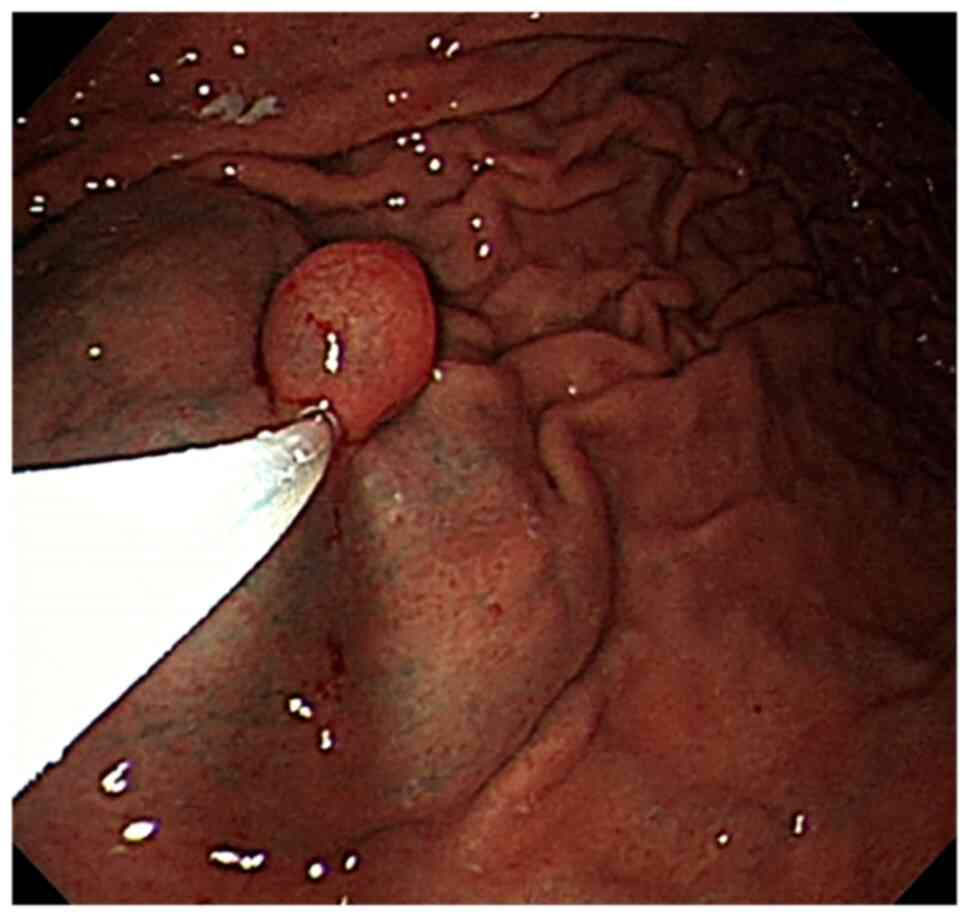
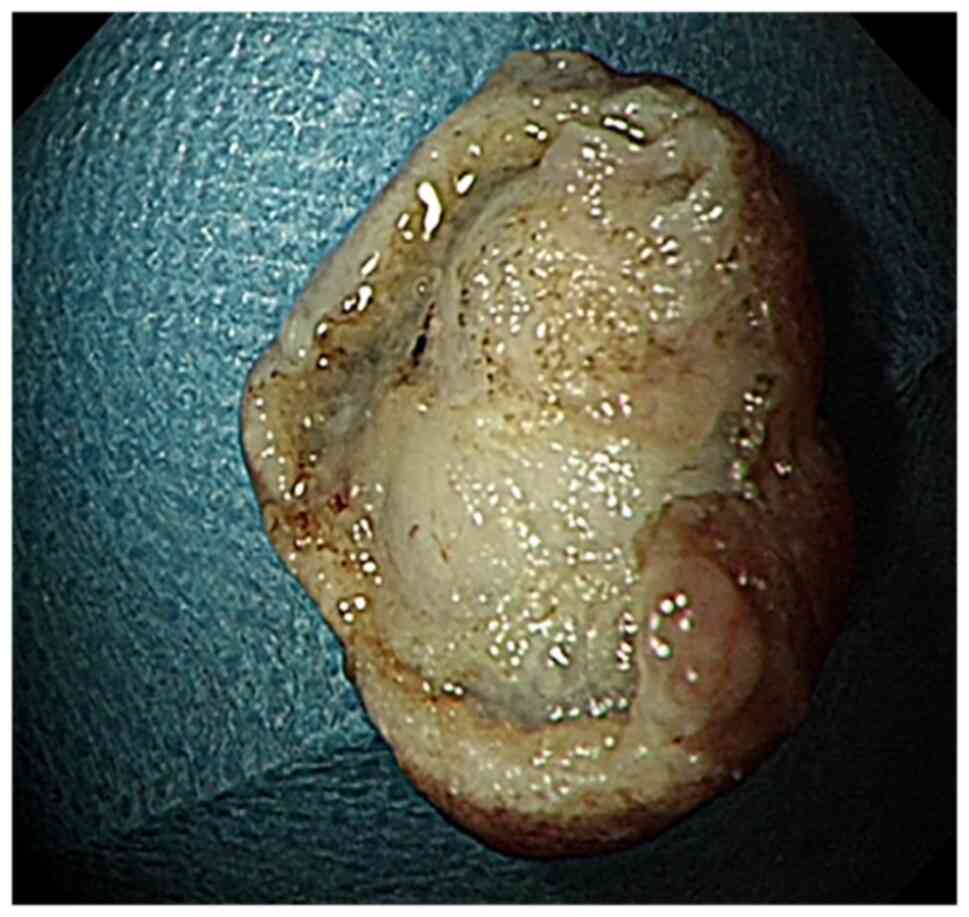
Endoscopy showed a 15-mm submucosal eminence with a smooth surface in the greater curvature of the stomach. After normal saline (with epinephrine and indigo carmine) was injected into the base to lift the tumor, the tumor was completely excised with a high-frequency electrical snare and the wound surface was clamped with metal for hemostasis (Figs. 1 and 2). Base on that results of the endoscopy, neuroendocrine tumors, heterotopic pancreatic and gastrointestinal stromal tumors were considered. and the final diagnosis awaited pathological examination. The present study was approved by the Ethics Committee of Sunshine Union Hospital (approval no. 2022-11-0028).

Figure 1

Endoscopic image of the tumor showing the high-frequency electrical snare lifting the clamped tumor.

Figure 2

Endoscopic image of the tumor showing the basal surface of the resected tumor (the basal surface area is about 1.5x1 cm).

Pathological findings. Macro-examination

A gray mass measuring 1.5x1.4x1 cm was excised. The tissue was fixed with 4% neutral formalin at room temperature for 48 h, dehydrated with alcohol and xylene, embedded in paraffin at 62˚C and then cooled. The 4-µm serial sections were prepared and then stained with hematoxylin for 5 min and eosin for 2 min at room temperature.

Microscopic observation

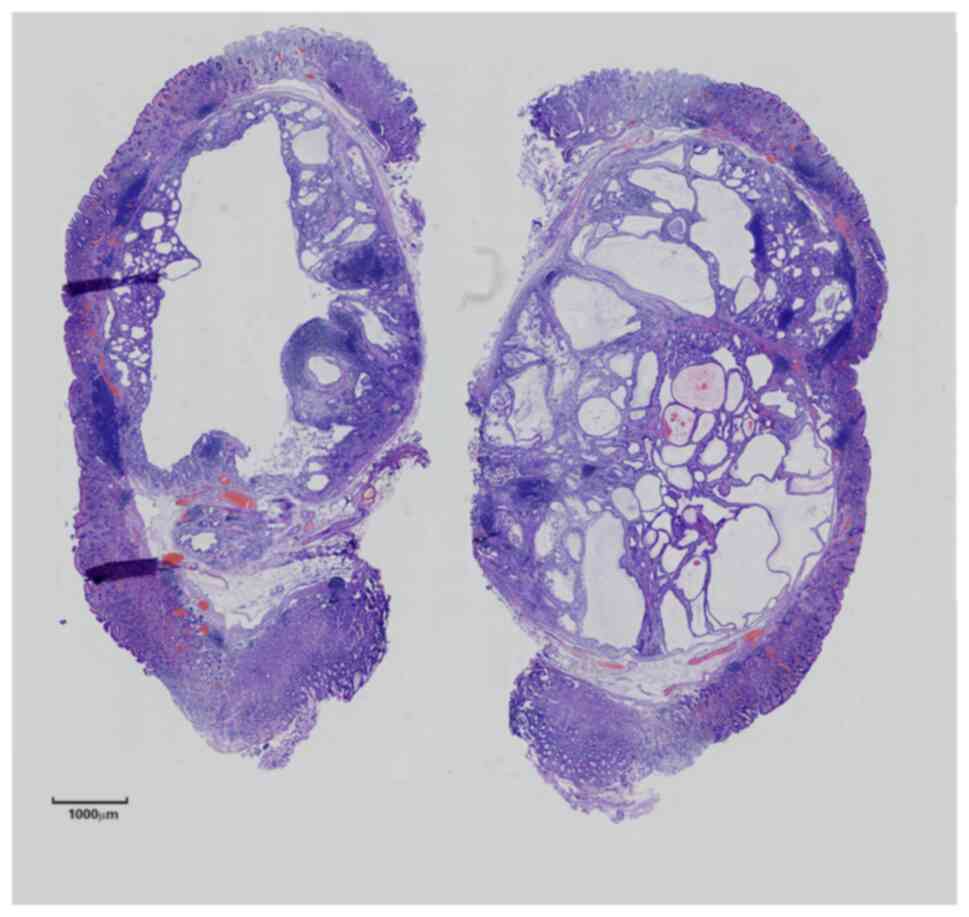
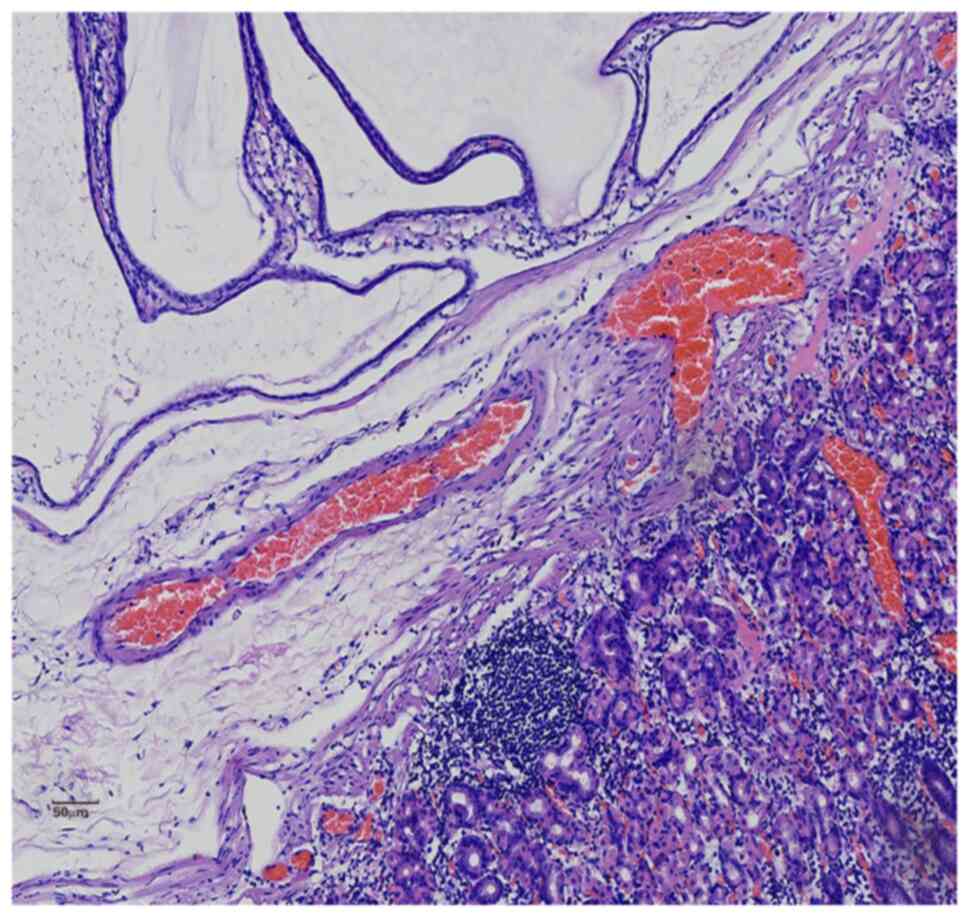
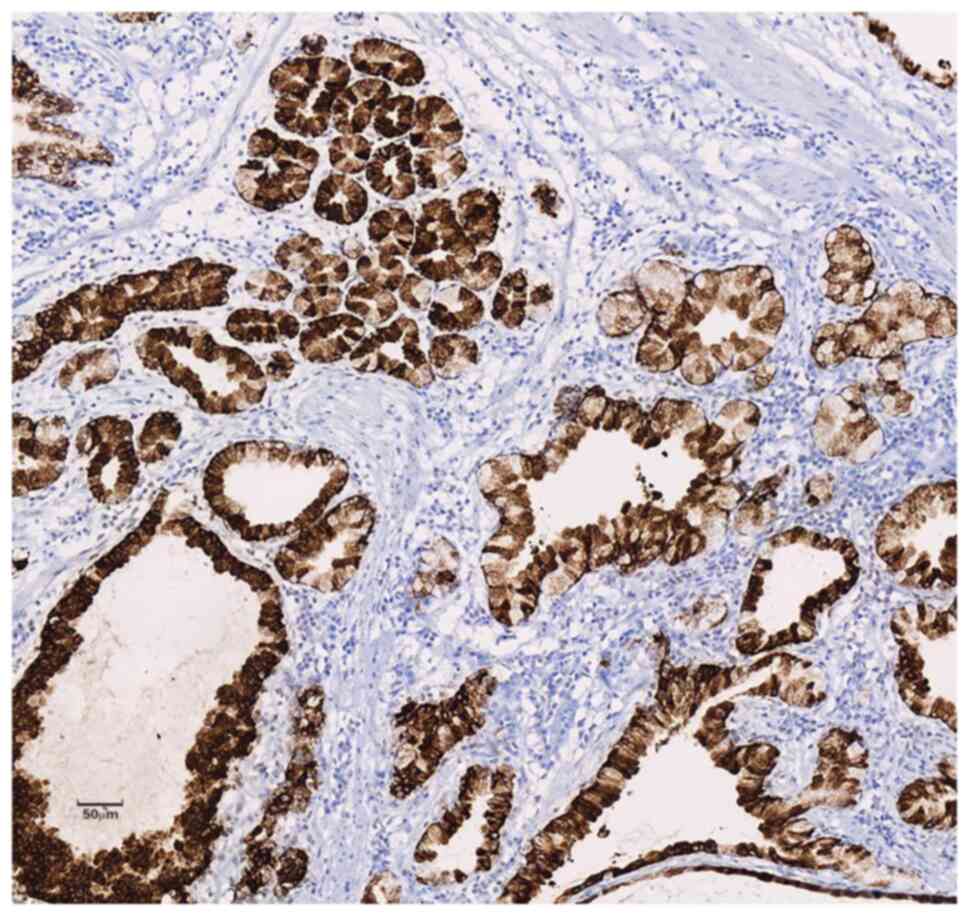
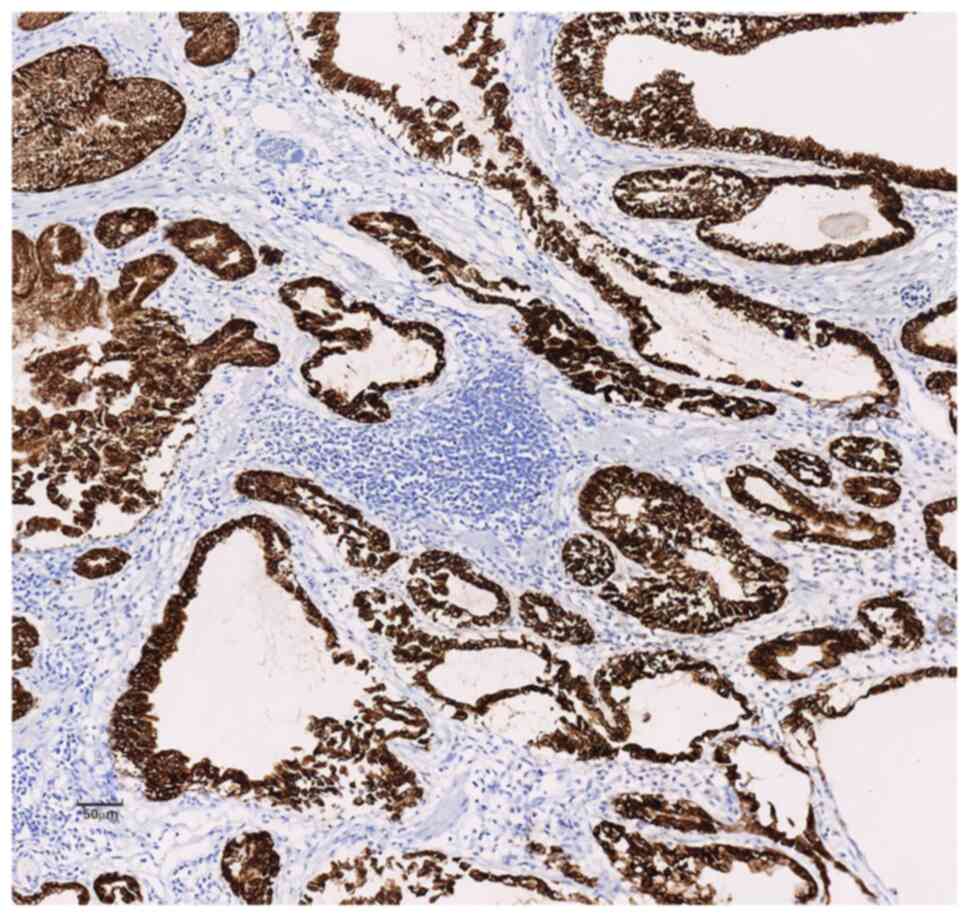
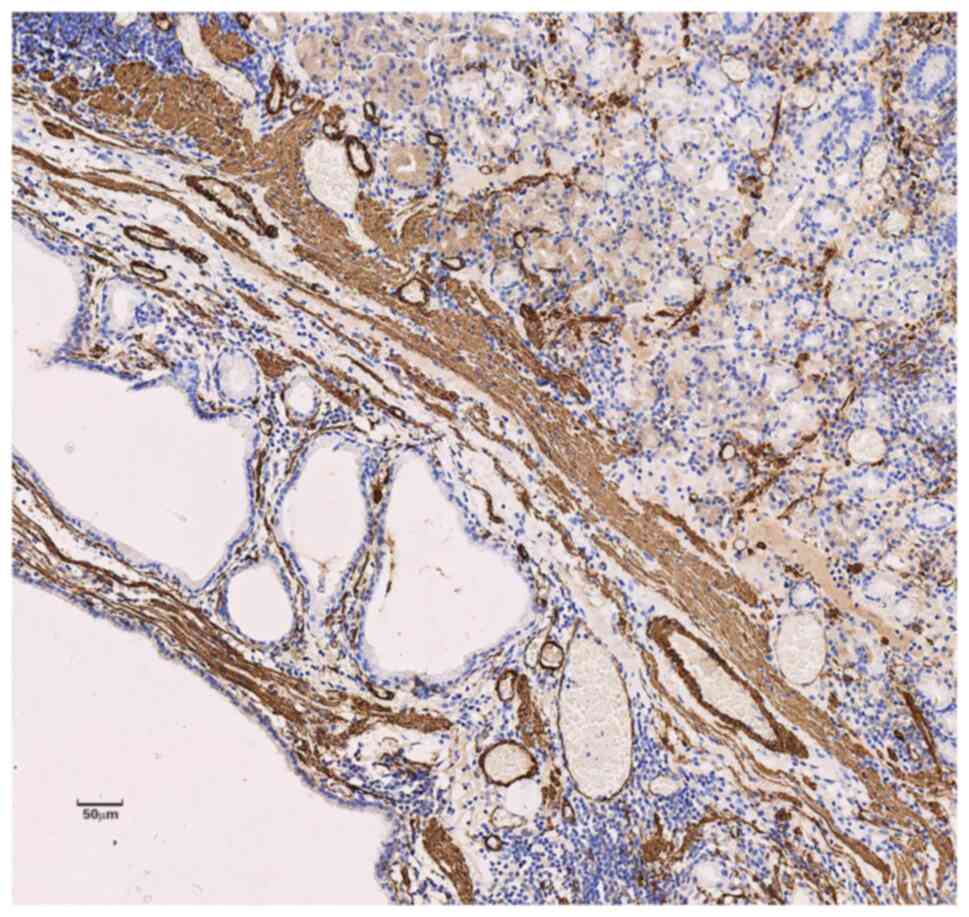
Histopathological examination showed that the fundic gland and gastric pit of the inherent gastric mucosa were normal in shape, with mild atrophy but no enterolization. Submucosal ‘inverted’ glands were seen as nodular, lobulated hyperplasia with thin, smooth muscle bundles encircling the ‘nodules’ or ‘lobules’ or surrounding a single gland. Some glands were similar in size to the normal intrinsic glands and some were saccular-dilated with visible eosinophilic secretions in the glandular cavity. Similar to the chief cells, the cells of the normal-sized glands were located in the basement and had a short columnar shape, round nuclei and basophilic cytoplasm. The cells of the dilated glands were similar to the surface mucous cells of the gastric pit as they were located in the base with a high columnar shape, oval nuclei and pale, stained cytoplasm that could be flattened due to the extrusion of secretions. None of the above cells had obvious atypia or mitotic figures. Scattered infiltration of lymphocytes or formation of lymphoid follicles were seen in the interstitium (Figs. 3 and 4). Immunohistochemical staining were incubated with primary antibodies mucin-5AC (MUC-5AC; working solution; cat. no. MAB-0079; Fuzhou Maixin Biotechnology Development Co., Ltd.), mucin-6 (MUC-6; working solution; cat. no. ZM-0396; OriGene Technologies, Inc.), smooth muscle actin (SMA; working solution; cat. no. ZM-0003; OriGene Technologies, Inc.), Desmin (working solution, cat. no. Kit-0023; Fuzhou Maixin Biotechnology Development Co., Ltd.), CD10 (working solution, cat. no. MAB-068; Fuzhou Maixin Biotechnology Development Co., Ltd.), caudal-related homeobox transcription factor 2 (CDX-2; working solution; cat. no. MAB-0216; Fuzhou Maixin Biotechnology Development Co., Ltd.), mucin-2 (MUC-2; working solution; cat. no. MAB-0075; Fuzhou Maixin Biotechnology Development Co., Ltd.) and Ki-67 (working solution, cat. no. ZM-0166; OriGene Technologies, Inc.) overnight at 4˚C from EnVision Systems (Agilent Technologies, Inc.) showed diffuse strong positive expression of MUC-5AC and MUC-6 in the cytoplasm of the polyp glands (Figs. 5 and 6) and positive expression of SMA and Desmin in the muscular layer of mucosa and the smooth muscle bundle of interstitial tissue of the polyps (Fig. 7). The staining further showed negative expression of CD10, CDX-2 and MUC-2 and the Ki-67 proliferating index was less than 2% of the glands in the polyps.

Figure 3

Histopathological appearance of inverted hyperplastic polyp showing the submucosal ‘inverted’ glands with smooth muscle bundles encircling the ‘inverted’ glands or surrounding a single gland. Some glands were similar to the normal inherent glands in size and some were saccular-dilated with visible eosinophilic secretion in the glandular cavity (magnification, x16; hematoxylin and eosin staining; scale bar=1,000 µm).

Figure 4

Partial enlarged view of Fig. 3 showing that the hyperplastic smooth muscle bundles surrounded the lobules composed of glands and the glands within the polyp had expanded sacculi (magnification, x200; hematoxylin and eosin staining; scale bars=50 µm).

Figure 5

Immunohistochemical staining of inverted hyperplastic polyp showing the diffuse and strong cytoplasmic expression of glandular MUC-5AC in the polyp (EnVision; magnification, x200; scale bar=50 µm).

Figure 6

Immunohistochemical staining of inverted hyperplastic polyp showing the diffuse and strong cytoplasmic expression of glandular MUC-6 in the polyp (EnVision; magnification, x200; scale bar=50 µm).

Figure 7

Immunohistochemical staining of inverted hyperplastic polyp showing the positive expression of smooth muscle actin in the mucosal muscular layer and the smooth muscle bundle in the polyp stroma (EnVision; magnification, x200; scale bar=50 µm).

Pathological diagnosis

The patient was diagnosed with (greater curvature of stomach) IHP.

Treatment and follow-up

The tumor was completely removed by EMR and postoperative recovery was good. There was no recurrence during the 6-week follow-up.

Discussion

Gastric hyperplastic polyps usually present with multiple types of benign lesions above the gastric mucosa; inverted growth of polyps into the gastric mucosa is rare. Gastric IHP is characterized by inverted growth of hyperplastic mucosa under normal mucosa and it has been reported that IHP can be pedicled (5). Kim et al (6) classified gastric inverted polyps into three types according to the characteristics of the lesion's connection with mucosal surfaces, smooth muscle boundaries and tissues. Type 1 is characterized by a central mucosal communicating structure and clear smooth muscle borders and has a typical shape of a round vase under low magnification. Half of type 1 may be accompanied by simultaneous cancer transformation. Type 2 is similar to type 1 but has no central communicating structure. Type 3 is mainly histologically characterized by lobular tissue composed of cystic or hyperplastic glands and smooth muscle formation, without a mucosal communicating structure or smooth muscle boundary. According to this classification method, the present case can be classified as type 1 IHP. Kono et al (7) showed that IHP could be found in individuals of any age, with an mean age of 55.6 years, and without significant gender difference. They further showed that IHP can occur at the fundus of the stomach, body of the stomach and gastric antrum with a maximum diameter of 11 cm. The pathogenesis of IHP remains unclear at present. It may be caused by i) congenital malformations of gastrointestinal submucosal glands developed on the basis of embryo remnants or ii) repeated acquired inflammation and ulcer cause laceration of the muscularis mucosae and invasion of mucosal epithelial cells into the submucosal layer (2,7). As the first does not explain why IHP is more common in older adults, the second explanation is more compelling (2,8). In combination with the above, the occurrence of IHP in our patient may be related to gastric injury caused by prolonged gastric discomfort. IHP is reportedly accompanied by canceration, so it is of great significance to make a clear diagnosis of IHP.

IHP has no specific symptoms; abdominal discomfort is most common and some patients may experience anemia. If IHP occurs in the intestine, it may present symptoms of intestinal obstruction. When epigastric discomfort occurs, clinicians may first consider gastric ulcer, duodenal ulcer, or even malignant diseases, such as gastric cancer or liver cancer; few will consider IHP. At this time, gastrointestinal endoscopy provides an effective method of differential diagnosis. Under the endoscope, IHP is often misdiagnosed as other submucosal lesions. Diagnosis usually relies on histopathology distinguishing it from other diseases, such as gastritis cystica profunda (GCP), gastrointestinal stromal tumors, neuroendocrine tumors and ectopic pancreas. It is most difficult to distinguish IHP from GCP as the development processes of IHP and GCP are currently considered to be similar and GCP may be a precursor lesion of IHP (2). IHP and GCP are especially difficult to differentiate if the lesion has submucosal glandular ectopic sites (9). IHP often presents with a vase-like shape and ‘opened’ on the mucosal surface, with edge tissues turning inward and an increased number of internal glands, which are relatively densely arranged and irregular in shape. GCP often occurs at the anastomotic site after gastric surgery, with a single gland, small number and relatively loose arrangement (2).

Most IHP are benign lesions, but because IHP can become cancerous and the location of the canceration may be deep or shallow (8), biopsy cannot rule out the possibility of malignant change. Moreover, biopsy often faces incomplete pathological sampling of the remaining masses, thus reducing the diagnostic accuracy. Complete endoscopic excision should be performed, regardless of whether the mass is benign or malignant, to reduce the risk of surgical metastasis of the mass as well as the physical and financial burden on the patient. The currently recommended surgical methods are endoscopic sub-mucosal section and EMR and the former is preferred for patients with tumors >2 cm (4). When combined malignant transformation is found, it is important to examine the depth of infiltration of malignant components, vascular invasion and the incised edge to determine whether additional surgery is required. Regular follow-up examinations should be performed postoperatively to prevent recurrence.

In summary, IHP is a rare submucosal lesion with unique morphological features. As it can become cancerous, its misdiagnosis should be vigilantly avoided. Endoscopic treatment is preferred, including complete resection of the tumor and close follow-up to prevent recurrence.

Acknowledgements

The authors thank Mr Jun Gao in the Department of Gastroenterology of Sunshine Union Hospital (Weifang, China) for his meticulous operation on the patient and for providing the tissue.

Funding

Funding: No funding was received.

Availability of data and materials

The datasets used and/or analyzed during the current study are available from the corresponding author on reasonable request.

Authors' contributions

QM and XY drafted the manuscript and conceived the study. QM, LG, NS, YC, LL, LML and WG performed the research and analyzed the data. QM wrote the manuscript. XY and NS revised the manuscript. XY and WG confirm the authenticity of all the raw data. All authors read and approved the final manuscript.

Ethics approval and consent to participate

The present study was approved by the Ethics Committee of Sunshine Union Hospital (approval no. 2022-11-0028).

Patient consent for publication

The patient provided written informed consent for the case study to be published.

Competing interests

The authors declare that they have no competing interests.

References

1 

Kamata Y, Kurotaki H, Onodera T and Nishida N: An unusual heterotopia of pyloric glands of the stomach with inverted downgrowth. Acta Pathol Jpn. 43:192–197. 1993.PubMed/NCBI View Article : Google Scholar

2 

Hua HJ, Wu J, Li KD, Song GX and Li H: Analysis of clinicopathological characteristics of gastric-type inverted hyperplastic polyps. Zhonghua Bing Li Xue Za Zhi. 51:749–751. 2022.PubMed/NCBI View Article : Google Scholar : (In Chinese).

3 

Lee SJ, Park JK, Seo HI, Han KH, Kim YD, Jeong WJ, Cheon GJ and Eom DW: A case of gastric inverted hyperplastic polyp found with gastritis cystica profunda and early gastric cancer. Clin Endosc. 46:568–571. 2013.PubMed/NCBI View Article : Google Scholar

4 

Kim HS, Hwang EJ, Jang JY, Lee J and Kim YW: Multifocal adenocarcinomas arising within a gastric inverted hyperplastic polyp. Korean J Pathol. 46:387–391. 2012.PubMed/NCBI View Article : Google Scholar

5 

Itoh K, Tsuchigame T, Matsukawa T, Takahashi M, Honma K and Ishimaru Y: Unusual gastric polyp showing submucosal proliferation of glands: Case report and literature review. J Gastroenterol. 33:720–723. 1998.PubMed/NCBI View Article : Google Scholar

6 

Kim JY, Ahn S, Kim KM, Chang SH, Kim HS, Lee JH, Kim JJ, Sohn TS, Kang HJ and Joo M: Gastric inverted polyps-distinctive subepithelial lesions of the stomach: Clinicopathologic analysis of 12 cases with an emphasis on neoplastic potential. Am J Surg Pathol. 45:680–689. 2021.PubMed/NCBI View Article : Google Scholar

7 

Kono T, Imai Y, Ichihara T, Miyagawa K, Kanemitsu K, Ajiki T, Kawasaki K, Kamigaki T, Ikuta H, Ohbayashi C, et al: Adenocarcinoma arising in gastric inverted hyperplastic polyp: A case report and review of the literature. Pathol Res Pract. 203:53–56. 2007.PubMed/NCBI View Article : Google Scholar

8 

Yun JT, Lee SW, Kim DP, Choi SH, Kim SH, Park JK, Jang SH, Park YJ, Sung YG and Sul HJ: Gastric inverted hyperplastic polyp: A rare cause of iron deficiency anemia. World J Gastroenterol. 22:4066–4070. 2016.PubMed/NCBI View Article : Google Scholar

9 

Franzin G and Novelli P: Gastritis cystica profunda. Histopathology. 5:535–547. 1981.PubMed/NCBI View Article : Google Scholar

Related Articles

  • Abstract
  • View
  • Download
  • Twitter
Copy and paste a formatted citation
Spandidos Publications style
Ma Q, Gao L, Sun N, Chen Y, Liu L, Liu L, Guo W and Yang X: Gastric inverted hyperplastic polyp: A case report. Exp Ther Med 25: 6, 2023.
APA
Ma, Q., Gao, L., Sun, N., Chen, Y., Liu, L., Liu, L. ... Yang, X. (2023). Gastric inverted hyperplastic polyp: A case report. Experimental and Therapeutic Medicine, 25, 6. https://doi.org/10.3892/etm.2022.11705
MLA
Ma, Q., Gao, L., Sun, N., Chen, Y., Liu, L., Liu, L., Guo, W., Yang, X."Gastric inverted hyperplastic polyp: A case report". Experimental and Therapeutic Medicine 25.1 (2023): 6.
Chicago
Ma, Q., Gao, L., Sun, N., Chen, Y., Liu, L., Liu, L., Guo, W., Yang, X."Gastric inverted hyperplastic polyp: A case report". Experimental and Therapeutic Medicine 25, no. 1 (2023): 6. https://doi.org/10.3892/etm.2022.11705
Copy and paste a formatted citation
x
Spandidos Publications style
Ma Q, Gao L, Sun N, Chen Y, Liu L, Liu L, Guo W and Yang X: Gastric inverted hyperplastic polyp: A case report. Exp Ther Med 25: 6, 2023.
APA
Ma, Q., Gao, L., Sun, N., Chen, Y., Liu, L., Liu, L. ... Yang, X. (2023). Gastric inverted hyperplastic polyp: A case report. Experimental and Therapeutic Medicine, 25, 6. https://doi.org/10.3892/etm.2022.11705
MLA
Ma, Q., Gao, L., Sun, N., Chen, Y., Liu, L., Liu, L., Guo, W., Yang, X."Gastric inverted hyperplastic polyp: A case report". Experimental and Therapeutic Medicine 25.1 (2023): 6.
Chicago
Ma, Q., Gao, L., Sun, N., Chen, Y., Liu, L., Liu, L., Guo, W., Yang, X."Gastric inverted hyperplastic polyp: A case report". Experimental and Therapeutic Medicine 25, no. 1 (2023): 6. https://doi.org/10.3892/etm.2022.11705
Follow us
  • Twitter
  • LinkedIn
  • Facebook
About
  • Spandidos Publications
  • Careers
  • Cookie Policy
  • Privacy Policy
How can we help?
  • Help
  • Live Chat
  • Contact
  • Email to our Support Team