Spandidos Publications Logo
  • About
    • About Spandidos
    • Aims and Scopes
    • Abstracting and Indexing
    • Editorial Policies
    • Reprints and Permissions
    • Job Opportunities
    • Terms and Conditions
    • Contact
  • Journals
    • All Journals
    • Oncology Letters
      • Oncology Letters
      • Information for Authors
      • Editorial Policies
      • Editorial Board
      • Aims and Scope
      • Abstracting and Indexing
      • Bibliographic Information
      • Archive
    • International Journal of Oncology
      • International Journal of Oncology
      • Information for Authors
      • Editorial Policies
      • Editorial Board
      • Aims and Scope
      • Abstracting and Indexing
      • Bibliographic Information
      • Archive
    • Molecular and Clinical Oncology
      • Molecular and Clinical Oncology
      • Information for Authors
      • Editorial Policies
      • Editorial Board
      • Aims and Scope
      • Abstracting and Indexing
      • Bibliographic Information
      • Archive
    • Experimental and Therapeutic Medicine
      • Experimental and Therapeutic Medicine
      • Information for Authors
      • Editorial Policies
      • Editorial Board
      • Aims and Scope
      • Abstracting and Indexing
      • Bibliographic Information
      • Archive
    • International Journal of Molecular Medicine
      • International Journal of Molecular Medicine
      • Information for Authors
      • Editorial Policies
      • Editorial Board
      • Aims and Scope
      • Abstracting and Indexing
      • Bibliographic Information
      • Archive
    • Biomedical Reports
      • Biomedical Reports
      • Information for Authors
      • Editorial Policies
      • Editorial Board
      • Aims and Scope
      • Abstracting and Indexing
      • Bibliographic Information
      • Archive
    • Oncology Reports
      • Oncology Reports
      • Information for Authors
      • Editorial Policies
      • Editorial Board
      • Aims and Scope
      • Abstracting and Indexing
      • Bibliographic Information
      • Archive
    • Molecular Medicine Reports
      • Molecular Medicine Reports
      • Information for Authors
      • Editorial Policies
      • Editorial Board
      • Aims and Scope
      • Abstracting and Indexing
      • Bibliographic Information
      • Archive
    • World Academy of Sciences Journal
      • World Academy of Sciences Journal
      • Information for Authors
      • Editorial Policies
      • Editorial Board
      • Aims and Scope
      • Abstracting and Indexing
      • Bibliographic Information
      • Archive
    • International Journal of Functional Nutrition
      • International Journal of Functional Nutrition
      • Information for Authors
      • Editorial Policies
      • Editorial Board
      • Aims and Scope
      • Abstracting and Indexing
      • Bibliographic Information
      • Archive
    • International Journal of Epigenetics
      • International Journal of Epigenetics
      • Information for Authors
      • Editorial Policies
      • Editorial Board
      • Aims and Scope
      • Abstracting and Indexing
      • Bibliographic Information
      • Archive
    • Medicine International
      • Medicine International
      • Information for Authors
      • Editorial Policies
      • Editorial Board
      • Aims and Scope
      • Abstracting and Indexing
      • Bibliographic Information
      • Archive
  • Articles
  • Information
    • Information for Authors
    • Information for Reviewers
    • Information for Librarians
    • Information for Advertisers
    • Conferences
  • Language Editing
Spandidos Publications Logo
  • About
    • About Spandidos
    • Aims and Scopes
    • Abstracting and Indexing
    • Editorial Policies
    • Reprints and Permissions
    • Job Opportunities
    • Terms and Conditions
    • Contact
  • Journals
    • All Journals
    • Biomedical Reports
      • Information for Authors
      • Editorial Policies
      • Editorial Board
      • Aims and Scope
      • Abstracting and Indexing
      • Bibliographic Information
      • Archive
    • Experimental and Therapeutic Medicine
      • Information for Authors
      • Editorial Policies
      • Editorial Board
      • Aims and Scope
      • Abstracting and Indexing
      • Bibliographic Information
      • Archive
    • International Journal of Epigenetics
      • Information for Authors
      • Editorial Policies
      • Editorial Board
      • Aims and Scope
      • Abstracting and Indexing
      • Bibliographic Information
      • Archive
    • International Journal of Functional Nutrition
      • Information for Authors
      • Editorial Policies
      • Editorial Board
      • Aims and Scope
      • Abstracting and Indexing
      • Bibliographic Information
      • Archive
    • International Journal of Molecular Medicine
      • Information for Authors
      • Editorial Policies
      • Editorial Board
      • Aims and Scope
      • Abstracting and Indexing
      • Bibliographic Information
      • Archive
    • International Journal of Oncology
      • Information for Authors
      • Editorial Policies
      • Editorial Board
      • Aims and Scope
      • Abstracting and Indexing
      • Bibliographic Information
      • Archive
    • Medicine International
      • Information for Authors
      • Editorial Policies
      • Editorial Board
      • Aims and Scope
      • Abstracting and Indexing
      • Bibliographic Information
      • Archive
    • Molecular and Clinical Oncology
      • Information for Authors
      • Editorial Policies
      • Editorial Board
      • Aims and Scope
      • Abstracting and Indexing
      • Bibliographic Information
      • Archive
    • Molecular Medicine Reports
      • Information for Authors
      • Editorial Policies
      • Editorial Board
      • Aims and Scope
      • Abstracting and Indexing
      • Bibliographic Information
      • Archive
    • Oncology Letters
      • Information for Authors
      • Editorial Policies
      • Editorial Board
      • Aims and Scope
      • Abstracting and Indexing
      • Bibliographic Information
      • Archive
    • Oncology Reports
      • Information for Authors
      • Editorial Policies
      • Editorial Board
      • Aims and Scope
      • Abstracting and Indexing
      • Bibliographic Information
      • Archive
    • World Academy of Sciences Journal
      • Information for Authors
      • Editorial Policies
      • Editorial Board
      • Aims and Scope
      • Abstracting and Indexing
      • Bibliographic Information
      • Archive
  • Articles
  • Information
    • For Authors
    • For Reviewers
    • For Librarians
    • For Advertisers
    • Conferences
  • Language Editing
Login Register Submit
  • This site uses cookies
  • You can change your cookie settings at any time by following the instructions in our Cookie Policy. To find out more, you may read our Privacy Policy.

    I agree
Search articles by DOI, keyword, author or affiliation
Search
Advanced Search
presentation
International Journal of Molecular Medicine
Join Editorial Board Propose a Special Issue
Print ISSN: 1107-3756 Online ISSN: 1791-244X
Journal Cover
October-2017 Volume 40 Issue 4

Full Size Image

Sign up for eToc alerts
Recommend to Library

Journals

International Journal of Molecular Medicine

International Journal of Molecular Medicine

International Journal of Molecular Medicine is an international journal devoted to molecular mechanisms of human disease.

International Journal of Oncology

International Journal of Oncology

International Journal of Oncology is an international journal devoted to oncology research and cancer treatment.

Molecular Medicine Reports

Molecular Medicine Reports

Covers molecular medicine topics such as pharmacology, pathology, genetics, neuroscience, infectious diseases, molecular cardiology, and molecular surgery.

Oncology Reports

Oncology Reports

Oncology Reports is an international journal devoted to fundamental and applied research in Oncology.

Experimental and Therapeutic Medicine

Experimental and Therapeutic Medicine

Experimental and Therapeutic Medicine is an international journal devoted to laboratory and clinical medicine.

Oncology Letters

Oncology Letters

Oncology Letters is an international journal devoted to Experimental and Clinical Oncology.

Biomedical Reports

Biomedical Reports

Explores a wide range of biological and medical fields, including pharmacology, genetics, microbiology, neuroscience, and molecular cardiology.

Molecular and Clinical Oncology

Molecular and Clinical Oncology

International journal addressing all aspects of oncology research, from tumorigenesis and oncogenes to chemotherapy and metastasis.

World Academy of Sciences Journal

World Academy of Sciences Journal

Multidisciplinary open-access journal spanning biochemistry, genetics, neuroscience, environmental health, and synthetic biology.

International Journal of Functional Nutrition

International Journal of Functional Nutrition

Open-access journal combining biochemistry, pharmacology, immunology, and genetics to advance health through functional nutrition.

International Journal of Epigenetics

International Journal of Epigenetics

Publishes open-access research on using epigenetics to advance understanding and treatment of human disease.

Medicine International

Medicine International

An International Open Access Journal Devoted to General Medicine.

Journal Cover
October-2017 Volume 40 Issue 4

Full Size Image

Sign up for eToc alerts
Recommend to Library

  • Article
  • Citations
    • Cite This Article
    • Download Citation
    • Create Citation Alert
    • Remove Citation Alert
    • Cited By
  • Similar Articles
    • Related Articles (in Spandidos Publications)
    • Similar Articles (Google Scholar)
    • Similar Articles (PubMed)
  • Download PDF
  • Download XML
  • View XML
Article Open Access

Nova1 mediates resistance of rat pheochromocytoma cells to hypoxia-induced apoptosis via the Bax/Bcl-2/caspase-3 pathway

  • Authors:
    • Hualing Li
    • Bei Lv
    • Ling Kong
    • Jing Xia
    • Ming Zhu
    • Lijuan Hu
    • Danyang Zhen
    • Yifan Wu
    • Xiaoqin Jia
    • Sujuan Zhu
    • Hengmi Cui
  • View Affiliations / Copyright

    Affiliations: Department of Biochemistry, Medical College of Yangzhou University, Yangzhou, Jiangsu 225001, P.R. China, Department of Biochemistry, Biosciences and Biotechnology College of Yangzhou University, Yangzhou, Jiangsu 225009, P.R. China, Jiangsu Key Laboratory of Integrated Traditional Chinese and Western Medicine for Prevention and Treatment of Senile Diseases, Yangzhou, Jiangsu 225001, P.R. China
    Copyright: © Li et al. This is an open access article distributed under the terms of Creative Commons Attribution License.
  • Pages: 1125-1133
    |
    Published online on: August 3, 2017
       https://doi.org/10.3892/ijmm.2017.3089
  • Expand metrics +
Metrics: Total Views: 0 (Spandidos Publications: | PMC Statistics: )
Metrics: Total PDF Downloads: 0 (Spandidos Publications: | PMC Statistics: )
Cited By (CrossRef): 0 citations Loading Articles...

This article is mentioned in:


Abstract

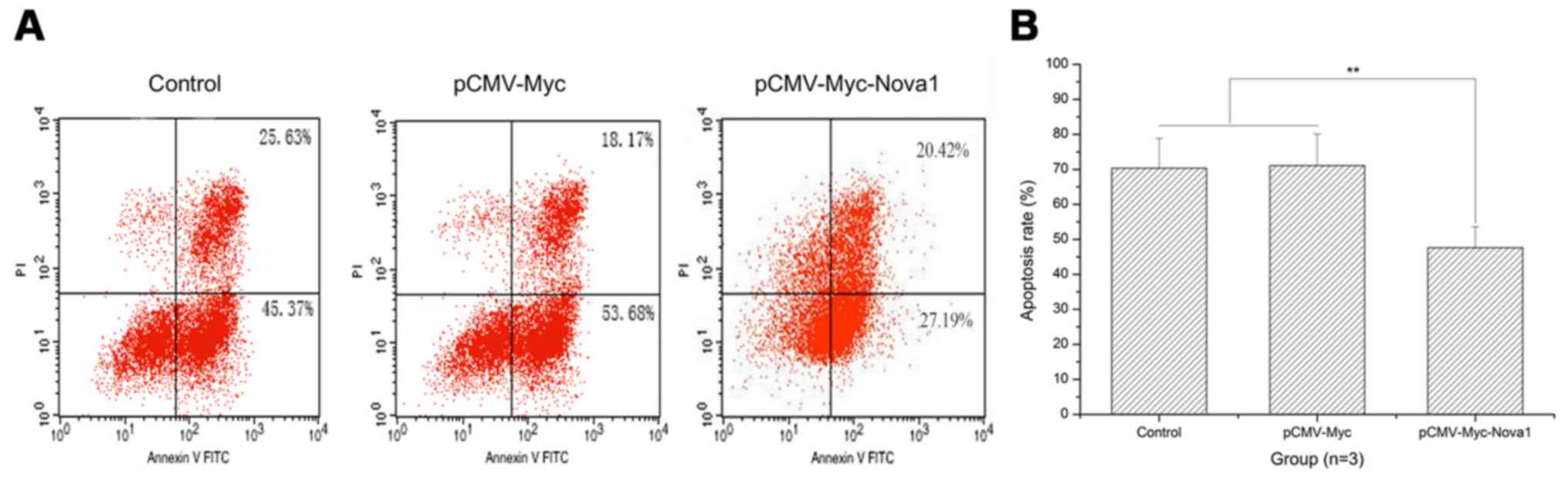
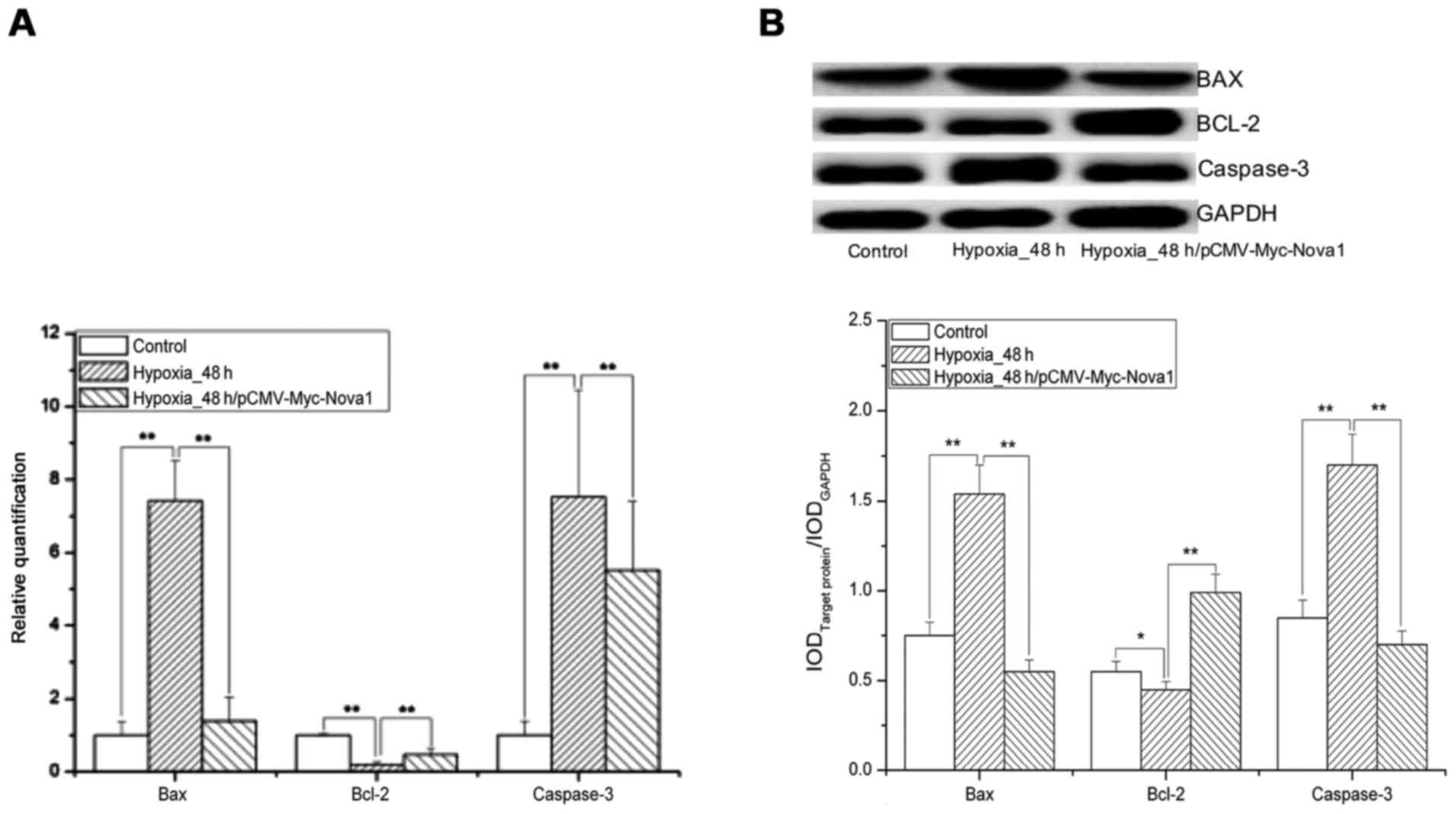
Neuro-oncological ventral antigen 1 (Nova1) is a well known brain-specific splicing factor. Several studies have identified Nova1 as a regulatory protein at the top of a hierarchical network. However, the function of Nova1 during hypoxia remains poorly understood. This study aimed to investigate the protective effect of Nova1 against cell hypoxia and to further explore the Bax/Bcl-2/caspase-3 pathway as a potential mechanism. During hypoxia, the survival rate of pheochromocytoma PC12 cells was gradually decreased and the apoptosis rate was gradually increased, peaking at 48 h of hypoxia. At 48 h after transfection of PC12 cells with pCMV-Myc-Nova1, the expression of Nova1 was significantly increased, with wide distribution in the cytoplasm and nucleus. Moreover, the survival rate was significantly increased and the apoptosis rate was significantly decreased. Additionally, the mRNA and protein expression levels of Bax and caspase-3 were significantly increased in the pCMV-Myc group and significantly decreased in the pCMV‑Myc-Nova1 group, whereas that of Bcl-2 was significantly decreased in the pCMV-Myc group and significantly increased in the pCMV-Myc-Nova1 group. This study indicated that Nova1 could be linked to resistance to the hypoxia-induced apoptosis of PC12 cells via the Bax/Bcl-2/caspase-3 pathway, and this finding may be of significance for exploring novel mechanisms of hypoxia and the treatment of hypoxia-associated diseases.
View Figures

Figure 1

Figure 2

Figure 3

Figure 4

Figure 5

Figure 6

View References

1 

Belo AI, van Vliet SJ, Maus A, Laan LC, Nauta TD, Koolwijk P, Tefsen B and van Die I: Hypoxia inducible factor 1α down regulates cell surface expression of α1,2-fucosylated glycans in human pancreatic adenocarcinoma cells. FEBS Lett. 589:2359–2366. 2015. View Article : Google Scholar : PubMed/NCBI

2 

Chen HC, Lee JT, Shih CP, Chao TT, Sytwu HK, Li SL, Fang MC, Chen HK, Lin YC, Kuo CY, et al: Hypoxia induces a metabolic shift and enhances the stemness and expansion of cochlear spiral ganglion stem/progenitor cells. Biomed Res Int. 2015:3595372015.PubMed/NCBI

3 

de Oliveira JT, Ribeiro C, Barros R, Gomes C, de Matos AJ, Reis CA, Rutteman GR and Gärtner F: Hypoxia up-regulates galectin-3 in mammary tumor progression and metastasis. PLoS One. 10:e01344582015. View Article : Google Scholar : PubMed/NCBI

4 

Bonestroo HJ, Nijboer CH, van Velthoven CT, van Bel F and Heijnen CJ: The neonatal brain is not protected by osteopontin peptide treatment after hypoxia-ischemia. Dev Neurosci. 37:142–152. 2015. View Article : Google Scholar : PubMed/NCBI

5 

Cui C, Zhou T, Li J, Wang H, Li X, Xiong J, Xu P and Xue M: Proteomic analysis of the mouse brain after repetitive exposure to hypoxia. Chem Biol Interact. 236:57–66. 2015. View Article : Google Scholar : PubMed/NCBI

6 

Kimura W, Xiao F, Canseco DC, Muralidhar S, Thet S, Zhang HM, Abderrahman Y, Chen R, Garcia JA, Shelton JM, et al: Hypoxia fate mapping identifies cycling cardiomyocytes in the adult heart. Nature. 523:226–230. 2015. View Article : Google Scholar : PubMed/NCBI

7 

Siebenmann C, Rasmussen P, Sørensen H, Bonne TC, Zaar M, Aachmann-Andersen NJ, Nordsborg NB, Secher NH and Lundby C: Hypoxia increases exercise heart rate despite combined inhibition of β-adrenergic and muscarinic receptors. Am J Physiol Heart Circ Physiol. 308:H1540–H1546. 2015. View Article : Google Scholar : PubMed/NCBI

8 

Calbet JA, Boushel R, Rådegran G, Søndergaard H, Wagner PD and Saltin B: Determinants of maximal oxygen uptake in severe acute hypoxia. Am J Physiol Regul Integr Comp Physiol. 284:R291–R303. 2003. View Article : Google Scholar

9 

Gonchar O and Mankovskaya I: Effect of moderate hypoxia/reoxygenation on mitochondrial adaptation to acute severe hypoxia. Acta Biol Hung. 60:185–194. 2009. View Article : Google Scholar : PubMed/NCBI

10 

Sanotskaya NV, Matsievskii DD and Lebedeva MA: Effect of picrotoxin on organism's resistance to acute severe hypoxia. Bull Exp Biol Med. 145:177–180. 2008. View Article : Google Scholar : PubMed/NCBI

11 

Beltran-Parrazal L, Acuna D, Ngan AM, Kim E, Ngan A, Kawakami K, Edmond J and Lopez IA: Neuroglobin, cytoglobin, and transcriptional profiling of hypoxia-related genes in the rat cerebellum after prenatal chronic very mild carbon monoxide exposure (25 ppm). Brain Res. 1330:61–71. 2010. View Article : Google Scholar : PubMed/NCBI

12 

Dore-Duffy P, Wencel M, Katyshev V and Cleary K: Chronic mild hypoxia ameliorates chronic inflammatory activity in myelin oligodendrocyte glycoprotein (MOG) peptide induced experimental autoimmune encephalomyelitis (EAE). Adv Exp Med Biol. 701:165–173. 2011. View Article : Google Scholar : PubMed/NCBI

13 

Lima-Ojeda JM, Vogt MA, Richter SH, Dormann C, Schneider M, Gass P and Inta D: Lack of protracted behavioral abnormalities following intermittent or continuous chronic mild hypoxia in perinatal C57BL/6 mice. Neurosci Lett. 577:77–82. 2014. View Article : Google Scholar : PubMed/NCBI

14 

Hu Q, Wu C, Chen JY, Yan F, Li JR and Chen G: The relationship between hypoxia-inducible factor-1α expression and apoptosis in early brain injury after subarachnoid hemorrhage. Zhejiang Da Xue Xue Bao Yi Xue Ban. 43:58–65. 2014.In Chinese. PubMed/NCBI

15 

Xuan M, Okazaki M, Iwata N, Asano S, Kamiuchi S, Matsuzaki H, Sakamoto T, Miyano Y, Iizuka H and Hibino Y: Chronic treatment with a water-soluble extract from the culture medium of Ganoderma lucidum mycelia prevents apoptosis and necroptosis in hypoxia/ischemia-induced injury of type 2 diabetic mouse brain. Evid Based Complement Alternat Med. 2015:8659862015. View Article : Google Scholar : PubMed/NCBI

16 

Liu B, Zhang YH, Jiang Y, Li LL, Chen Q, He GQ, Tan XD and Li CQ: Gadd45b is a novel mediator of neuronal apoptosis in ischemic stroke. Int J Biol Sci. 11:353–360. 2015. View Article : Google Scholar : PubMed/NCBI

17 

Lv H, Wang L, Shen J, Hao S, Ming A, Wang X, Su F and Zhang Z: Salvianolic acid B attenuates apoptosis and inflammation via SIRT1 activation in experimental stroke rats. Brain Res Bull. 115:30–36. 2015. View Article : Google Scholar : PubMed/NCBI

18 

Fang L, Gao H, Zhang W, Zhang W and Wang Y: Resveratrol alleviates nerve injury after cerebral ischemia and reperfusion in mice by inhibiting inflammation and apoptosis. Int J Clin Exp Med. 8:3219–3226. 2015.PubMed/NCBI

19 

Zhao P, Zhou R, Zhu XY, Hao YJ, Li N, Wang J, Niu Y, Sun T, Li YX and Yu JQ: Matrine attenuates focal cerebral ischemic injury by improving antioxidant activity and inhibiting apoptosis in mice. Int J Mol Med. 36:633–644. 2015. View Article : Google Scholar : PubMed/NCBI

20 

Daulatzai MA: Death by a thousand cuts in Alzheimer's disease: Hypoxia - the prodrome. Neurotox Res. 24:216–243. 2013. View Article : Google Scholar : PubMed/NCBI

21 

Liu H, Qiu H, Yang J, Ni J and Le W: Chronic hypoxia facilitates Alzheimer's disease through demethylation of γ-secretase by downregulating DNA methyltransferase 3b. Alzheimers Dement. 12:130–143. 2016. View Article : Google Scholar

22 

Schmid D, Fay F, Small DM, Jaworski J, Riley JS, Tegazzini D, Fenning C, Jones DS, Johnston PG, Longley DB, et al: Efficient drug delivery and induction of apoptosis in colorectal tumors using a death receptor 5-targeted nanomedicine. Mol Ther. 22:2083–2092. 2014. View Article : Google Scholar : PubMed/NCBI

23 

Walter RF, Werner R, Ting S, Vollbrecht C, Theegarten D, Christoph DC, Schmid KW, Wohlschlaeger J and Mairinger FD: Identification of deregulation of apoptosis and cell cycle in neuroendocrine tumors of the lung via NanoString nCounter expression analysis. Oncotarget. 6:24690–24698. 2015. View Article : Google Scholar : PubMed/NCBI

24 

Darnell RB and Posner JB: Paraneoplastic syndromes involving the nervous system. N Engl J Med. 349:1543–1554. 2003. View Article : Google Scholar : PubMed/NCBI

25 

Ratti A, Fallini C, Colombrita C, Pascale A, Laforenza U, Quattrone A and Silani V: Post-transcriptional regulation of neuro-oncological ventral antigen 1 by the neuronal RNA-binding proteins ELAV. J Biol Chem. 283:7531–7541. 2008. View Article : Google Scholar : PubMed/NCBI

26 

Buckanovich RJ and Darnell RB: The neuronal RNA binding protein Nova-1 recognizes specific RNA targets in vitro and in vivo. Mol Cell Biol. 17:3194–3201. 1997. View Article : Google Scholar : PubMed/NCBI

27 

Zhang YA, Zhu JM, Yin J, Tang WQ, Guo YM, Shen XZ and Liu TT: High expression of neuro-oncological ventral antigen 1 correlates with poor prognosis in hepatocellular carcinoma. PLoS One. 9:e909552014. View Article : Google Scholar : PubMed/NCBI

28 

Dredge BK and Darnell RB: Nova regulates GABA(A) receptor gamma2 alternative splicing via a distal downstream UCAU-rich intronic splicing enhancer. Mol Cell Biol. 23:4687–4700. 2003. View Article : Google Scholar : PubMed/NCBI

29 

Li H, Sun C, Wang Y, Gao Y, Liu Y, Gao Y, Li X and Zhang C: Dynamic expression pattern of neuro-oncological ventral antigen 1 (Nova1) in the rat brain after focal cerebral ischemia/reperfusion insults. J Histochem Cytochem. 61:45–54. 2013. View Article : Google Scholar :

30 

Dredge BK, Stefani G, Engelhard CC and Darnell RB: Nova autoregulation reveals dual functions in neuronal splicing. EMBO J. 24:1608–1620. 2005. View Article : Google Scholar : PubMed/NCBI

31 

Nishida A, Minegishi M, Takeuchi A, Awano H, Niba ET and Matsuo M: Neuronal SH-SY5Y cells use the C-dystrophin promoter coupled with exon 78 skipping and display multiple patterns of alternative splicing including two intronic insertion events. Hum Genet. 134:993–1001. 2015. View Article : Google Scholar : PubMed/NCBI

32 

Stepankiw N, Raghavan M, Fogarty EA, Grimson A and Pleiss JA: Widespread alternative and aberrant splicing revealed by lariat sequencing. Nucleic Acids Res. 43:8488–8501. 2015. View Article : Google Scholar : PubMed/NCBI

33 

Stephan-Otto Attolini C, Peña V and Rossell D: Designing alternative splicing RNA-seq studies. Beyond generic guidelines. Bioinformatics. 31:3631–3637. 2015. View Article : Google Scholar : PubMed/NCBI

34 

Schreiner D, Nguyen TM, Russo G, Heber S, Patrignani A, Ahrné E and Scheiffele P: Targeted combinatorial alternative splicing generates brain region-specific repertoires of neurexins. Neuron. 84:386–398. 2014. View Article : Google Scholar : PubMed/NCBI

35 

Trifonov S, Yamashita Y, Kase M, Maruyama M and Sugimoto T: Glutamic acid decarboxylase 1 alternative splicing isoforms: Characterization, expression and quantification in the mouse brain. BMC Neurosci. 15:1142014. View Article : Google Scholar : PubMed/NCBI

36 

Cantagrel S, Krier C, Ducrocq S, Bodard S, Payen V, Laugier J, Guilloteau D and Chalon S: Hypoxic preconditioning reduces apoptosis in a rat model of immature brain hypoxia-ischaemia. Neurosci Lett. 347:106–110. 2003. View Article : Google Scholar : PubMed/NCBI

37 

Williamson DJ, Ejaz S, Sitnikov S, Fryer TD, Sawiak SJ, Burke P, Baron JC and Aigbirhio FI: A comparison of four PET tracers for brain hypoxia mapping in a rodent model of stroke. Nucl Med Biol. 40:338–344. 2013. View Article : Google Scholar : PubMed/NCBI

38 

Greene LA and Tischler AS: Establishment of a noradrenergic clonal line of rat adrenal pheochromocytoma cells which respond to nerve growth factor. Proc Natl Acad Sci USA. 73:2424–2428. 1976. View Article : Google Scholar : PubMed/NCBI

39 

Dichter MA, Tischler AS and Greene LA: Nerve growth factor-induced increase in electrical excitability and acetylcholine sensitivity of a rat pheochromocytoma cell line. Nature. 268:501–504. 1977. View Article : Google Scholar : PubMed/NCBI

40 

McGuire JC, Greene LA and Furano AV: NGF stimulates incorporation of fucose or glucosamine into an external glycoprotein in cultured rat PC12 pheochromocytoma cells. Cell. 15:357–365. 1978. View Article : Google Scholar : PubMed/NCBI

41 

Rudy B, Kirschenbaum B and Greene LA: Nerve growth factor-induced increase in saxitoxin binding to rat PC12 pheochromocytoma cells. J Neurosci. 2:1405–1411. 1982.PubMed/NCBI

42 

Gutsaeva DR, Carraway MS, Suliman HB, Demchenko IT, Shitara H, Yonekawa H and Piantadosi CA: Transient hypoxia stimulates mitochondrial biogenesis in brain subcortex by a neuronal nitric oxide synthase-dependent mechanism. J Neurosci. 28:2015–2024. 2008. View Article : Google Scholar : PubMed/NCBI

43 

Huang NC, Yongbi MN and Helpern JA: The influence of preischemic hyperglycemia on acute changes in brain water ADCw following focal ischemia in rats. Brain Res. 788:137–143. 1998. View Article : Google Scholar : PubMed/NCBI

44 

Liu KF, Li F, Tatlisumak T, Garcia JH, Sotak CH, Fisher M and Fenstermacher JD: Regional variations in the apparent diffusion coefficient and the intracellular distribution of water in rat brain during acute focal ischemia. Stroke. 32:1897–1905. 2001. View Article : Google Scholar : PubMed/NCBI

45 

Roehl AB, Zoremba N, Kipp M, Schiefer J, Goetzenich A, Bleilevens C, Kuehn-Velten N, Tolba R, Rossaint R and Hein M: The effects of levosimendan on brain metabolism during initial recovery from global transient ischaemia/hypoxia. BMC Neurol. 12:812012. View Article : Google Scholar : PubMed/NCBI

46 

Shi Q, Zhang P, Zhang J, Chen X, Lu H, Tian Y, Parker TL and Liu Y: Adenovirus-mediated brain-derived neurotrophic factor expression regulated by hypoxia response element protects brain from injury of transient middle cerebral artery occlusion in mice. Neurosci Lett. 465:220–225. 2009. View Article : Google Scholar : PubMed/NCBI

47 

Carpio MA, Michaud M, Zhou W, Fisher JK, Walensky LD and Katz SG: BCL-2 family member BOK promotes apoptosis in response to endoplasmic reticulum stress. Proc Natl Acad Sci USA. 112:7201–7206. 2015. View Article : Google Scholar : PubMed/NCBI

48 

Lee HJ, Lee EK, Seo YE, Shin YH, Kim HS, Chun YH, Yoon JS, Kim HH, Han MY, Kim CK, et al: Roles of Bcl-2 and caspase-9 and -3 in CD30-induced human eosinophil apoptosis. J Microbiol Immunol Infect. 50:145–152. 2017. View Article : Google Scholar

Related Articles

  • Abstract
  • View
  • Download
  • Twitter
Copy and paste a formatted citation
Spandidos Publications style
Li H, Lv B, Kong L, Xia J, Zhu M, Hu L, Zhen D, Wu Y, Jia X, Zhu S, Zhu S, et al: Nova1 mediates resistance of rat pheochromocytoma cells to hypoxia-induced apoptosis via the Bax/Bcl-2/caspase-3 pathway. Int J Mol Med 40: 1125-1133, 2017.
APA
Li, H., Lv, B., Kong, L., Xia, J., Zhu, M., Hu, L. ... Cui, H. (2017). Nova1 mediates resistance of rat pheochromocytoma cells to hypoxia-induced apoptosis via the Bax/Bcl-2/caspase-3 pathway. International Journal of Molecular Medicine, 40, 1125-1133. https://doi.org/10.3892/ijmm.2017.3089
MLA
Li, H., Lv, B., Kong, L., Xia, J., Zhu, M., Hu, L., Zhen, D., Wu, Y., Jia, X., Zhu, S., Cui, H."Nova1 mediates resistance of rat pheochromocytoma cells to hypoxia-induced apoptosis via the Bax/Bcl-2/caspase-3 pathway". International Journal of Molecular Medicine 40.4 (2017): 1125-1133.
Chicago
Li, H., Lv, B., Kong, L., Xia, J., Zhu, M., Hu, L., Zhen, D., Wu, Y., Jia, X., Zhu, S., Cui, H."Nova1 mediates resistance of rat pheochromocytoma cells to hypoxia-induced apoptosis via the Bax/Bcl-2/caspase-3 pathway". International Journal of Molecular Medicine 40, no. 4 (2017): 1125-1133. https://doi.org/10.3892/ijmm.2017.3089
Copy and paste a formatted citation
x
Spandidos Publications style
Li H, Lv B, Kong L, Xia J, Zhu M, Hu L, Zhen D, Wu Y, Jia X, Zhu S, Zhu S, et al: Nova1 mediates resistance of rat pheochromocytoma cells to hypoxia-induced apoptosis via the Bax/Bcl-2/caspase-3 pathway. Int J Mol Med 40: 1125-1133, 2017.
APA
Li, H., Lv, B., Kong, L., Xia, J., Zhu, M., Hu, L. ... Cui, H. (2017). Nova1 mediates resistance of rat pheochromocytoma cells to hypoxia-induced apoptosis via the Bax/Bcl-2/caspase-3 pathway. International Journal of Molecular Medicine, 40, 1125-1133. https://doi.org/10.3892/ijmm.2017.3089
MLA
Li, H., Lv, B., Kong, L., Xia, J., Zhu, M., Hu, L., Zhen, D., Wu, Y., Jia, X., Zhu, S., Cui, H."Nova1 mediates resistance of rat pheochromocytoma cells to hypoxia-induced apoptosis via the Bax/Bcl-2/caspase-3 pathway". International Journal of Molecular Medicine 40.4 (2017): 1125-1133.
Chicago
Li, H., Lv, B., Kong, L., Xia, J., Zhu, M., Hu, L., Zhen, D., Wu, Y., Jia, X., Zhu, S., Cui, H."Nova1 mediates resistance of rat pheochromocytoma cells to hypoxia-induced apoptosis via the Bax/Bcl-2/caspase-3 pathway". International Journal of Molecular Medicine 40, no. 4 (2017): 1125-1133. https://doi.org/10.3892/ijmm.2017.3089
Follow us
  • Twitter
  • LinkedIn
  • Facebook
About
  • Spandidos Publications
  • Careers
  • Cookie Policy
  • Privacy Policy
How can we help?
  • Help
  • Live Chat
  • Contact
  • Email to our Support Team