Spandidos Publications Logo
  • About
    • About Spandidos
    • Aims and Scopes
    • Abstracting and Indexing
    • Editorial Policies
    • Reprints and Permissions
    • Job Opportunities
    • Terms and Conditions
    • Contact
  • Journals
    • All Journals
    • Oncology Letters
      • Oncology Letters
      • Information for Authors
      • Editorial Policies
      • Editorial Board
      • Aims and Scope
      • Abstracting and Indexing
      • Bibliographic Information
      • Archive
    • International Journal of Oncology
      • International Journal of Oncology
      • Information for Authors
      • Editorial Policies
      • Editorial Board
      • Aims and Scope
      • Abstracting and Indexing
      • Bibliographic Information
      • Archive
    • Molecular and Clinical Oncology
      • Molecular and Clinical Oncology
      • Information for Authors
      • Editorial Policies
      • Editorial Board
      • Aims and Scope
      • Abstracting and Indexing
      • Bibliographic Information
      • Archive
    • Experimental and Therapeutic Medicine
      • Experimental and Therapeutic Medicine
      • Information for Authors
      • Editorial Policies
      • Editorial Board
      • Aims and Scope
      • Abstracting and Indexing
      • Bibliographic Information
      • Archive
    • International Journal of Molecular Medicine
      • International Journal of Molecular Medicine
      • Information for Authors
      • Editorial Policies
      • Editorial Board
      • Aims and Scope
      • Abstracting and Indexing
      • Bibliographic Information
      • Archive
    • Biomedical Reports
      • Biomedical Reports
      • Information for Authors
      • Editorial Policies
      • Editorial Board
      • Aims and Scope
      • Abstracting and Indexing
      • Bibliographic Information
      • Archive
    • Oncology Reports
      • Oncology Reports
      • Information for Authors
      • Editorial Policies
      • Editorial Board
      • Aims and Scope
      • Abstracting and Indexing
      • Bibliographic Information
      • Archive
    • Molecular Medicine Reports
      • Molecular Medicine Reports
      • Information for Authors
      • Editorial Policies
      • Editorial Board
      • Aims and Scope
      • Abstracting and Indexing
      • Bibliographic Information
      • Archive
    • World Academy of Sciences Journal
      • World Academy of Sciences Journal
      • Information for Authors
      • Editorial Policies
      • Editorial Board
      • Aims and Scope
      • Abstracting and Indexing
      • Bibliographic Information
      • Archive
    • International Journal of Functional Nutrition
      • International Journal of Functional Nutrition
      • Information for Authors
      • Editorial Policies
      • Editorial Board
      • Aims and Scope
      • Abstracting and Indexing
      • Bibliographic Information
      • Archive
    • International Journal of Epigenetics
      • International Journal of Epigenetics
      • Information for Authors
      • Editorial Policies
      • Editorial Board
      • Aims and Scope
      • Abstracting and Indexing
      • Bibliographic Information
      • Archive
    • Medicine International
      • Medicine International
      • Information for Authors
      • Editorial Policies
      • Editorial Board
      • Aims and Scope
      • Abstracting and Indexing
      • Bibliographic Information
      • Archive
  • Articles
  • Information
    • Information for Authors
    • Information for Reviewers
    • Information for Librarians
    • Information for Advertisers
    • Conferences
  • Language Editing
Spandidos Publications Logo
  • About
    • About Spandidos
    • Aims and Scopes
    • Abstracting and Indexing
    • Editorial Policies
    • Reprints and Permissions
    • Job Opportunities
    • Terms and Conditions
    • Contact
  • Journals
    • All Journals
    • Biomedical Reports
      • Information for Authors
      • Editorial Policies
      • Editorial Board
      • Aims and Scope
      • Abstracting and Indexing
      • Bibliographic Information
      • Archive
    • Experimental and Therapeutic Medicine
      • Information for Authors
      • Editorial Policies
      • Editorial Board
      • Aims and Scope
      • Abstracting and Indexing
      • Bibliographic Information
      • Archive
    • International Journal of Epigenetics
      • Information for Authors
      • Editorial Policies
      • Editorial Board
      • Aims and Scope
      • Abstracting and Indexing
      • Bibliographic Information
      • Archive
    • International Journal of Functional Nutrition
      • Information for Authors
      • Editorial Policies
      • Editorial Board
      • Aims and Scope
      • Abstracting and Indexing
      • Bibliographic Information
      • Archive
    • International Journal of Molecular Medicine
      • Information for Authors
      • Editorial Policies
      • Editorial Board
      • Aims and Scope
      • Abstracting and Indexing
      • Bibliographic Information
      • Archive
    • International Journal of Oncology
      • Information for Authors
      • Editorial Policies
      • Editorial Board
      • Aims and Scope
      • Abstracting and Indexing
      • Bibliographic Information
      • Archive
    • Medicine International
      • Information for Authors
      • Editorial Policies
      • Editorial Board
      • Aims and Scope
      • Abstracting and Indexing
      • Bibliographic Information
      • Archive
    • Molecular and Clinical Oncology
      • Information for Authors
      • Editorial Policies
      • Editorial Board
      • Aims and Scope
      • Abstracting and Indexing
      • Bibliographic Information
      • Archive
    • Molecular Medicine Reports
      • Information for Authors
      • Editorial Policies
      • Editorial Board
      • Aims and Scope
      • Abstracting and Indexing
      • Bibliographic Information
      • Archive
    • Oncology Letters
      • Information for Authors
      • Editorial Policies
      • Editorial Board
      • Aims and Scope
      • Abstracting and Indexing
      • Bibliographic Information
      • Archive
    • Oncology Reports
      • Information for Authors
      • Editorial Policies
      • Editorial Board
      • Aims and Scope
      • Abstracting and Indexing
      • Bibliographic Information
      • Archive
    • World Academy of Sciences Journal
      • Information for Authors
      • Editorial Policies
      • Editorial Board
      • Aims and Scope
      • Abstracting and Indexing
      • Bibliographic Information
      • Archive
  • Articles
  • Information
    • For Authors
    • For Reviewers
    • For Librarians
    • For Advertisers
    • Conferences
  • Language Editing
Login Register Submit
  • This site uses cookies
  • You can change your cookie settings at any time by following the instructions in our Cookie Policy. To find out more, you may read our Privacy Policy.

    I agree
Search articles by DOI, keyword, author or affiliation
Search
Advanced Search
presentation
International Journal of Oncology
Join Editorial Board Propose a Special Issue
Print ISSN: 1019-6439 Online ISSN: 1791-2423
Journal Cover
September 2012 Volume 41 Issue 3

Full Size Image

Cover Legend PDF

Sign up for eToc alerts
Recommend to Library

Journals

International Journal of Molecular Medicine

International Journal of Molecular Medicine

International Journal of Molecular Medicine is an international journal devoted to molecular mechanisms of human disease.

International Journal of Oncology

International Journal of Oncology

International Journal of Oncology is an international journal devoted to oncology research and cancer treatment.

Molecular Medicine Reports

Molecular Medicine Reports

Covers molecular medicine topics such as pharmacology, pathology, genetics, neuroscience, infectious diseases, molecular cardiology, and molecular surgery.

Oncology Reports

Oncology Reports

Oncology Reports is an international journal devoted to fundamental and applied research in Oncology.

Experimental and Therapeutic Medicine

Experimental and Therapeutic Medicine

Experimental and Therapeutic Medicine is an international journal devoted to laboratory and clinical medicine.

Oncology Letters

Oncology Letters

Oncology Letters is an international journal devoted to Experimental and Clinical Oncology.

Biomedical Reports

Biomedical Reports

Explores a wide range of biological and medical fields, including pharmacology, genetics, microbiology, neuroscience, and molecular cardiology.

Molecular and Clinical Oncology

Molecular and Clinical Oncology

International journal addressing all aspects of oncology research, from tumorigenesis and oncogenes to chemotherapy and metastasis.

World Academy of Sciences Journal

World Academy of Sciences Journal

Multidisciplinary open-access journal spanning biochemistry, genetics, neuroscience, environmental health, and synthetic biology.

International Journal of Functional Nutrition

International Journal of Functional Nutrition

Open-access journal combining biochemistry, pharmacology, immunology, and genetics to advance health through functional nutrition.

International Journal of Epigenetics

International Journal of Epigenetics

Publishes open-access research on using epigenetics to advance understanding and treatment of human disease.

Medicine International

Medicine International

An International Open Access Journal Devoted to General Medicine.

Journal Cover
September 2012 Volume 41 Issue 3

Full Size Image

Cover Legend PDF

Sign up for eToc alerts
Recommend to Library

  • Article
  • Citations
    • Cite This Article
    • Download Citation
    • Create Citation Alert
    • Remove Citation Alert
    • Cited By
  • Similar Articles
    • Related Articles (in Spandidos Publications)
    • Similar Articles (Google Scholar)
    • Similar Articles (PubMed)
  • Download PDF
  • Download XML
  • View XML
Article Open Access

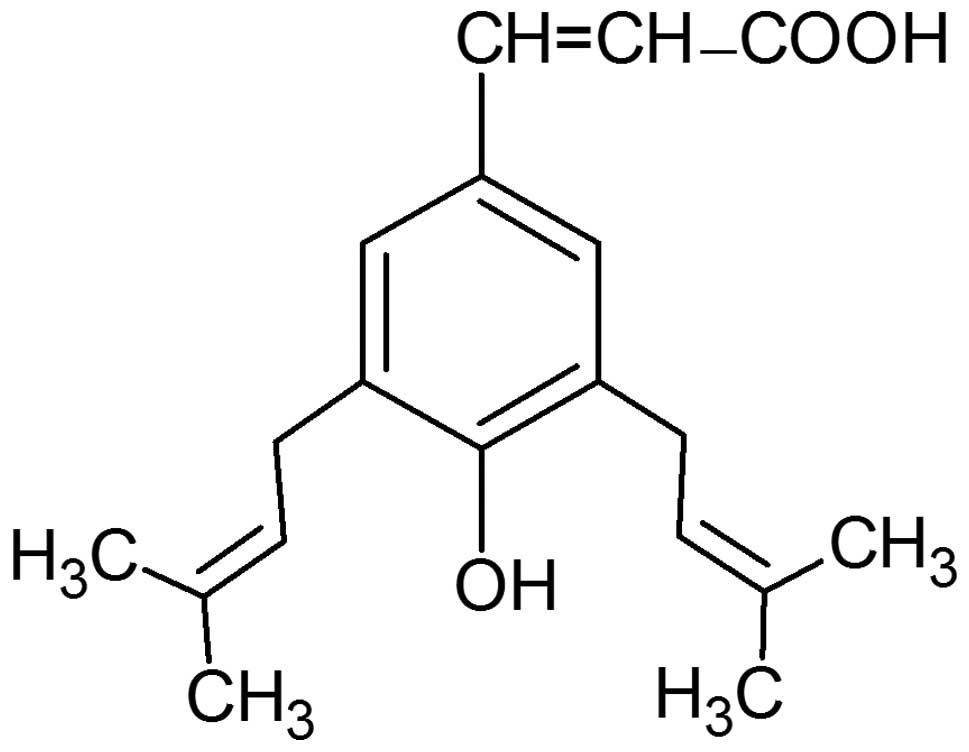
Artepillin C (3,5-diprenyl-4-hydroxycinnamic acid) sensitizes LNCaP prostate cancer cells to TRAIL-induced apoptosis

  • Authors:
    • Ewelina Szliszka
    • Grzegorz Zydowicz
    • Elzbieta Mizgala
    • Wojciech Krol
  • View Affiliations / Copyright

    Affiliations: Department of Microbiology and Immunology, Medical University of Silesia in Katowice, Zabrze, Poland, Department of Family Medicine, Medical University of Silesia in Katowice, Zabrze, Poland
    Copyright: © Szliszka et al. This is an open access article distributed under the terms of Creative Commons Attribution License [CC BY_NC 3.0].
  • Pages: 818-828
    |
    Published online on: June 25, 2012
       https://doi.org/10.3892/ijo.2012.1527
  • Expand metrics +
Metrics: Total Views: 0 (Spandidos Publications: | PMC Statistics: )
Metrics: Total PDF Downloads: 0 (Spandidos Publications: | PMC Statistics: )
Cited By (CrossRef): 0 citations Loading Articles...

This article is mentioned in:


Abstract

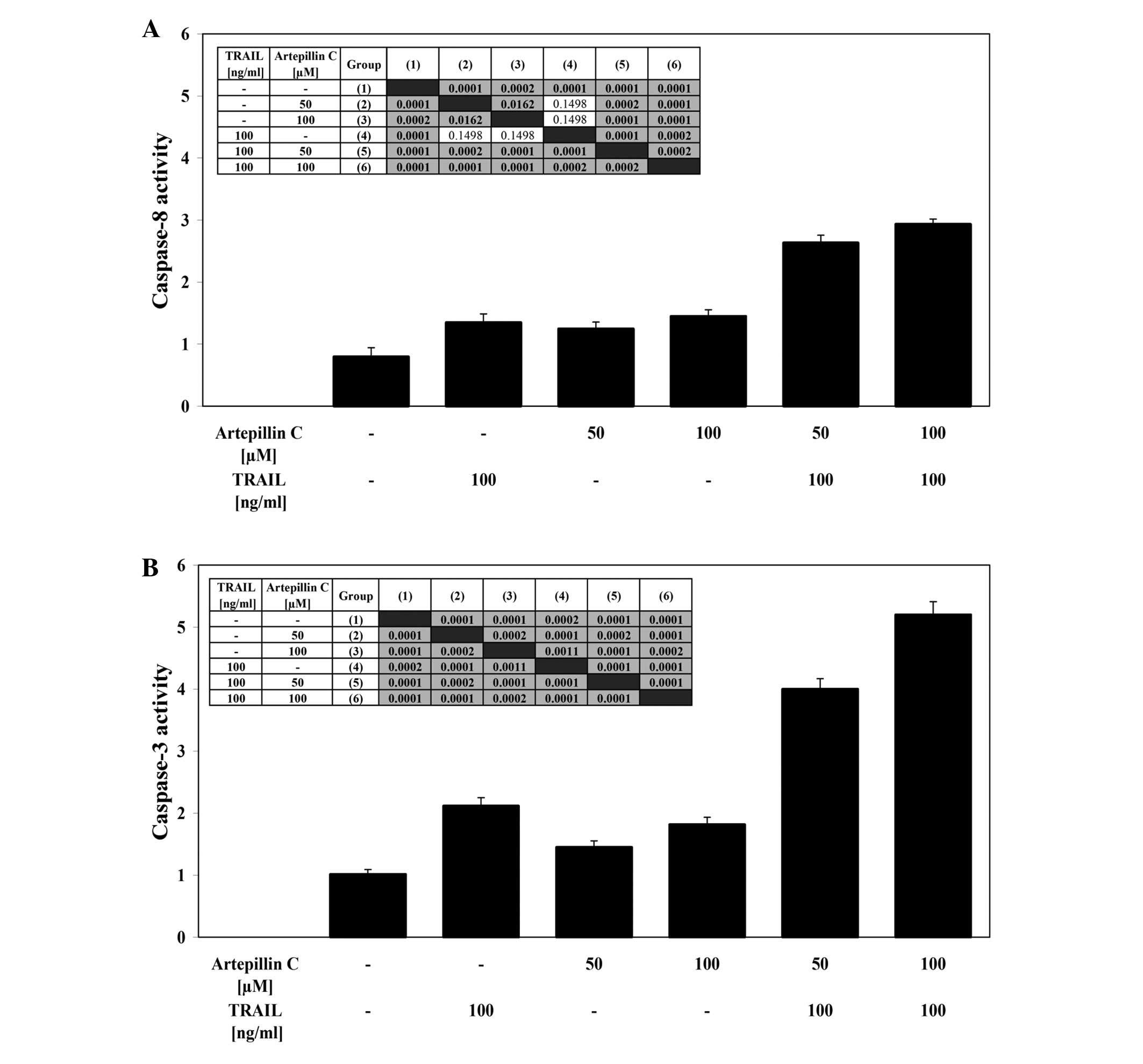
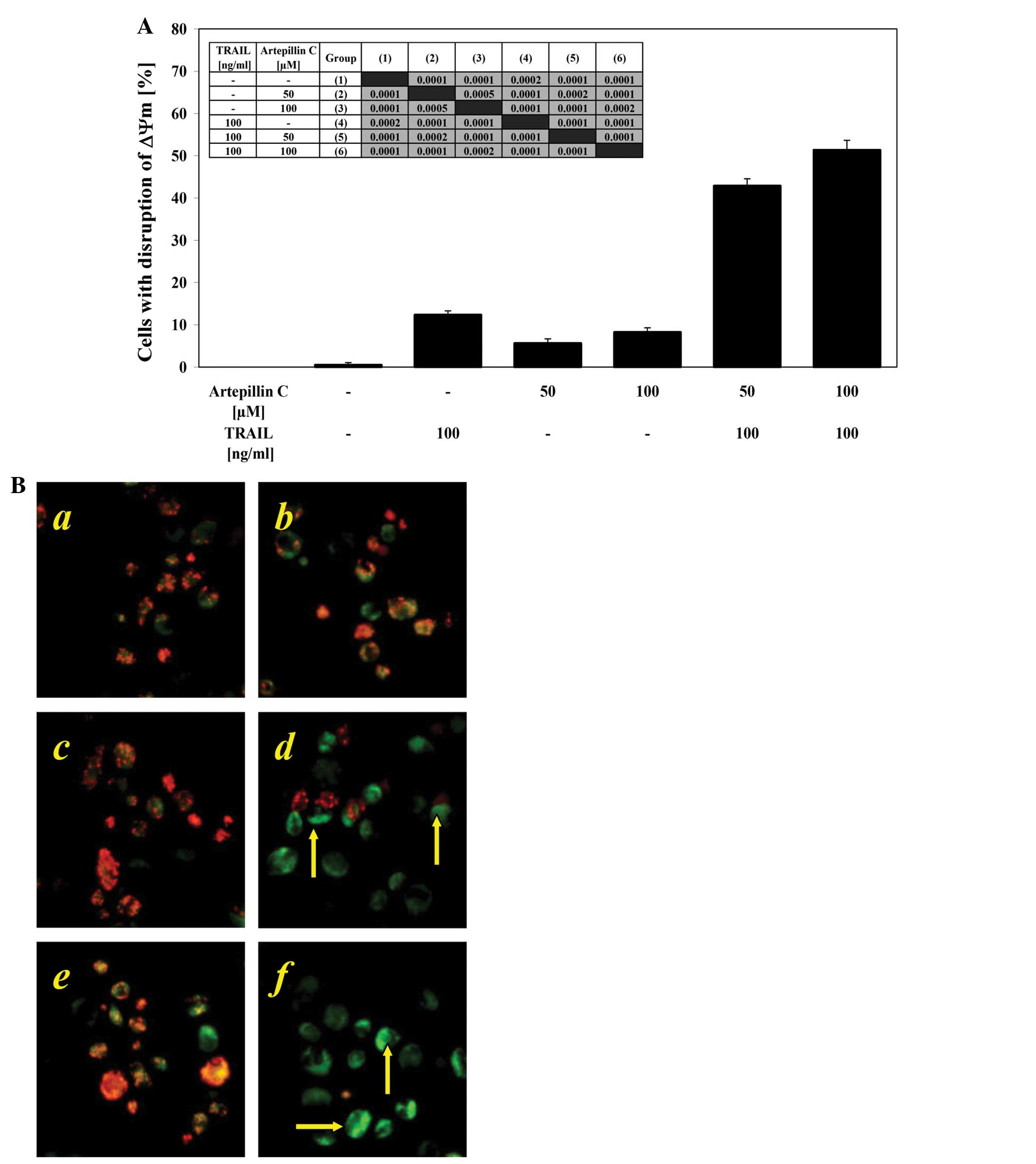
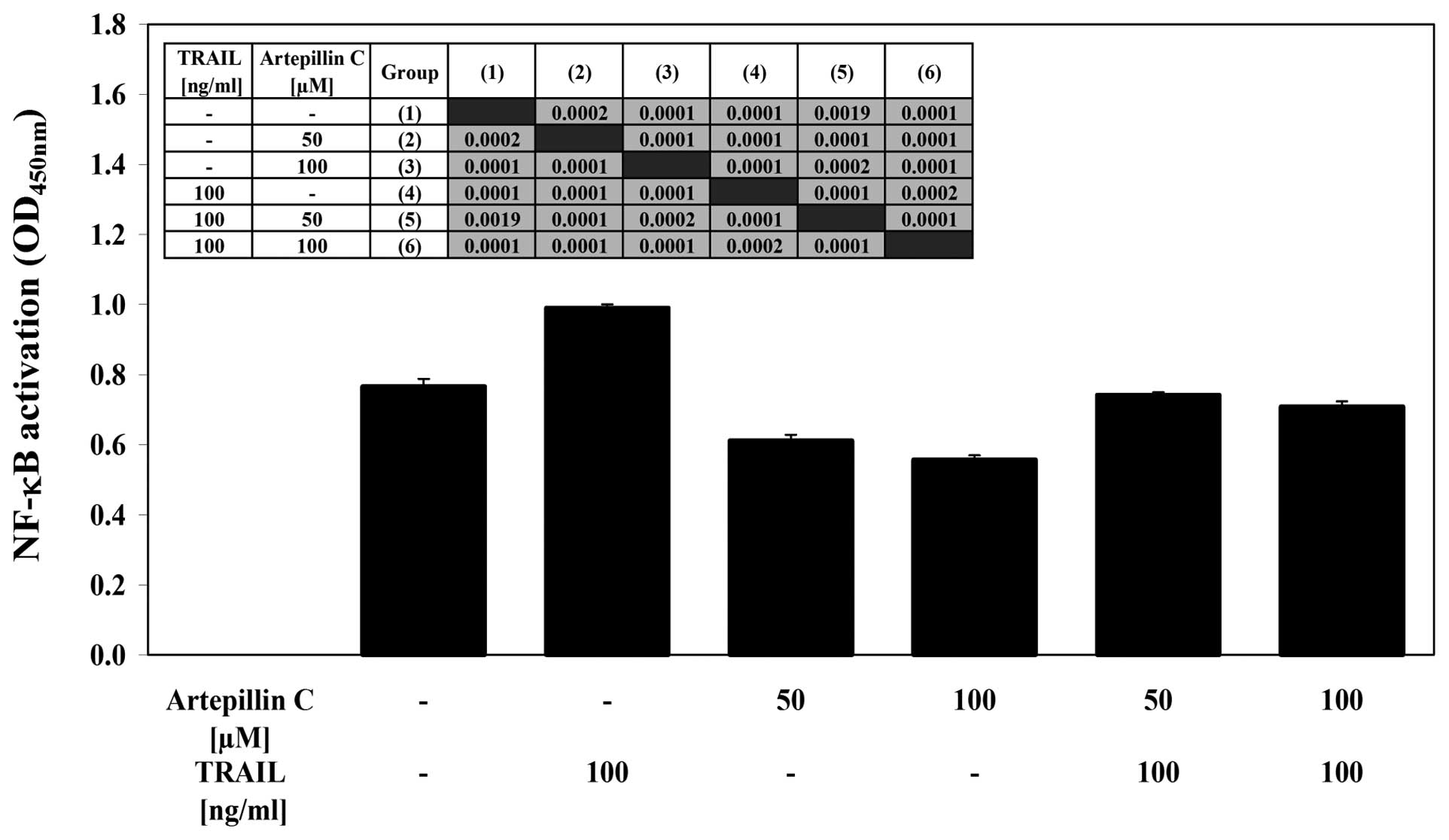
Naturally occurring phenolic compounds have been shown to sensitize prostate cancer cells to tumour necrosis factor-related apoptosis-inducing ligand (TRAIL)-induced apoptosis. TRAIL is a potent stimulator of apoptosis in cancer cells and an important immune effector molecule in the surveillance and elimination of developing tumours. However, many cancer cells are resistant to TRAIL-mediated death. In this study, we aimed to determine the mechanisms by which TRAIL resistance can be overcome in prostate cancer cells by 3,5-diprenyl-4-hydroxycinnamic acid (artepillin C). Artepillin C is a bioactive component of Brazilian green propolis that possesses antitumour and chemopreventive activities. TRAIL-resistant LNCaP prostate cancer cells were treated with TRAIL and artepillin C. Cytotoxicity was measured by MTT and lactate dehydrogenase (LDH) assays. Apoptosis was detected using Annexin V-FITC staining by flow cytometry and fluorescence microscopy. Death receptor (DR) (TRAIL-R1/DR4 and TRAIL-R2/DR5) expression was analyzed using flow cytometry. Mitochondrial membrane potential (∆ψm) was evaluated using DePsipher staining by fluorescence micro­scopy. The inhibition of NF-κB (p65) activation was confirmed with the ELISA-based TransAM NF-κB kit. Caspase-8 and caspase-3 activities were determined by colorimetric protease assays. The results showed that artepillin C sensitized the TRAIL-resistant LNCaP cells by engaging the extrinsic (receptor-mediated) and intrinsic (mitochondrial) apoptotic pathways. Artepillin C increased the expression of TRAIL-R2 and decreased the activity of NF-κB. Co-treatment with TRAIL and artepillin C induced the significant activation of caspase-8 and caspase-3, as well as the disruption of ∆ψm. These findings show that prostate cancer cells can be sensitized to TRAIL-mediated immunoprevention by artepillin C and confirm the role of phenolic compounds in prostate cancer immunochemoprevention.
View Figures

Figure 1

Figure 2

Figure 3

Figure 4

Figure 5

Figure 6

Figure 7

View References

1 

Lee JY, Huerta-Yepez S, Vega M, Baritaki S, Spandidos DA and Bonavida B: The NO TRAIL to YES TRAIL in cancer therapy (Review). Int J Oncol. 31:685–691. 2007.PubMed/NCBI

2 

Voelkel-Johnson C: TRAIL-mediated signaling in prostate, bladder and renal cancer. Nat Rev Urol. 8:417–427. 2011. View Article : Google Scholar : PubMed/NCBI

3 

Baritaki S, Katsman A, Chatterjee D, Yeung KC, Spandidos DA and Bonavida B: Regulation of tumor cell sensitivity to TRAIL-induced apoptosis by the metastatic suppressor Raf kinase inhibitor protein via Yin Yang 1 inhibition and death receptor 5 up-regulation. J Immunol. 179:5441–5453. 2007. View Article : Google Scholar : PubMed/NCBI

4 

Baritaki S, Huerta-Yepez S, Sakai T, Spandidos DA and Bonavida B: Chemotherapeutic drugs sensitize cancer cells to TRAIL-mediated apoptosis: up-regulation of DR5 and inhibition of Yin Yang 1. Mol Cancer Ther. 6:1387–1399. 2007. View Article : Google Scholar : PubMed/NCBI

5 

Baritaki S, Suzuki E, Umezawa K, Spandidos DA, Berenson J, Daniels TR, Penichet ML, Jazirehi AR, Palladino M and Bonavida B: Inhibition of Yin Yang 1-dependent repressor activity of DR5 transcription and expression by the novel proteasome inhibitor NPI-0052 contributes to its TRAIL-enhanced apoptosis in cancer cells. J Immunol. 180:6199–6210. 2008. View Article : Google Scholar : PubMed/NCBI

6 

Szliszka E and Krol W: The role of dietary polyphenols in tumor necrosis factor-related apoptosis inducing ligand (TRAIL)-induced apoptosis for cancer chemoprevention. Eur J Cancer Prev. 20:63–69. 2011. View Article : Google Scholar

7 

Szliszka E, Bronikowska J, Majcher A, Miszkiewicz J and Krol W: Enhanced sensitivity of hormone-refractory prostate cancer cells to tumor necrosis factor-related apoptosis-inducing ligand (TRAIL) mediated cytotoxicity by taxanes. CEJ Urol. 62:29–34. 2009.

8 

Szliszka E, Bronikowska J, Czuba ZP and Krol W: Isoflavones augment the effect of tumor necrosis factor-related apoptosis-inducing ligand (TRAIL) on prostate cancer cells. CEJ Urol. 63:182–186. 2010.

9 

Szliszka E, Gebka J, Bronikowska J and Krol W: Dietary flavones enhance the effect of tumor necrosis factor-related apoptosis-inducing ligand (TRAIL) on bladder cancer cells. CEJ Urol. 63:138–143. 2010.

10 

Lee SJ, Noh HJ, Sung EG, Song IH, Kim JY, Kwon TK and Lee TJ: Berberine sensitizes TRAIL-induced apoptosis through proteasome-mediated downregulation of c-FLIP and Mcl-1 proteins. Int J Oncol. 38:485–492. 2011.PubMed/NCBI

11 

Fujiwara J, Sowa Y, Horinaka M, Koyama M, Wakada M, Miki T and Sakai T: The anti-obesity drug orlistat promotes sensitivity to TRAIL by two different pathways in hormone-refractory prostate cancer cells. Int J Oncol. 40:1483–1491. 2012.PubMed/NCBI

12 

Horinaka M, Yoshida T, Shiraishi T, Nakata S, Wakada M and Sakai T: The dietary flavonoid apigenin sensitizes malignant tumor cells to tumor necrosis factor-related apoptosis-inducing ligand. Mol Cancer Ther. 5:945–951. 2006. View Article : Google Scholar

13 

Jung YH, Heo J, Lee YJ, Kwon TK and Kim YH: Quercetin enhances TRAIL-mediated apoptosis in prostate cancer cells via increased protein stability of death receptor 5. Life Sci. 86:351–357. 2010. View Article : Google Scholar : PubMed/NCBI

14 

Szliszka E, Czuba ZP, Mazur B, Paradysz A and Krol W: Chalcones and dihydrochalcones augment TRAIL-mediated apoptosis in prostate cancer cells. Molecules. 15:5336–5353. 2010. View Article : Google Scholar : PubMed/NCBI

15 

Szliszka E, Czuba ZP, Sedek L, Paradysz A and Krol W: Enhanced TRAIL-mediated apoptosis in prostate cancer cells by the bioactive compounds neobavaisoflavone and psoralidin isolated from Psoralea corylifolia. Pharmacol Rep. 63:139–148. 2011. View Article : Google Scholar : PubMed/NCBI

16 

Szliszka E, Czuba ZP, Bronikowska J, Mertas A, Paradysz A and Krol W: Ethanolic extract of propolis (EEP) augments TRAIL-induced apoptotic death in prostate cancer cells. Evid Based Complement Alternat Med. 2011:5351722011. View Article : Google Scholar : PubMed/NCBI

17 

Szliszka E, Zydowicz G, Janoszka B, Dobosz C, Kowalczyk-Ziomek G and Krol W: Ethanolic extract of Brazilian green propolis sensitizes prostate cancer cells to TRAIL-induced apoptosis. Int J Oncol. 38:941–953. 2011.PubMed/NCBI

18 

Szliszka E and Krol W: Soy isoflavones augment the effect of TRAIL-mediated apoptotic death in prostate cancer cells. Oncol Rep. 26:533–541. 2011.PubMed/NCBI

19 

Szliszka E, Helewski KJ, Mizgala E and Krol W: The dietary flavonol fisetin enhances the apoptosis-inducing potential of TRAIL in prostate cancer cells. Int J Oncol. 39:771–779. 2011.PubMed/NCBI

20 

Szliszka E, Czuba ZP, Mertas A, Paradysz A and Krol W: The dietary isoflavone biochanin-A sensitizes prostate cancer cells to TRAIL-induced apoptosis. Urol Oncol. http://dx.doi.org/10.1016/j.urolonc.2011.01.019. 2011, PubMed/NCBI

21 

Park YK, Paredes-Guzman JF, Aguiar CL, Alencar SM and Fujiwara FY: Chemical constituents in Baccharis dracunculifolia as the main botanical origin of southeastern Brazilian propolis. J Agric Food Chem. 52:1100–1113. 2004.

22 

Matsuda AH and de Almeida-Muradian LB: Validated method for the quantification of artepillin C in Brazilian propolis. Phytochem Anal. 19:179–183. 2008. View Article : Google Scholar : PubMed/NCBI

23 

de Sousa JP, Leite MF, Jorge RF, Resende DO, da Silva Filho AA, Furtado NA, Soares AE, Spadaro AC, de Magalhaes PM and Bastos JK: Seasonality role on the phenolics from cultivated Baccharis dracunculifolia. Evid Based Complement Alternat Med. 2011:4642892011.PubMed/NCBI

24 

Matsuno T, Jung SK, Matsumoto Y, Saito M and Morikawa J: Preferential cytotoxicity to tumor cells of 3,5-diprenyl-4-hydroxycinnamic acid (artepillin C) isolated from propolis. Anticancer Res. 17:3565–3568. 1997.PubMed/NCBI

25 

Kimoto T, Arai S, Kohguchi M, Aga M, Nomura Y, Micallef MJ, Kurimoto M and Mito K: Apoptosis and suppression of tumor growth by artepillin C extracted from Brazilian propolis. Cancer Detect Prev. 22:506–515. 1998. View Article : Google Scholar : PubMed/NCBI

26 

Kimoto T, Aga M, Hino K, Koya-Miyata S, Yamamoto Y, Micallef MJ, Hanaya T, Arai S, Ikeda M and Kurimoto M: Apoptosis of human leukemia cells induced by artepillin C, an active ingredient of Brazilian propolis. Anticancer Res. 21:221–228. 2001.PubMed/NCBI

27 

Ahn MR, Kunimasa K, Ohta T, Kumazawa S, Kamihira M, Kaji K, Uto Y, Hori H, Nagasawa H and Nakayama T: Suppression of tumor-induced angiogenesis by Brazilian propolis: major component artepillin C inhibits in vitro tube formation and endothelial cell proliferation. Cancer Lett. 252:235–243. 2007. View Article : Google Scholar : PubMed/NCBI

28 

Paulino N, Abreu SR, Uto Y, Koyama D, Nagasawa H, Hori H, Dirsch VM, Vollmar AM, Scremin A and Bretz WA: Anti-inflammatory effects of a bioavailable compound, Artepillin C, in Brazilian propolis. Eur J Pharmacol. 587:296–301. 2008. View Article : Google Scholar : PubMed/NCBI

29 

Ahn MR, Kunimasa K, Kumazawa S, Nakayama T, Kaji K, Uto Y, Hori H, Nagasawa H and Ohta T: Correlation between antiangiogenic activity and antioxidant activity of various components from propolis. Mol Nutr Food Res. 53:643–651. 2009. View Article : Google Scholar : PubMed/NCBI

30 

Izuta H, Narahara Y, Shimazawa M, Mishima S, Kondo S and Hara H: 1,1-diphenyl-2-picrylhydrazyl radical scavenging activity of bee products and their constituents determined by ESR. Biol Pharm Bull. 32:1947–1951. 2009. View Article : Google Scholar : PubMed/NCBI

31 

Messerli SM, Ahn MR, Kunimasa K, Yanagihara M, Tatefuji T, Hashimoto K, Mautner V, Uto Y, Hori H, Kumazawa S, Kaji K, Ohta T and Maruta H: Artepillin C (ARC) in Brazilian green propolis selectively blocks oncogenic PAK1 signaling and suppresses the growth of NF tumors in mice. Phytother Res. 23:423–427. 2009. View Article : Google Scholar : PubMed/NCBI

32 

Simoes-Ambrosio LM, Gregorio LE, Sousa JP, Figueiredo-Rinhel AS, Azzolini AE, Bastos JK and Lucisano-Valim YM: The role of seasonality on the inhibitory effect of Brazilian green propolis on the oxidative metabolism of neutrophils. Fitoterapia. 81:1102–1108. 2010. View Article : Google Scholar : PubMed/NCBI

33 

de Azevedo Bentes Monteiro Neto M, de Souza Lima IM, Furtado RA, Bastos JK, da Silva Filho AA and Tavares DC: Antigenotoxicity of artepillin C in vivo evaluated by the micronucleus and comet assays. J Appl Toxicol. 31:714–719. 2011.PubMed/NCBI

34 

Fonseca YM, Marquele-Oliveira F, Vicentini FT, Furtado NA, Sousa JP, Lucisano-Valim YM and Fonseca MJ: Evaluation of the potential of Brazilian propolis against UV-induced oxidative stress. Evid Based Complement Alternat Med. 2011:8639172010.PubMed/NCBI

35 

Moura SA, Negri G, Salatino A, Lima LD, Dourado LP, Mendes JB, Andrade SP, Ferreira MA and Cara DC: Aqueous extract of Brazilian green propolis: primary components, evaluation of inflammation and wound healing by using subcutaneous implanted sponges. Evid Based Complement Alternat Med. 2011:7482832011. View Article : Google Scholar

36 

Watanabe MA, Amarante MK, Conti BJ and Sforcin JM: Cytotoxic constituents of propolis inducing anticancer effects: a review. J Pharm Pharmacol. 63:1378–1386. 2011. View Article : Google Scholar : PubMed/NCBI

37 

Androutsopoulos VP, Ruparelia K, Arroo RR, Tsatsakis AM and Spandidos DA: CYP1-mediated antiproliferative activity of dietary flavonoids in MDA-MB-468 breast cancer cells. Toxicology. 264:162–170. 2009. View Article : Google Scholar : PubMed/NCBI

38 

Androutsopoulos VP, Papakyriakou A, Vourloumis D, Tsatsakis AM and Spandidos DA: Dietary flavonoids in cancer therapy and prevention: substrates and inhibitors of cytochrome P450 CYP1 enzymes. Pharmacol Ther. 126:9–20. 2010. View Article : Google Scholar : PubMed/NCBI

39 

Androutsopoulos VP, Papakyriakou A, Vourloumis D and Spandidos DA: Comparative CYP1A1 and CYP1B1 substrate and inhibitor profile of dietary flavonoids. Bioorg Med Chem. 19:2842–2849. 2011. View Article : Google Scholar : PubMed/NCBI

40 

Davalli P, Rizzi F, Caldara GF, Davoli S, Corti A, Silva A, Astancolle S, Vitale M, Bettuzzi S, Arcari M and Azzali G: Chronic administration of green tea extract to TRAMP mice induces the collapse of Golgi apparatus in prostate secretory cells and results in alterations of protein post-translational processing. Int J Oncol. 39:1521–1527. 2011.PubMed/NCBI

41 

Onoda C, Kuribayashi K, Nirasawa S, Tsuji N, Tanaka M, Kobayashi D and Watanabe N: (−)-Epigallocatechin-3-gallate induces apoptosis in gastric cancer cell lines by down-regulating survivin expression. Int J Oncol. 38:1403–1408. 2011.

42 

Teiten MH, Gaascht F, Cronauer M, Henry E, Dicato M and Diederich M: Anti-proliferative potential of curcumin in androgen-dependent prostate cancer cells occurs through modulation of the Wingless signaling pathway. Int J Oncol. 38:603–611. 2011.

43 

Miki H, Uehara N, Kimura A, Sasaki T, Yuri T, Yoshizawa K and Tsubura A: Resveratrol induces apoptosis via ROS-triggered autophagy in human colon cancer cells. Int J Oncol. 40:1020–1028. 2012.PubMed/NCBI

44 

Marech I, Vacca A, Ranieri G, Gnoni A and Dammacco F: Novel strategies in the treatment of castration-resistant prostate cancer (Review). Int J Oncol. 40:1313–1320. 2012.PubMed/NCBI

45 

Venkateswaran V and Klotz LH: Diet and prostate cancer: mechanisms of action and implications for chemoprevention. Nat Rev Urol. 7:442–453. 2010. View Article : Google Scholar : PubMed/NCBI

46 

Bronikowska J, Szliszka E, Czuba ZP, Zwolinski D, Szmydki B and Krol W: The combination of TRAIL and isoflavones enhances apoptosis in cancer cells. Molecules. 15:2000–2015. 2010. View Article : Google Scholar : PubMed/NCBI

47 

Szliszka E, Czuba ZP, Domino M, Mazur B, Zydowicz G and Krol W: Ethanolic extract of propolis (EEP) enhances the apoptosis-inducing potential of TRAIL in cancer cells. Molecules. 14:738–754. 2009. View Article : Google Scholar : PubMed/NCBI

48 

Szliszka E, Skaba D, Czuba ZP and Krol W: Inhibition of inflammatory mediators by neobavaisoflavone in activated RAW264.7 macrophages. Molecules. 16:3701–3712. 2011. View Article : Google Scholar : PubMed/NCBI

49 

Szliszka E, Czuba ZP, Kawczyk-Krupka A, Sieron-Stoltny A, Sieron A and Krol W: Chlorin-based photodynamic therapy enhances the effect of tumor necrosis factor-related apoptosis-inducing ligand (TRAIL) in bladder cancer cells. Med Sci Monit. 18:BR47–BR53. 2012. View Article : Google Scholar

50 

Szliszka E, Mazur B, Zydowicz G, Czuba ZP and Krol W: TRAIL-induced apoptosis and expression of death receptor TRAIL-R1 and TRAIL-R2 in bladder cancer cells. Folia Histochem Cytobiol. 47:579–585. 2009.PubMed/NCBI

51 

Akao Y, Maruyama H, Matsumoto K, Ohguchi K, Nishizawa K, Sakamoto T, Araki Y, Mishima S and Nozawa Y: Cell growth inhibitory effect of cinnamic acid derivatives from propolis on human tumor cell lines. Biol Pharm Bull. 26:1057–1059. 2003. View Article : Google Scholar : PubMed/NCBI

52 

Yoshida T, Konishi M, Horinaka M, Yasuda T, Goda AE, Taniguchi H, Yano K, Wakada M and Sakai T: Kaempferol sensitizes colon cancer cells to TRAIL-induced apoptosis. Biochem Biophys Res Commun. 375:129–133. 2008. View Article : Google Scholar : PubMed/NCBI

53 

Li X, Wang JN, Huang JM, Xiong XK, Chen MF, Ong CN, Shen HM and Yang XF: Chrysin promotes tumor necrosis factor (TNF)-related apoptosis-inducing ligand (TRAIL) induced apoptosis in human cancer cell lines. Toxicol In Vitro. 25:630–635. 2011. View Article : Google Scholar : PubMed/NCBI

54 

Baritaki S, Militello L, Malaponte G, Spandidos DA, Salcedo M and Bonavida B: The anti-CD20 mAb LFB-R603 interrupts the dysregulated NF-κB/Snail/RKIP/PTEN resistance loop in B-NHL cells: Role in sensitization to TRAIL apoptosis. Int J Oncol. 38:1683–1694. 2011.PubMed/NCBI

Related Articles

  • Abstract
  • View
  • Download
  • Twitter
Copy and paste a formatted citation
Spandidos Publications style
Szliszka E, Zydowicz G, Mizgala E and Krol W: Artepillin C (3,5-diprenyl-4-hydroxycinnamic acid) sensitizes LNCaP prostate cancer cells to TRAIL-induced apoptosis. Int J Oncol 41: 818-828, 2012.
APA
Szliszka, E., Zydowicz, G., Mizgala, E., & Krol, W. (2012). Artepillin C (3,5-diprenyl-4-hydroxycinnamic acid) sensitizes LNCaP prostate cancer cells to TRAIL-induced apoptosis. International Journal of Oncology, 41, 818-828. https://doi.org/10.3892/ijo.2012.1527
MLA
Szliszka, E., Zydowicz, G., Mizgala, E., Krol, W."Artepillin C (3,5-diprenyl-4-hydroxycinnamic acid) sensitizes LNCaP prostate cancer cells to TRAIL-induced apoptosis". International Journal of Oncology 41.3 (2012): 818-828.
Chicago
Szliszka, E., Zydowicz, G., Mizgala, E., Krol, W."Artepillin C (3,5-diprenyl-4-hydroxycinnamic acid) sensitizes LNCaP prostate cancer cells to TRAIL-induced apoptosis". International Journal of Oncology 41, no. 3 (2012): 818-828. https://doi.org/10.3892/ijo.2012.1527
Copy and paste a formatted citation
x
Spandidos Publications style
Szliszka E, Zydowicz G, Mizgala E and Krol W: Artepillin C (3,5-diprenyl-4-hydroxycinnamic acid) sensitizes LNCaP prostate cancer cells to TRAIL-induced apoptosis. Int J Oncol 41: 818-828, 2012.
APA
Szliszka, E., Zydowicz, G., Mizgala, E., & Krol, W. (2012). Artepillin C (3,5-diprenyl-4-hydroxycinnamic acid) sensitizes LNCaP prostate cancer cells to TRAIL-induced apoptosis. International Journal of Oncology, 41, 818-828. https://doi.org/10.3892/ijo.2012.1527
MLA
Szliszka, E., Zydowicz, G., Mizgala, E., Krol, W."Artepillin C (3,5-diprenyl-4-hydroxycinnamic acid) sensitizes LNCaP prostate cancer cells to TRAIL-induced apoptosis". International Journal of Oncology 41.3 (2012): 818-828.
Chicago
Szliszka, E., Zydowicz, G., Mizgala, E., Krol, W."Artepillin C (3,5-diprenyl-4-hydroxycinnamic acid) sensitizes LNCaP prostate cancer cells to TRAIL-induced apoptosis". International Journal of Oncology 41, no. 3 (2012): 818-828. https://doi.org/10.3892/ijo.2012.1527
Follow us
  • Twitter
  • LinkedIn
  • Facebook
About
  • Spandidos Publications
  • Careers
  • Cookie Policy
  • Privacy Policy
How can we help?
  • Help
  • Live Chat
  • Contact
  • Email to our Support Team