Spandidos Publications Logo
  • About
    • About Spandidos
    • Aims and Scopes
    • Abstracting and Indexing
    • Editorial Policies
    • Reprints and Permissions
    • Job Opportunities
    • Terms and Conditions
    • Contact
  • Journals
    • All Journals
    • Oncology Letters
      • Oncology Letters
      • Information for Authors
      • Editorial Policies
      • Editorial Board
      • Aims and Scope
      • Abstracting and Indexing
      • Bibliographic Information
      • Archive
    • International Journal of Oncology
      • International Journal of Oncology
      • Information for Authors
      • Editorial Policies
      • Editorial Board
      • Aims and Scope
      • Abstracting and Indexing
      • Bibliographic Information
      • Archive
    • Molecular and Clinical Oncology
      • Molecular and Clinical Oncology
      • Information for Authors
      • Editorial Policies
      • Editorial Board
      • Aims and Scope
      • Abstracting and Indexing
      • Bibliographic Information
      • Archive
    • Experimental and Therapeutic Medicine
      • Experimental and Therapeutic Medicine
      • Information for Authors
      • Editorial Policies
      • Editorial Board
      • Aims and Scope
      • Abstracting and Indexing
      • Bibliographic Information
      • Archive
    • International Journal of Molecular Medicine
      • International Journal of Molecular Medicine
      • Information for Authors
      • Editorial Policies
      • Editorial Board
      • Aims and Scope
      • Abstracting and Indexing
      • Bibliographic Information
      • Archive
    • Biomedical Reports
      • Biomedical Reports
      • Information for Authors
      • Editorial Policies
      • Editorial Board
      • Aims and Scope
      • Abstracting and Indexing
      • Bibliographic Information
      • Archive
    • Oncology Reports
      • Oncology Reports
      • Information for Authors
      • Editorial Policies
      • Editorial Board
      • Aims and Scope
      • Abstracting and Indexing
      • Bibliographic Information
      • Archive
    • Molecular Medicine Reports
      • Molecular Medicine Reports
      • Information for Authors
      • Editorial Policies
      • Editorial Board
      • Aims and Scope
      • Abstracting and Indexing
      • Bibliographic Information
      • Archive
    • World Academy of Sciences Journal
      • World Academy of Sciences Journal
      • Information for Authors
      • Editorial Policies
      • Editorial Board
      • Aims and Scope
      • Abstracting and Indexing
      • Bibliographic Information
      • Archive
    • International Journal of Functional Nutrition
      • International Journal of Functional Nutrition
      • Information for Authors
      • Editorial Policies
      • Editorial Board
      • Aims and Scope
      • Abstracting and Indexing
      • Bibliographic Information
      • Archive
    • International Journal of Epigenetics
      • International Journal of Epigenetics
      • Information for Authors
      • Editorial Policies
      • Editorial Board
      • Aims and Scope
      • Abstracting and Indexing
      • Bibliographic Information
      • Archive
    • Medicine International
      • Medicine International
      • Information for Authors
      • Editorial Policies
      • Editorial Board
      • Aims and Scope
      • Abstracting and Indexing
      • Bibliographic Information
      • Archive
  • Articles
  • Information
    • Information for Authors
    • Information for Reviewers
    • Information for Librarians
    • Information for Advertisers
    • Conferences
  • Language Editing
Spandidos Publications Logo
  • About
    • About Spandidos
    • Aims and Scopes
    • Abstracting and Indexing
    • Editorial Policies
    • Reprints and Permissions
    • Job Opportunities
    • Terms and Conditions
    • Contact
  • Journals
    • All Journals
    • Biomedical Reports
      • Information for Authors
      • Editorial Policies
      • Editorial Board
      • Aims and Scope
      • Abstracting and Indexing
      • Bibliographic Information
      • Archive
    • Experimental and Therapeutic Medicine
      • Information for Authors
      • Editorial Policies
      • Editorial Board
      • Aims and Scope
      • Abstracting and Indexing
      • Bibliographic Information
      • Archive
    • International Journal of Epigenetics
      • Information for Authors
      • Editorial Policies
      • Editorial Board
      • Aims and Scope
      • Abstracting and Indexing
      • Bibliographic Information
      • Archive
    • International Journal of Functional Nutrition
      • Information for Authors
      • Editorial Policies
      • Editorial Board
      • Aims and Scope
      • Abstracting and Indexing
      • Bibliographic Information
      • Archive
    • International Journal of Molecular Medicine
      • Information for Authors
      • Editorial Policies
      • Editorial Board
      • Aims and Scope
      • Abstracting and Indexing
      • Bibliographic Information
      • Archive
    • International Journal of Oncology
      • Information for Authors
      • Editorial Policies
      • Editorial Board
      • Aims and Scope
      • Abstracting and Indexing
      • Bibliographic Information
      • Archive
    • Medicine International
      • Information for Authors
      • Editorial Policies
      • Editorial Board
      • Aims and Scope
      • Abstracting and Indexing
      • Bibliographic Information
      • Archive
    • Molecular and Clinical Oncology
      • Information for Authors
      • Editorial Policies
      • Editorial Board
      • Aims and Scope
      • Abstracting and Indexing
      • Bibliographic Information
      • Archive
    • Molecular Medicine Reports
      • Information for Authors
      • Editorial Policies
      • Editorial Board
      • Aims and Scope
      • Abstracting and Indexing
      • Bibliographic Information
      • Archive
    • Oncology Letters
      • Information for Authors
      • Editorial Policies
      • Editorial Board
      • Aims and Scope
      • Abstracting and Indexing
      • Bibliographic Information
      • Archive
    • Oncology Reports
      • Information for Authors
      • Editorial Policies
      • Editorial Board
      • Aims and Scope
      • Abstracting and Indexing
      • Bibliographic Information
      • Archive
    • World Academy of Sciences Journal
      • Information for Authors
      • Editorial Policies
      • Editorial Board
      • Aims and Scope
      • Abstracting and Indexing
      • Bibliographic Information
      • Archive
  • Articles
  • Information
    • For Authors
    • For Reviewers
    • For Librarians
    • For Advertisers
    • Conferences
  • Language Editing
Login Register Submit
  • This site uses cookies
  • You can change your cookie settings at any time by following the instructions in our Cookie Policy. To find out more, you may read our Privacy Policy.

    I agree
Search articles by DOI, keyword, author or affiliation
Search
Advanced Search
presentation
Molecular Medicine Reports
Join Editorial Board Propose a Special Issue
Print ISSN: 1791-2997 Online ISSN: 1791-3004
Journal Cover
September 2012 Volume 6 Issue 3

Full Size Image

Sign up for eToc alerts
Recommend to Library

Journals

International Journal of Molecular Medicine

International Journal of Molecular Medicine

International Journal of Molecular Medicine is an international journal devoted to molecular mechanisms of human disease.

International Journal of Oncology

International Journal of Oncology

International Journal of Oncology is an international journal devoted to oncology research and cancer treatment.

Molecular Medicine Reports

Molecular Medicine Reports

Covers molecular medicine topics such as pharmacology, pathology, genetics, neuroscience, infectious diseases, molecular cardiology, and molecular surgery.

Oncology Reports

Oncology Reports

Oncology Reports is an international journal devoted to fundamental and applied research in Oncology.

Experimental and Therapeutic Medicine

Experimental and Therapeutic Medicine

Experimental and Therapeutic Medicine is an international journal devoted to laboratory and clinical medicine.

Oncology Letters

Oncology Letters

Oncology Letters is an international journal devoted to Experimental and Clinical Oncology.

Biomedical Reports

Biomedical Reports

Explores a wide range of biological and medical fields, including pharmacology, genetics, microbiology, neuroscience, and molecular cardiology.

Molecular and Clinical Oncology

Molecular and Clinical Oncology

International journal addressing all aspects of oncology research, from tumorigenesis and oncogenes to chemotherapy and metastasis.

World Academy of Sciences Journal

World Academy of Sciences Journal

Multidisciplinary open-access journal spanning biochemistry, genetics, neuroscience, environmental health, and synthetic biology.

International Journal of Functional Nutrition

International Journal of Functional Nutrition

Open-access journal combining biochemistry, pharmacology, immunology, and genetics to advance health through functional nutrition.

International Journal of Epigenetics

International Journal of Epigenetics

Publishes open-access research on using epigenetics to advance understanding and treatment of human disease.

Medicine International

Medicine International

An International Open Access Journal Devoted to General Medicine.

Journal Cover
September 2012 Volume 6 Issue 3

Full Size Image

Sign up for eToc alerts
Recommend to Library

  • Article
  • Citations
    • Cite This Article
    • Download Citation
    • Create Citation Alert
    • Remove Citation Alert
    • Cited By
  • Similar Articles
    • Related Articles (in Spandidos Publications)
    • Similar Articles (Google Scholar)
    • Similar Articles (PubMed)
  • Download PDF
  • Download XML
  • View XML
Article

Epidermal growth factor enhances MPC-83 pancreatic cancer cell migration through the upregulation of aquaporin 3

  • Authors:
    • Weijun Liu
    • Kunhua Wang
    • Kunmei Gong
    • Xiaogang Li
    • Kaiyuan Luo
  • View Affiliations / Copyright

    Affiliations: Department of General Surgery, Kunhua Hospital Affiliated to Kunming Medical College, Kunming, Yunnan 650032, P.R. China, Department of General Surgery, the Fourth Affiliated Hospital of Kunming Medical College, Kunming, Yunnan 650021, P.R. China
  • Pages: 607-610
    |
    Published online on: June 25, 2012
       https://doi.org/10.3892/mmr.2012.966
  • Expand metrics +
Metrics: Total Views: 0 (Spandidos Publications: | PMC Statistics: )
Metrics: Total PDF Downloads: 0 (Spandidos Publications: | PMC Statistics: )
Cited By (CrossRef): 0 citations Loading Articles...

This article is mentioned in:


Abstract

Aquaporin (AQP) water channels are expressed in high-grade tumor cells of different tissue origins. In this study, we investigated whether AQP3 is expressed in cultured MPC-83 pancreatic cancer cells, whether AQP3 enhances cell migration and the signal pathway mechanism involved. MPC-83 pancreatic cancer cells were pre-treated and treated with EGF at different time points and then analyzed using western blotting. Results showed that epidermal growth factor (EGF) induced the phosphorylation of the EGF receptor (EGFR) and extracellular signal-regulated kinase (ERK), which peaked at 5 min after EGF treatment. EGFR and ERK phosphorylation induced by EGF were inhibited by PD153035 (EGFR tyrosine kinase inhibitor) and U0126 (ERK inhibitor), respectively. EGF increased the activity of AQP3 in a dose- and time-dependent manner in MPC-83 pancreatic cancer cells, which peaked at 24 h after treatment. The activity of AQP3 and cell migration were inhibited by PD153035, U0126 and CuSO4 (AQP3 water transport inhibitor). EGFR/ERK pathway-mediated AQP3 activation and cell migration were stimulated by EGF in cultured MPC-83 pancreatic cancer cells in vitro and this cell signaling pathway is inhibited by the EGFR and ERK inhibitors, which may be used as potential therapeutic targets in the treatment of pancreatic cancer.

Introduction

Aquaporins (AQPs) are small, integral membrane proteins that selectively transport water across cell plasma membranes. AQPs are expressed in a number of fluid-transporting tissues, including kidney tubules and glandular epithelia, as well as in non-fluid-transporting tissues, such as epidermis, adipose tissue and astroglia. AQPs are strongly expressed in tumor cells of different origins, particularly aggressive tumors (1). AQP expression in tumors has been suggested to be of diagnostic and prognostic value. Recent discoveries of AQP involvement in cell migration and proliferation suggest that AQPs play key roles in tumor biology. AQP-dependent cell migration has been found in a variety of cell types in vitro and in mice in vivo. AQP3 has been found to be expressed in cultured fibroblasts, with AQP3 knockdown by RNA inhibition reducing fibroblast migration (2). Impaired cell migration has also been observed in AQP1-deficient proximal tubule epithelial cells, AQP3-deficient corneal epithelial cells and enterocytes (3).

The epidermal growth factor (EGF) family of growth factors exert their roles and elicit a series of physiological and pathological actions by binding to the EGF receptor (EGFR) family. Activation of the EGFR family has been identified as a key event that initiates the cascade of intracellular signaling pathways leading to proliferation, cell survival, angiogenesis and metastasis (4). A number of the most common human epithelial cancers express relatively high levels of EGFR at advanced stages of malignancy and an increased metastatic potential of the disease (5). Elevated expression or activity of EGFR is common in human cancer and is associated with poor patient prognosis (6). Therefore, we hypothesized that AQPs in MPC-83 pancreatic cancer cells also mediate EGF-induced cell migration and thus their metastatic potential.

In the present study, we investigated whether EGF induced the phosphorylation of EGFR and ERK and if so, whether AQP3 expression was upregulated by EGF. We also observed whether EGF facilitated MPC-83 pancreatic cancer cell migration. Using western blot analysis and in vitro cell migration, we found that EGF phosphorylates EGFR and ERK and that AQP3 expression is upregulated by EGF. EGF, via the EGFR signaling pathway, facilitated AQP3 expression, which is involved in cell migration in MPC-83 pancreatic cancer cells. Our findings provide an explanation as to the molecular mechanisms of MPC-83 pancreatic cancer cell migration and may contribute to potential therapeutic strategies for the treatment of pancreatic cancer.

Materials and methods

Reagents

Rabbit anti-aquaporin3 was obtained from Chemicon (Temecula, CA, USA). Rabbit anti-phospho-EGFR (Tyr1068), phospho-ERK and ERK were obtained from Cell Signaling Technology (Beverly, MA, USA). Rabbit anti-mouse IgG-HRP antibody was obtained from Santa Cruz Biotechnology, Inc. (Santa Cruz, CA, USA). Monoclonal mouse anti-β-actin was obtained from Sigma (St. Louis, MO, USA). PD153035 and U0126 were obtained from CalbioChem (San Diego, CA, USA). CuSO4 was obtained from Sigma.

Cell culture

Cultured pancreatic cancer cell line MPC-83 cells were maintained in DMEM (Sigma) supplemented with 10% fetal bovine serum (FBS), penicillin/streptomycin (1:100, Sigma) and 4 mM L-glutamine (1:100, Sigma), in a CO2 incubator at 37°C. For western blot analysis, cells were reseeded in 6-well plates at a density of 0.2×10⁶ cells/ml with fresh complete culture medium. Morphological changes were observed under a phase contrast microscope.

Western blot analysis

Cultured MPC-83 pancreatic cancer cells with or without treatment were washed with cold PBS and harvested by scraping into 150 μl of RIPA buffer (containing 50 mM Tris-HCl, pH 7.4, 150 mM NaCl, 1% NP40, 1 mM EDTA, 0.25% sodium deoxycholate) with fluoride and protease inhibitor cocktail (10 μl/ml leupeptin, 10 μl/ml aprotinin and 1 μM pepstatin). Cell lysates were incubated at 4°C for 30 min. After centrifugation at 14,000 rpm for 10 min at 4°C, the protein concentration was determined by a Bio-Rad protein assay (Bio-Rad, Hercules, CA, USA). Proteins (20 μg for AQP3, phospho-EGFR and EGFR, phospho-ERK and ERK; 10 μg for β-actin) were denatured in 5X SDS-PAGE sample buffer for 5 min at 95°C. The proteins were separated by 10 or 7.5% SDS-PAGE and transferred onto PVDE membranes (Millipore, Bedford, MA, USA) for 2 h at 4°C. Non-specific binding was blocked with 10% dry milk in TBST (20 mM Tris-HCl, 137 mM NaCl, 0.01% Tween-20, pH 7.4) for 1 h at room temperature. After blocking, the membranes were incubated with specific antibodies against AQP3 (1:1,000), EGFR (1:1,000), phospho-EGFR (1:1,000), phospho-ERK and ERK (1:1,000) and β-actin (1:20,000) in dilution buffer (2% BSA in TBS) overnight at 4°C. The blots were incubated with HRP-conjugated anti-rabbit or anti-mouse IgG at appropriate dilutions and room temperature for 1 h. Antibody binding was detected using an enhanced chemiluminescence (ECL) detection system following the manufacturer’s instructions and visualized by autoradiography with Hyperfilm.

Phagokinetic track motility assay

Twelve-well plates were coated with coating medium of 20 μg/ml fibronectin (Sigma) in PBS and placed in a CO2 incubator at 37°C for at least 2 h. After removing the coating medium gently with a pasteur pipette, the wells were washed with PBS and 2.4 ml of microsphere suspension (86 μl of stock microbeads solution in 30 ml PBS) was added to each well. The plates were then centrifuged at 1,200 rpm at 4°C for 20 min and carefully transferred to a CO2 incubator and incubated at 37°C for at least 1 h. From each well, 1.8 ml of supernatant was removed and 1,500 freshly trypsinized cells in 2 ml assay medium (DMEM supplemented with a 0.05% FBS) were seeded per well. The cells were cultured for 24 h and photographed under a phase contrast microscope.

Statistical analysis

Experiments were performed in triplicate. Data were presented as the mean ± standard error (SE). Comparisons among groups were performed using analysis of variance (ANOVA). P<0.05 was considered to indicate statistically significant differences.

Results

Phosphorylation of EGFR and ERK was induced by EGF in MPC-83 pancreatic cancer cells

MPC-83 pancreatic cancer cells were pre-treated with EGF at different time points, then p-EGFR and p-ERK were detected by western blotting. The results showed that EGFR phosphorylation was induced by EGF. This phosphorylation peaked at 5 min and lasted 1 h (Fig. 1A). Similar results were observed in ERK phosphorylation, which peaked at 5 min after EGF treatment and lasted 40 min (Fig. 1B). The phosphorylation of EGFR and ERK induced by EGF was significantly inhibited in MPC-83 pancreatic cancer cells which were pre-treated by PD153035 (PD) or U0126 (U0) (Fig. 1C and D). This finding confirms that EGF induces the phosphorylation of EGFR and further activates its downstream signal pathway.
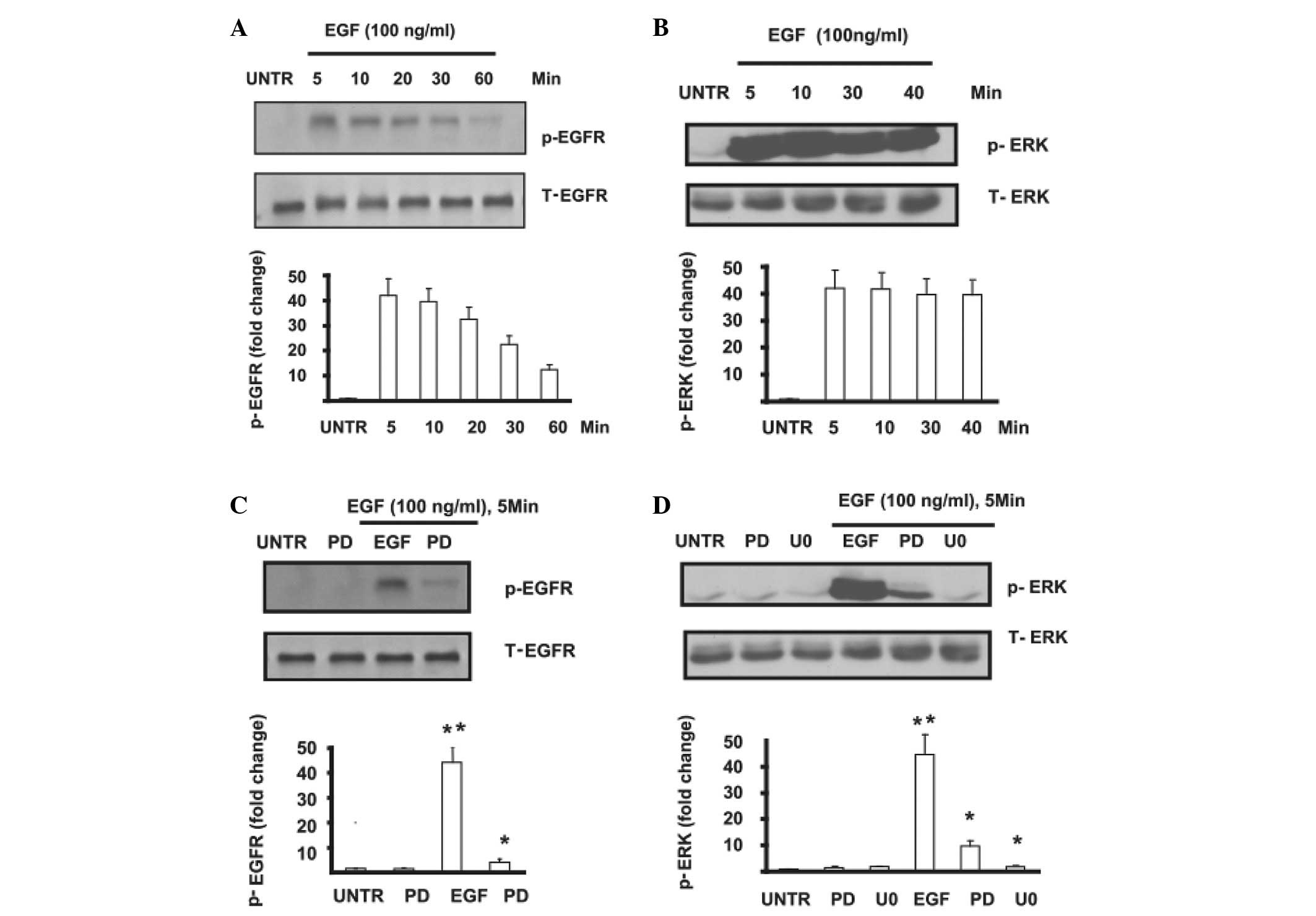
Figure 1

(A) Cells were treated with EGF (100 ng/ml) and collected at different time points (5, 15, 30 and 60 min). EGFR phosphorylation was analyzed by western blotting and quantified. (B) Cells were treated with EGF (100 ng/ml) and collected at different time points (5, 10, 30 and 40 min), cell lysates were collected and ERK phosphorylation was analyzed by western blotting and quantified. (C) Cells were pre-treated with or without PD (PD153035) followed by EGF (100 ng/ml) for 5 min, and EGFR phosphorylation was analyzed by western blotting and quantified. (D) Cells were pre-treated with or without PD or U0 (U0126) followed by EGF (100 ng/ml) for 5 min, and ERK phosphorylation was analyzed by western blotting and quantified. The data are presented as the mean ± SE of triplicate experiments. *P<0.05. EGF, epidermal growth factor; EGFR, EGF receptor; ERK, extracellular signal-regulated kinase.

Expression of AQP3 was upregulated by EGF in MPC-83 pancreatic cancer cells

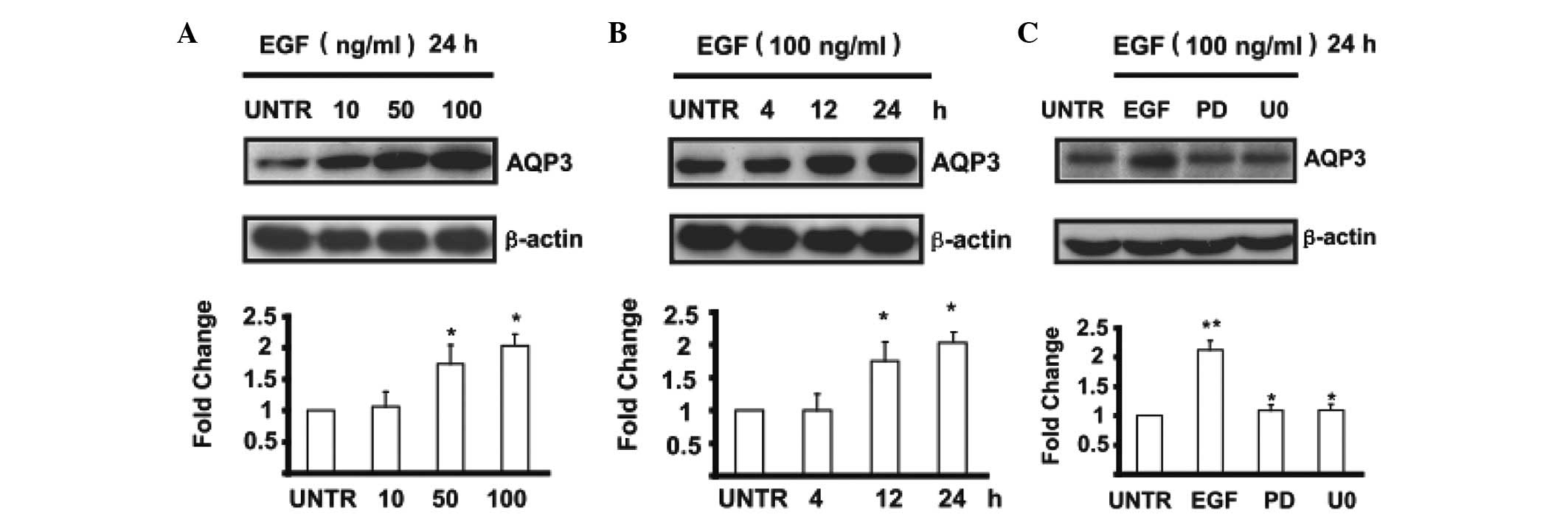
Cells were treated with EGF at different concentrations of 10, 50 and 100 ng/ml and cell lysates were analyzed for AQP3 by western blotting. The results showed that EGF induced the upregulation of AQP3 in a dose-dependent manner in MPC-83 pancreatic cancer cells (Fig. 2A). AQP3 expression begins to increase after cells are treated with 50 ng/ml of EGF and is highest at 100 ng/ml of EGF treatment. The expression of AQP3 was upregulated by EGF in a time-dependent manner (Fig. 2B). AQP3 begins to increase at 12 h and is most obvious at 24 h after being treated with 100 ng/ml of EGF. The expression of AQP3 was inhibited in MPC-83 pancreatic cancer cells which were pre-treated by PD or U0 followed with EGF treatment (Fig. 2C). The data show the mean ± SE of triplicate experiments.

Figure 2

(A) Cells were treated with various doses of EGF (10, 50, 100 ng/ml) and collected at 24 h, AQP3 expression was analyzed by western blotting and quantified. (B) Cells were treated with EGF (100 ng/ml) and collected at different time points (4, 12 and 24 h), AQP3 expression was analyzed by western blotting and quantified. (C) Cells were pre-treated with or without PD (PD153035) or U0 (U0126) followed by EGF (100 ng/ml) for 24 h, AQP expression was analyzed by western blotting and quantified. EGF, epidermal growth factor; AQP, aquaporin.

Migration of MPC-83 pancreatic cancer cells was inhibited by PD, U0 and CuSO4 (water and glycerol transport inhibitors of AQP3)

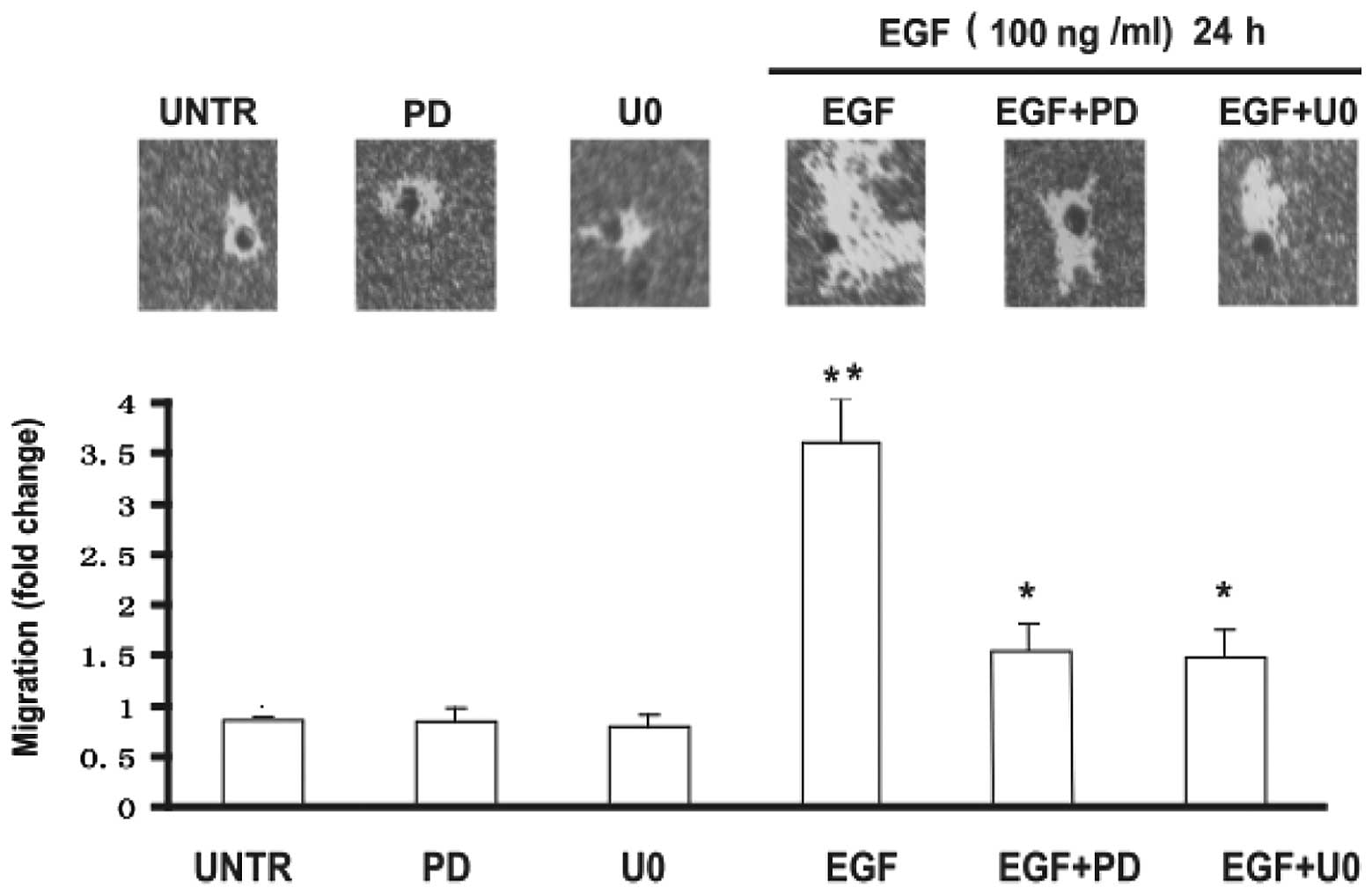
The migration of MPC-83 pancreatic cancer cells which were pre-treated with PD, U0 and CuSO4 followed by EGF treatment was significantly inhibited (Fig. 3).

Figure 3

Cells were treated with EGF (100 ng/ml) and inhibitors (PD153035, U0126 or CuSO4). Cell migration was inhibited and photographed at 24 h. EGF-induced cell migration was inhibited by PD153035, U0126 or CuSO4 in triplicate experiments. *P<0.05. EGF, epidermal growth factor.

Discussion

Pancreatic cancer remains a potentially fatal malignancy giving rise to continuing concern for a number of reasons. Pancreatic cancer is a major unsolved health problem, with conventional cancer treatments having little impact on disease course. Almost all patients who have pancreatic cancer develop metastases and succumb to the disease. The main risk factors are smoking, age and certain genetic disorders, although the primary causes are poorly understood.

Tumor-committed cells generally have an aggressive metabolic energy profile, allowing them to compete with surrounding cells, proliferate and form characteristic structures. At least 12 different tumor cell types have been reported to express AQPs in vivo in humans and rodents. For certain tumors, positive correlations have been established between histological tumor grade and the level of AQP expression. AQP3, which is found in normal epidermis and becomes upregulated in basal cell carcinoma, facilitates cell proliferation in different cell types. AQP3-null mice are resistant to skin tumorigenesis by a mechanism that may involve reduced tumor cell glycerol metabolism and ATP generation (7). AQP expression in tumors is known to facilitate tumor cell migration and spread, suggesting a novel function for AQP expression in high-grade tumors. One consequence of AQP involvement in tumor cell migration is the possibility of AQP inhibition to limit tumor spread, although testing of this possibility requires the development of suitable AQP-selective inhibitors (8). We have found that AQP3 is expressed in cultured MPC-83 pancreatic cancer cells. Using specific AQP3 water transport inhibitors, it is confirmed that AQP3 is involved in EGF-induced pancreatic cancer cell migration in vitro.

Growth factors control cell growth, proliferation, differentiation, survival and migration by activating receptors on specific target cells. Aberrant activation of EGFR and the EGF signal pathway is associated with neoplastic cell proliferation, migration, stromal invasion, resistance to apoptosis and angiogenesis (9). Aberrant EGFR expression and signaling contribute to the development of multiple epithelial malignancies in humans, including squamous cell carcinomas of the skin and breast cancer (10). In particular, EGFR expression is upregulated in 33–50% of human epithelial tumors (11). In this study, we confirm that AQP3 upregulation is involved in MPC-83 pancreatic cancer cell migration and this effect can be induced by EGF. We also provide evidence that an EGFR-mediated MEK/ERK pathway is involved in EGF-induced AQP3 expression and cell migration in MPC-83 pancreatic cancer cells.

EGFR-mediated signaling pathways have been shown to contribute to the regulation of angiogenesis and metastasis (12). To demonstrate whether one of these pathways was involved in MPC-83 pancreatic cancer cell migration, EGFR and ERK inhibitors were used. We found that these two inhibitors suppressed AQP3 expression and cell migration induced by EGF in MPC-83 pancreatic cancer cells. The above results clearly demonstrate that an EGF/EGFR/ERK signaling pathway is at least partly involved in EGF-induced AQP3 expression and cell migration in MPC-83 pancreatic cancer cells. First, EGF induces the phosphorylation of EGFR and ERK, then AQP3 expression is up-regulated and finally, MPC-83 pancreatic cancer cell migration is enhanced.

We conclude that AQP3 is expressed in MPC-83 pancreatic cancer cells and AQP3 facilitates MPC-83 pancreatic cancer cell migration. EGF upregulates AQP3 expression and cell migration via the EGFR/ERK signal transduction pathway in MPC-83 pancreatic cancer cells. This is likely to aid in future efforts to target appropriate EGFR-mediated signals as a rational cancer therapy.

References

1 

Jeyaseelan K, Sepramaniam S, Armugam A, et al: Aquaporins: a promising target for drug development. Expert Opin Ther Targets. 10:889–909. 2006. View Article : Google Scholar : PubMed/NCBI

2 

Walz T, Fujiyoshi Y and Engel A: The AQP structure and functional implications. Handb Exp Pharmacol. 31–56. 2009.

3 

Verkman AS, Hara-Chikuma M and Papadopoulos MC: Aquaporins–new players in cancer biology. J Mol Med (Berl). 86:523–529. 2008.

4 

Sartore-Bianchi A, Bencardino K, Di Nicolantonio F, et al: Integrated molecular dissection of the epidermal growth factor receptor (EFGR) oncogenic pathway to predict response to EGFR-targeted monoclonal antibodies in metastatic colorectal cancer. Target Oncol. 5:19–28. 2010. View Article : Google Scholar

5 

Perol M and Arpin D: Tyrosine kinase inhibitors in the management of non-small cell lung cancer. Rev Mal Respir. 24:6S188–6S197. 2007.PubMed/NCBI

6 

Valentini AM, Pirrelli M and Caruso ML: EGFR-targeted therapy in colorectal cancer: does immunohistochemistry deserve a role in predicting the response to cetuximab? Curr Opin Mol Ther. 10:124–131. 2008.PubMed/NCBI

7 

Nico B and Ribatti D: Role of aquaporins in cell migration and edema formation in human brain tumors. Exp Cell Res. 317:2391–2396. 2011. View Article : Google Scholar : PubMed/NCBI

8 

Papadopoulos MC, Saadoun S and Verkman AS: Aquaporins and cell migration. Pflugers Arch. 456:693–700. 2008. View Article : Google Scholar : PubMed/NCBI

9 

Giaccone G and Wang Y: Strategies for overcoming resistance to EGFR family tyrosine kinase inhibitors. Cancer Treat Rev. 37:456–464. 2011.PubMed/NCBI

10 

Mahipal A, McDonald MJ, Witkiewicz A, et al: Cell membrane and cytoplasmic epidermal growth factor receptor expression in pancreatic ductal adenocarcinoma. Med Oncol. 29:134–139

11 

Steelman LS, Franklin RA, Abrams SL, et al: Roles of the Ras/Raf/MEK/ERK pathway in leukemia therapy. Leukemia. 25:1080–1094. 2011. View Article : Google Scholar : PubMed/NCBI

12 

Dragovich T and Campen C: Anti-EGFR-targeted therapy for esophageal and gastric cancers: an evolving concept. J Oncol. 8041082009.PubMed/NCBI

Related Articles

  • Abstract
  • View
  • Download
  • Twitter
Copy and paste a formatted citation
Spandidos Publications style
Liu W, Wang K, Gong K, Li X and Luo K: Epidermal growth factor enhances MPC-83 pancreatic cancer cell migration through the upregulation of aquaporin 3. Mol Med Rep 6: 607-610, 2012.
APA
Liu, W., Wang, K., Gong, K., Li, X., & Luo, K. (2012). Epidermal growth factor enhances MPC-83 pancreatic cancer cell migration through the upregulation of aquaporin 3. Molecular Medicine Reports, 6, 607-610. https://doi.org/10.3892/mmr.2012.966
MLA
Liu, W., Wang, K., Gong, K., Li, X., Luo, K."Epidermal growth factor enhances MPC-83 pancreatic cancer cell migration through the upregulation of aquaporin 3". Molecular Medicine Reports 6.3 (2012): 607-610.
Chicago
Liu, W., Wang, K., Gong, K., Li, X., Luo, K."Epidermal growth factor enhances MPC-83 pancreatic cancer cell migration through the upregulation of aquaporin 3". Molecular Medicine Reports 6, no. 3 (2012): 607-610. https://doi.org/10.3892/mmr.2012.966
Copy and paste a formatted citation
x
Spandidos Publications style
Liu W, Wang K, Gong K, Li X and Luo K: Epidermal growth factor enhances MPC-83 pancreatic cancer cell migration through the upregulation of aquaporin 3. Mol Med Rep 6: 607-610, 2012.
APA
Liu, W., Wang, K., Gong, K., Li, X., & Luo, K. (2012). Epidermal growth factor enhances MPC-83 pancreatic cancer cell migration through the upregulation of aquaporin 3. Molecular Medicine Reports, 6, 607-610. https://doi.org/10.3892/mmr.2012.966
MLA
Liu, W., Wang, K., Gong, K., Li, X., Luo, K."Epidermal growth factor enhances MPC-83 pancreatic cancer cell migration through the upregulation of aquaporin 3". Molecular Medicine Reports 6.3 (2012): 607-610.
Chicago
Liu, W., Wang, K., Gong, K., Li, X., Luo, K."Epidermal growth factor enhances MPC-83 pancreatic cancer cell migration through the upregulation of aquaporin 3". Molecular Medicine Reports 6, no. 3 (2012): 607-610. https://doi.org/10.3892/mmr.2012.966
Follow us
  • Twitter
  • LinkedIn
  • Facebook
About
  • Spandidos Publications
  • Careers
  • Cookie Policy
  • Privacy Policy
How can we help?
  • Help
  • Live Chat
  • Contact
  • Email to our Support Team