Spandidos Publications Logo
  • About
    • About Spandidos
    • Aims and Scopes
    • Abstracting and Indexing
    • Editorial Policies
    • Reprints and Permissions
    • Job Opportunities
    • Terms and Conditions
    • Contact
  • Journals
    • All Journals
    • Oncology Letters
      • Oncology Letters
      • Information for Authors
      • Editorial Policies
      • Editorial Board
      • Aims and Scope
      • Abstracting and Indexing
      • Bibliographic Information
      • Archive
    • International Journal of Oncology
      • International Journal of Oncology
      • Information for Authors
      • Editorial Policies
      • Editorial Board
      • Aims and Scope
      • Abstracting and Indexing
      • Bibliographic Information
      • Archive
    • Molecular and Clinical Oncology
      • Molecular and Clinical Oncology
      • Information for Authors
      • Editorial Policies
      • Editorial Board
      • Aims and Scope
      • Abstracting and Indexing
      • Bibliographic Information
      • Archive
    • Experimental and Therapeutic Medicine
      • Experimental and Therapeutic Medicine
      • Information for Authors
      • Editorial Policies
      • Editorial Board
      • Aims and Scope
      • Abstracting and Indexing
      • Bibliographic Information
      • Archive
    • International Journal of Molecular Medicine
      • International Journal of Molecular Medicine
      • Information for Authors
      • Editorial Policies
      • Editorial Board
      • Aims and Scope
      • Abstracting and Indexing
      • Bibliographic Information
      • Archive
    • Biomedical Reports
      • Biomedical Reports
      • Information for Authors
      • Editorial Policies
      • Editorial Board
      • Aims and Scope
      • Abstracting and Indexing
      • Bibliographic Information
      • Archive
    • Oncology Reports
      • Oncology Reports
      • Information for Authors
      • Editorial Policies
      • Editorial Board
      • Aims and Scope
      • Abstracting and Indexing
      • Bibliographic Information
      • Archive
    • Molecular Medicine Reports
      • Molecular Medicine Reports
      • Information for Authors
      • Editorial Policies
      • Editorial Board
      • Aims and Scope
      • Abstracting and Indexing
      • Bibliographic Information
      • Archive
    • World Academy of Sciences Journal
      • World Academy of Sciences Journal
      • Information for Authors
      • Editorial Policies
      • Editorial Board
      • Aims and Scope
      • Abstracting and Indexing
      • Bibliographic Information
      • Archive
    • International Journal of Functional Nutrition
      • International Journal of Functional Nutrition
      • Information for Authors
      • Editorial Policies
      • Editorial Board
      • Aims and Scope
      • Abstracting and Indexing
      • Bibliographic Information
      • Archive
    • International Journal of Epigenetics
      • International Journal of Epigenetics
      • Information for Authors
      • Editorial Policies
      • Editorial Board
      • Aims and Scope
      • Abstracting and Indexing
      • Bibliographic Information
      • Archive
    • Medicine International
      • Medicine International
      • Information for Authors
      • Editorial Policies
      • Editorial Board
      • Aims and Scope
      • Abstracting and Indexing
      • Bibliographic Information
      • Archive
  • Articles
  • Information
    • Information for Authors
    • Information for Reviewers
    • Information for Librarians
    • Information for Advertisers
    • Conferences
  • Language Editing
Spandidos Publications Logo
  • About
    • About Spandidos
    • Aims and Scopes
    • Abstracting and Indexing
    • Editorial Policies
    • Reprints and Permissions
    • Job Opportunities
    • Terms and Conditions
    • Contact
  • Journals
    • All Journals
    • Biomedical Reports
      • Information for Authors
      • Editorial Policies
      • Editorial Board
      • Aims and Scope
      • Abstracting and Indexing
      • Bibliographic Information
      • Archive
    • Experimental and Therapeutic Medicine
      • Information for Authors
      • Editorial Policies
      • Editorial Board
      • Aims and Scope
      • Abstracting and Indexing
      • Bibliographic Information
      • Archive
    • International Journal of Epigenetics
      • Information for Authors
      • Editorial Policies
      • Editorial Board
      • Aims and Scope
      • Abstracting and Indexing
      • Bibliographic Information
      • Archive
    • International Journal of Functional Nutrition
      • Information for Authors
      • Editorial Policies
      • Editorial Board
      • Aims and Scope
      • Abstracting and Indexing
      • Bibliographic Information
      • Archive
    • International Journal of Molecular Medicine
      • Information for Authors
      • Editorial Policies
      • Editorial Board
      • Aims and Scope
      • Abstracting and Indexing
      • Bibliographic Information
      • Archive
    • International Journal of Oncology
      • Information for Authors
      • Editorial Policies
      • Editorial Board
      • Aims and Scope
      • Abstracting and Indexing
      • Bibliographic Information
      • Archive
    • Medicine International
      • Information for Authors
      • Editorial Policies
      • Editorial Board
      • Aims and Scope
      • Abstracting and Indexing
      • Bibliographic Information
      • Archive
    • Molecular and Clinical Oncology
      • Information for Authors
      • Editorial Policies
      • Editorial Board
      • Aims and Scope
      • Abstracting and Indexing
      • Bibliographic Information
      • Archive
    • Molecular Medicine Reports
      • Information for Authors
      • Editorial Policies
      • Editorial Board
      • Aims and Scope
      • Abstracting and Indexing
      • Bibliographic Information
      • Archive
    • Oncology Letters
      • Information for Authors
      • Editorial Policies
      • Editorial Board
      • Aims and Scope
      • Abstracting and Indexing
      • Bibliographic Information
      • Archive
    • Oncology Reports
      • Information for Authors
      • Editorial Policies
      • Editorial Board
      • Aims and Scope
      • Abstracting and Indexing
      • Bibliographic Information
      • Archive
    • World Academy of Sciences Journal
      • Information for Authors
      • Editorial Policies
      • Editorial Board
      • Aims and Scope
      • Abstracting and Indexing
      • Bibliographic Information
      • Archive
  • Articles
  • Information
    • For Authors
    • For Reviewers
    • For Librarians
    • For Advertisers
    • Conferences
  • Language Editing
Login Register Submit
  • This site uses cookies
  • You can change your cookie settings at any time by following the instructions in our Cookie Policy. To find out more, you may read our Privacy Policy.

    I agree
Search articles by DOI, keyword, author or affiliation
Search
Advanced Search
presentation
Oncology Letters
Join Editorial Board Propose a Special Issue
Print ISSN: 1792-1074 Online ISSN: 1792-1082
Journal Cover
December-2025 Volume 30 Issue 6

Full Size Image

Sign up for eToc alerts
Recommend to Library

Journals

International Journal of Molecular Medicine

International Journal of Molecular Medicine

International Journal of Molecular Medicine is an international journal devoted to molecular mechanisms of human disease.

International Journal of Oncology

International Journal of Oncology

International Journal of Oncology is an international journal devoted to oncology research and cancer treatment.

Molecular Medicine Reports

Molecular Medicine Reports

Covers molecular medicine topics such as pharmacology, pathology, genetics, neuroscience, infectious diseases, molecular cardiology, and molecular surgery.

Oncology Reports

Oncology Reports

Oncology Reports is an international journal devoted to fundamental and applied research in Oncology.

Experimental and Therapeutic Medicine

Experimental and Therapeutic Medicine

Experimental and Therapeutic Medicine is an international journal devoted to laboratory and clinical medicine.

Oncology Letters

Oncology Letters

Oncology Letters is an international journal devoted to Experimental and Clinical Oncology.

Biomedical Reports

Biomedical Reports

Explores a wide range of biological and medical fields, including pharmacology, genetics, microbiology, neuroscience, and molecular cardiology.

Molecular and Clinical Oncology

Molecular and Clinical Oncology

International journal addressing all aspects of oncology research, from tumorigenesis and oncogenes to chemotherapy and metastasis.

World Academy of Sciences Journal

World Academy of Sciences Journal

Multidisciplinary open-access journal spanning biochemistry, genetics, neuroscience, environmental health, and synthetic biology.

International Journal of Functional Nutrition

International Journal of Functional Nutrition

Open-access journal combining biochemistry, pharmacology, immunology, and genetics to advance health through functional nutrition.

International Journal of Epigenetics

International Journal of Epigenetics

Publishes open-access research on using epigenetics to advance understanding and treatment of human disease.

Medicine International

Medicine International

An International Open Access Journal Devoted to General Medicine.

Journal Cover
December-2025 Volume 30 Issue 6

Full Size Image

Sign up for eToc alerts
Recommend to Library

  • Article
  • Citations
    • Cite This Article
    • Download Citation
    • Create Citation Alert
    • Remove Citation Alert
    • Cited By
  • Similar Articles
    • Related Articles (in Spandidos Publications)
    • Similar Articles (Google Scholar)
    • Similar Articles (PubMed)
  • Download PDF
  • Download XML
  • View XML

  • Supplementary Files
    • Supplementary_Data1.pdf
    • Supplementary_Data2.xlsx
    • Supplementary_Data3.xlsx
Article Open Access

Stimulator of interferon genes signaling network‑driven prognostic signature for pancreatic cancer: Hub gene discovery with multimodal validation

  • Authors:
    • Wenjing Yu
    • Junqun Liao
    • Jiayan Li
    • Yongquan Wu
  • View Affiliations / Copyright

    Affiliations: The Medical Laboratory of Science, The Thirteenth People's Hospital of Chongqing, Chongqing 400084, P.R. China, The Medical Laboratory of Science, The First Affiliated Hospital of Chongqing Medical University, Chongqing 400084, P.R. China, Zhongyuan Huiji Biotechnology Co., Ltd. (Zybio Inc.), Chongqing 400084, P.R. China
    Copyright: © Yu et al. This is an open access article distributed under the terms of Creative Commons Attribution License.
  • Article Number: 602
    |
    Published online on: October 21, 2025
       https://doi.org/10.3892/ol.2025.15348
  • Expand metrics +
Metrics: Total Views: 0 (Spandidos Publications: | PMC Statistics: )
Metrics: Total PDF Downloads: 0 (Spandidos Publications: | PMC Statistics: )
Cited By (CrossRef): 0 citations Loading Articles...

This article is mentioned in:


Abstract

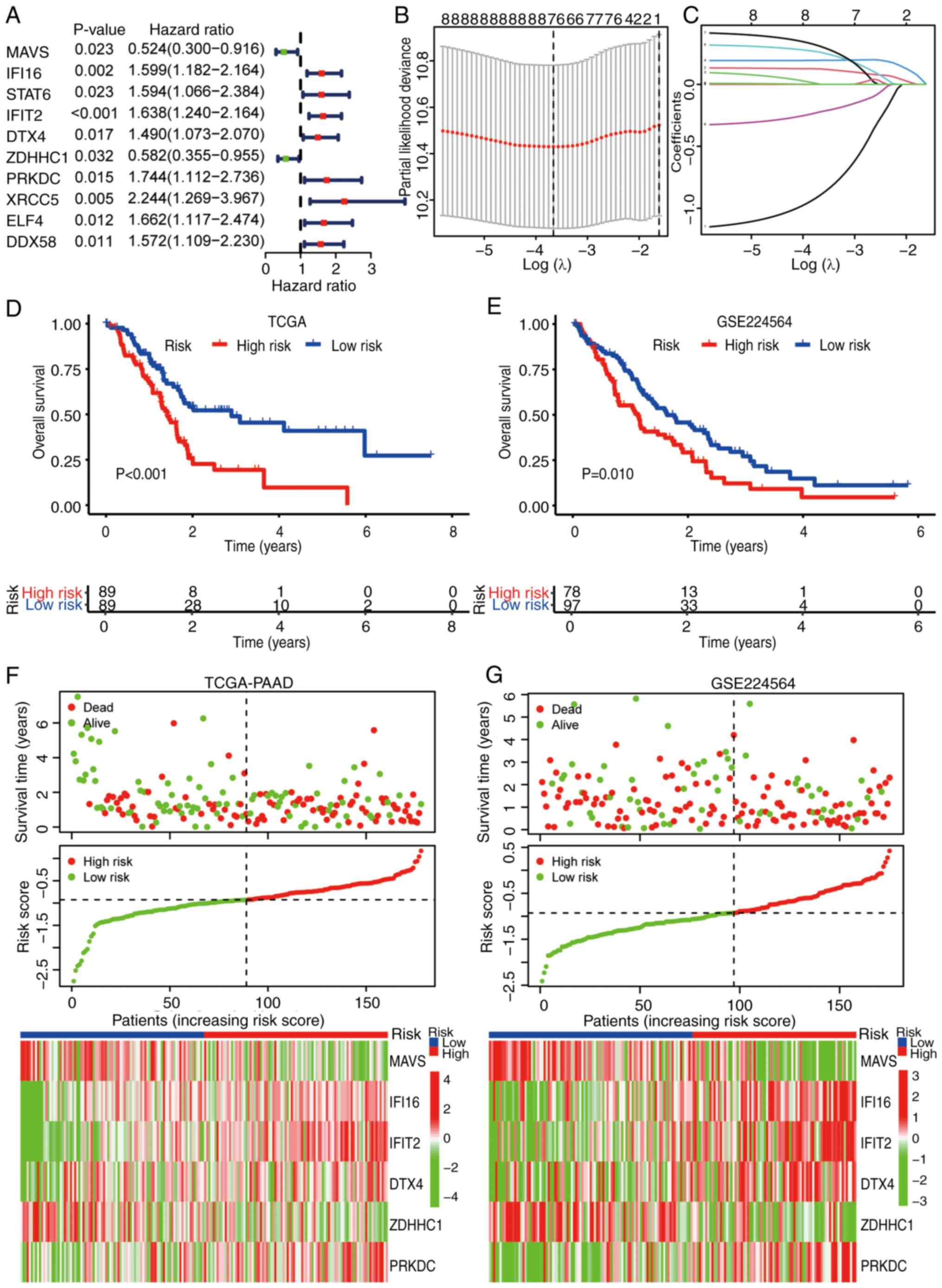
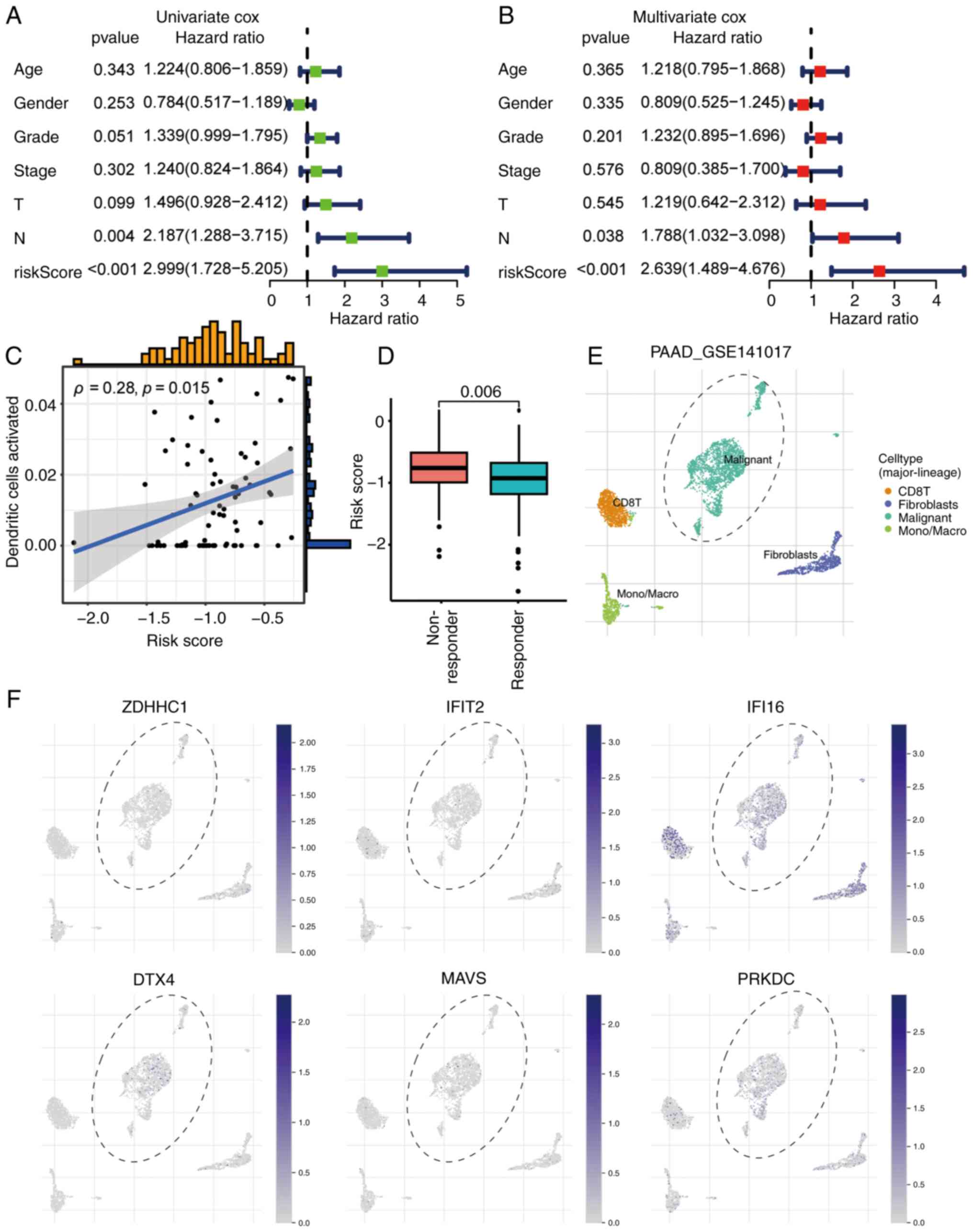
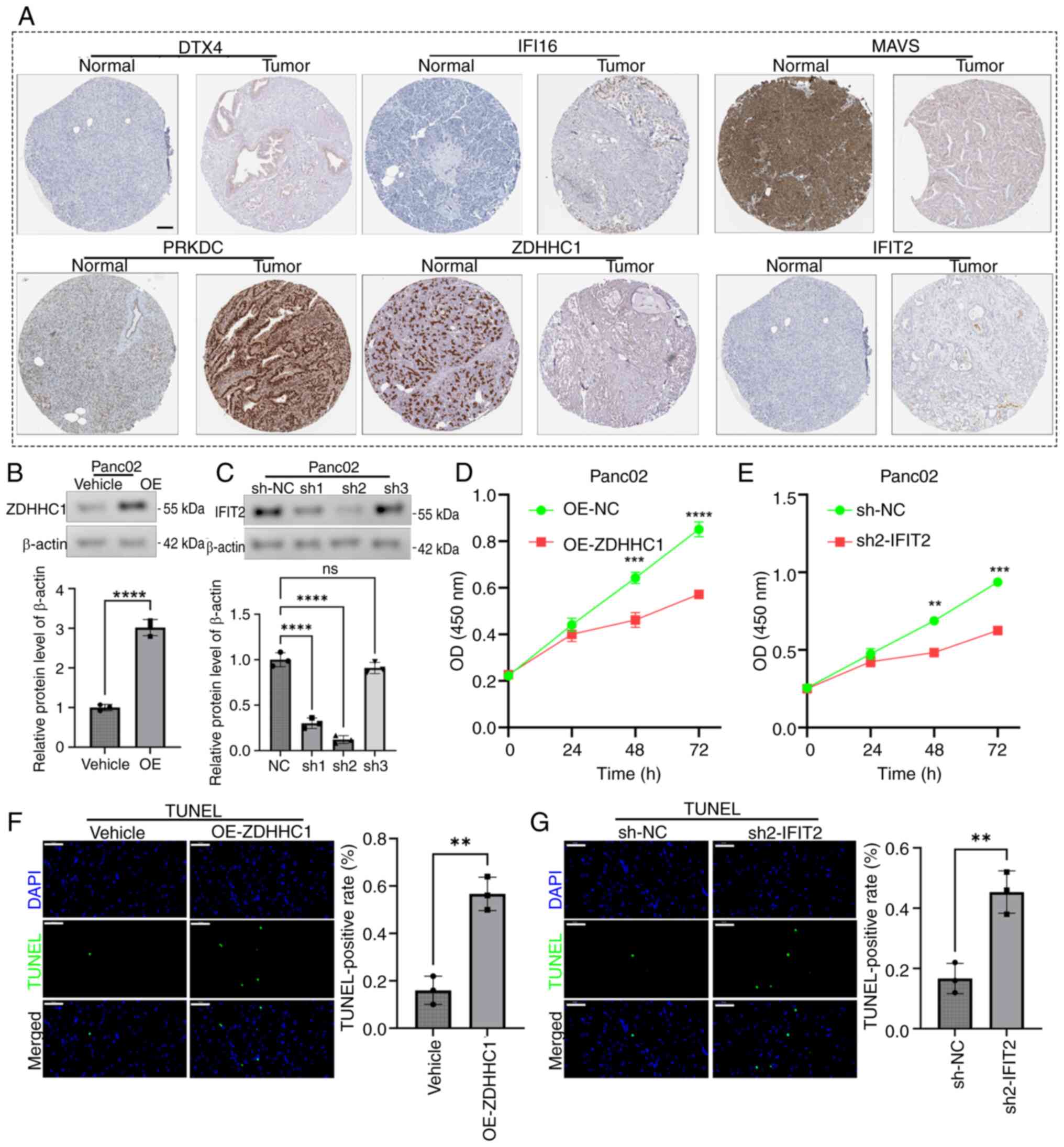
The stimulator of interferon genes (STING) signaling pathway plays an important role in tumor progression, particularly in immune regulation. However, the functions of STING‑related genes in immunologically ‘cold’ tumors, such as pancreatic ductal adenocarcinoma (PAAD), are yet to be elucidated. The present study aims to investigate the involvement of STING signaling pathway‑associated genes in PAAD progression and immune infiltration. Bioinformatics analysis of PAAD transcriptomic data from public cohorts (TCGA and GEO) revealed that the majority of STING‑related genes were highly expressed in PAAD. Based on the expression levels of these genes, patients with PAAD from these cohorts were stratified into high‑risk and low‑risk groups. These STING‑related genes exerted differential impacts on tumor mutational burden, immune infiltration and response to immunotherapy. Utilizing these genes, a prognostic model was constructed (hazard ratio, 2.639; P<0.001) and externally validated. Model analysis indicated that interferon‑induced protein with tetratricopeptide repeats 2 (IFIT2) and zinc finger DHHC‑type containing 1 (ZDHHC1) may possess notable biological functions in PAAD. Subsequent functional experiments involving knockout of IFIT2 and overexpression of ZDHHC1in PAAD cell lines demonstrated that these genes significantly regulated cell proliferation (assessed by CCK‑8 assay) and apoptosis (assessed by TUNEL assay) (P<0.001). In summary, the STING signaling pathway is critically involved in PAAD pathogenesis, and the representative genes IFIT2 and ZDHHC1 exhibit distinct functional roles within this context.
View Figures

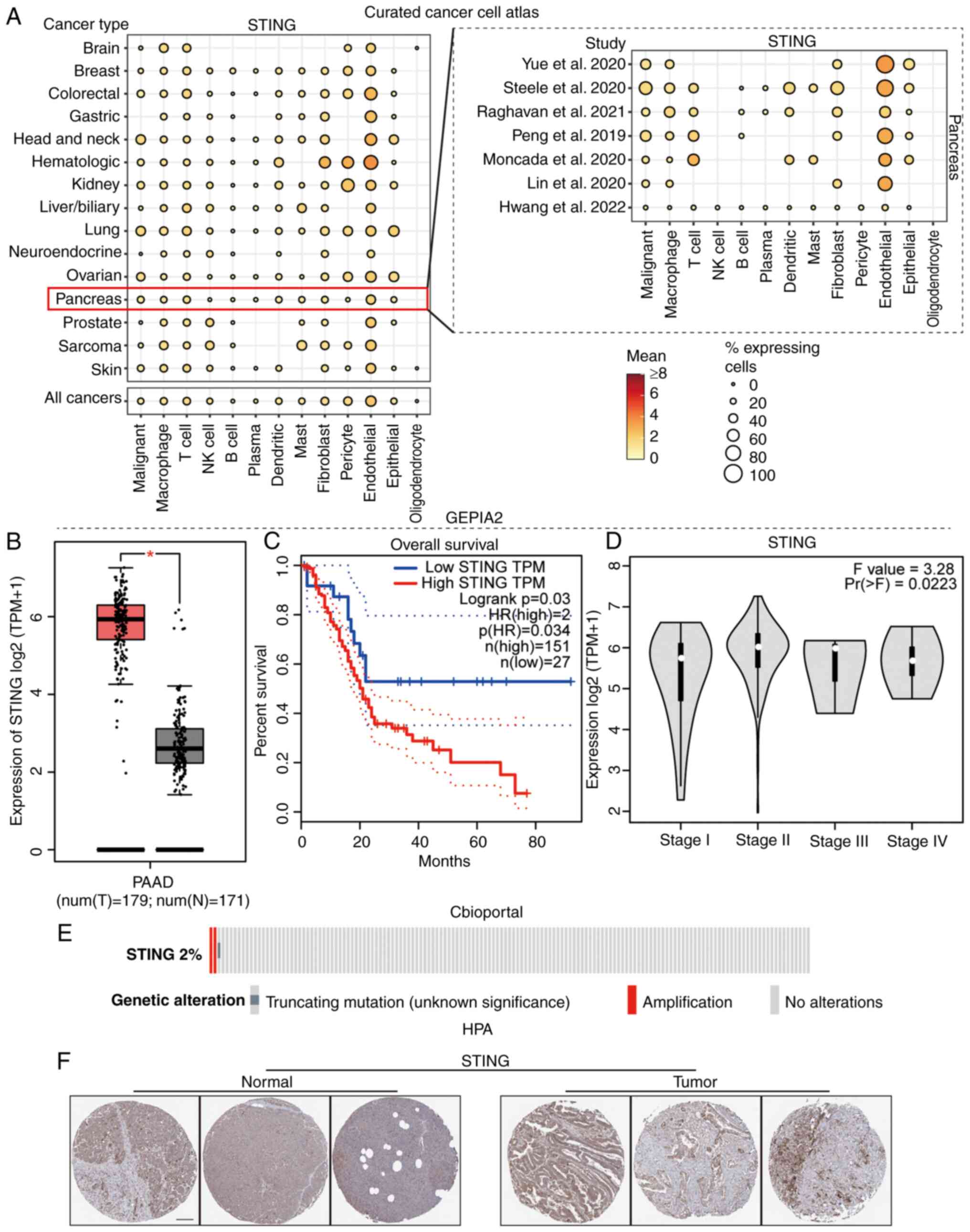
Figure 1

Role of STING expression in PAAD. (A)
Heatmap comparing STING and immune-related gene expression profiles
in PAAD tumor microenvironment vs. adjacent normal tissue. (B) Box
plot demonstrating significantly elevated STING mRNA expression in
PAAD tumors (T) vs. normal pancreatic tissues (N) (*P<0.05)
(TCGA-PAAD (T) + Genotype-Tissue Expression; normal controls;
http://gtexportal.org). (C) Kaplan-Meier curves
comparing overall survival between PAAD patients with low vs. high
STING expression (log-rank test). (D) Violin plots showing STING
expression distribution across AJCC stages (I–IV) of PAAD. (E)
Oncoprint of STING genomic alterations (mutations, copy number
changes) in PAAD. (F) Human Protein Atlas representative
immunohistochemistry images of STING protein expression (PAAD
tissue; proteinatlas.org). Scale bar, 100 µm. STING, stimulator of
interferon genes; PAAD, pancreatic ductal adenocarcinoma; PAAD,
pancreatic adenocarcinoma; IHC, immunohistochemistry; NK, natural
killer; HR, hazard ratio; T, tumor; N, normal; TPM, transcripts per
million.

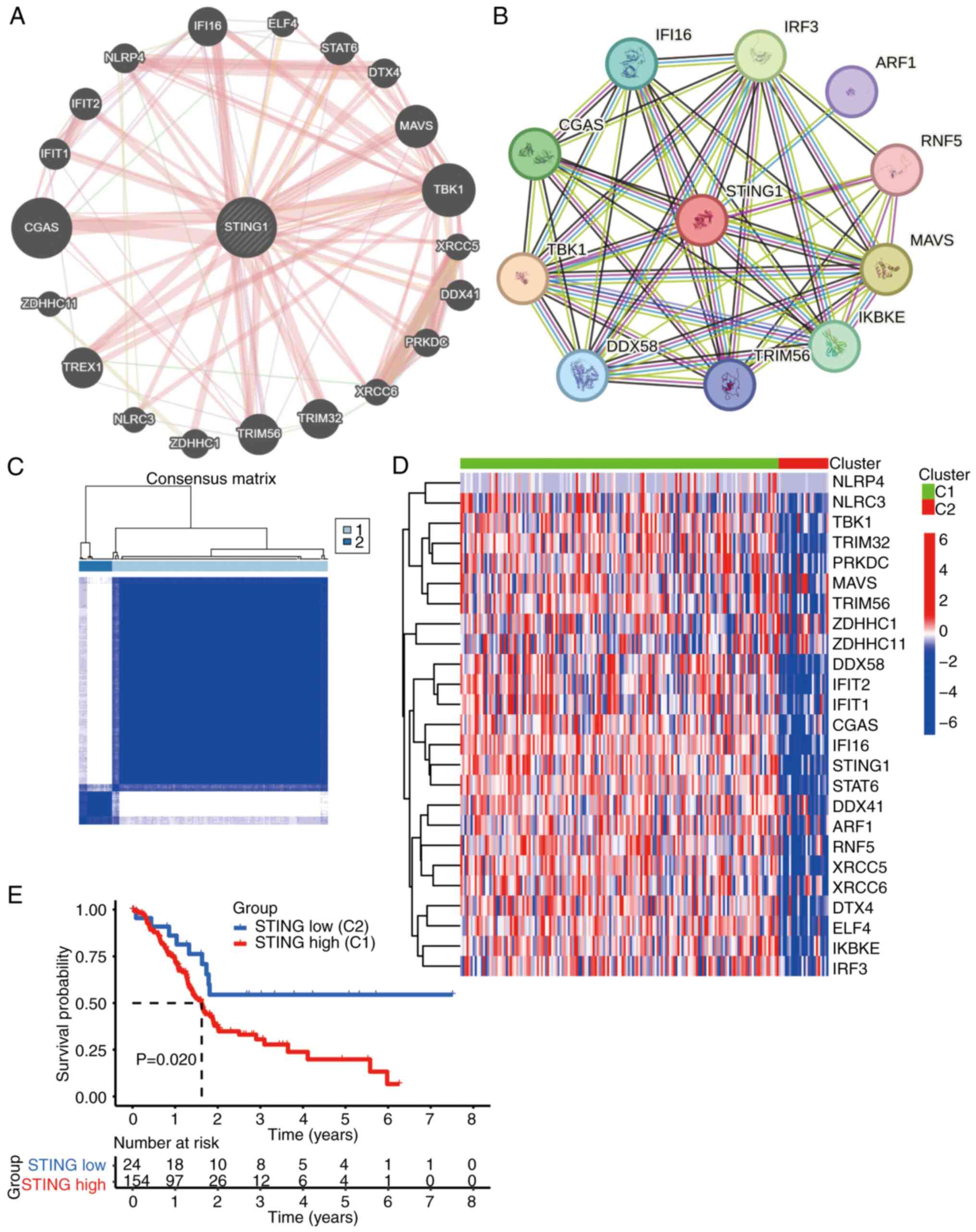
Figure 2

Molecular characterization of STING
signaling pathway-related genes in PAAD. (A) Protein-protein
interaction (PPI) network of core STING signaling components
identified through STRING database analysis (minimum interaction
score: 0.4). (B) Expanded PPI network showing secondary interactors
of STING pathway genes (minimum interaction score: 0.7). (C)
Consensus matrix heatmap classifying patients with PAAD into two
molecular subtypes (C1 and C2) based on STING-related gene
expression patterns. (D) Heatmap comparing expression profiles of
STING-related genes across PAAD subtypes (C1 vs. C2) with
expression gradient key (red, high expression; blue, low
expression). (E) Kaplan-Meier survival analysis showing
significantly reduced overall survival in the STING-enriched
subtype (C1) compared with the STING-depleted subtype (C2). STING,
stimulator of interferon genes; PAAD, pancreatic ductal
adenocarcinoma; CGAS, cyclic GMP-AMP synthase; TBK1, TANK-binding
kinase 1; MAVS, mitochondrial antiviral-signaling protein; TRIM56,
tripartite motif-containing 56; TREX1, three prime repair
exonuclease 1; TRIM32, tripartite motif-containing 32; IFI16,
interferon γ inducible protein 16; IFIT1, interferon-induced
protein with tetratricopeptide repeats 1; DDX41, DEAD-box helicase
41; NLRP4, NLR family pyrin domain containing 4; DTX4, deltex E3
ubiquitin ligase 4; ZDHHC1, zinc finger DHHC-type containing 1;
PRKDC, protein kinase DNA-activated catalytic subunit; XRCC, X-ray
repair cross complementing; ELF4, E74-like ETS transcription factor
4; NLRC3, NLR family CARD domain containing 3; ARF1, ARF GTPase 1;
DDX56, RNA sensor RIG-I; IKBKE, inhibitor of nuclear factor κB
kinase subunit ε; IRF3, interferon regulatory factor 3; RNF5, ring
finger protein 5.

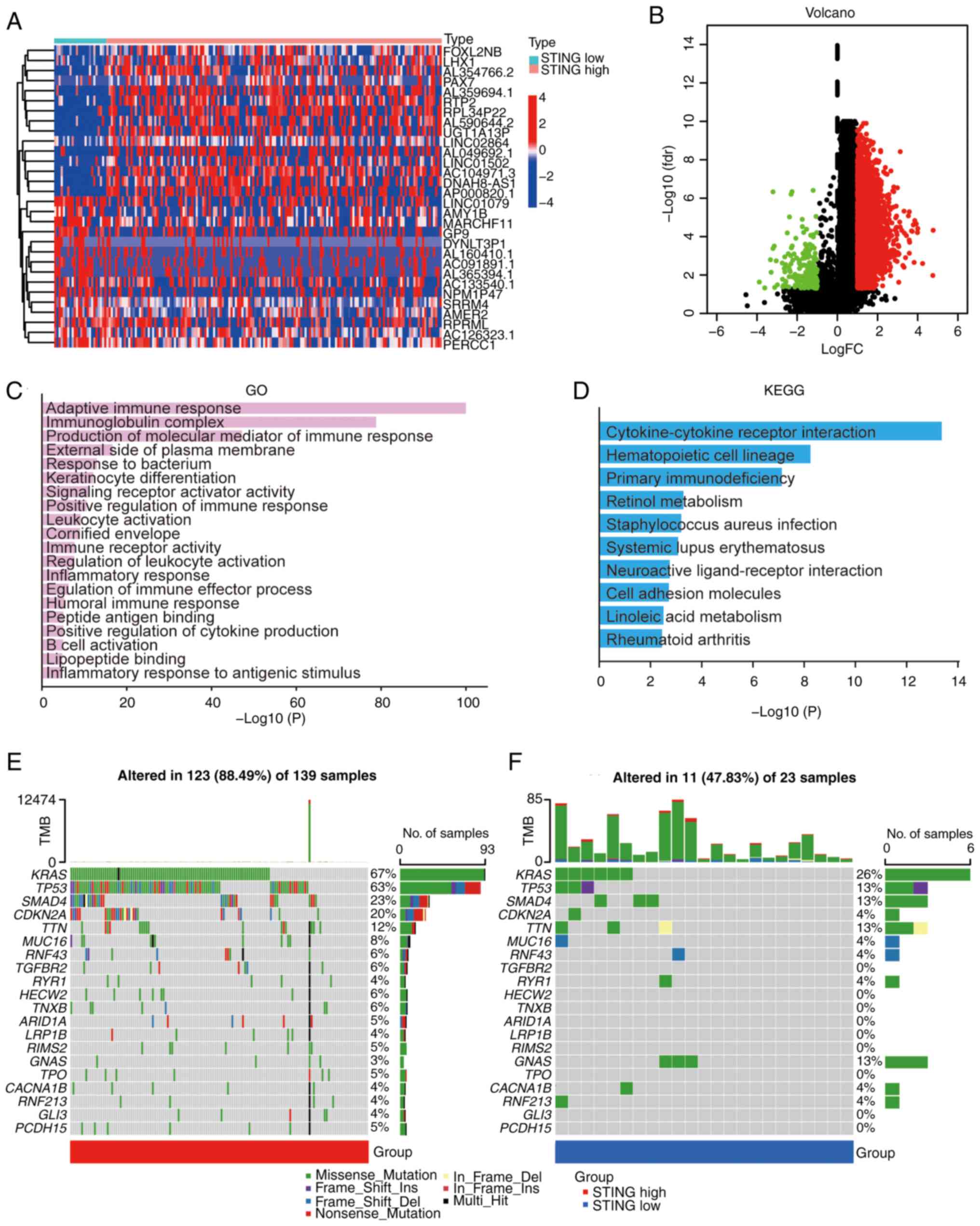
Figure 3

Gene characteristics of different
PAAD subtypes. (A) Heatmap of upregulated genes in STING1-enriched
subtype (C1) vs. STING1-depleted subtype (C2). (B) Heatmap of
downregulated genes in STING1-enriched subtype (C1) vs.
STING1-depleted subtype (C2). (red, high expression; blue, low
expression). (C) GO enrichment analysis showing top biological
processes in STING1-enriched subtype. (D) KEGG pathway enrichment
analysis showing top signaling pathways in STING1-enriched subtype.
(E) Mutational landscape of STING1-enriched subtype (C1) showing
frequent mutations in KRAS, TP53 and CDKN2A. (F) Mutational
landscape of STING1-depleted subtype (C2) showing distinct mutation
profile with SMAD4 alterations. PAAD, pancreatic ductal
adenocarcinoma; STING, stimulator of interferon genes; FC,
fold-change; fdr, false discovery rate; TMB, tumor mutational
burden; GO, Gene Ontology; KEGG, Kyoto Encyclopedia of Genes and
Genomes.

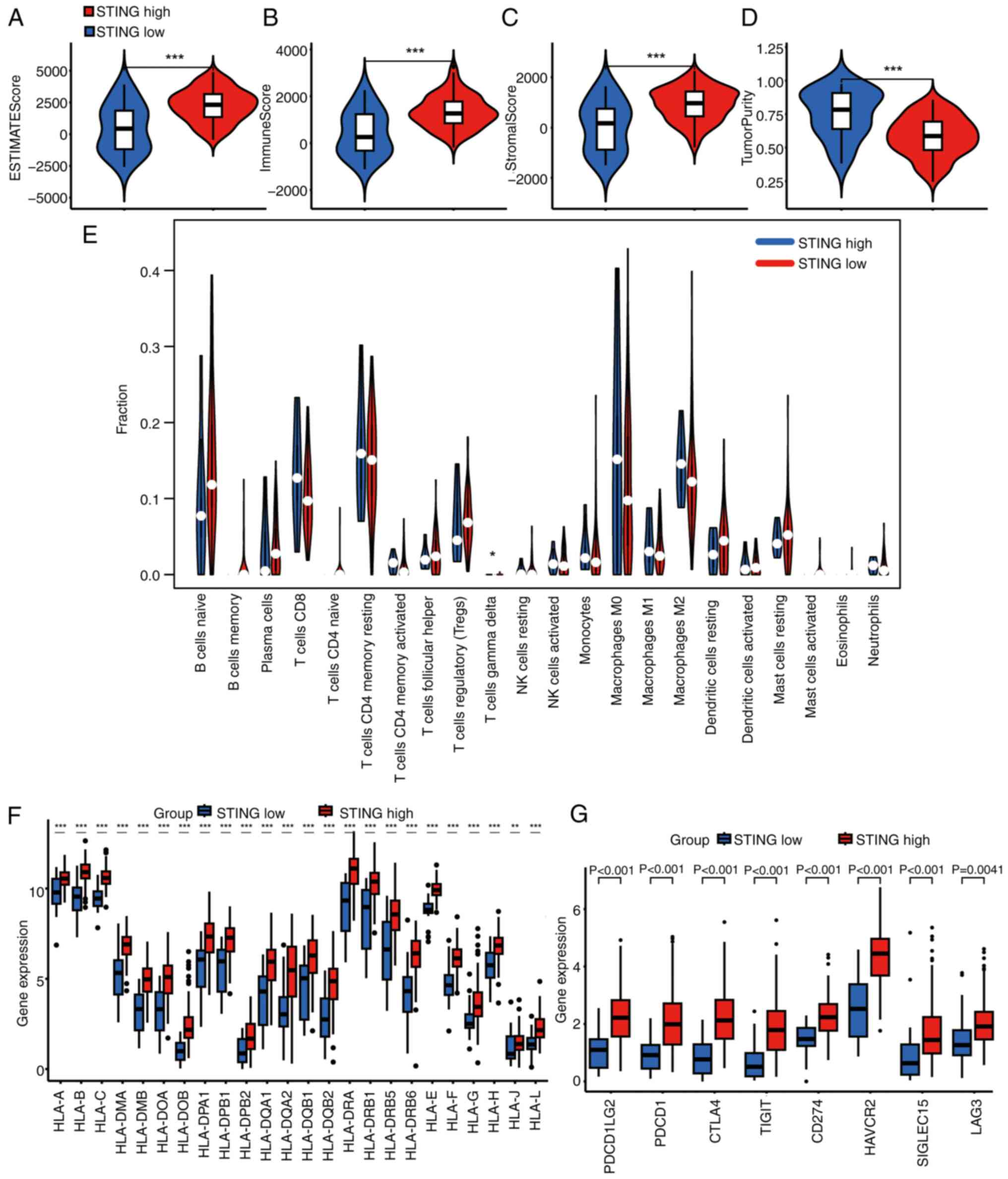
Figure 4

Immune microenvironment profiling of
PAAD molecular subtypes. (A) ESTIMATE analysis showing
significantly higher immune scores in STING1-high subtype (C1) vs.
STING1-low subtype (C2). (B) Significantly higher stromal scores in
C1 vs. C2. (C) Significantly lower tumor purity in C1 vs. C2. (D)
CIBERSORT analysis revealing differential immune cell infiltration
patterns between subtypes (key immune subsets labeled)
(***P<0.001). (E) Positive correlation between STING1 expression
and γδ T cell infiltration density (Pearson r=0.68; *P<0.05) (F)
Upregulated HLA molecule expression in C1 vs. C2 (**P<0.05 and
***P<0.01). (G) Elevated immune checkpoint molecule expression
in C1 vs. C2. PAAD, pancreatic ductal adenocarcinoma; STING,
stimulator of interferon genes; HLA, human leukocyte antigen; NK,
natural killer.

Figure 5

Development and validation of a
STING1 signaling-related prognostic signature for PAAD. (A)
Univariate Cox regression analysis of STING1 pathway-related genes
in PAAD. Genes with significant prognostic value (P<0.05) are
included. (B) LASSO regression 10-fold cross-validation curve
showing optimal λ selection (minimum criteria). (C) LASSO
coefficient profiles of STING1-related genes across log(λ)
sequence. (D) Kaplan-Meier survival analysis for the prognostic
signature in TCGA-PAAD cohort (high-risk vs. low-risk groups;
cutoff: median risk score). (E) Validation of prognostic signature
in GSE224564 cohort. (F) Risk score distribution plot with
corresponding survival status and expression heatmap for 6
signature genes in TCGA-PAAD. (G) Validation in GSE224564 cohort
showing identical configuration to (F). STING, stimulator of
interferon genes; PAAD, pancreatic ductal adenocarcinoma; LASSO,
least absolute shrinkage and selection operator; TCGA, The Cancer
Genome Atlas; MAVS, mitochondrial antiviral-signaling protein;
IFI16, interferon γ inducible protein 16; IFIT2, interferon-induced
protein with tetratricopeptide repeats 2; DTX4, deltex E3 ubiquitin
ligase 4; ZDHHC1, zinc finger DHHC-type containing 1; PRKDC,
protein kinase DNA-activated catalytic subunit; STAT6, signal
transducer and activator of transcription 6; XRCC5, X-ray repair
cross complementing: ELF4, E74-like ETS transcription factor 4;
DDX58, RNA sensor RIG-I.

Figure 6

Independent prognostic value and
immunotherapy relevance of the STING-related risk signature in
PAAD. (A) Univariate Cox regression analysis of clinical parameters
and risk score. (B) Multivariate Cox regression confirming the risk
score as an independent prognostic factor after adjusting for
covariates in (A). (C) Correlation analysis of risk score and
activated dendritic cell abundance. ‘Dendritic cells activated’
represents proportion scores derived from the xCell algorithm (0–1
scale), quantifying relative abundance in the tumor
microenvironment. Correlation was assessed using Spearman's rank
correlation analysis (Spearman's ρ=0.28; P=0.015). (D) Higher risk
scores in immunotherapy non-responders vs. responders (Mann-Whitney
U test). Single-cell RNA sequencing (GSE141017) visualization of
STING1 signature gene expression: (E) t-SNE plot showing cell-type
distribution. (F) Feature plots of signature gene expression across
the PAAD tumor microenvironment. STING, stimulator of interferon
genes; PAAD, pancreatic ductal adenocarcinoma; T, tumor; N, node;
CD8T, T-cell surface glycoprotein CD8; ZDHHC1, zinc finger
DHHC-type containing 1; IFIT2, interferon-induced protein with
tetratricopeptide repeats 2; IFI16, interferon γ inducible protein
16; DTX4, deltex E3 ubiquitin ligase 4; MAVS, mitochondrial
antiviral-signaling protein; PRKDC, protein kinase DNA-activated
catalytic subunit; PAAD, pancreatic adenocarcinoma.

Figure 7

Functional roles of IFIT2 and ZDHHC1
in PAAD oncobiology. (A) Human Protein Atlas representative
immunohistochemical staining of six prognostic signature genes in
PAAD tissues (proteinatlas.org). Scale bar, 100 µm. (B) Western
blot and semi-quantification confirming successful ZDHHC1
overexpression in Panc02 cells (C) Western blot and
semi-quantification confirming IFIT2 knockout efficiency in Panc02
cells (****P<0.0001). (D) CCK-8 assay: ZDHHC1 overexpression
enhances Panc02 proliferation (***P<0.001 and ****P<0.0001 vs
OE-NC). (E) CCK-8 assay: IFIT2 knockout enhances Panc02
proliferation (**P<0.01 and ***P<0.001 vs. sh-NC). (F) TUNEL
assay (scale bar, 50 µm) demonstrating reduced apoptosis in
ZDHHC1-overexpressing Panc02 cells. (G) TUNEL assay (scale bar 50
µm) showing decreased apoptosis in IFIT2-knockout Panc02 cells
(**P<0.01). IFIT2, interferon-induced protein with
tetratricopeptide repeats 2; ZDHHC1, zinc finger DHHC-type
containing 1; PAAD, pancreatic ductal adenocarcinoma; OE,
overexpression; CCK-8, Cell Counting Kit-8; DTX4, deltex E3
ubiquitin ligase 4; IFI16, interferon γ inducible protein 16; MAVS,
mitochondrial antiviral-signaling protein; PRKDC, protein kinase
DNA-activated catalytic subunit; sh-NC, scrambled negative control
shRNA; ns, not significant.
View References

1 

Bray F, Laversanne M, Sung H, Ferlay J, Siegel RL, Soerjomataram I and Jemal A: Global cancer statistics 2022: GLOBOCAN estimates of incidence and mortality worldwide for 36 cancers in 185 countries. CA Cancer J Clin. 74:229–263. 2024. View Article : Google Scholar : PubMed/NCBI

2 

Blackford AL, Canto MI, Dbouk M, Hruban RH, Katona BW, Chak A, Brand RE, Syngal S, Farrell J, Kastrinos F, et al: Pancreatic cancer surveillance and survival of high-risk individuals. JAMA Oncol. 10:1087–1096. 2024. View Article : Google Scholar

3 

Park W, Chawla A and O'Reilly EM: Pancreatic cancer: A review. JAMA. 326:851–862. 2021. View Article : Google Scholar : PubMed/NCBI

4 

Peduzzi G, Archibugi L, Farinella R, de Leon Pisani RP, Vodickova L, Vodicka P, Kraja B, Sainz J, Bars-Cortina D, Daniel N, et al: The exposome and pancreatic cancer, lifestyle and environmental risk factors for PDAC. Semin Cancer Biol. 113:100–129. 2025. View Article : Google Scholar

5 

Springfeld C, Ferrone CR, Katz MHG, Philip PA, Hong TS, Hackert T, Büchler MW and Neoptolemos J: Neoadjuvant therapy for pancreatic cancer. Nat Rev Clin Oncol. 20:318–337. 2023. View Article : Google Scholar

6 

Hu ZI and O'Reilly EM: Therapeutic developments in pancreatic cancer. Nat Rev Gastroenterol Hepatol. 21:7–24. 2024. View Article : Google Scholar

7 

Sang W, Zhou Y, Chen H, Yu C, Dai L, Liu Z, Chen L, Fang Y, Ma P, Wu X, et al: Receptor-interacting protein kinase 2 is an immunotherapy target in pancreatic cancer. Cancer Discov. 14:326–347. 2024. View Article : Google Scholar : PubMed/NCBI

8 

Ullman NA, Burchard PR, Dunne RF and Linehan DC: Immunologic strategies in pancreatic cancer: Making cold tumors hot. J Clin Oncol. 40:2789–2805. 2022. View Article : Google Scholar

9 

Zhao K, Huang J, Zhao Y, Wang S, Xu J and Yin K: Targeting STING in cancer: Challenges and emerging opportunities. Biochim Biophys Acta Rev Cancer. 1878:1889832023. View Article : Google Scholar : PubMed/NCBI

10 

Zhang B, Xu P and Ablasser A: Regulation of the cGAS-STING pathway. Annu Rev Immunol. 43:667–692. 2025. View Article : Google Scholar

11 

Tani T, Mathsyaraja H, Campisi M, Li ZH, Haratani K, Fahey CG, Ota K, Mahadevan NR, Shi Y, Saito S, et al: TREX1 inactivation unleashes cancer cell STING-interferon signaling and promotes antitumor immunity. Cancer Discov. 14:752–765. 2024. View Article : Google Scholar : PubMed/NCBI

12 

Luo J, Wang S, Yang Q, Fu Q, Zhu C, Li T, Yang S, Zhao Y, Guo R, Ben X, et al: γδ T Cell-mediated tumor immunity is tightly regulated by STING and TGF-β signaling pathways. Adv Sci (Weinh). 12:e24044322025. View Article : Google Scholar : PubMed/NCBI

13 

Liu X, Hogg GD, Zuo C, Borcherding NC, Baer JM, Lander VE, Kang LI, Knolhoff BL, Ahmad F, Osterhout RE, et al: Context-dependent activation of STING-interferon signaling by CD11b agonists enhances anti-tumor immunity. Cancer Cell. 41:1073–1090.e12. 2023. View Article : Google Scholar

14 

Tian X, Ai J, Tian X and Wei X: cGAS-STING pathway agonists are promising vaccine adjuvants. Med Res Rev. 44:1768–1799. 2024. View Article : Google Scholar : PubMed/NCBI

15 

Chen X, Xu Z, Li T, Thakur A, Wen Y, Zhang K, Liu Y, Liang Q, Liu W, Qin JJ and Yan Y: Nanomaterial-encapsulated STING agonists for immune modulation in cancer therapy. Biomark Res. 12:22024. View Article : Google Scholar : PubMed/NCBI

16 

Chin EN, Sulpizio A and Lairson LL: Targeting STING to promote antitumor immunity. Trends Cell Biol. 33:189–203. 2023. View Article : Google Scholar

17 

Chen X, Meng F, Xu Y, Li T, Chen X and Wang H: Chemically programmed STING-activating nano-liposomal vesicles improve anticancer immunity. Nat Commun. 14:45842023. View Article : Google Scholar : PubMed/NCBI

18 

Dosta P, Cryer AM, Dion MZ, Shiraishi T, Langston SP, Lok D, Wang J, Harrison S, Hatten T, Ganno ML, et al: Investigation of the enhanced antitumour potency of STING agonist after conjugation to polymer nanoparticles. Nat Nanotechnol. 18:1351–1363. 2023. View Article : Google Scholar

19 

Wen Z, Sun F, Wang R, Wang W, Zhang H, Yang F, Wang M, Wang Y and Li B: STING agonists: A range of eminent mediators in cancer immunotherapy. Cell Signal. 134:1119142025. View Article : Google Scholar

20 

Ohara Y, Tang W, Liu H, Yang S, Dorsey TH, Cawley H, Moreno P, Chari R, Guest MR, Azizian A, et al: SERPINB3-MYC axis induces the basal-like/squamous subtype and enhances disease progression in pancreatic cancer. Cell Rep. 42:1134342023. View Article : Google Scholar : PubMed/NCBI

21 

Amin MB, Greene FL, Edge SB, Compton CC, Gershenwald JE, Brookland RK, Meyer L, Gress DM, Byrd DR and Winchester DP: The eighth edition AJCC cancer staging manual: Continuing to build a bridge from a population-based to a more ‘personalized’ approach to cancer staging. CA Cancer J Clin. 67:93–99. 2017. View Article : Google Scholar : PubMed/NCBI

22 

Lee M, Thomas AS, Lee SY, Cho YJ, Jung HS, Yun WG, Han Y, Jang JY, Kluger MD and Kwon W: Reconsidering the absence of extrapancreatic extension in T staging for pancreatic adenocarcinoma in the AJCC (8th ed) staging manual using the national cancer database. J Gastrointest Surg. 27:2484–2492. 2023. View Article : Google Scholar : PubMed/NCBI

23 

Kerschbaum-Gruber S, Kleinwächter A, Popova K, Kneringer A, Appel LM, Stasny K, Röhrer A, Dias AB, Benedum J, Walch L, et al: Cytosolic nucleic acid sensors and interferon beta-1 activation drive radiation-induced anti-tumour immune effects in human pancreatic cancer cells. Front Immunol. 15:12869422024. View Article : Google Scholar

24 

Sung H, Ferlay J, Siegel RL, Laversanne M, Soerjomataram I, Jemal A and Bray F: Global cancer statistics 2020: GLOBOCAN estimates of incidence and mortality worldwide for 36 cancers in 185 countries. CA Cancer J Clin. 71:209–249. 2021. View Article : Google Scholar : PubMed/NCBI

25 

Yin L, Wei J, Lu Z, Huang S, Gao H, Chen J, Guo F, Tu M, Xiao B, Xi C, et al: Prevalence of germline sequence variations among patients with pancreatic cancer in China. JAMA Netw Open. 5:e21487212022. View Article : Google Scholar : PubMed/NCBI

26 

Larson NB, Oberg AL, Adjei AA and Wang L: A clinician's guide to bioinformatics for next-generation sequencing. J Thorac Oncol. 18:143–157. 2023. View Article : Google Scholar

27 

Petralia F, Ma W, Yaron TM, Caruso FP, Tignor N, Wang JM, Charytonowicz D, Johnson JL, Huntsman EM, Marino GB, et al: Pan-cancer proteogenomics characterization of tumor immunity. Cell. 187:1255–1277.e27. 2024. View Article : Google Scholar

28 

Lv M, Chen M, Zhang R, Zhang W, Wang C, Zhang Y, Wei X, Guan Y, Liu J, Feng K, et al: Manganese is critical for antitumor immune responses via cGAS-STING and improves the efficacy of clinical immunotherapy. Cell Res. 30:966–979. 2020. View Article : Google Scholar : PubMed/NCBI

29 

Li S, Mirlekar B, Johnson BM, Brickey WJ, Wrobel JA, Yang N, Song D, Entwistle S, Tan X, Deng M, et al: STING-induced regulatory B cells compromise NK function in cancer immunity. Nature. 610:373–380. 2022. View Article : Google Scholar : PubMed/NCBI

30 

Li J, Hubisz MJ, Earlie EM, Duran MA, Hong C, Varela AA, Lettera E, Deyell M, Tavora B, Havel JJ, et al: Non-cell-autonomous cancer progression from chromosomal instability. Nature. 620:1080–1088. 2023. View Article : Google Scholar : PubMed/NCBI

31 

Jneid B, Bochnakian A, Hoffmann C, Delisle F, Djacoto E, Sirven P, Denizeau J, Sedlik C, Gerber-Ferder Y, Fiore F, et al: Selective STING stimulation in dendritic cells primes antitumor T cell responses. Sci Immunol. 8:eabn66122023. View Article : Google Scholar

32 

Wang J, Li S, Wang M, Wang X, Chen S, Sun Z, Ren X, Huang G, Sumer BD, Yan N, et al: STING licensing of type I dendritic cells potentiates antitumor immunity. Sci Immunol. 9:eadj39452024. View Article : Google Scholar

33 

Yang Y, Song J, Zhao H, Zhang H and Guo M: Patients with dermatomyositis shared partially similar transcriptome signature with COVID-19 infection. Autoimmunity. 56:22209842023. View Article : Google Scholar : PubMed/NCBI

34 

Xu QC, Tien YC, Shi YH, Chen S, Zhu YQ, Huang XT, Huang CS, Zhao W and Yin XY: METTL3 promotes intrahepatic cholangiocarcinoma progression by regulating IFIT2 expression in an m6A-YTHDF2-dependent manner. Oncogene. 41:1622–1633. 2022. View Article : Google Scholar : PubMed/NCBI

35 

Zhou B, Liu Y, Ma H, Zhang B, Lu B, Li S, Liu T, Qi Y, Wang Y, Zhang M, et al: Zdhhc1 deficiency mitigates foam cell formation and atherosclerosis by inhibiting PI3K-Akt-mTOR signaling pathway through facilitating the nuclear translocation of p110α. Biochim Biophys Acta Mol Basis Dis. 1871:1675772025. View Article : Google Scholar : PubMed/NCBI

36 

Le X, Mu J, Peng W, Tang J, Xiang Q, Tian S, Feng Y, He S, Qiu Z, Ren G, et al: DNA methylation downregulated ZDHHC1 suppresses tumor growth by altering cellular metabolism and inducing oxidative/ER stress-mediated apoptosis and pyroptosis. Theranostics. 10:9495–9511. 2020. View Article : Google Scholar : PubMed/NCBI

37 

Tang J, Peng W, Feng Y, Le X, Wang K, Xiang Q, Li L, Wang Y, Xu C, Mu J, et al: Cancer cells escape p53′s tumor suppression through ablation of ZDHHC1-mediated p53 palmitoylation. Oncogene. 40:5416–5426. 2021. View Article : Google Scholar : PubMed/NCBI

Related Articles

  • Abstract
  • View
  • Download
  • Twitter
Copy and paste a formatted citation
Spandidos Publications style
Yu W, Liao J, Li J and Wu Y: Stimulator of interferon genes signaling network‑driven prognostic signature for pancreatic cancer: Hub gene discovery with multimodal validation. Oncol Lett 30: 602, 2025.
APA
Yu, W., Liao, J., Li, J., & Wu, Y. (2025). Stimulator of interferon genes signaling network‑driven prognostic signature for pancreatic cancer: Hub gene discovery with multimodal validation. Oncology Letters, 30, 602. https://doi.org/10.3892/ol.2025.15348
MLA
Yu, W., Liao, J., Li, J., Wu, Y."Stimulator of interferon genes signaling network‑driven prognostic signature for pancreatic cancer: Hub gene discovery with multimodal validation". Oncology Letters 30.6 (2025): 602.
Chicago
Yu, W., Liao, J., Li, J., Wu, Y."Stimulator of interferon genes signaling network‑driven prognostic signature for pancreatic cancer: Hub gene discovery with multimodal validation". Oncology Letters 30, no. 6 (2025): 602. https://doi.org/10.3892/ol.2025.15348
Copy and paste a formatted citation
x
Spandidos Publications style
Yu W, Liao J, Li J and Wu Y: Stimulator of interferon genes signaling network‑driven prognostic signature for pancreatic cancer: Hub gene discovery with multimodal validation. Oncol Lett 30: 602, 2025.
APA
Yu, W., Liao, J., Li, J., & Wu, Y. (2025). Stimulator of interferon genes signaling network‑driven prognostic signature for pancreatic cancer: Hub gene discovery with multimodal validation. Oncology Letters, 30, 602. https://doi.org/10.3892/ol.2025.15348
MLA
Yu, W., Liao, J., Li, J., Wu, Y."Stimulator of interferon genes signaling network‑driven prognostic signature for pancreatic cancer: Hub gene discovery with multimodal validation". Oncology Letters 30.6 (2025): 602.
Chicago
Yu, W., Liao, J., Li, J., Wu, Y."Stimulator of interferon genes signaling network‑driven prognostic signature for pancreatic cancer: Hub gene discovery with multimodal validation". Oncology Letters 30, no. 6 (2025): 602. https://doi.org/10.3892/ol.2025.15348
Follow us
  • Twitter
  • LinkedIn
  • Facebook
About
  • Spandidos Publications
  • Careers
  • Cookie Policy
  • Privacy Policy
How can we help?
  • Help
  • Live Chat
  • Contact
  • Email to our Support Team