Spandidos Publications Logo
  • About
    • About Spandidos
    • Aims and Scopes
    • Abstracting and Indexing
    • Editorial Policies
    • Reprints and Permissions
    • Job Opportunities
    • Terms and Conditions
    • Contact
  • Journals
    • All Journals
    • Oncology Letters
      • Oncology Letters
      • Information for Authors
      • Editorial Policies
      • Editorial Board
      • Aims and Scope
      • Abstracting and Indexing
      • Bibliographic Information
      • Archive
    • International Journal of Oncology
      • International Journal of Oncology
      • Information for Authors
      • Editorial Policies
      • Editorial Board
      • Aims and Scope
      • Abstracting and Indexing
      • Bibliographic Information
      • Archive
    • Molecular and Clinical Oncology
      • Molecular and Clinical Oncology
      • Information for Authors
      • Editorial Policies
      • Editorial Board
      • Aims and Scope
      • Abstracting and Indexing
      • Bibliographic Information
      • Archive
    • Experimental and Therapeutic Medicine
      • Experimental and Therapeutic Medicine
      • Information for Authors
      • Editorial Policies
      • Editorial Board
      • Aims and Scope
      • Abstracting and Indexing
      • Bibliographic Information
      • Archive
    • International Journal of Molecular Medicine
      • International Journal of Molecular Medicine
      • Information for Authors
      • Editorial Policies
      • Editorial Board
      • Aims and Scope
      • Abstracting and Indexing
      • Bibliographic Information
      • Archive
    • Biomedical Reports
      • Biomedical Reports
      • Information for Authors
      • Editorial Policies
      • Editorial Board
      • Aims and Scope
      • Abstracting and Indexing
      • Bibliographic Information
      • Archive
    • Oncology Reports
      • Oncology Reports
      • Information for Authors
      • Editorial Policies
      • Editorial Board
      • Aims and Scope
      • Abstracting and Indexing
      • Bibliographic Information
      • Archive
    • Molecular Medicine Reports
      • Molecular Medicine Reports
      • Information for Authors
      • Editorial Policies
      • Editorial Board
      • Aims and Scope
      • Abstracting and Indexing
      • Bibliographic Information
      • Archive
    • World Academy of Sciences Journal
      • World Academy of Sciences Journal
      • Information for Authors
      • Editorial Policies
      • Editorial Board
      • Aims and Scope
      • Abstracting and Indexing
      • Bibliographic Information
      • Archive
    • International Journal of Functional Nutrition
      • International Journal of Functional Nutrition
      • Information for Authors
      • Editorial Policies
      • Editorial Board
      • Aims and Scope
      • Abstracting and Indexing
      • Bibliographic Information
      • Archive
    • International Journal of Epigenetics
      • International Journal of Epigenetics
      • Information for Authors
      • Editorial Policies
      • Editorial Board
      • Aims and Scope
      • Abstracting and Indexing
      • Bibliographic Information
      • Archive
    • Medicine International
      • Medicine International
      • Information for Authors
      • Editorial Policies
      • Editorial Board
      • Aims and Scope
      • Abstracting and Indexing
      • Bibliographic Information
      • Archive
  • Articles
  • Information
    • Information for Authors
    • Information for Reviewers
    • Information for Librarians
    • Information for Advertisers
    • Conferences
  • Language Editing
Spandidos Publications Logo
  • About
    • About Spandidos
    • Aims and Scopes
    • Abstracting and Indexing
    • Editorial Policies
    • Reprints and Permissions
    • Job Opportunities
    • Terms and Conditions
    • Contact
  • Journals
    • All Journals
    • Biomedical Reports
      • Information for Authors
      • Editorial Policies
      • Editorial Board
      • Aims and Scope
      • Abstracting and Indexing
      • Bibliographic Information
      • Archive
    • Experimental and Therapeutic Medicine
      • Information for Authors
      • Editorial Policies
      • Editorial Board
      • Aims and Scope
      • Abstracting and Indexing
      • Bibliographic Information
      • Archive
    • International Journal of Epigenetics
      • Information for Authors
      • Editorial Policies
      • Editorial Board
      • Aims and Scope
      • Abstracting and Indexing
      • Bibliographic Information
      • Archive
    • International Journal of Functional Nutrition
      • Information for Authors
      • Editorial Policies
      • Editorial Board
      • Aims and Scope
      • Abstracting and Indexing
      • Bibliographic Information
      • Archive
    • International Journal of Molecular Medicine
      • Information for Authors
      • Editorial Policies
      • Editorial Board
      • Aims and Scope
      • Abstracting and Indexing
      • Bibliographic Information
      • Archive
    • International Journal of Oncology
      • Information for Authors
      • Editorial Policies
      • Editorial Board
      • Aims and Scope
      • Abstracting and Indexing
      • Bibliographic Information
      • Archive
    • Medicine International
      • Information for Authors
      • Editorial Policies
      • Editorial Board
      • Aims and Scope
      • Abstracting and Indexing
      • Bibliographic Information
      • Archive
    • Molecular and Clinical Oncology
      • Information for Authors
      • Editorial Policies
      • Editorial Board
      • Aims and Scope
      • Abstracting and Indexing
      • Bibliographic Information
      • Archive
    • Molecular Medicine Reports
      • Information for Authors
      • Editorial Policies
      • Editorial Board
      • Aims and Scope
      • Abstracting and Indexing
      • Bibliographic Information
      • Archive
    • Oncology Letters
      • Information for Authors
      • Editorial Policies
      • Editorial Board
      • Aims and Scope
      • Abstracting and Indexing
      • Bibliographic Information
      • Archive
    • Oncology Reports
      • Information for Authors
      • Editorial Policies
      • Editorial Board
      • Aims and Scope
      • Abstracting and Indexing
      • Bibliographic Information
      • Archive
    • World Academy of Sciences Journal
      • Information for Authors
      • Editorial Policies
      • Editorial Board
      • Aims and Scope
      • Abstracting and Indexing
      • Bibliographic Information
      • Archive
  • Articles
  • Information
    • For Authors
    • For Reviewers
    • For Librarians
    • For Advertisers
    • Conferences
  • Language Editing
Login Register Submit
  • This site uses cookies
  • You can change your cookie settings at any time by following the instructions in our Cookie Policy. To find out more, you may read our Privacy Policy.

    I agree
Search articles by DOI, keyword, author or affiliation
Search
Advanced Search
presentation
Oncology Reports
Join Editorial Board Propose a Special Issue
Print ISSN: 1021-335X Online ISSN: 1791-2431
Journal Cover
July-2017 Volume 38 Issue 1

Full Size Image

Sign up for eToc alerts
Recommend to Library

Journals

International Journal of Molecular Medicine

International Journal of Molecular Medicine

International Journal of Molecular Medicine is an international journal devoted to molecular mechanisms of human disease.

International Journal of Oncology

International Journal of Oncology

International Journal of Oncology is an international journal devoted to oncology research and cancer treatment.

Molecular Medicine Reports

Molecular Medicine Reports

Covers molecular medicine topics such as pharmacology, pathology, genetics, neuroscience, infectious diseases, molecular cardiology, and molecular surgery.

Oncology Reports

Oncology Reports

Oncology Reports is an international journal devoted to fundamental and applied research in Oncology.

Experimental and Therapeutic Medicine

Experimental and Therapeutic Medicine

Experimental and Therapeutic Medicine is an international journal devoted to laboratory and clinical medicine.

Oncology Letters

Oncology Letters

Oncology Letters is an international journal devoted to Experimental and Clinical Oncology.

Biomedical Reports

Biomedical Reports

Explores a wide range of biological and medical fields, including pharmacology, genetics, microbiology, neuroscience, and molecular cardiology.

Molecular and Clinical Oncology

Molecular and Clinical Oncology

International journal addressing all aspects of oncology research, from tumorigenesis and oncogenes to chemotherapy and metastasis.

World Academy of Sciences Journal

World Academy of Sciences Journal

Multidisciplinary open-access journal spanning biochemistry, genetics, neuroscience, environmental health, and synthetic biology.

International Journal of Functional Nutrition

International Journal of Functional Nutrition

Open-access journal combining biochemistry, pharmacology, immunology, and genetics to advance health through functional nutrition.

International Journal of Epigenetics

International Journal of Epigenetics

Publishes open-access research on using epigenetics to advance understanding and treatment of human disease.

Medicine International

Medicine International

An International Open Access Journal Devoted to General Medicine.

Journal Cover
July-2017 Volume 38 Issue 1

Full Size Image

Sign up for eToc alerts
Recommend to Library

  • Article
  • Citations
    • Cite This Article
    • Download Citation
    • Create Citation Alert
    • Remove Citation Alert
    • Cited By
  • Similar Articles
    • Related Articles (in Spandidos Publications)
    • Similar Articles (Google Scholar)
    • Similar Articles (PubMed)
  • Download PDF
  • Download XML
  • View XML
Article

DcR3 promotes hepatoma cell migration by downregulating E-cadherin expression

  • Authors:
    • Hongling Zhang
    • Xuhong Chen
    • Dongming Li
    • Lulu Cui
    • Xin Li
    • Xiufeng Ye
    • Xiaochun Wan
  • View Affiliations / Copyright

    Affiliations: Shenzhen Laboratory of Fully Human Antibody Engineering, Institute of Biomedicine and Biotechnology, Shenzhen Institutes of Advanced Technology, Chinese Academy of Sciences, Shenzhen 518055, P.R. China, Shenzhen Second People's Hospital, The First Affiliated Hospital of Shenzhen University, Shenzhen 518035, P.R. China, Basic Medicine College, Guangxi Medical University, Nanning, Guangxi 530021, P.R. China
  • Pages: 377-383
    |
    Published online on: May 30, 2017
       https://doi.org/10.3892/or.2017.5685
  • Expand metrics +
Metrics: Total Views: 0 (Spandidos Publications: | PMC Statistics: )
Metrics: Total PDF Downloads: 0 (Spandidos Publications: | PMC Statistics: )
Cited By (CrossRef): 0 citations Loading Articles...

This article is mentioned in:


Abstract

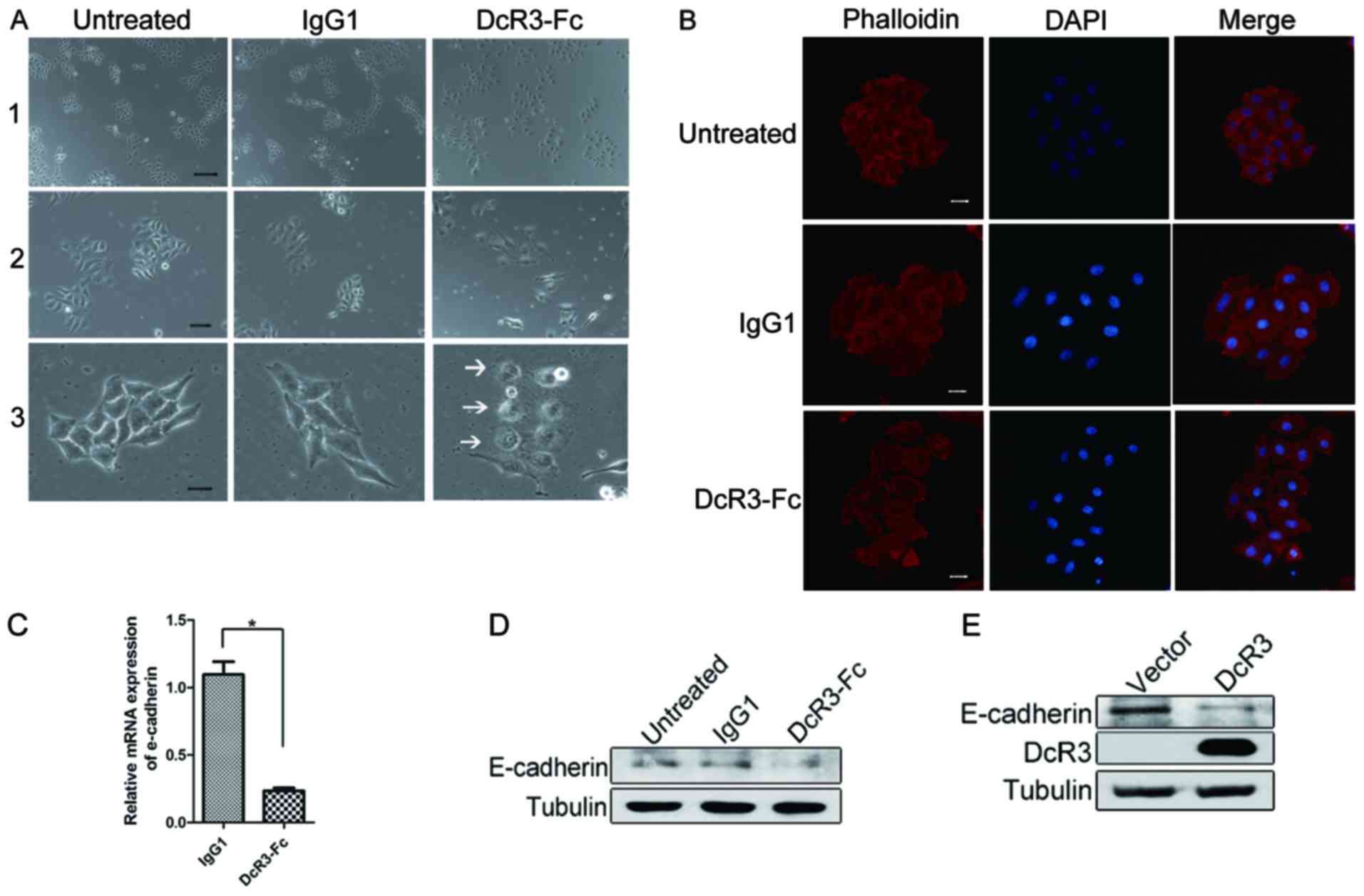
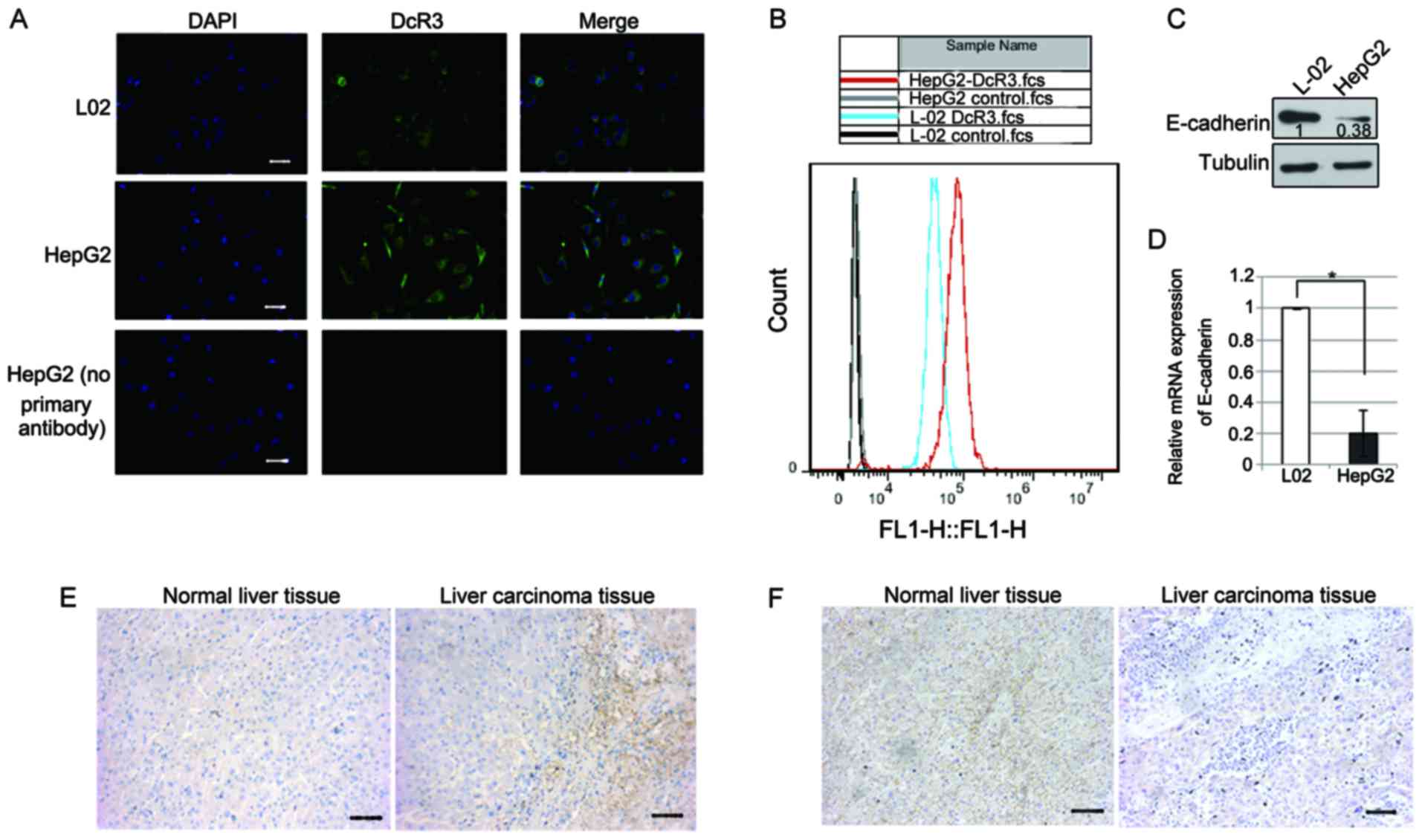
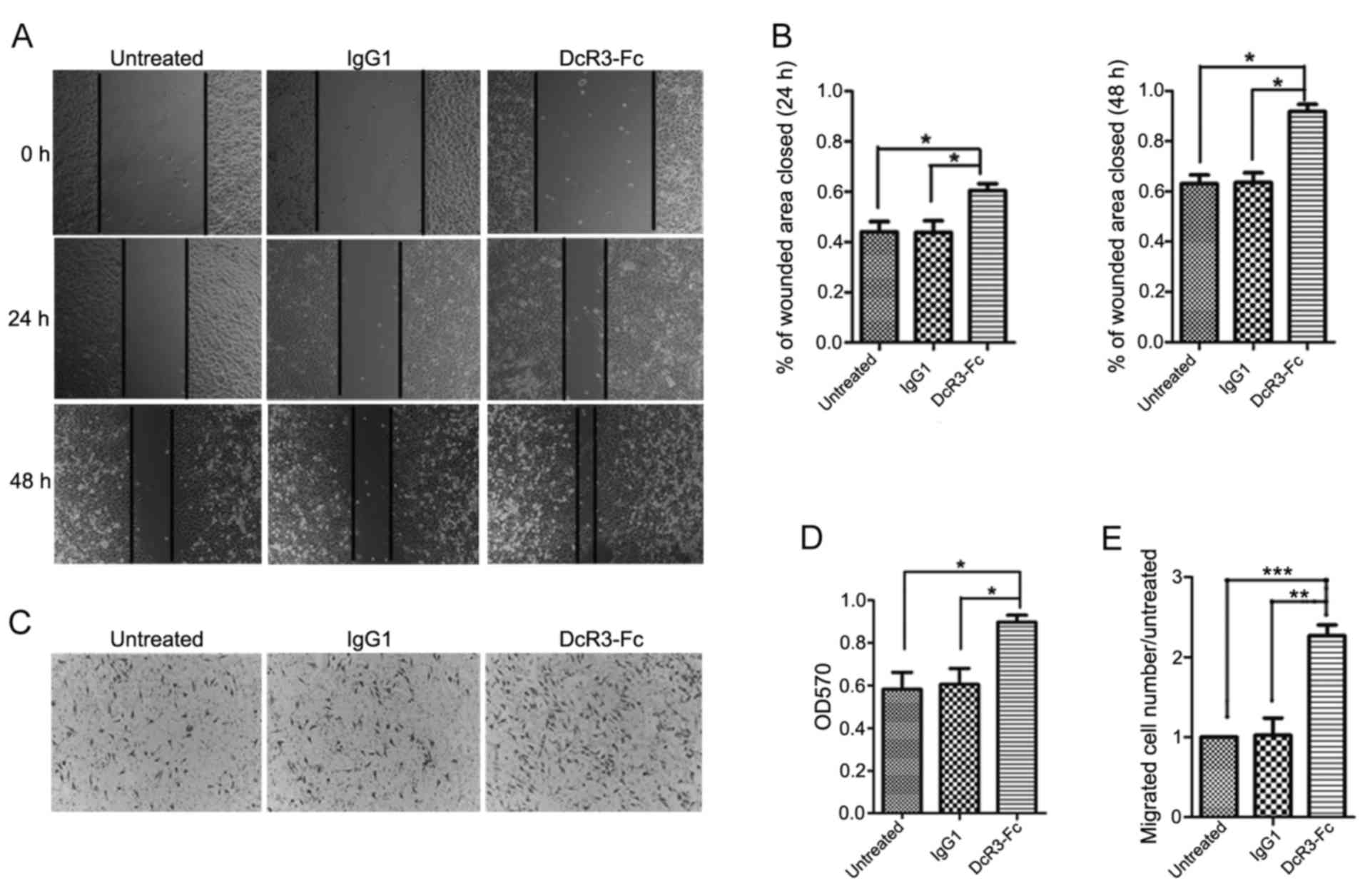
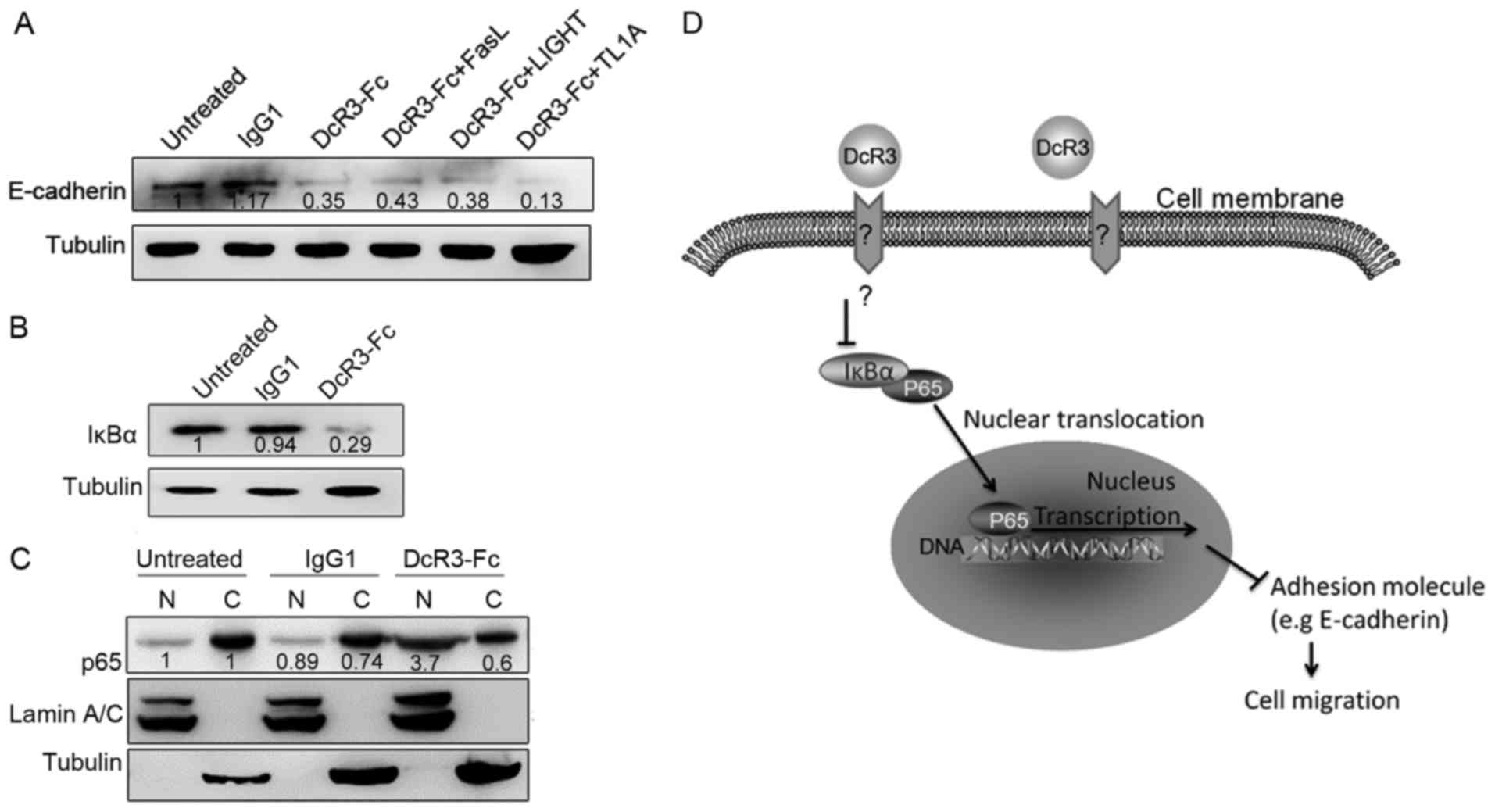
Decoy receptor 3 (DcR3), a decoy molecule belonging to the tumor necrosis factor receptor superfamily (TNFRSF), is a soluble receptor that can neutralize the biological effects of three other TNFSF members, namely, Fas ligand (FasL/TNFSF6/CD95L), LIGHT (TNFSF14) and TNF-like molecule 1A (TL1A/TNFSF15). DcR3 expression is increased in tumor cells. As such, DcR3 has been considered a potential biomarker to predict cancer invasion and progression of inflammation. However, the molecular mechanisms of DcR3 in tumor progression and metastasis remain poorly described. In the present study, DcR3 induced cytoskeleton remodeling, inhibited E-cadherin expression, and promoted cancer cell migration. Immunofluorescence and flow cytometry demonstrated that DcR3 expression was increased in hepatoma cells, whereas E-cadherin expression was significantly downregulated. Immunohistochemistry revealed that DcR3 and E-cadherin exhibited an opposite expression pattern between normal and cancerous liver tissues. Moreover, DcR3 treatment promoted IκBα degradation and p65 nuclear translocation. Therefore, the present study uncovered the mechanism underlying the function of DcR3 in cancer cell migration and provides evidence that DcR3 may be a potential target for cancer therapy.
View Figures

Figure 1

Figure 2

Figure 3

Figure 4

View References

1 

Pitti RM, Marsters SA, Lawrence DA, Roy M, Kischkel FC, Dowd P, Huang A, Donahue CJ, Sherwood SW, Baldwin DT, et al: Genomic amplification of a decoy receptor for Fas ligand in lung and colon cancer. Nature. 396:699–703. 1998. View Article : Google Scholar : PubMed/NCBI

2 

Yu KY, Kwon B, Ni J, Zhai Y, Ebner R and Kwon BS: A newly identified member of tumor necrosis factor receptor superfamily (TR6) suppresses LIGHT-mediated apoptosis. J Biol Chem. 274:13733–13736. 1999. View Article : Google Scholar : PubMed/NCBI

3 

Migone TS, Zhang J, Luo X, Zhuang L, Chen C, Hu B, Hong JS, Perry JW, Chen SF, Zhou JX, et al: TL1A is a TNF-like ligand for DR3 and TR6/DcR3 and functions as a T cell costimulator. Immunity. 16:479–492. 2002. View Article : Google Scholar : PubMed/NCBI

4 

Gill RM and Hunt JS: Soluble receptor (DcR3) and cellular inhibitor of apoptosis-2 (cIAP-2) protect human cytotrophoblast cells against LIGHT-mediated apoptosis. Am J Pathol. 165:309–317. 2004. View Article : Google Scholar : PubMed/NCBI

5 

Lin WW and Hsieh SL: Decoy receptor 3: A pleiotropic immunomodulator and biomarker for inflammatory diseases, autoimmune diseases and cancer. Biochem Pharmacol. 81:838–847. 2011. View Article : Google Scholar : PubMed/NCBI

6 

Wan X, Shi G, Semenuk M, Zhang J and Wu J: DcR3/TR6 modulates immune cell interactions. J Cell Biochem. 89:603–612. 2003. View Article : Google Scholar : PubMed/NCBI

7 

Siakavellas SI, Sfikakis PP and Bamias G: The TL1A/DR3/DcR3 pathway in autoimmune rheumatic diseases. Semin Arthritis Rheum. 45:1–8. 2015. View Article : Google Scholar : PubMed/NCBI

8 

Wu Y, Han B, Sheng H, Lin M, Moore PA, Zhang J and Wu J: Clinical significance of detecting elevated serum DcR3/TR6/M68 in malignant tumor patients. Int J Cancer. 105:724–732. 2003. View Article : Google Scholar : PubMed/NCBI

9 

Otsuki T, Tomokuni A, Sakaguchi H, Aikoh T, Matsuki T, Isozaki Y, Hyodoh F, Ueki H, Kusaka M, Kita S, et al: Over-expression of the decoy receptor 3 (DcR3) gene in peripheral blood mononuclear cells (PBMC) derived from silicosis patients. Clin Exp Immunol. 119:323–327. 2000. View Article : Google Scholar : PubMed/NCBI

10 

Bai C, Connolly B, Metzker ML, Hilliard CA, Liu X, Sandig V, Soderman A, Galloway SM, Liu Q, Austin CP, et al: Overexpression of M68/DcR3 in human gastrointestinal tract tumors independent of gene amplification and its location in a four-gene cluster. Proc Natl Acad Sci USA. 97:1230–1235. 2000. View Article : Google Scholar : PubMed/NCBI

11 

Ge Z, Sanders AJ, Ye L, Wang Y and Jiang WG: Expression of death decoy receptor-3 (DcR3) in human breast cancer and its functional effects on breast cancer cells in vitro. J Exp Ther Oncol. 9:109–118. 2011.PubMed/NCBI

12 

Tu HF, Liu CJ, Liu SY, Chen YP, Yu EH, Lin SC and Chang KW: Serum decoy receptor 3 level: A predictive marker for nodal metastasis and survival among oral cavity cancer patients. Head Neck. 33:396–402. 2011.PubMed/NCBI

13 

Bamias G, Gizis M, Delladetsima I, Laoudi E, Siakavellas SI, Koutsounas I, Kaltsa G, Vlachogiannakos J, Vafiadis-Zouboulis I, Daikos GL, et al: Elevated serum levels of the antiapoptotic protein decoy-receptor 3 are associated with advanced liver disease. Can J Gastroenterol Hepatol. 2016:26370102016. View Article : Google Scholar : PubMed/NCBI

14 

Bamias G, Kaltsa G, Siakavellas SI, Papaxoinis K, Zampeli E, Michopoulos S, Zouboulis-Vafiadis I and Ladas SD: High intestinal and systemic levels of decoy receptor 3 (DcR3) and its ligand TL1A in active ulcerative colitis. Clin Immunol. 137:242–249. 2010. View Article : Google Scholar : PubMed/NCBI

15 

Ao R, Du YQ, Wang Y, Chen YS and Wang BY: MMP-2 and DcR3 expression in esophageal cancer tissue and correlation with patient survival. Int J Clin Exp Med. 6:700–705. 2013.PubMed/NCBI

16 

Hsu MJ, Lin WW, Tsao WC, Chang YC, Hsu TL, Chiu AW, Chio CC and Hsieh SL: Enhanced adhesion of monocytes via reverse signaling triggered by decoy receptor 3. Exp Cell Res. 292:241–251. 2004. View Article : Google Scholar : PubMed/NCBI

17 

Yang CR, Hsieh SL, Ho FM and Lin WW: Decoy receptor 3 increases monocyte adhesion to endothelial cells via NF-kappa B-dependent up-regulation of intercellular adhesion molecule-1, VCAM-1, and IL-8 expression. J Immunol. 174:1647–1656. 2005. View Article : Google Scholar : PubMed/NCBI

18 

Tateishi K, Miura Y, Hayashi S, Takahashi M and Kurosaka M: DcR3 protects THP-1 macrophages from apoptosis by increasing integrin alpha4. Biochem Biophys Res Commun. 389:593–598. 2009. View Article : Google Scholar : PubMed/NCBI

19 

Kim S, Kotoula V, Hytiroglou P, Zardavas D and Zhang L: Significance of increased expression of decoy receptor 3 in chronic liver disease. Dig Liver Dis. 41:591–598. 2009. View Article : Google Scholar : PubMed/NCBI

20 

Chen G and Luo D: Expression of decoy receptor 3 in liver tissue microarrays. Natl Med J India. 21:275–278. 2008.PubMed/NCBI

21 

Nagar B, Overduin M, Ikura M and Rini JM: Structural basis of calcium-induced E-cadherin rigidification and dimerization. Nature. 380:360–364. 1996. View Article : Google Scholar : PubMed/NCBI

22 

Benham-Pyle BW, Pruitt BL and Nelson WJ: Cell adhesion. Mechanical strain induces E-cadherin-dependent Yap1 and β-catenin activation to drive cell cycle entry. Science. 348:1024–1027. 2015. View Article : Google Scholar : PubMed/NCBI

23 

Ishiyama N, Lee SH, Liu S, Li GY, Smith MJ, Reichardt LF and Ikura M: Dynamic and static interactions between p120 catenin and E-cadherin regulate the stability of cell-cell adhesion. Cell. 141:117–128. 2010. View Article : Google Scholar : PubMed/NCBI

24 

Perl AK, Wilgenbus P, Dahl U, Semb H and Christofori G: A causal role for E-cadherin in the transition from adenoma to carcinoma. Nature. 392:190–193. 1998. View Article : Google Scholar : PubMed/NCBI

25 

Nagafuchi A, Shirayoshi Y, Okazaki K, Yasuda K and Takeichi M: Transformation of cell adhesion properties by exogenously introduced E-cadherin cDNA. Nature. 329:341–343. 1987. View Article : Google Scholar : PubMed/NCBI

26 

Paul A, Danley M, Saha B, Tawfik O and Paul S: PKCζ promotes breast cancer invasion by regulating expression of E-cadherin and Zonula Occludens-1 (ZO-1) via NFκB-p65. Sci Rep. 5:125202015. View Article : Google Scholar : PubMed/NCBI

27 

Hayden MS and Ghosh S: Shared principles in NF-kappaB signaling. Cell. 132:344–362. 2008. View Article : Google Scholar : PubMed/NCBI

28 

Yu W, Xu YC, Tao Y, He P, Li Y, Wu T, Zhu YP, Li J, Wu JX and Dai J: DcR3 regulates the growth and metastatic potential of SW480 colon cancer cells. Oncol Rep. 30:2741–2748. 2013.PubMed/NCBI

29 

Mild G, Bachmann F, Boulay JL, Glatz K, Laffer U, Lowy A, Metzger U, Reuter J, Terracciano L, Herrmann R, et al: DCR3 locus is a predictive marker for 5-fluorouracil-based adjuvant chemotherapy in colorectal cancer. Int J Cancer. 102:254–257. 2002. View Article : Google Scholar : PubMed/NCBI

30 

Zhang Y, Luo J, He R, Huang W, Li Z, Li P, Dang Y, Chen G and Li S: Expression and clinicopathological implication of DcR3 in lung cancer tissues: A tissue microarray study with 365 cases. Onco Targets Ther. 9:4959–4968. 2016. View Article : Google Scholar : PubMed/NCBI

31 

Zheng XF, Miao LY, Li S and Wang YB: Promotive effects of Dcr3 gene on the occurrence and progression of gastric cancer and its mechanism. Hepatogastroenterology. 61:880–884. 2014.PubMed/NCBI

32 

Hsu TL, Chang YC, Chen SJ, Liu YJ, Chiu AW, Chio CC, Chen L and Hsieh SL: Modulation of dendritic cell differentiation and maturation by decoy receptor 3. J Immunol. 168:4846–4853. 2002. View Article : Google Scholar : PubMed/NCBI

33 

Wu SF, Liu TM, Lin YC, Sytwu HK, Juan HF, Chen ST, Shen KL, Hsi SC and Hsieh SL: Immunomodulatory effect of decoy receptor 3 on the differentiation and function of bone marrow-derived dendritic cells in nonobese diabetic mice: From regulatory mechanism to clinical implication. J Leukoc Biol. 75:293–306. 2004. View Article : Google Scholar : PubMed/NCBI

34 

Chang YC, Hsu TL, Lin HH, Chio CC, Chiu AW, Chen NJ, Lin CH and Hsieh SL: Modulation of macrophage differentiation and activation by decoy receptor 3. J Leukoc Biol. 75:486–494. 2004. View Article : Google Scholar : PubMed/NCBI

35 

Weissinger D, Tagscherer KE, Macher-Göppinger S, Haferkamp A, Wagener N and Roth W: The soluble Decoy Receptor 3 is regulated by a PI3K-dependent mechanism and promotes migration and invasion in renal cell carcinoma. Mol Cancer. 12:1202013. View Article : Google Scholar : PubMed/NCBI

36 

Chua HL, Bhat-Nakshatri P, Clare SE, Morimiya A, Badve S and Nakshatri H: NF-kappaB represses E-cadherin expression and enhances epithelial to mesenchymal transition of mammary epithelial cells: Potential involvement of ZEB-1 and ZEB-2. Oncogene. 26:711–724. 2007. View Article : Google Scholar : PubMed/NCBI

37 

Xu J, Lamouille S and Derynck R: TGF-beta-induced epithelial to mesenchymal transition. Cell Res. 19:156–172. 2009. View Article : Google Scholar : PubMed/NCBI

Related Articles

  • Abstract
  • View
  • Download
  • Twitter
Copy and paste a formatted citation
Spandidos Publications style
Zhang H, Chen X, Li D, Cui L, Li X, Ye X and Wan X: DcR3 promotes hepatoma cell migration by downregulating E-cadherin expression. Oncol Rep 38: 377-383, 2017.
APA
Zhang, H., Chen, X., Li, D., Cui, L., Li, X., Ye, X., & Wan, X. (2017). DcR3 promotes hepatoma cell migration by downregulating E-cadherin expression. Oncology Reports, 38, 377-383. https://doi.org/10.3892/or.2017.5685
MLA
Zhang, H., Chen, X., Li, D., Cui, L., Li, X., Ye, X., Wan, X."DcR3 promotes hepatoma cell migration by downregulating E-cadherin expression". Oncology Reports 38.1 (2017): 377-383.
Chicago
Zhang, H., Chen, X., Li, D., Cui, L., Li, X., Ye, X., Wan, X."DcR3 promotes hepatoma cell migration by downregulating E-cadherin expression". Oncology Reports 38, no. 1 (2017): 377-383. https://doi.org/10.3892/or.2017.5685
Copy and paste a formatted citation
x
Spandidos Publications style
Zhang H, Chen X, Li D, Cui L, Li X, Ye X and Wan X: DcR3 promotes hepatoma cell migration by downregulating E-cadherin expression. Oncol Rep 38: 377-383, 2017.
APA
Zhang, H., Chen, X., Li, D., Cui, L., Li, X., Ye, X., & Wan, X. (2017). DcR3 promotes hepatoma cell migration by downregulating E-cadherin expression. Oncology Reports, 38, 377-383. https://doi.org/10.3892/or.2017.5685
MLA
Zhang, H., Chen, X., Li, D., Cui, L., Li, X., Ye, X., Wan, X."DcR3 promotes hepatoma cell migration by downregulating E-cadherin expression". Oncology Reports 38.1 (2017): 377-383.
Chicago
Zhang, H., Chen, X., Li, D., Cui, L., Li, X., Ye, X., Wan, X."DcR3 promotes hepatoma cell migration by downregulating E-cadherin expression". Oncology Reports 38, no. 1 (2017): 377-383. https://doi.org/10.3892/or.2017.5685
Follow us
  • Twitter
  • LinkedIn
  • Facebook
About
  • Spandidos Publications
  • Careers
  • Cookie Policy
  • Privacy Policy
How can we help?
  • Help
  • Live Chat
  • Contact
  • Email to our Support Team