Introduction
Sepsis is a disseminated inflammatory response
elicited by microbial infection (1) and is the major cause of mortality in
critically ill patients (2–4).
Acute lung injury (ALI) is a clinical syndrome associated with
respiratory dysfunction and is often a complication of sepsis. ALI
has a mortality rate of ~50% (5).
Since the most common cause of ALI in humans is sepsis, the
administration of gram-negative bacterial endotoxin,
lipopolysaccharide (LPS), has been used as an animal model of
sepsis-related lung injury in a number of species (6–13).
Previously, Rojas et al(14) reported that intraperitoneal
administration of LPS to mice leads to a transient systemic
inflammatory response and transient lung injury and
dysfunction.
Sirtuin 1 (Sirt1), a mammalian homolog of Sir2, is a
NAD+-dependent class III histone deacetylase. Sirt1 has
been demonstrated to be involved in a number of pathophysiological
processes, including anti-inflammation (15–17),
by the regulation of specific proinflammatory mediators. Knockdown
of the Sirt1 gene leads to increased cytokine release, whereas
Sirt1 activation inhibits the production of tumor necrosis
factor-α, monocyte chemoattractant protein 1 and interleukin (IL)-8
(18–21). Resveratrol
(trans-3,5,4′-trihydroxystilbene), a polyphenolic phytoalexin, is a
potent activator of Sirt1 (22). A
number of studies have demonstrated that resveratrol exerts
anti-inflammatory properties (23–25).
Resveratrol exhibits a chondroprotective function by the
suppression of IL-1β production and reactive oxygen species
(26). In human primary airway
epithelial cells, resveratrol inhibits cytokine-stimulated
inducible nitric oxide synthase (iNOS) expression and nitrite
production (27). Resveratrol also
protects cartilage against the development of experimentally
induced inflammatory arthritis (28).
Sirt1 may represent a promising target for
anti-inflammatory therapy (29).
In the present study, the role of Sirt1 in LPS-induced ALI was
investigated in mice by the activation of Sirt1 with resveratrol.
In addition, the inhibitory role of Sirt1 on LPS-induced
inflammation in TC-1 cells was determined by the activation of
Sirt1 with resveratrol or the downregulation of Sirt1 by RNA
interference. The results of the study indicate that resveratrol
inhibits inflammation and ALI.
Materials and methods
Cell culture and treatment
Mice pulmonary alveolar epithelial cells, TC-1
(ScienCell Research Laboratories, Carlsbad, CA, USA), were cultured
in Dulbecco’s Modified Eagle’s Medium supplemented with antibiotics
(100 U/ml penicillin and 100 mg/ml streptomycin) and 10% fetal
bovine serum, at 37°C in a humidified incubator with 5%
CO2. LPS (E. coli serotype, O111:B4) and
resveratrol (both Sigma-Aldrich, St. Louis, MO, USA) were used in
this study.
Resveratrol was added 1 h prior to LPS treatment.
The cells were treated with 15 or 30 μM resveratrol for 1 h
followed by administration of 100 ng/ml LPS.
RNA interference
Independent siRNA sequences were used to silence
SIRT1 expression. The sequences used were as follows: sense,
5′-ACUUUGCUGUAACCCUGUA(dTdT)-3′ and antisense,
5′-UACAGGGUUACAGCAAAGU(dTdT)-3′ (4). The siRNA concentration was 0.58
μg/1.5×105 cells (17,30).
Animal preparation and experimental
protocol
This study was approved by the Ethics Committee of
the Beijing Anzhen Hospital and Beijing Ditan Hospital, Capital
Medical University (Beijing, China).
Male mice (8–10 weeks old) were used in all
experiments. All adult male Wistar rats (270–300 g) were kept under
specific pathogen-free conditions in the animal care facility at
the Beijing Institute of Cardiopulmonary Vascular Disease, Beijing
Anzhen Hospital (Beijing, China).
Mice were administered with LPS intraperitoneally
(10 mg/kg body weight) and sacrificed at 18 h. To study recovery
from endotoxemic ALI, a subset of mice were intraperitoneally
injected with 15 or 30 mg/kg resveratrol at 6 and 12 h following
LPS administration, and then sacrificed 18 h following initial LPS
injection. The mice were used to evaluate the lung wet-to-dry (W/D)
ratio, and the histology and molecular biology were analyzed.
Lung W/D ratio
The W/D ratio was determined in the right lung as
described previously (31).
Briefly, the right lung was separated, weighed (wet weight) and
then dried in a microwave at low power (200 W) for 5 min.
Respiratory parameters
Airflow, airway and esophageal pressures were
measured (32,33). Changes in esophageal pressure,
which reflect chest wall pressure, were measured with a
water-filled catheter (PE205) with side holes at the tip connected
to a SCIREQ differential pressure transducer (SC-24; SCIREQ,
Montreal, QC, Canada) (34,35).
Transpulmonary pressure was calculated by the difference between
airway and esophageal pressures (32). All signals were filtered (100 Hz),
amplified in a four-channel conditioner, sampled at 200 Hz with a
12-bit analog-to-digital converter (DT2801A; Data Translation,
Marlborough, MA, USA) and continuously recorded throughout the
experiment using a personal computer. All data were analyzed using
ANADAT data analysis software (RHT-InfoData, Inc., Montreal, QC,
Canada).
Immunohistochemistry for Sirt1
The right lungs were removed, fixed in 3% buffered
formaldehyde and embedded in paraffin. Sections (4 μm thick) were
cut and stained with hematoxylin and eosin (H&E).
Formalin-fixed paraffin-embedded lung biopsies of mice were
deparaffinized with xylane and rehydrated in ethanol. Endogenous
peroxidase activity was quenched by 3% hydrogen peroxide solution
for 15 min. Next, the sections were blocked with l% BSA for l h and
subsequently incubated with 0.25 mg/ml anti-Sirt1 monoclonal
antibody overnight at 4°C. Following extensive washing, the
sections were treated with a secondary antibody for 20 min
(36).
Matrix metalloproteinase-9 (MMP-9), iNOS,
IL-1β, IL-6 and Sirt1 mRNA expression
Quantitative real-time RT-PCR was performed to
measure the expression of the MMP-9, iNOS, IL-1β, IL-6 and SIRT1
genes. PCR primers for target genes were purchased from Invitrogen
Life Technologies (Carlsbad, CA, USA; Table I).
 | Table IRT-PCR primers for MMP-9, iNOS,
IL-1β, IL-6 and Sirt1. |
Table I
RT-PCR primers for MMP-9, iNOS,
IL-1β, IL-6 and Sirt1.
| Target gene | Primer |
|---|
| MMP-9 | Up-5′-TGT ACC GCT
ATG GTT ACA CTC G-3′ |
| Down-5′-GC CCA GAG
ATT TCG ACT C-3′ |
| iNOS | Up-5′-TTC CAC CTG
GGG TTC TTG-3′ |
| Down-5′-GCT CAA GAG
TCG GGG AAG TA-3′ |
| IL-1β | Up-5′-CTA TGT CTT
GCC CGT GGA G-3′ |
| Down-5′-CAT CAT CCC
ACG AGT CAC A-3′ |
| IL-6 | Up-5′-CTC CGC AAG
AGA CTT CCA G-3′ |
| Down-5′-CTC CTC TCC
GGA CTT GTG A-3′ |
| Sirt1 | Up-5′-TGC ACG ACG
AAG ACG ACG AC-3′ |
| Down-5′-GGT TAT CTC
GGT ACC CAA TCG-3′ |
Gelatin zymography
Gelatin zymography was performed as described
previously (37,38). MMP-9 expression and proteolytic
activities were presented as marked bands against the background of
stained gelatin.
Western blot analysis
The cells were lysed in RIPA buffer and the protein
concentration was detected using the DC™ protein assay (Bio-Rad,
Hercules, CA, USA). Protein expression levels were determined by
general methods using 30 mg protein with primary antibodies against
MMP-9 (1:500, Cell Signaling Technology, Inc., Danvers, MA, USA)
and iNOS, IL-1β, IL-6 and Sirt1 (1:500, Santa Cruz Biotechnology,
Inc., Santa Cruz, CA, USA). Horseradish peroxidase-conjugated
secondary antibodies were used for ECL-plus (GE Healthcare,
Waukesha, WI, USA) detection. The results were normalized against
β-actin (1:5,000, Abcam, Cambridge, UK).
Statistical analysis
Both conditions were satisfied, one-way analysis of
variance (ANOVA) for repeated measures was used to compare the time
course of the mean airway pressure (MAP), inferior vena cava (IVC)
and right atrium (RA) dimensions. The W/D ratio was analyzed using
two-way ANOVA followed by Tukey’s test. To compare non-parametric
data, two-way ANOVA on ranks followed by the Dunn’s post-hoc test
were selected. All statistical analysis was performed using SPSS
version 13.0 (SPSS, Inc., Chicago, IL, USA). P<0.05 was
considered to indicate a statistically significant difference.
Results
Resveratrol decreases pulmonary edema
induced by LPS
Pulmonary edema is a hallmark of ALI and the gold
standard for the measurement of edema is the amount of water in the
lungs.
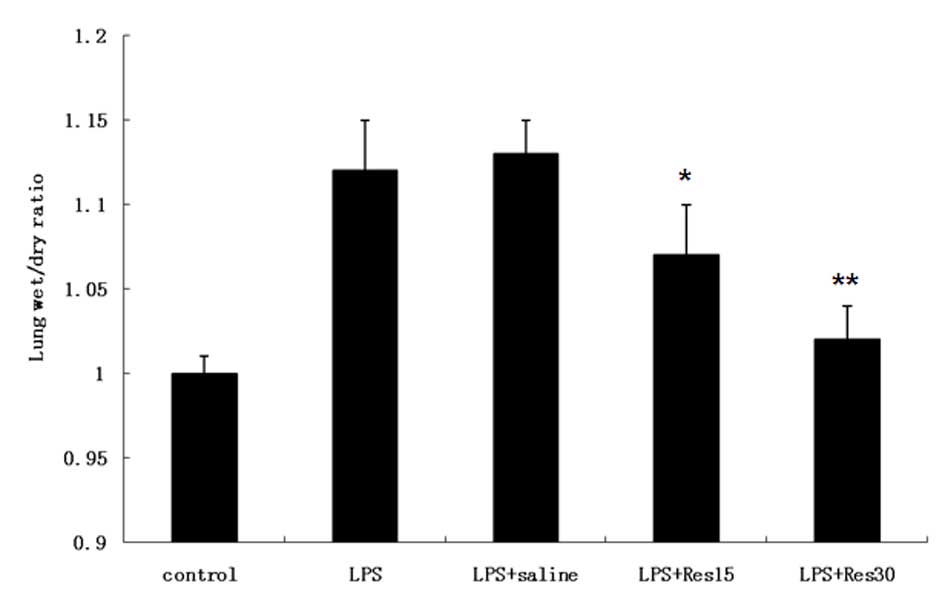
Fig. 1 presents the
wet-dry weight ratio (uncorrected for residual blood) for the
control, LPS- and resveratrol-treated animals at various
concentrations following LPS administration. Edema was marked
following LPS administration and then gradually decreased following
treatment with resveratrol, particularly in 30 μM
resveratrol-treated cells (P<0.01).
Resveratrol improves the lung function of
mice treated with LPS
As demonstrated in Table II, changes in lung functions were
observed following the administration of LPS and a significant
difference was demonstrated between LPS-treated and control animals
in Penh (a dimensionless number hypothesized to be associated with
airway resistance), relaxation time, minute ventilation, tidal
volume, end inspiratory pause and respiratory frequency. All
changes in function were restored following treatment with
resveratrol in a dose-dependent manner. These variables, identified
to be significantly different between LPS-treated and control
animals, are presented at 18 h following LPS.
| Table IIResveratrol improved the lung
function of mice treated with LPS. |
Table II
Resveratrol improved the lung
function of mice treated with LPS.
| Group | Penh | Relaxation time
(sec) | Minute volume
(ml/min) | End inspiratory
pause (ms) | Tidal volume
(ml) | Frequency
(breaths/min) |
|---|
| Control | 0.44±0.01 | 0.07±0.0 | 118.43±11.6 | 4.58±0.0 | 0.24±0.0 | 447±23.1 |
| LPS | 0.64±0.02 | 0.13±0.0 | 38.12±2.5 | 5.18±0.0 | 0.19±0.0 | 222±9.2 |
| LPS + saline | 0.67±0.02 | 0.12±0.0 | 42.13±3.6 | 5.13±0.0 | 0.18±0.0 | 198±1.8 |
| LPS + Res15 | 0.53±0.01a | 0.10±0.0a | 78.68±1.3a | 4.73±0.0a | 0.20±0.0a | 318±10.5a |
| LPS + Res30 | 0.48±0.01b | 0.08±0.0b | 108.66±5.8b | 4.42±0.0b | 0.23±0.0b | 408±12.2b |
Resveratrol reduces pathological changes
in the lungs of mice treated with LPS via Sirt1
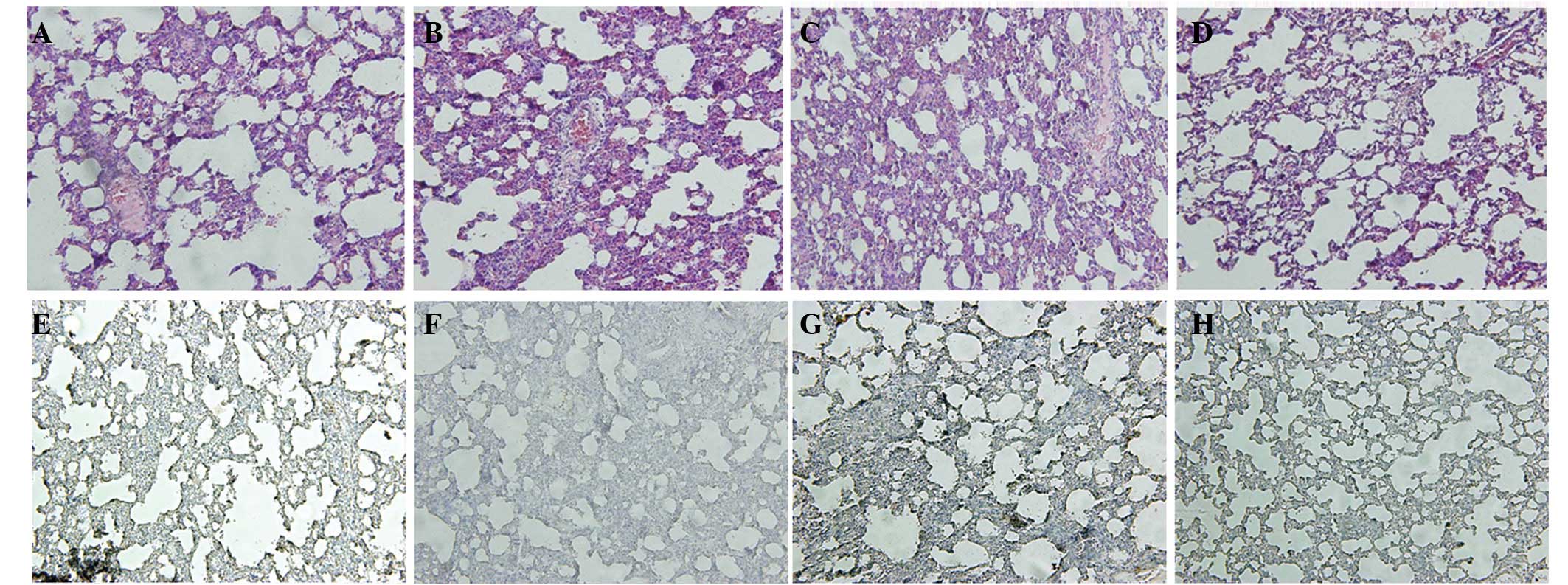
Photomicrographs of H&E-stained sections of lung
tissues from the control (Fig.
2A), LPS-untreated (Fig. 2B),
15 (Fig. 2C) and 30 μM
resveratrol-treated mice (Fig. 2D)
are presented. Following LPS administration, congestion and
infiltration of inflammatory cells, which appeared to be
predominantly neutrophils, were identified. Further inflammation
and septal thickening were observed. The changes were restored by
resveratrol, particularly at 30 μM, although increased numbers of
neutrophils were still present. The results revealed that
resveratrol blocked ALI of mice induced by LPS in a dose-dependent
manner.
The expression of Sirt1 in mouse lungs treated with
LPS (Fig. 2E) was analyzed by
immunohistochemistry and was demonstrated to be significantly
decreased compared with the control (Fig. 2F). Sirt1 expression was induced by
resveratrol in a dose-dependent manner. Sirt1 expression was higher
in samples treated with 15 μM resveratrol (Fig. 2G) compared with 30 μM (Fig. 2H). These observations indicate that
resveratrol-induced inhibition of ALI induced by LPS correlates
with Sirt1 expression in mice.
Resveratrol blocks LPS-induced
overexpression of MMP-9 and other inflammatory factors in mice and
TC-1 cells
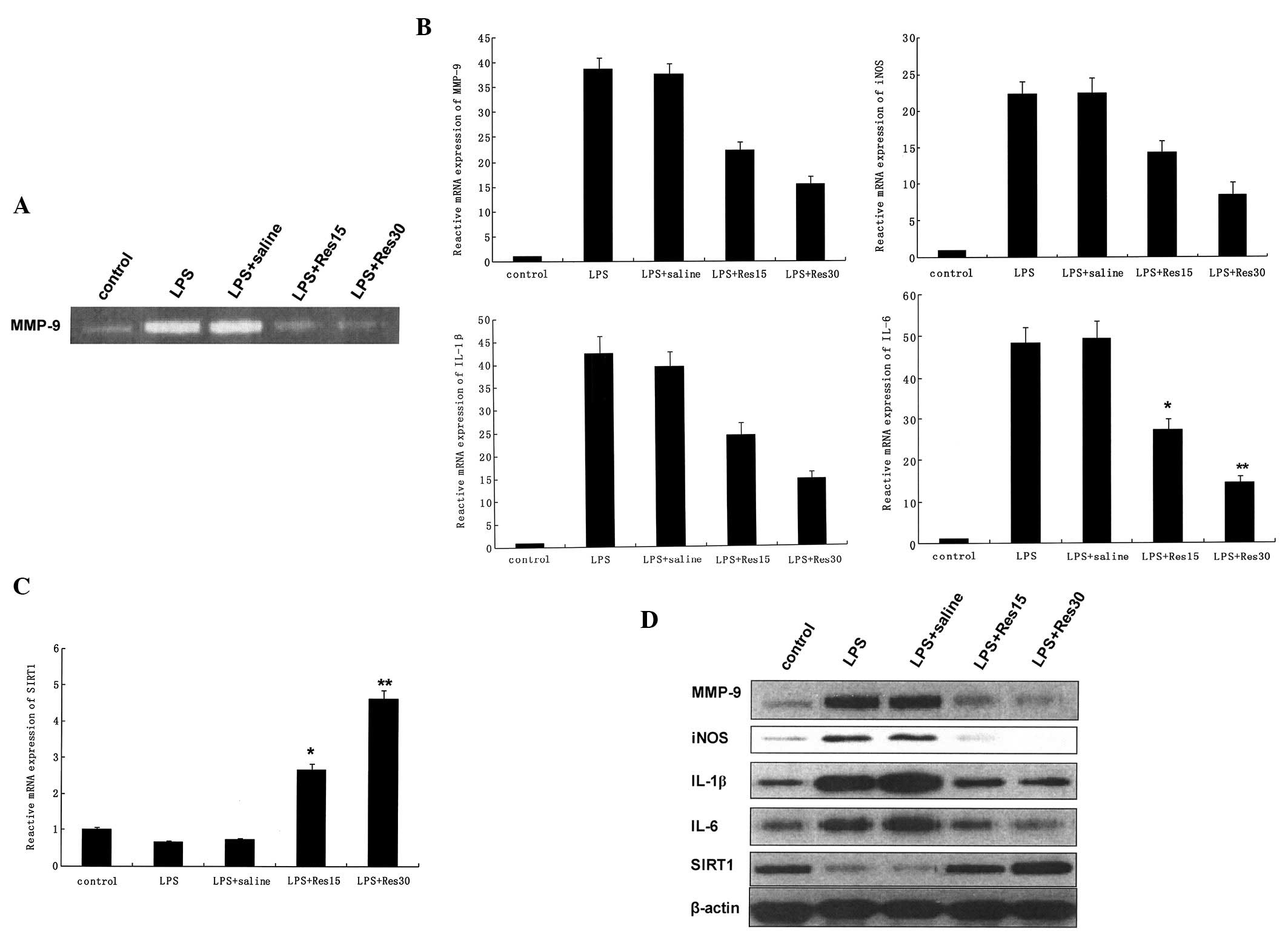
As demonstrated in Fig.
3A, LPS markedly induced the upregulation of MMP-9 in the lungs
of LPS-treated mice. mRNA expression levels of MMP-9, iNOS, IL-1β
and IL-6 (Fig. 3B) were shown to
be significantly induced by LPS in cells, however, the levels of
Sirt1 were markedly decreased (P<0.01; Fig. 3C).
Release of MMP-9 in the culture medium was observed
in LPS-treated cells and was inhibited by resveratrol in a
dose-dependent manner (Fig. 3A).
In addition, resveratrol inhibited a number of proinflammatory
factors in a dose-dependent manner (Fig. 3B). Western blot analysis
demonstrated that the upregulation of MMP-9, iNOS, IL-1β and IL-6
(Fig. 3D) were attenuated by
resveratrol-treatment prior to the administration of LPS.
Resveratrol inhibits inflammation via
Sirt1
RNA interference was used to knockdown Sirt1
expression in TC-1 cells. Expression of Sirt1 was reduced 48 h
following treatment with siRNA targeting the Sirt1 gene (Fig. 4A). The inhibitory effect of
resveratrol on the upregulation of MMP-9, iNOS, IL-1β and IL-6 was
attenuated in cells in which Sirt1 expression was knocked down
(Fig. 4B and C).
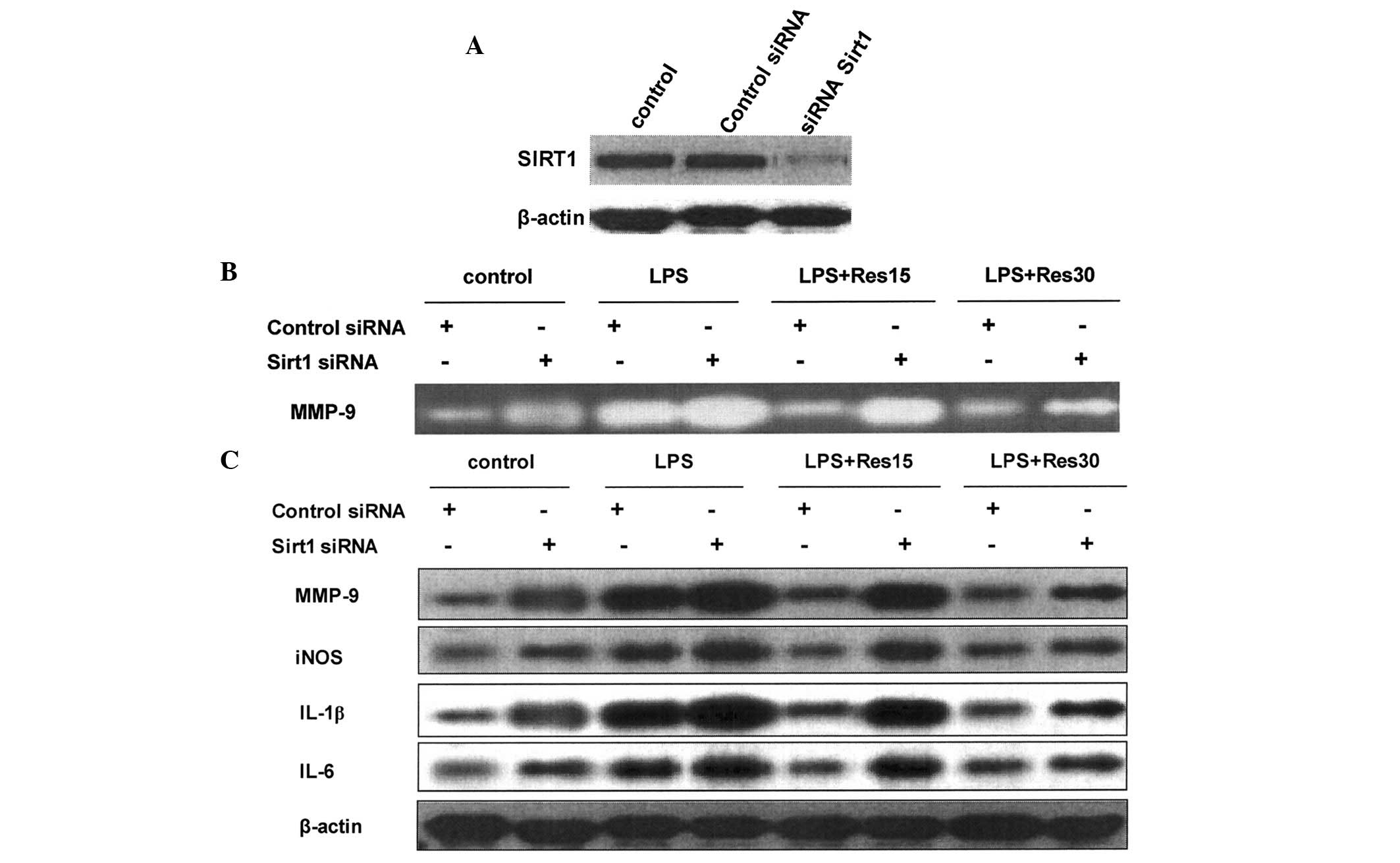 | Figure 4Resveratrol inhibited inflammation
via Sirt1 in a dose-dependent manner in TC-1 cells treated with
LPS. (A) Western blot analysis revealed that Sirt1 siRNA
transfection markedly reduced Sirt1 expression, compared with
control siRNA or DDW transfection. Following Sirt1 or control siRNA
transfection, the cells were pretreated with resveratrol in the
presence of LPS treatment. (B) MMP-9 expression in the medium was
examined by gelatin zymography and (C) protein expression of MMP-9,
iNOS, IL-1β and IL-6 was determined by western blot analysis. LPS,
lipopolysaccharide; Sirt1, sirtuin 1; MMP-9, matrix
metalloproteinase-9; IL, interleukin; iNOS, inducible nitric oxide
synthase; DDW, double distilled water. |
Discussion
Sepsis is the most common clinical setting in which
ALI develops. Bacterial endotoxin, also known as LPS, is well-known
to induce lung injury and a number of studies have used LPS-treated
mice as a model of lung inflammation and injury (39–41).
Compared with other species (e.g. swine and sheep), mice are highly
resistant to LPS, therefore, large doses of the toxin are required
to cause a response in the lungs (42).
In humans, a clinical constellation of findings
called the systemic inflammatory response syndrome (SIRS) defines a
population at risk for ALI (43);
SIRS is caused by the systemic release of an array of
proinflammatory cytokines (15).
The intraperitoneal administration of endotoxin to mice causes
transient SIRS and transient lung injury and dysfunction. The
response is characterized by successive waves of cytokine release
into the circulation, early evidence of lung fibrogenesis, and
prolonged increases in growth factors that may participate in lung
repair. The response of mice to LPS includes lethargy, weight loss
and an acutely increased release of a host of inflammatory
cytokines into the circulation. This systemic inflammatory response
is hypothesized to reflect that of humans with sepsis. At present,
effective treatment methods and therapeutics have not been
developed against sepsis and ALI induced by sepsis. Resveratrol is
a potent activator of Sirt1 and is known to exhibit a number of
effects on metabolism, as well as anticancer, anti-ageing and
anti-inflammatory properties (23,44,45,22).
In the present study, resveratrol was shown to
decrease pulmonary edema induced by LPS. Rojas et al found
that edema was identified 2 h following LPS, peaked at 6 h and then
gradually decreased. Even 48 h following LPS administration, lung
water was still ~10% higher compared with control animals (14). In the present study, Fig. 1 demonstrates that edema in the
sepsis mouse model was marked following LPS administration and then
decreased following treatment with resveratrol, particularly at a
concentration of 30 μM. The results indicate that resveratrol may
decrease pulmonary edema induced by LPS in a dose-dependent
manner.
Whole body plethysmograph was used to measure a
number of variables associated with breathing patterns and
respiratory functions, a number of which were affected by LPS
administration. Changes of lung function were identified to be
significantly different between LPS-treated and control animals.
All changes in function were restored following treatment with
resveratrol in a dose-dependent manner. These alterations in
breathing pattern are likely to be associated with the systemic
inflammatory response and local inflammation and pulmonary edema.
The 6 variables identified to be significantly different between
LPS-treated and control animals are presented at 18 h following
LPS. The results indicated that resveratrol improved lung function
in mice treated with LPS.
Following LPS administration, the congestion and
infiltration of inflammatory cells was observed, which appeared to
be predominantly neutrophils (Fig.
2B) but not in the control (Fig.
2A). There was further inflammation and septal thickening
(Fig. 2B). The changes were
restored by resveratrol (Fig. 2C and
D), particularly at the concentration of 30 μM (Fig. 2D), although increased numbers of
neutrophils were still present. The expression of Sirt1 in the
lungs of mice treated with LPS (Fig.
2F) significantly decreased compared with the control (Fig. 2E). Sirt1 expression was induced by
resveratrol in a dose-dependent manner (Fig. 2G and H), particularly in the group
treated with 30 μM (Fig. 2H).
These results demonstrated that resveratrol blocked ALI of mice
induced by LPS in a dose dependent manner and correlated with
Sirt1.
LPS is commonly used to stimulate lung injury in
mice and induces inflammation in various cell types (14). Mice and TC-1 cells were treated
with LPS followed by resveratrol. The release of MMP-9 in the
culture medium was observed in LPS-treated cells and was markedly
inhibited by resveratrol in a dose-dependent manner (Fig. 3A). Resveratrol inhibited the
expression of MMP-9, iNOS, IL-1β and IL-6 in TC-1 cells in a
dose-dependent manner (Fig. 3).
The results in the mouse model were consistent with those of TC-1
cells (data not shown). Resveratrol is a potent Sirt1 agonist and
increases Sirt1 activity (46).
Resveratrol was used to investigate the anti-inflammatory function
of Sirt1 in LPS-induced ALI in mice. The results in mice indicated
that resveratrol blocked LPS-induced inflammation of the lung,
consistent with results observed in TC-1 cells (data not shown).
These observations indicated that resveratrol blocked LPS-induced
overexpression of MMP-9 and other inflammatory factors in mice and
TC-1 cells.
Since resveratrol is a pharmacological activator of
Sirt1 and may have off-target effects, the importance of Sirt1 in
the anti-inflammatory activity of resveratrol was analyzed. Sirt1
expression is induced by LPS or inflammation (47,48).
The inhibitory effect of resveratrol on the upregulation of MMP-9,
iNOS, IL-1β and IL-6 was attenuated in TC-1 cells in which Sirt1
expression was knocked down (Fig.
4). These results indicate that the anti-inflammatory effects
of resveratrol are largely dependent on the ability of Sirt1 to
negatively regulate inflammation.
In conclusion, the upregulation of MMP-9, IL-1β,
IL-6 and iNOS was induced in LPS-induced sepsis mouse models and
the TC-1 cell line and resveratrol suppressed the overexpression of
these pro-inflammatory molecules in a dose-dependent manner.
Resveratrol decreased pulmonary edema in the sepsis mouse model. In
addition, resveratrol improved lung function and prevented
pathological alterations. Knockdown of Sirt1 by RNA interference
rendered TC-1 cells more susceptible to LPS stimulation and
diminished the anti-inflammatory effect of resveratrol. Resveratrol
inhibited LPS-induced ALI and inflammation via Sirt1, indicating
that Sirt1 is an efficient target for the regulation of LPS-induced
ALI and inflammation. The results of the present study provide
insights into the treatment of ALI during sepsis.
Acknowledgements
The present study was supported by a grant from the
National Natural Science Foundation of China (no. 30600524).
References
|
1
|
Lee WL and Slutsky AS: Sepsis and
endothelial permeability. N Engl J Med. 363:689–691. 2010.
View Article : Google Scholar : PubMed/NCBI
|
|
2
|
Hotchkiss RS and Karl IE: The
pathophysiology and treatment of sepsis. N Engl J Med. 348:138–150.
2003. View Article : Google Scholar : PubMed/NCBI
|
|
3
|
Angus DC, Linde-Zwirble WT, Lidicker J, et
al: Epidemiology of severe sepsis in the United States: analysis of
incidence, outcome and associated costs of care. Crit Care Med.
29:1303–1310. 2001. View Article : Google Scholar : PubMed/NCBI
|
|
4
|
Marshall JC, Vincent JL, Guyatt G, et al:
Outcome measures for clinical research in sepsis: a report of the
2nd Cambridge Colloquium of the International Sepsis Forum. Crit
Care Med. 33:1708–1716. 2005. View Article : Google Scholar : PubMed/NCBI
|
|
5
|
Herridge MS, Cheung AM, Tansey CM, et al:
One-year outcomes in survivors of the acute respiratory distress
syndrome. N Engl J Med. 348:683–693. 2003.PubMed/NCBI
|
|
6
|
Chung YJ, Jarvis B and Pestka J:
Modulation of lipopolysaccharide-induced proinflammatory cytokine
production by satratoxins and other macrocyclic trichothecenes in
the murine macrophage. J Toxicol Environ Health A. 66:379–391.
2003. View Article : Google Scholar
|
|
7
|
Brandolini L, Asti C, Ruggieri V, et al:
Lipopolysaccharide-induced lung injury in mice. II Evaluation of
functional damage in isolated parenchyma strips. Pulm Pharmacol
Ther. 13:71–78. 2000. View Article : Google Scholar : PubMed/NCBI
|
|
8
|
Bucher M and Taeger K: Endothelin-receptor
gene-expression in rat endotoxemia. Intensive Care Med. 28:642–647.
2002. View Article : Google Scholar : PubMed/NCBI
|
|
9
|
Emery DA, Nagaraja KV, Sivanandan V, et
al: Endotoxin lipopolysaccharide from Escherichia coli and
its effects on the phagocytic function of systemic and pulmonary
macrophages in turkeys. Avian Dis. 35:901–909. 1991.
|
|
10
|
Esbenshade AM, Newman JH, Lams PM, et al:
Respiratory failure after endotoxin infusion in sheep: lung
mechanics and lung fluid balance. J Appl Physiol. 53:967–976.
1982.PubMed/NCBI
|
|
11
|
Müller G, Steinbach G, Berndt A and Köhler
H: Effects of various applications of lipopolysaccharides on blood
parameters of pigs. J Vet Med B Infect Dis Vet Public Health.
49:429–437. 2002.PubMed/NCBI
|
|
12
|
Lentsch AB, Czermak BJ, Bless NM, et al:
Essential role of alveolar macrophages in intrapulmonary activation
of NF-kappaB. Am J Respir Cell Mol Biol. 20:692–698. 1999.
View Article : Google Scholar : PubMed/NCBI
|
|
13
|
Lentsch AB and Ward PA: Regulation of
experimental lung inflammation. Respir Physiol. 128:17–22. 2001.
View Article : Google Scholar : PubMed/NCBI
|
|
14
|
Rojas M, Woods CR, Mora AL, et al:
Endotoxin-induced lung injury in mice: structural, functional and
biochemical responses. Am J Physiol Lung Cell Mol Physiol.
288:L333–L341. 2005. View Article : Google Scholar : PubMed/NCBI
|
|
15
|
Howitz KT, Bitterman KJ, Cohen HY, et al:
Small molecule activators of sirtuins extend Saccharomyces
cerevisiae lifespan. Nature. 425:191–196. 2003. View Article : Google Scholar : PubMed/NCBI
|
|
16
|
Kojima K, Ohhashi R, Fujita Y, et al: A
role for SIRT1 in cell growth and chemoresistance in prostate
cancer PC3 and DU145 cells. Biochem Biophys Res Commun.
373:423–428. 2008. View Article : Google Scholar : PubMed/NCBI
|
|
17
|
Ford J, Jiang M and Milner J:
Cancer-specific functions of SIRT1 enable human epithelial cancer
cell growth and survival. Cancer Res. 65:10457–10463. 2005.
View Article : Google Scholar : PubMed/NCBI
|
|
18
|
Yang SR, Wright J, Bauter M, et al:
Sirtuin regulates cigarette smoke-induced proinflammatory mediator
release via RelA/p65 NF-kappaB in macrophages in vitro and
in rat lungs in vivo: implications for chronic inflammation
and aging. Am J Physiol Lung Cell Mol Physiol. 292:L567–L576. 2007.
View Article : Google Scholar : PubMed/NCBI
|
|
19
|
Yeung F, Hoberg JE, Ramsey CS, et al:
Modulation of NF-kappaB-dependent transcription and cell survival
by the SIRT1 deacetylase. EMBO J. 23:2369–2380. 2004. View Article : Google Scholar : PubMed/NCBI
|
|
20
|
Rajendrasozhan S, Yang SR, Kinnula VL and
Rahman I: SIRT1, an antiinflammatory and antiaging protein, is
decreased in lungs of patients with chronic obstructive pulmonary
disease. Am J Respir Crit Care Med. 177:861–870. 2008. View Article : Google Scholar : PubMed/NCBI
|
|
21
|
Singh UP, Singh NP, Singh B, et al:
Resveratrol (trans-3,5,4′-trihydroxystilbene) induces silent mating
type information regulation-1 and down-regulates nuclear
transcription factor-kappaB activation to abrogate dextran sulfate
sodium-induced colitis. J Pharmacol Exp Ther. 332:829–839.
2010.
|
|
22
|
Borra MT, Smith BC and Denu JM: Mechanism
of human SIRT1 activation by resveratrol. J Biol Chem.
280:17187–17195. 2005. View Article : Google Scholar : PubMed/NCBI
|
|
23
|
Bishayee A, Waghray A, Barnes KF, et al:
Suppression of the inflammatory cascade is implicated in
resveratrol chemoprevention of experimental hepatocarcinogenesis.
Pharm Res. 27:1080–1091. 2010. View Article : Google Scholar : PubMed/NCBI
|
|
24
|
Knobloch J, Sibbing B, Jungck D, et al:
Resveratrol impairs the release of steroid-resistant inflammatory
cytokines from human airway smooth muscle cells in chronic
obstructive pulmonary disease. J Pharmacol Exp Ther. 335:788–798.
2010. View Article : Google Scholar
|
|
25
|
Chung EY, Kim BH, Hong JT, et al:
Resveratrol downregulates interferon-gamma-inducible inflammatory
genes in macrophages: molecular mechanism via decreased STAT-1
activation. J Nutr Biochem. 22:902–909. 2011. View Article : Google Scholar
|
|
26
|
Csaki C, Keshishzadeh N, Fischer K and
Shakibaei M: Regulation of inflammation signalling by resveratrol
in human chondrocytes in vitro. Biochem Pharmacol.
75:677–687. 2008. View Article : Google Scholar : PubMed/NCBI
|
|
27
|
Donnelly LE, Newton R, Kennedy GE, et al:
Anti-inflammatory effects of resveratrol in lung epithelial cells:
molecular mechanisms. Am J Physiol Lung Cell Mol Physiol.
287:L774–L783. 2004. View Article : Google Scholar : PubMed/NCBI
|
|
28
|
Elmali N, Baysal O, Harma A, et al:
Effects of resveratrol in inflammatory arthritis. Inflammation.
30:1–6. 2007. View Article : Google Scholar : PubMed/NCBI
|
|
29
|
Olholm J, Paulsen SK, Cullberg KB, et al:
Antiinflammatory effect of resveratrol on adipokine expression and
secretion in human adipose tissue explants. Int J Obes (Lond).
34:1546–1553. 2010. View Article : Google Scholar : PubMed/NCBI
|
|
30
|
Kim DH, Longo M, Han Y, et al: Interferon
induction by siRNAs and ssRNAs synthesised by phage polymerase. Nat
Biotechnol. 22:321–325. 2004. View
Article : Google Scholar : PubMed/NCBI
|
|
31
|
Peterson BT, Brooks JA and Zack AG: Use of
microwave oven for determination of postmortem water volume of
lungs. J Appl Physiol. 52:1661–1663. 1982.PubMed/NCBI
|
|
32
|
Riva DR, Oliveira MB, Rzezinski AF, et al:
Recruitment maneuver in pulmonary and extrapulmonary experimental
acute lung injury. Crit Care Med. 36:1900–1908. 2008. View Article : Google Scholar : PubMed/NCBI
|
|
33
|
Pássaro CP, Silva PL, Rzezinski AF, et al:
Pulmonary lesion induced by low and high positive end-expiratory
pressure levels during protective ventilation in experimental acute
lung injury. Crit Care Med. 37:1011–1017. 2009.PubMed/NCBI
|
|
34
|
Baydur A, Behrakis PK, Zin WA, et al: A
simple method for assessing the validity of the esophageal balloon
technique. Am Rev Respir Dis. 126:788–791. 1982.PubMed/NCBI
|
|
35
|
Baydur A, Sassoon CS and Stiles CM:
Partitioning of respiratory mechanics in young adults. Effects of
duration of anesthesia. Am Rev Respir Dis. 135:165–172.
1987.PubMed/NCBI
|
|
36
|
Leite-Junior JH, Garcia CS,
Souza-Fernandes AB, et al: Methylprednisolone improves lung
mechanics and reduces the inflammatory response in pulmonary but
not in extrapulmonary mild acute lung injury in mice. Crit Care
Med. 36:2621–2628. 2008. View Article : Google Scholar : PubMed/NCBI
|
|
37
|
Gursoy-Ozdemir Y, Qiu J, Matsuoka N, et
al: Cortical spreading depression activates and upregulates MMP-9.
J Clin Invest. 113:1447–1455. 2004. View Article : Google Scholar : PubMed/NCBI
|
|
38
|
Qiu J, Xu J, Zheng Y, et al: High-mobility
group box 1 promotes metalloproteinase-9 upregulation through
Toll-like receptor 4 after cerebral ischemia. Stroke. 41:2077–2082.
2010. View Article : Google Scholar : PubMed/NCBI
|
|
39
|
Matsuda N, Hattori Y, Takahashi Y, et al:
Therapeutic effect of in vivo transfection of transcription
factor decoy to NF-kappaB on septic lung in mice. Am J Physiol Lung
Cell Mol Physiol. 287:L1248–L1255. 2004.PubMed/NCBI
|
|
40
|
Oshikawa K and Sugiyama Y: Gene expression
of Toll-like receptors and associated molecules induced by
inflammatory stimuli in the primary alveolar macrophage. Biochem
Biophys Res Commun. 305:649–655. 2003. View Article : Google Scholar : PubMed/NCBI
|
|
41
|
Yull FE, Han W, Jansen ED, et al:
Bioluminescent detection of endotoxin effects on HIV-1 LTR-driven
transcription in vivo. J Histochem Cytochem. 51:741–749.
2003. View Article : Google Scholar : PubMed/NCBI
|
|
42
|
Pietrantoni C, Minai OA, Yu NC, et al:
Respiratory failure and sepsis are the major causes of ICU
admissions and mortality in survivors of lung transplants. Chest.
123:504–509. 2003. View Article : Google Scholar : PubMed/NCBI
|
|
43
|
Takala A, Nupponen I, Kylänpää-Bäck ML and
Repo H: Markers of inflammation in sepsis. Ann Med. 34:614–623.
2002. View Article : Google Scholar
|
|
44
|
Lagouge M, Argmann C, Gerhart-Hines Z, et
al: Resveratrol improves mitochondrial function and protects
against metabolic disease by activating SIRT1 and PGC-1alpha. Cell.
127:1109–1122. 2006. View Article : Google Scholar : PubMed/NCBI
|
|
45
|
Sun W, Wang W, Kim J, et al: Anti-cancer
effect of resveratrol is associated with induction of apoptosis via
a mitochondrial pathway alignment. Adv Exp Med Biol. 614:179–186.
2008. View Article : Google Scholar : PubMed/NCBI
|
|
46
|
Zhang HN, Li L, Gao P, et al: Involvement
of the p65/RelA subunit of NF-kappaB in TNF-alpha-induced SIRT1
expression in vascular smooth muscle cells. Biochem Biophys Res
Commun. 397:569–575. 2010. View Article : Google Scholar : PubMed/NCBI
|
|
47
|
Lee SJ and Kim MM: Resveratrol with
antioxidant activity inhibits matrix metalloproteinase via
modulation of SIRT1 in human fibrosarcoma cells. Life Sci.
88:465–472. 2011. View Article : Google Scholar : PubMed/NCBI
|
|
48
|
Niederer F, Ospelt C, Brentano F, et al:
SIRT1 overexpression in the rheumatoid arthritis synovium
contributes to proinflammatory cytokine production and apoptosis
resistance. Ann Rheum Dis. 70:1866–1873. 2011. View Article : Google Scholar : PubMed/NCBI
|