Spandidos Publications Logo
  • About
    • About Spandidos
    • Aims and Scopes
    • Abstracting and Indexing
    • Editorial Policies
    • Reprints and Permissions
    • Job Opportunities
    • Terms and Conditions
    • Contact
  • Journals
    • All Journals
    • Oncology Letters
      • Oncology Letters
      • Information for Authors
      • Editorial Policies
      • Editorial Board
      • Aims and Scope
      • Abstracting and Indexing
      • Bibliographic Information
      • Archive
    • International Journal of Oncology
      • International Journal of Oncology
      • Information for Authors
      • Editorial Policies
      • Editorial Board
      • Aims and Scope
      • Abstracting and Indexing
      • Bibliographic Information
      • Archive
    • Molecular and Clinical Oncology
      • Molecular and Clinical Oncology
      • Information for Authors
      • Editorial Policies
      • Editorial Board
      • Aims and Scope
      • Abstracting and Indexing
      • Bibliographic Information
      • Archive
    • Experimental and Therapeutic Medicine
      • Experimental and Therapeutic Medicine
      • Information for Authors
      • Editorial Policies
      • Editorial Board
      • Aims and Scope
      • Abstracting and Indexing
      • Bibliographic Information
      • Archive
    • International Journal of Molecular Medicine
      • International Journal of Molecular Medicine
      • Information for Authors
      • Editorial Policies
      • Editorial Board
      • Aims and Scope
      • Abstracting and Indexing
      • Bibliographic Information
      • Archive
    • Biomedical Reports
      • Biomedical Reports
      • Information for Authors
      • Editorial Policies
      • Editorial Board
      • Aims and Scope
      • Abstracting and Indexing
      • Bibliographic Information
      • Archive
    • Oncology Reports
      • Oncology Reports
      • Information for Authors
      • Editorial Policies
      • Editorial Board
      • Aims and Scope
      • Abstracting and Indexing
      • Bibliographic Information
      • Archive
    • Molecular Medicine Reports
      • Molecular Medicine Reports
      • Information for Authors
      • Editorial Policies
      • Editorial Board
      • Aims and Scope
      • Abstracting and Indexing
      • Bibliographic Information
      • Archive
    • World Academy of Sciences Journal
      • World Academy of Sciences Journal
      • Information for Authors
      • Editorial Policies
      • Editorial Board
      • Aims and Scope
      • Abstracting and Indexing
      • Bibliographic Information
      • Archive
    • International Journal of Functional Nutrition
      • International Journal of Functional Nutrition
      • Information for Authors
      • Editorial Policies
      • Editorial Board
      • Aims and Scope
      • Abstracting and Indexing
      • Bibliographic Information
      • Archive
    • International Journal of Epigenetics
      • International Journal of Epigenetics
      • Information for Authors
      • Editorial Policies
      • Editorial Board
      • Aims and Scope
      • Abstracting and Indexing
      • Bibliographic Information
      • Archive
    • Medicine International
      • Medicine International
      • Information for Authors
      • Editorial Policies
      • Editorial Board
      • Aims and Scope
      • Abstracting and Indexing
      • Bibliographic Information
      • Archive
  • Articles
  • Information
    • Information for Authors
    • Information for Reviewers
    • Information for Librarians
    • Information for Advertisers
    • Conferences
  • Language Editing
Spandidos Publications Logo
  • About
    • About Spandidos
    • Aims and Scopes
    • Abstracting and Indexing
    • Editorial Policies
    • Reprints and Permissions
    • Job Opportunities
    • Terms and Conditions
    • Contact
  • Journals
    • All Journals
    • Biomedical Reports
      • Information for Authors
      • Editorial Policies
      • Editorial Board
      • Aims and Scope
      • Abstracting and Indexing
      • Bibliographic Information
      • Archive
    • Experimental and Therapeutic Medicine
      • Information for Authors
      • Editorial Policies
      • Editorial Board
      • Aims and Scope
      • Abstracting and Indexing
      • Bibliographic Information
      • Archive
    • International Journal of Epigenetics
      • Information for Authors
      • Editorial Policies
      • Editorial Board
      • Aims and Scope
      • Abstracting and Indexing
      • Bibliographic Information
      • Archive
    • International Journal of Functional Nutrition
      • Information for Authors
      • Editorial Policies
      • Editorial Board
      • Aims and Scope
      • Abstracting and Indexing
      • Bibliographic Information
      • Archive
    • International Journal of Molecular Medicine
      • Information for Authors
      • Editorial Policies
      • Editorial Board
      • Aims and Scope
      • Abstracting and Indexing
      • Bibliographic Information
      • Archive
    • International Journal of Oncology
      • Information for Authors
      • Editorial Policies
      • Editorial Board
      • Aims and Scope
      • Abstracting and Indexing
      • Bibliographic Information
      • Archive
    • Medicine International
      • Information for Authors
      • Editorial Policies
      • Editorial Board
      • Aims and Scope
      • Abstracting and Indexing
      • Bibliographic Information
      • Archive
    • Molecular and Clinical Oncology
      • Information for Authors
      • Editorial Policies
      • Editorial Board
      • Aims and Scope
      • Abstracting and Indexing
      • Bibliographic Information
      • Archive
    • Molecular Medicine Reports
      • Information for Authors
      • Editorial Policies
      • Editorial Board
      • Aims and Scope
      • Abstracting and Indexing
      • Bibliographic Information
      • Archive
    • Oncology Letters
      • Information for Authors
      • Editorial Policies
      • Editorial Board
      • Aims and Scope
      • Abstracting and Indexing
      • Bibliographic Information
      • Archive
    • Oncology Reports
      • Information for Authors
      • Editorial Policies
      • Editorial Board
      • Aims and Scope
      • Abstracting and Indexing
      • Bibliographic Information
      • Archive
    • World Academy of Sciences Journal
      • Information for Authors
      • Editorial Policies
      • Editorial Board
      • Aims and Scope
      • Abstracting and Indexing
      • Bibliographic Information
      • Archive
  • Articles
  • Information
    • For Authors
    • For Reviewers
    • For Librarians
    • For Advertisers
    • Conferences
  • Language Editing
Login Register Submit
  • This site uses cookies
  • You can change your cookie settings at any time by following the instructions in our Cookie Policy. To find out more, you may read our Privacy Policy.

    I agree
Search articles by DOI, keyword, author or affiliation
Search
Advanced Search
presentation
Oncology Reports
Join Editorial Board Propose a Special Issue
Print ISSN: 1021-335X Online ISSN: 1791-2431
Journal Cover
February-2019 Volume 41 Issue 2

Full Size Image

Sign up for eToc alerts
Recommend to Library

Journals

International Journal of Molecular Medicine

International Journal of Molecular Medicine

International Journal of Molecular Medicine is an international journal devoted to molecular mechanisms of human disease.

International Journal of Oncology

International Journal of Oncology

International Journal of Oncology is an international journal devoted to oncology research and cancer treatment.

Molecular Medicine Reports

Molecular Medicine Reports

Covers molecular medicine topics such as pharmacology, pathology, genetics, neuroscience, infectious diseases, molecular cardiology, and molecular surgery.

Oncology Reports

Oncology Reports

Oncology Reports is an international journal devoted to fundamental and applied research in Oncology.

Experimental and Therapeutic Medicine

Experimental and Therapeutic Medicine

Experimental and Therapeutic Medicine is an international journal devoted to laboratory and clinical medicine.

Oncology Letters

Oncology Letters

Oncology Letters is an international journal devoted to Experimental and Clinical Oncology.

Biomedical Reports

Biomedical Reports

Explores a wide range of biological and medical fields, including pharmacology, genetics, microbiology, neuroscience, and molecular cardiology.

Molecular and Clinical Oncology

Molecular and Clinical Oncology

International journal addressing all aspects of oncology research, from tumorigenesis and oncogenes to chemotherapy and metastasis.

World Academy of Sciences Journal

World Academy of Sciences Journal

Multidisciplinary open-access journal spanning biochemistry, genetics, neuroscience, environmental health, and synthetic biology.

International Journal of Functional Nutrition

International Journal of Functional Nutrition

Open-access journal combining biochemistry, pharmacology, immunology, and genetics to advance health through functional nutrition.

International Journal of Epigenetics

International Journal of Epigenetics

Publishes open-access research on using epigenetics to advance understanding and treatment of human disease.

Medicine International

Medicine International

An International Open Access Journal Devoted to General Medicine.

Journal Cover
February-2019 Volume 41 Issue 2

Full Size Image

Sign up for eToc alerts
Recommend to Library

  • Article
  • Citations
    • Cite This Article
    • Download Citation
    • Create Citation Alert
    • Remove Citation Alert
    • Cited By
  • Similar Articles
    • Related Articles (in Spandidos Publications)
    • Similar Articles (Google Scholar)
    • Similar Articles (PubMed)
  • Download PDF
  • Download XML
  • View XML
Article Open Access

Lysine demethylase 2A promotes the progression of ovarian cancer by regulating the PI3K pathway and reversing epithelial‑mesenchymal transition

Expression of Concern in: /10.3892/or.2025.8971
  • Authors:
    • Dan‑Hua Lu
    • Jiang Yang
    • Li‑Kun Gao
    • Jie Min
    • Jian‑Ming Tang
    • Ming Hu
    • Yang Li
    • Su‑Ting Li
    • Jing Chen
    • Li Hong
  • View Affiliations / Copyright

    Affiliations: Department of Gynaecology and Obstetrics, Renmin Hospital of Wuhan University, Wuhan, Hubei 430060, P.R. China, Department of Pathology, Molecular Diagnostics Laboratory, University of Michigan, Ann Arbor, MI 48109, USA
    Copyright: © Lu et al. This is an open access article distributed under the terms of Creative Commons Attribution License.
  • Pages: 917-927
    |
    Published online on: November 27, 2018
       https://doi.org/10.3892/or.2018.6888
  • Expand metrics +
Metrics: Total Views: 0 (Spandidos Publications: | PMC Statistics: )
Metrics: Total PDF Downloads: 0 (Spandidos Publications: | PMC Statistics: )
Cited By (CrossRef): 0 citations Loading Articles...

This article is mentioned in:


Abstract

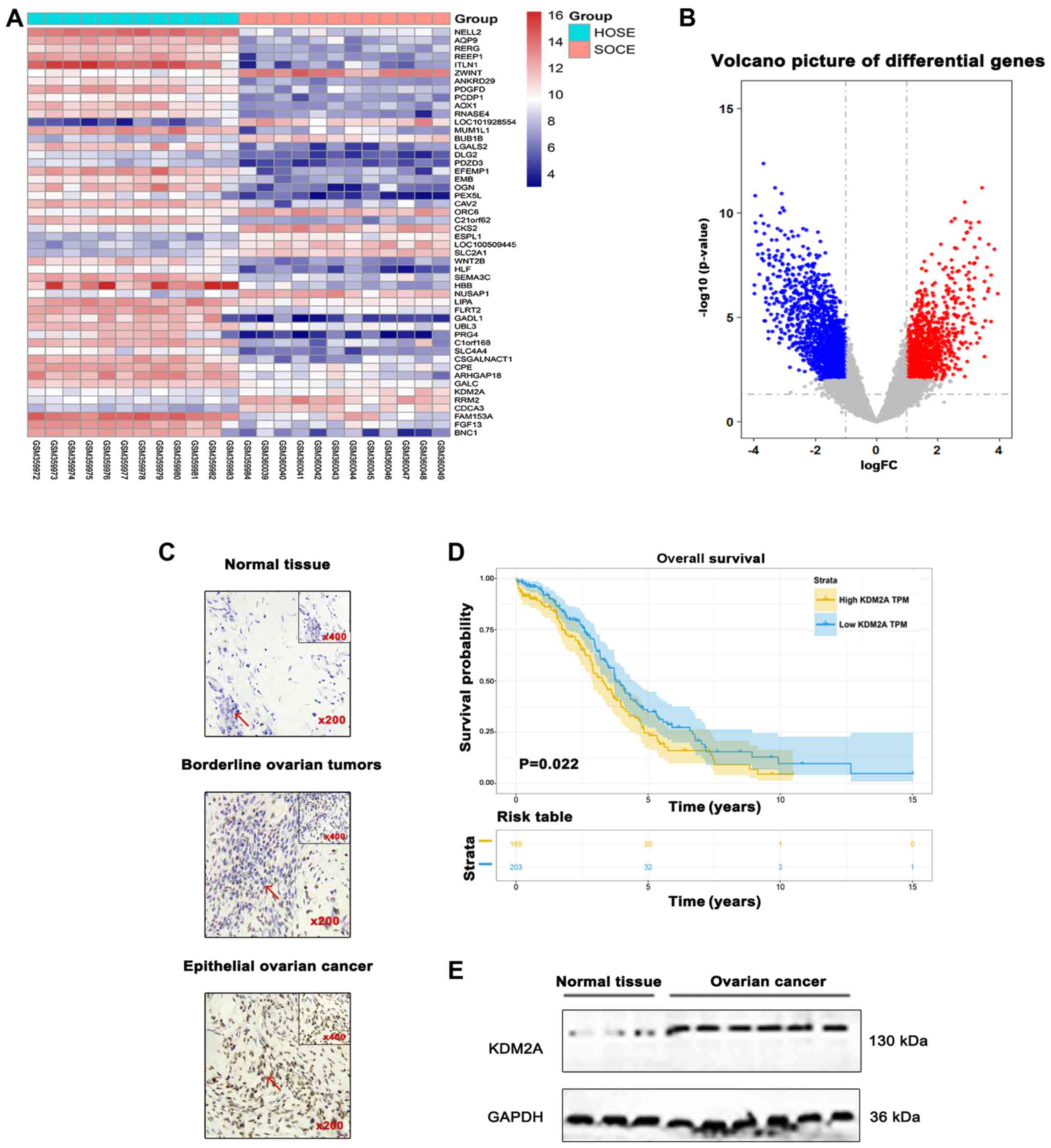
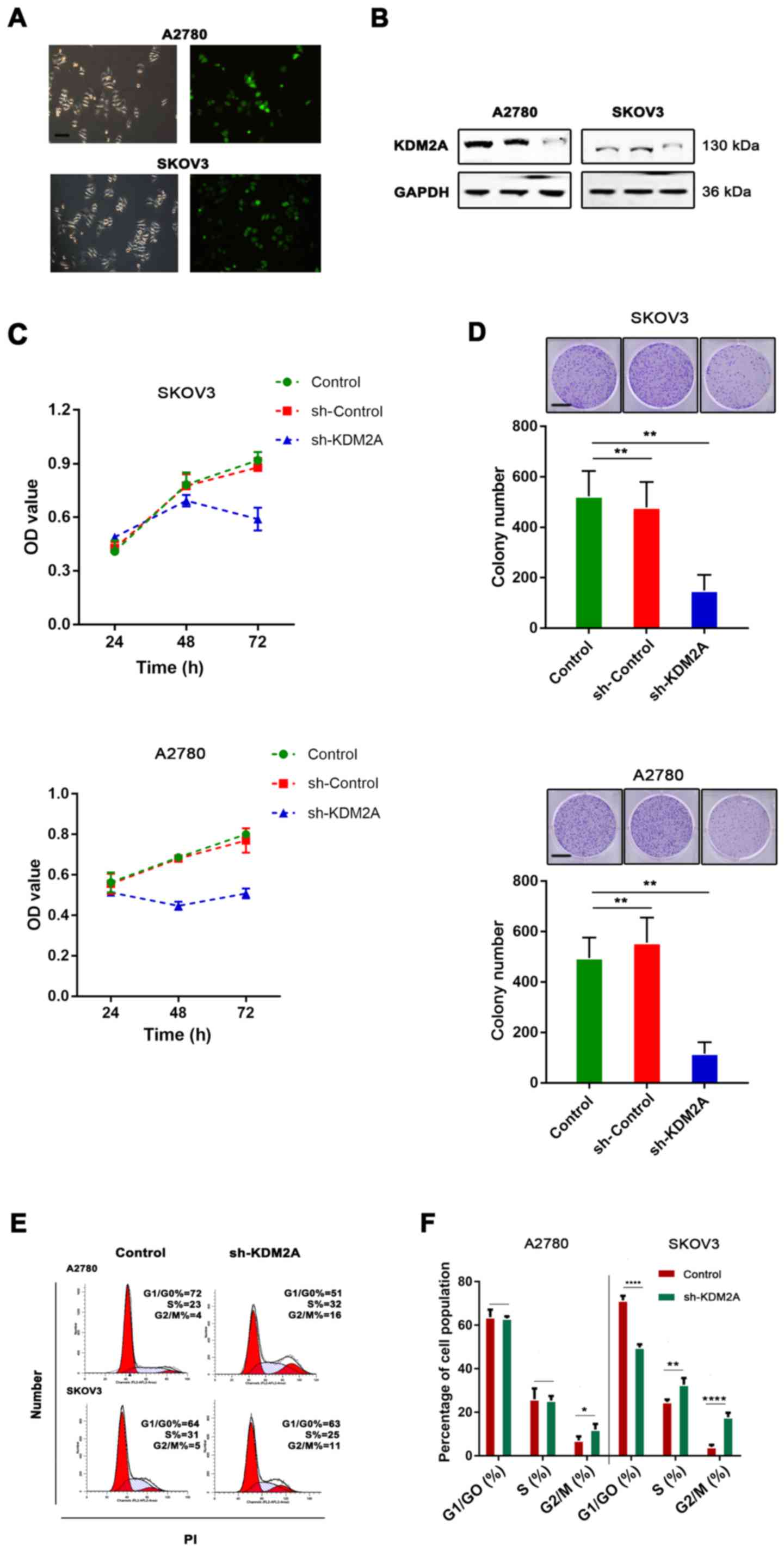
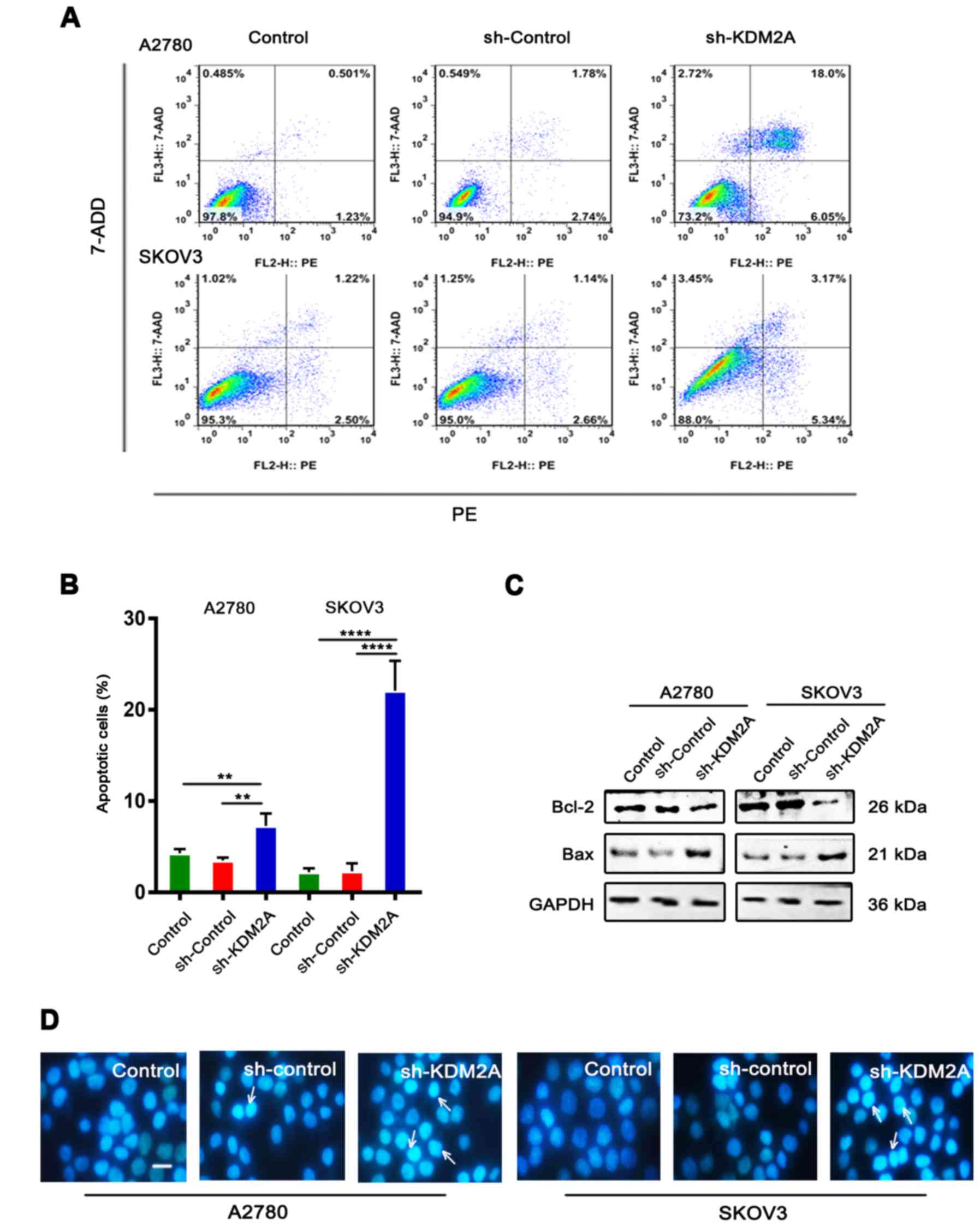
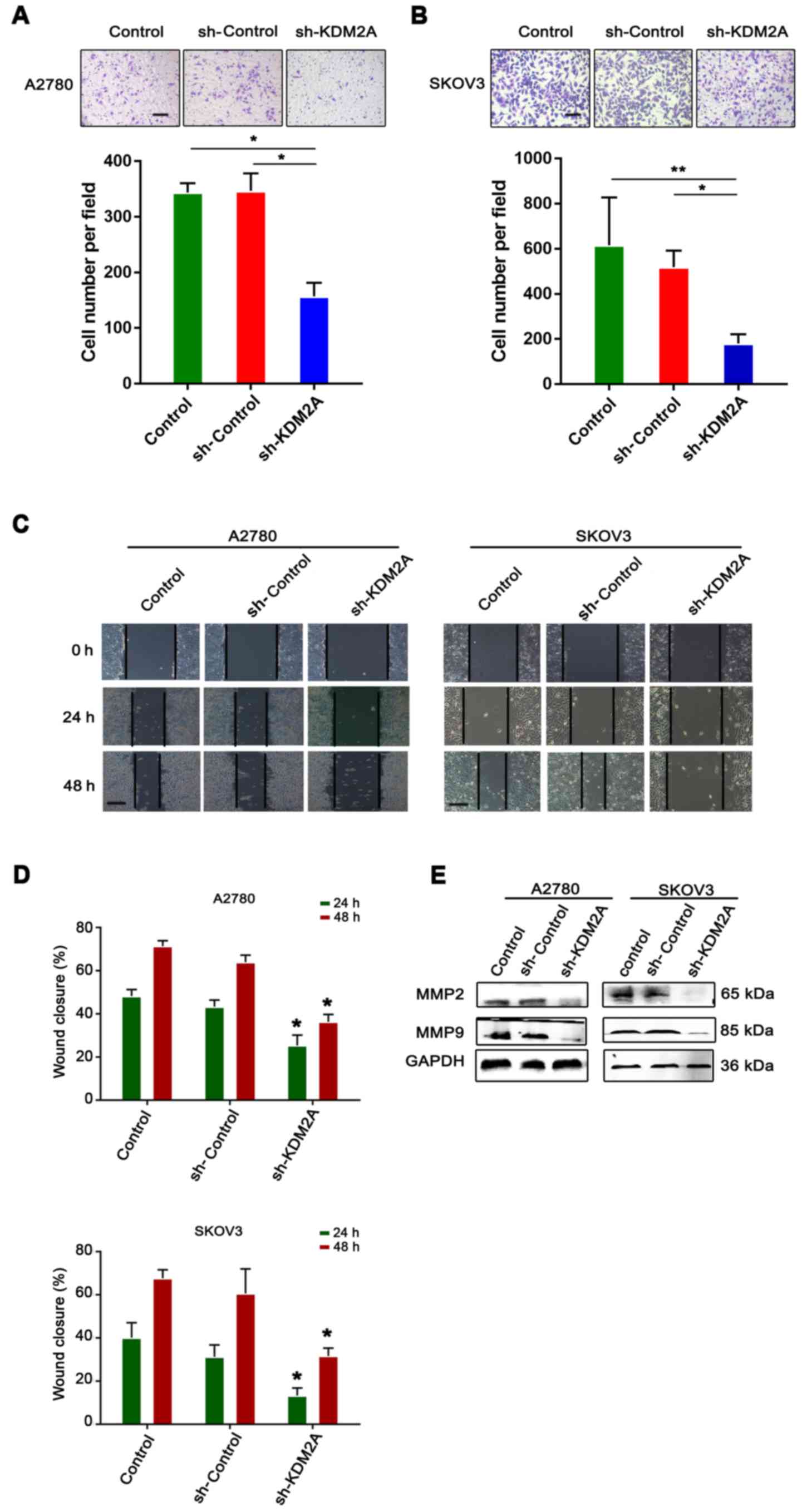
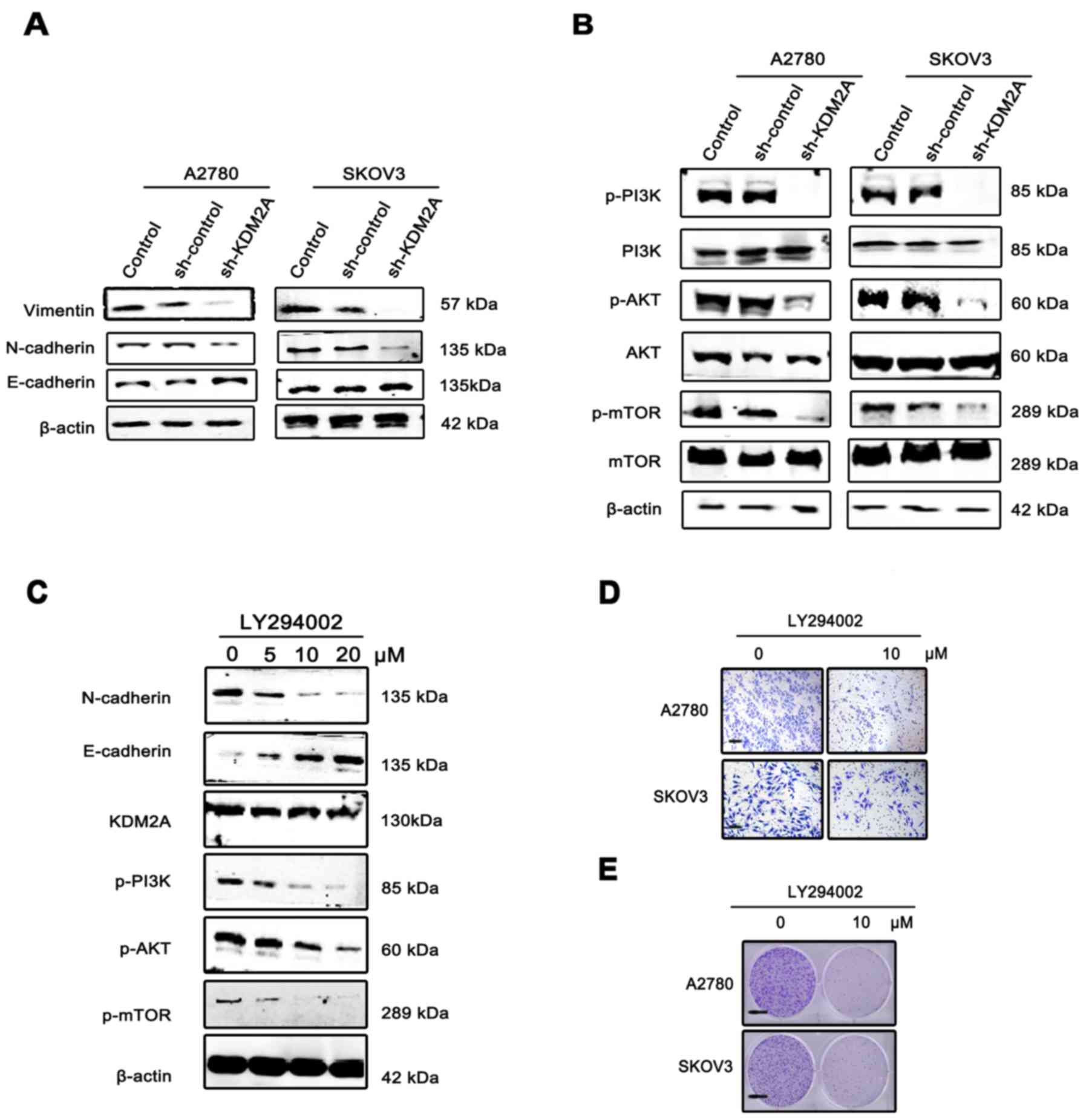
Metastasis is the most common cause of death in ovarian cancer patients but remains largely untreated. Epithelial‑mesenchymal transition (EMT) is critical for the conversion of early‑stage ovarian tumors into metastatic malignancies. Thus, investigating the signaling pathways promoting EMT may identify potential targets for the treatment of metastatic ovarian cancer. Lysine demethylase 2A (KDM2A), also known as FBXL11 and JHDM1A, is a histone H3 lysine 36 (H3K36) demethylase that regulates EMT and the metastasis of ovarian cancer. However, the function and underlying mechanisms of EMT suppression in ovarian cancer have not been thoroughly elucidated to date. In the present study, we used Gene Expression Omnibus (GEO) databases to determine that KDM2A is significantly upregulated in human ovarian cancers. KDM2A expression was assessed by immunohistochemistry of epithelial ovarian cancer (EOC) borderline ovarian tumors and normal ovary tissues. Seven fresh EOC tissues and 3 fresh normal ovary tissues were collected for western blot analysis. Kaplan‑Meier survival curves were constructed to identify genes related to EOC prognosis from the TCGA data portal. Stable KDM2A‑knockdown cell lines were established to study the biological functions and underlying mechanisms of KDM2A in EMT in vitro. GEO database analysis revealed that KDM2A was highly upregulated in EOC tissues; this analysis was accompanied by immunochemistry and western blot analysis using samples of human tissues. High expression of KDM2A was associated with poor survival in EOC patients. KDM2A knockdown promoted apoptosis and suppressed the proliferation, migration and invasion of tumor cells in vitro. EMT and the PI3K/AKT/mTOR signaling pathway were suppressed in KDM2A‑silenced cells. Inactivation of the PI3K/AKT/mTOR signaling pathway in A2780 cells induced EMT inhibition. Our data revealed that KDM2A functions as a tumor oncogene, and the downregulation of KDM2A expression regulates EMT and EOC progression, providing a valuable prognostic marker and potential target for the treatment of EOC patients.
View Figures

Figure 1

Figure 2

Figure 3

Figure 4

Figure 5

View References

1 

Siegel RL, Miller KD and Jemal A: Cancer statistics, 2016. CA Cancer J Clin. 66:7–30. 2016. View Article : Google Scholar : PubMed/NCBI

2 

Torre LA, Bray F, Siegel RL, Ferlay J, Lortet-Tieulent J and Jemal A: Global cancer statistics, 2012. CA Cancer J Clin. 65:87–108. 2015. View Article : Google Scholar : PubMed/NCBI

3 

Auersperg N: Ovarian surface epithelium as a source of ovarian cancers: Unwarranted speculation or evidence-based hypothesis? Gynecol Oncol. 130:246–251. 2013. View Article : Google Scholar : PubMed/NCBI

4 

Holschneider CH and Berek JS: Ovarian cancer: Epidemiology, biology, and prognostic factors. Semin Surg Oncol. 19:3–10. 2000. View Article : Google Scholar : PubMed/NCBI

5 

Marsden DE, Friedlander M and Hacker NF: Current management of epithelial ovarian carcinoma: A review. Semin Surg Oncol. 19:11–19. 2000. View Article : Google Scholar : PubMed/NCBI

6 

Lengyel E: Ovarian cancer development and metastasis. Am J Pathol. 177:1053–1064. 2010. View Article : Google Scholar : PubMed/NCBI

7 

Shi Y and Whetstine JR: Dynamic regulation of histone lysine methylation by demethylases. Mol Cell. 25:1–14. 2007. View Article : Google Scholar : PubMed/NCBI

8 

Klose RJ and Zhang Y: Regulation of histone methylation by demethylimination and demethylation. Nat Rev Mol Cell Biol. 8:307–318. 2007. View Article : Google Scholar : PubMed/NCBI

9 

Faundes V, Newman WG, Bernardini L, Canham N, Clayton-Smith J, Dallapiccola B, Davies SJ, Demos MK, Goldman A, Gill H, et al: Histone lysine methylases and demethylases in the landscape of human developmental disorders. Am J Hum Genet. 102:175–187. 2018. View Article : Google Scholar : PubMed/NCBI

10 

Tsukada Y, Fang J, Erdjument-Bromage H, Warren ME, Borchers CH, Tempst P and Zhang Y: Histone demethylation by a family of JmjC domain-containing proteins. Nature. 439:811–816. 2006. View Article : Google Scholar : PubMed/NCBI

11 

Wagner KW, Alam H, Dhar SS, Giri U, Li N, Wei Y, Giri D, Cascone T, Kim JH, Ye Y, et al: KDM2A promotes lung tumorigenesis by epigenetically enhancing ERK1/2 signaling. J Clin Invest. 123:5231–5246. 2013. View Article : Google Scholar : PubMed/NCBI

12 

Nalla AK, Williams TF, Collins CP, Rae DT and Trobridge GD: Lentiviral vector-mediated insertional mutagenesis screen identifies genes that influence androgen independent prostate cancer progression and predict clinical outcome. Mol Carcinog. 55:1761–1771. 2016. View Article : Google Scholar : PubMed/NCBI

13 

Cao LL, Du C, Liu H, Pei L, Qin L, Jia M and Wang H: Lysine-specific demethylase 2A expression is associated with cell growth and cyclin D1 expression in colorectal adenocarcinoma. Int J Biol Markers. 1:17246008187640692018.

14 

Chen JY, Luo CW, Lai YS, Wu CC and Hung WC: Lysine demethylase KDM2A inhibits TET2 to promote DNA methylation and silencing of tumor suppressor genes in breast cancer. Oncogenesis. 6:e3692017. View Article : Google Scholar : PubMed/NCBI

15 

Kong Y, Zou S, Yang F, Xu X, Bu W, Jia J and Liu Z: RUNX3-mediated up-regulation of miR-29b suppresses the proliferation and migration of gastric cancer cells by targeting KDM2A. Cancer Lett. 381:138–148. 2016. View Article : Google Scholar : PubMed/NCBI

16 

Zhu L, Li Q, Wong SH, Huang M, Klein BJ, Shen J, Ikenouye L, Onishi M, Schneidawind D, Buechele C, et al: ASH1L links histone H3 lysine 36 dimethylation to MLL leukemia. Cancer Discov. 6:770–783. 2016. View Article : Google Scholar : PubMed/NCBI

17 

Chen JY, Li CF, Chu PY, Lai YS, Chen CH, Jiang SS, Hou MF and Hung WC: Lysine demethylase 2A promotes stemness and angiogenesis of breast cancer by upregulating Jagged1. Oncotarget. 7:27689–27710. 2016.PubMed/NCBI

18 

Bowen NJ, Walker LD, Matyunina LV, Logani S, Totten KA, Benigno BB and McDonald JF: Gene expression profiling supports the hypothesis that human ovarian surface epithelia are multipotent and capable of serving as ovarian cancer initiating cells. BMC Med Genomics. 2:712009. View Article : Google Scholar : PubMed/NCBI

19 

Ritchie ME, Phipson B, Wu D, Hu Y, Law CW, Shi W and Smyth GK: limma powers differential expression analyses for RNA-sequencing and microarray studies. Nucleic Acids Res. 43:e472015. View Article : Google Scholar : PubMed/NCBI

20 

Ito K and Murphy D: Application of ggplot2 to Pharmacometric Graphics. CPT Pharmacometrics Syst Pharmacol. 2:e792013. View Article : Google Scholar : PubMed/NCBI

21 

Hu J, Meng Y, Zhang Z, Yan Q, Jiang X, Lv Z and Hu L: MARCH5 RNA promotes autophagy, migration, and invasion of ovarian cancer cells. Autophagy. 13:333–344. 2017. View Article : Google Scholar : PubMed/NCBI

22 

Li Y, Wu T, Wang Y, Yang L, Hu C, Chen L and Wu S: γ-Glutamyl cyclotransferase contributes to tumor progression in high grade serous ovarian cancer by regulating epithelial-mesenchymal transition via activating PI3K/AKT/mTOR pathway. Gynecol Oncol. 149:163–172. 2018. View Article : Google Scholar : PubMed/NCBI

23 

Jiang Y, Qian X, Shen J, Wang Y, Li X, Liu R, Xia Y, Chen Q, Peng G, Lin SY and Lu Z: Local generation of fumarate promotes DNA repair through inhibition of histone H3 demethylation. Nat Cell Biol. 17:1158–1168. 2015. View Article : Google Scholar : PubMed/NCBI

24 

Huang Y, Liu Y, Yu L, Chen J, Hou J, Cui L, Ma D and Lu W: Histone demethylase KDM2A promotes tumor cell growth and migration in gastric cancer. Tumour Biol. 36:271–278. 2015. View Article : Google Scholar : PubMed/NCBI

25 

Naora H and Montell DJ: Ovarian cancer metastasis: Integrating insights from disparate model organisms. Nat Rev Cancer. 5:355–366. 2005. View Article : Google Scholar : PubMed/NCBI

26 

Shield K, Ackland ML, Ahmed N and Rice GE: Multicellular spheroids in ovarian cancer metastases: Biology and pathology. Gynecol Oncol. 113:143–148. 2009. View Article : Google Scholar : PubMed/NCBI

27 

Yilmaz M and Christofori G: EMT, the cytoskeleton, and cancer cell invasion. Cancer Metastasis Rev. 28:15–33. 2009. View Article : Google Scholar : PubMed/NCBI

28 

Kotiyal S and Bhattacharya S: Breast cancer stem cells, EMT and therapeutic targets. Biochem Biophys Res Commun. 453:112–116. 2014. View Article : Google Scholar : PubMed/NCBI

29 

Nieto MA, Huang RY, Jackson RA and Thiery JP: EMT: 2016. Cell. 166:21–45. 2016. View Article : Google Scholar : PubMed/NCBI

30 

van Roy F and Berx G: The cell-cell adhesion molecule E-cadherin. Cell Mol Life Sci. 65:3756–3788. 2008. View Article : Google Scholar : PubMed/NCBI

31 

Christofori G and Semb H: The role of the cell-adhesion molecule E-cadherin as a tumour-suppressor gene. Trends Biochem Sci. 24:73–76. 1999. View Article : Google Scholar : PubMed/NCBI

32 

Berx G, Cleton-Jansen AM, Nollet F, de Leeuw WJ, van de Vijver M, Cornelisse C and van Roy F: E-cadherin is a tumour/invasion suppressor gene mutated in human lobular breast cancers. EMBO J. 14:6107–6115. 1995. View Article : Google Scholar : PubMed/NCBI

33 

Pećina-Slaus N: Tumor suppressor gene E-cadherin and its role in normal and malignant cells. Cancer Cell Int. 3:172003. View Article : Google Scholar : PubMed/NCBI

34 

Duran GE, Wang YC, Moisan F, Francisco EB and Sikic BI: Decreased levels of baseline and drug-induced tubulin polymerisation are hallmarks of resistance to taxanes in ovarian cancer cells and are associated with epithelial-to-mesenchymal transition. Br J Cancer. 116:1318–1328. 2017. View Article : Google Scholar : PubMed/NCBI

35 

Cheng YC, Tsao MJ, Chiu CY, Kan PC and Chen Y: Magnolol inhibits human glioblastoma cell migration by regulating N-cadherin. J Neuropathol Exp Neurol. 77:426–436. 2018. View Article : Google Scholar : PubMed/NCBI

36 

Liu N, Peng SM, Zhan GX, Yu J, Wu WM, Gao H, Li XF and Guo XQ: Human chorionic gonadotropin β regulates epithelial-mesenchymal transition and metastasis in human ovarian cancer. Oncol Rep. 38:1464–1472. 2017. View Article : Google Scholar : PubMed/NCBI

37 

Colomiere M, Ward AC, Riley C, Trenerry MK, Cameron-Smith D, Findlay J, Ackland L and Ahmed N: Cross talk of signals between EGFR and IL-6R through JAK2/STAT3 mediate epithelial-mesenchymal transition in ovarian carcinomas. Br J Cancer. 100:134–144. 2009. View Article : Google Scholar : PubMed/NCBI

38 

Lamouille S, Xu J and Derynck R: Molecular mechanisms of epithelial-mesenchymal transition. Nat Rev Mol Cell Biol. 15:178–196. 2014. View Article : Google Scholar : PubMed/NCBI

39 

Cheaib B, Auguste A and Leary A: The PI3K/Akt/mTOR pathway in ovarian cancer: Therapeutic opportunities and challenges. Chin J Cancer. 34:4–16. 2015. View Article : Google Scholar : PubMed/NCBI

40 

Sain N, Krishnan B, Ormerod MG, De Rienzo A, Liu WM, Kaye SB, Workman P and Jackman AL: Potentiation of paclitaxel activity by the HSP90 inhibitor 17-allylamino-17-demethoxygeldanamycin in human ovarian carcinoma cell lines with high levels of activated AKT. Mol Cancer Ther. 5:1197–1208. 2006. View Article : Google Scholar : PubMed/NCBI

41 

Cao Y: Tumorigenesis as a process of gradual loss of original cell identity and gain of properties of neural precursor/progenitor cells. Cell Biosci. 7:612017. View Article : Google Scholar : PubMed/NCBI

42 

Zhang Z, Lei A, Xu L, Chen L, Chen Y, Zhang X, Gao Y, Yang X, Zhang M and Cao Y: Similarity in gene-regulatory networks suggests that cancer cells share characteristics of embryonic neural cells. J Biol Chem. 292:12842–12859. 2017. View Article : Google Scholar : PubMed/NCBI

Related Articles

  • Abstract
  • View
  • Download
  • Twitter
Copy and paste a formatted citation
Spandidos Publications style
Lu DH, Yang J, Gao LK, Min J, Tang JM, Hu M, Li Y, Li ST, Chen J, Hong L, Hong L, et al: Lysine demethylase 2A promotes the progression of ovarian cancer by regulating the PI3K pathway and reversing epithelial‑mesenchymal transition Expression of Concern in /10.3892/or.2025.8971. Oncol Rep 41: 917-927, 2019.
APA
Lu, D., Yang, J., Gao, L., Min, J., Tang, J., Hu, M. ... Hong, L. (2019). Lysine demethylase 2A promotes the progression of ovarian cancer by regulating the PI3K pathway and reversing epithelial‑mesenchymal transition Expression of Concern in /10.3892/or.2025.8971. Oncology Reports, 41, 917-927. https://doi.org/10.3892/or.2018.6888
MLA
Lu, D., Yang, J., Gao, L., Min, J., Tang, J., Hu, M., Li, Y., Li, S., Chen, J., Hong, L."Lysine demethylase 2A promotes the progression of ovarian cancer by regulating the PI3K pathway and reversing epithelial‑mesenchymal transition Expression of Concern in /10.3892/or.2025.8971". Oncology Reports 41.2 (2019): 917-927.
Chicago
Lu, D., Yang, J., Gao, L., Min, J., Tang, J., Hu, M., Li, Y., Li, S., Chen, J., Hong, L."Lysine demethylase 2A promotes the progression of ovarian cancer by regulating the PI3K pathway and reversing epithelial‑mesenchymal transition Expression of Concern in /10.3892/or.2025.8971". Oncology Reports 41, no. 2 (2019): 917-927. https://doi.org/10.3892/or.2018.6888
Copy and paste a formatted citation
x
Spandidos Publications style
Lu DH, Yang J, Gao LK, Min J, Tang JM, Hu M, Li Y, Li ST, Chen J, Hong L, Hong L, et al: Lysine demethylase 2A promotes the progression of ovarian cancer by regulating the PI3K pathway and reversing epithelial‑mesenchymal transition Expression of Concern in /10.3892/or.2025.8971. Oncol Rep 41: 917-927, 2019.
APA
Lu, D., Yang, J., Gao, L., Min, J., Tang, J., Hu, M. ... Hong, L. (2019). Lysine demethylase 2A promotes the progression of ovarian cancer by regulating the PI3K pathway and reversing epithelial‑mesenchymal transition Expression of Concern in /10.3892/or.2025.8971. Oncology Reports, 41, 917-927. https://doi.org/10.3892/or.2018.6888
MLA
Lu, D., Yang, J., Gao, L., Min, J., Tang, J., Hu, M., Li, Y., Li, S., Chen, J., Hong, L."Lysine demethylase 2A promotes the progression of ovarian cancer by regulating the PI3K pathway and reversing epithelial‑mesenchymal transition Expression of Concern in /10.3892/or.2025.8971". Oncology Reports 41.2 (2019): 917-927.
Chicago
Lu, D., Yang, J., Gao, L., Min, J., Tang, J., Hu, M., Li, Y., Li, S., Chen, J., Hong, L."Lysine demethylase 2A promotes the progression of ovarian cancer by regulating the PI3K pathway and reversing epithelial‑mesenchymal transition Expression of Concern in /10.3892/or.2025.8971". Oncology Reports 41, no. 2 (2019): 917-927. https://doi.org/10.3892/or.2018.6888
Follow us
  • Twitter
  • LinkedIn
  • Facebook
About
  • Spandidos Publications
  • Careers
  • Cookie Policy
  • Privacy Policy
How can we help?
  • Help
  • Live Chat
  • Contact
  • Email to our Support Team