Spandidos Publications Logo
  • About
    • About Spandidos
    • Aims and Scopes
    • Abstracting and Indexing
    • Editorial Policies
    • Reprints and Permissions
    • Job Opportunities
    • Terms and Conditions
    • Contact
  • Journals
    • All Journals
    • Oncology Letters
      • Oncology Letters
      • Information for Authors
      • Editorial Policies
      • Editorial Board
      • Aims and Scope
      • Abstracting and Indexing
      • Bibliographic Information
      • Archive
    • International Journal of Oncology
      • International Journal of Oncology
      • Information for Authors
      • Editorial Policies
      • Editorial Board
      • Aims and Scope
      • Abstracting and Indexing
      • Bibliographic Information
      • Archive
    • Molecular and Clinical Oncology
      • Molecular and Clinical Oncology
      • Information for Authors
      • Editorial Policies
      • Editorial Board
      • Aims and Scope
      • Abstracting and Indexing
      • Bibliographic Information
      • Archive
    • Experimental and Therapeutic Medicine
      • Experimental and Therapeutic Medicine
      • Information for Authors
      • Editorial Policies
      • Editorial Board
      • Aims and Scope
      • Abstracting and Indexing
      • Bibliographic Information
      • Archive
    • International Journal of Molecular Medicine
      • International Journal of Molecular Medicine
      • Information for Authors
      • Editorial Policies
      • Editorial Board
      • Aims and Scope
      • Abstracting and Indexing
      • Bibliographic Information
      • Archive
    • Biomedical Reports
      • Biomedical Reports
      • Information for Authors
      • Editorial Policies
      • Editorial Board
      • Aims and Scope
      • Abstracting and Indexing
      • Bibliographic Information
      • Archive
    • Oncology Reports
      • Oncology Reports
      • Information for Authors
      • Editorial Policies
      • Editorial Board
      • Aims and Scope
      • Abstracting and Indexing
      • Bibliographic Information
      • Archive
    • Molecular Medicine Reports
      • Molecular Medicine Reports
      • Information for Authors
      • Editorial Policies
      • Editorial Board
      • Aims and Scope
      • Abstracting and Indexing
      • Bibliographic Information
      • Archive
    • World Academy of Sciences Journal
      • World Academy of Sciences Journal
      • Information for Authors
      • Editorial Policies
      • Editorial Board
      • Aims and Scope
      • Abstracting and Indexing
      • Bibliographic Information
      • Archive
    • International Journal of Functional Nutrition
      • International Journal of Functional Nutrition
      • Information for Authors
      • Editorial Policies
      • Editorial Board
      • Aims and Scope
      • Abstracting and Indexing
      • Bibliographic Information
      • Archive
    • International Journal of Epigenetics
      • International Journal of Epigenetics
      • Information for Authors
      • Editorial Policies
      • Editorial Board
      • Aims and Scope
      • Abstracting and Indexing
      • Bibliographic Information
      • Archive
    • Medicine International
      • Medicine International
      • Information for Authors
      • Editorial Policies
      • Editorial Board
      • Aims and Scope
      • Abstracting and Indexing
      • Bibliographic Information
      • Archive
  • Articles
  • Information
    • Information for Authors
    • Information for Reviewers
    • Information for Librarians
    • Information for Advertisers
    • Conferences
  • Language Editing
Spandidos Publications Logo
  • About
    • About Spandidos
    • Aims and Scopes
    • Abstracting and Indexing
    • Editorial Policies
    • Reprints and Permissions
    • Job Opportunities
    • Terms and Conditions
    • Contact
  • Journals
    • All Journals
    • Biomedical Reports
      • Information for Authors
      • Editorial Policies
      • Editorial Board
      • Aims and Scope
      • Abstracting and Indexing
      • Bibliographic Information
      • Archive
    • Experimental and Therapeutic Medicine
      • Information for Authors
      • Editorial Policies
      • Editorial Board
      • Aims and Scope
      • Abstracting and Indexing
      • Bibliographic Information
      • Archive
    • International Journal of Epigenetics
      • Information for Authors
      • Editorial Policies
      • Editorial Board
      • Aims and Scope
      • Abstracting and Indexing
      • Bibliographic Information
      • Archive
    • International Journal of Functional Nutrition
      • Information for Authors
      • Editorial Policies
      • Editorial Board
      • Aims and Scope
      • Abstracting and Indexing
      • Bibliographic Information
      • Archive
    • International Journal of Molecular Medicine
      • Information for Authors
      • Editorial Policies
      • Editorial Board
      • Aims and Scope
      • Abstracting and Indexing
      • Bibliographic Information
      • Archive
    • International Journal of Oncology
      • Information for Authors
      • Editorial Policies
      • Editorial Board
      • Aims and Scope
      • Abstracting and Indexing
      • Bibliographic Information
      • Archive
    • Medicine International
      • Information for Authors
      • Editorial Policies
      • Editorial Board
      • Aims and Scope
      • Abstracting and Indexing
      • Bibliographic Information
      • Archive
    • Molecular and Clinical Oncology
      • Information for Authors
      • Editorial Policies
      • Editorial Board
      • Aims and Scope
      • Abstracting and Indexing
      • Bibliographic Information
      • Archive
    • Molecular Medicine Reports
      • Information for Authors
      • Editorial Policies
      • Editorial Board
      • Aims and Scope
      • Abstracting and Indexing
      • Bibliographic Information
      • Archive
    • Oncology Letters
      • Information for Authors
      • Editorial Policies
      • Editorial Board
      • Aims and Scope
      • Abstracting and Indexing
      • Bibliographic Information
      • Archive
    • Oncology Reports
      • Information for Authors
      • Editorial Policies
      • Editorial Board
      • Aims and Scope
      • Abstracting and Indexing
      • Bibliographic Information
      • Archive
    • World Academy of Sciences Journal
      • Information for Authors
      • Editorial Policies
      • Editorial Board
      • Aims and Scope
      • Abstracting and Indexing
      • Bibliographic Information
      • Archive
  • Articles
  • Information
    • For Authors
    • For Reviewers
    • For Librarians
    • For Advertisers
    • Conferences
  • Language Editing
Login Register Submit
  • This site uses cookies
  • You can change your cookie settings at any time by following the instructions in our Cookie Policy. To find out more, you may read our Privacy Policy.

    I agree
Search articles by DOI, keyword, author or affiliation
Search
Advanced Search
presentation
Oncology Reports
Join Editorial Board Propose a Special Issue
Print ISSN: 1021-335X Online ISSN: 1791-2431
Journal Cover
August-2014 Volume 32 Issue 2

Full Size Image

Sign up for eToc alerts
Recommend to Library

Journals

International Journal of Molecular Medicine

International Journal of Molecular Medicine

International Journal of Molecular Medicine is an international journal devoted to molecular mechanisms of human disease.

International Journal of Oncology

International Journal of Oncology

International Journal of Oncology is an international journal devoted to oncology research and cancer treatment.

Molecular Medicine Reports

Molecular Medicine Reports

Covers molecular medicine topics such as pharmacology, pathology, genetics, neuroscience, infectious diseases, molecular cardiology, and molecular surgery.

Oncology Reports

Oncology Reports

Oncology Reports is an international journal devoted to fundamental and applied research in Oncology.

Experimental and Therapeutic Medicine

Experimental and Therapeutic Medicine

Experimental and Therapeutic Medicine is an international journal devoted to laboratory and clinical medicine.

Oncology Letters

Oncology Letters

Oncology Letters is an international journal devoted to Experimental and Clinical Oncology.

Biomedical Reports

Biomedical Reports

Explores a wide range of biological and medical fields, including pharmacology, genetics, microbiology, neuroscience, and molecular cardiology.

Molecular and Clinical Oncology

Molecular and Clinical Oncology

International journal addressing all aspects of oncology research, from tumorigenesis and oncogenes to chemotherapy and metastasis.

World Academy of Sciences Journal

World Academy of Sciences Journal

Multidisciplinary open-access journal spanning biochemistry, genetics, neuroscience, environmental health, and synthetic biology.

International Journal of Functional Nutrition

International Journal of Functional Nutrition

Open-access journal combining biochemistry, pharmacology, immunology, and genetics to advance health through functional nutrition.

International Journal of Epigenetics

International Journal of Epigenetics

Publishes open-access research on using epigenetics to advance understanding and treatment of human disease.

Medicine International

Medicine International

An International Open Access Journal Devoted to General Medicine.

Journal Cover
August-2014 Volume 32 Issue 2

Full Size Image

Sign up for eToc alerts
Recommend to Library

  • Article
  • Citations
    • Cite This Article
    • Download Citation
    • Create Citation Alert
    • Remove Citation Alert
    • Cited By
  • Similar Articles
    • Related Articles (in Spandidos Publications)
    • Similar Articles (Google Scholar)
    • Similar Articles (PubMed)
  • Download PDF
  • Download XML
  • View XML
Article

A single nucleotide polymorphism in fibronectin 1 determines tumor shape in colorectal cancer

  • Authors:
    • Hiroyuki Kida
    • Yuki Takano
    • Ken  Yamamoto
    • Masaki  Mori
    • Katsuhiko  Yanaga
    • Jun-Ichi  Tanaka
    • Shin-Ei  Kudo
    • Koshi  Mimori
  • View Affiliations / Copyright

    Affiliations: Digestive Disease Center, Northern Yokohama Hospital, Showa University, Yokohama, Japan, Department of Surgery, Kyushu University Beppu Hospital, Beppu, Japan, Department of Molecular and Cellular Biology, Kyushu University, Fukuoka, Japan, Department of Gastroenterology, Osaka University, Suita, Japan, Department of Surgery, Jikei University School of Medicine, Tokyo, Japan
  • Pages: 548-552
    |
    Published online on: June 12, 2014
       https://doi.org/10.3892/or.2014.3251
  • Expand metrics +
Metrics: Total Views: 0 (Spandidos Publications: | PMC Statistics: )
Metrics: Total PDF Downloads: 0 (Spandidos Publications: | PMC Statistics: )
Cited By (CrossRef): 0 citations Loading Articles...

This article is mentioned in:


Abstract

Depressed and flat surface lesions are not easy to identify with routine colonoscopies during screening for colorectal cancer (CRC). Identifying clinically relevant genes that influence tumor shape could be useful when screening for the presence of depressed lesions. Total RNA was extracted from tumor cells collected by laser microdissection from the primary lesions of 146 CRC cases. Microarray analysis was performed to identify genes that were differentially expressed between depressed and elevated tumors. Single nucleotide polymorphism (SNP) analysis of genomic DNA from the peripheral blood of 67 CRC patients was then used to associate polymorphisms with the occurrence of depressed tumors. Microarray analysis revealed significantly higher expression of the fibronectin 1 (FN1) gene in 129 depressed-type tumors and lesions compared to 17 elevated-type tumors. FN1-abundant CRC tumors were large with a significantly higher incidence of lymphatic permeation. SNP analysis indicated that 44 tumors with a GG genotype at SNP rs6707530 showed significantly higher FN1 expression than did 23 tumors with GT/TT genotypes (p<0.05). The product of the FN1 gene (located at 2q34) is involved in cell adhesion, migration and metastasis in mesenchymal tumors. Abundant expression of FN1 may allow cancer cells to invade deeper layers, which would eventually define tumor shape. Identification of this SNP in blood samples may facilitate disease diagnosis and allow prediction of the presence of depressed tumors in the colorectal epithelium before a colon fiberscope examination.

Introduction

The size and shape of a lesion in colorectal cancer (CRC) are believed to be connected directly to clinical phenotype and to serve as predictors of malignant behavior (1,2). Early superficial CRC lesions can be classified as elevated (polypoid and non-polypoid) or depressed (3,4). Polypoid lesions grow above the surface of the mucosa and the volume of the polypoid component appears to be correlated with malignant behavior. Non-polypoid lesions may grow flat or slightly elevated, eventually progressing, into polypoid lesions or lateral spreading tumors. Finally, depressed lesions (0-IIc, 0-IIc+IIa, 0-IIa+IIc), which comprise only 2.3% of all superficial lesions (5), warrant particular attention due to the difficulty of detection and removal by fiberscope (6,7). Since depressed-type lesions are frequently located in the right colon, they can be difficult to detect. Moreover, depressed lesions, independent of size, have been associated with an increased risk of rapid progression to cancer, as shown in endoscopy and pathology units in Japan (4,5,8,9). Depressed-type lesions and tumors, such as earlier phase lesions (0-IIc, 0-IIc+IIa, 0-IIa+IIc) and/or advanced tumors (types 2 and 3), invade and metastasize to lymph nodes and other distant organs and indicate a poorer prognosis than do type 1 tumors.

Microarray analysis of RNA from the cancer cells of 144 CRC cases revealed that the fibronectin 1 (FN1) gene is significantly associated with tumor shape in CRC. FN1 is a glycoprotein that is present in a soluble dimeric form in the plasma, and in a dimeric or multimeric form at the cell surface and in the extracellular matrix (10). It is involved in cell adhesion and migration processes including embryogenesis, wound healing, blood coagulation, host defense and metastasis. The gene has 3 regions that are subject to alternative splicing, with the potential to produce 20 transcript variants. However, the full-length nature of some of these variants has not been determined.

In the present study, we performed a comprehensive analysis to identify genes that determine tumor shape (11). Evaluation of changes in the expression patterns of these genes may allow physicians to make a precise, non-invasive diagnosis of depressed-type lesions in early CRC. The correlation between FN1 expression and tumor shape was validated by quantitative real-time reverse transcription polymerase chain reaction (qRT-PCR) before single nucleotide polymorphism (SNP) analysis was performed to identify polymorphisms in the FN1 coding region that could be used as predictors of tumor shape (1) in CRC.

Materials and methods

CRC patients

The study group comprised 146 patients with primary CRC. The patients ranged in age from 32 to 96 years, with an average age of 66 years. They underwent operations at major hospitals in Japan: Kyushu University, Kitazato University, Tokyo Medical and Dental University, National Defense University, Mie University, Takano Hospital, National Cancer Center and Osaka University from 2004 to 2009. None of the patients received preoperative treatments such as radiation or chemotherapy. Immediately after surgical resection, tumor samples (T) were carefully removed from primary cancerous lesions for cell isolation using laser microdissection (LMD). Clinicopathological patient data were obtained from clinical records. Histopathological assessments were made using the Japanese Classification of Colorectal Carcinoma, 7th edition.

Collection of CRC cells

Tissues from the 146 CRC patients were collected for LMD using the Leica Laser Microdissection System (Leica Microsystems, Wetzlar, Germany). In brief, 5-μm frozen sections were fixed in 70% ethanol for 30 sec, stained with hematoxylin and eosin and dehydrated as follows: 5 sec each in 70, 95 and 100% ethanol and a final 5 min in xylene. The sections were air-dried, then microdissected with the LMD system. Target cells, at least 100 cells/section, were excised and bound to transfer film for total DNA extraction.

Total RNA extraction and first-strand cDNA synthesis

CRC tissue specimens or cultured cell lines at subconfluency were homogenized, and total RNA was extracted using the modified acid-guanidine-phenol-chloroform method. Total RNA (8.0 μg) was reverse transcribed to cDNA using M-MLV RT (Invitrogen Corporation, Carlsbad, CA, USA).

qRT-PCR

The sequences for FN1 mRNA were: FN1, sense primer, 5′-GAACTATGATGCCGACCAGAA-3′ and antisense primer, 5′-GGTTGTGCAGATTTCCTCGT-3′. Glyceraldehyde-3-phosphate dehydrogenase (GAPDH) was used as an internal control and GAPDH primers were: sense primer 5′-TTGGTATCGTGGAAGGACTCTA-3′ and antisense primer, 5′-TGTCATATTTGGCAGGTT-3′. Real-time monitoring of PCR reactions was performed using the LightCycler system (Roche Applied Science, Indianapolis, IN, USA) and SYBR-Green I dye (Roche Diagnostics, Tokyo, Japan). Monitoring was performed according to the manufacturer’s instructions. In brief, a master mixture containing 1 μl of cDNA, 2 μl of DNA Master SYBR-Green I mix, 50 ng of primers and 24 μl of 25 mM MgCl2 was prepared on ice, and the final volume was adjusted to 20 μl with water. After the reaction mixture was loaded into glass capillary tubes, qRT-PCR was performed with the following cycling conditions: initial denaturation at 95°C for 10 min, followed by 45 cycles of 95°C for 10 sec, annealing at 60°C for 10 sec and extension at 72°C for 10 sec. After amplification, products were subjected to a temperature gradient from 65° to 95°C at 0.2°C/sec, under continuous fluorescence monitoring, to produce a melting curve for analysis of primer specificity.

Expression array analysis

For microarray expression analysis, we used a commercially available Whole Human Genome Oligo DNA Microarray kit (Agilent Technologies, Santa Clara, CA, USA). A list of genes on this cDNA microarray is available from http://www.chem.agilent.com/scripts/generic.asp?lpage=5175&indcol=Y&prodcol=Y&prodcol=N&indcol=Y&prodcol=N. Cyanine (Cy)-labeled cRNA was prepared using T7 linear amplification as described in the Agilent Low RNA Input Fluorescent Linear Amplification Kit Manual (Agilent Technologies). Labeled cRNA was fragmented and hybridized to an oligonucleotide microarray (Whole Human Genome 4×44K Agilent G4112F). Fluorescence intensities were determined with an Agilent DNA Microarray Scanner and were analyzed using G2567AA Feature Extraction Software version A.7.5.1 (Agilent Technologies), which uses locally weighted linear regression curve fit (LOWESS) normalization. This microarray study followed the MIAME guidelines issued by the Microarray Gene Expression Data group. Further analyses were performed using GeneSpring version 7.3 (Silicon Genetics, San Carlos, CA, USA).

Evaluation of representative SNPs in the FN1 coding region

Genomic DNA was extracted from the peripheral blood of 64 patients with primary CRC using a QIAamp DNA Mini kit according to the manufacturer’s protocol (Qiagen, Valencia, CA, USA). SNPs in the exonic and intronic regions of FN1 were evaluated simultaneously using an Affymetrix genome-wild SNP array to determine the association between FN1 expression and the genotype of each SNP in the FN-1 gene: rs6707530, rs11651, rs7594168, rs10498037, rs33996776, rs1250214, rs7568287, rs10201850, rs41347752, rs1250204, rs7588661, rs2577302, rs1968510, rs34255697, rs10172425, rs7572169, rs2372545, rs1250264, rs12105173, rs10199059, rs1437799, rs1250270, rs11693652, rs7567647, rs1898536, rs10202483, rs1250247, rs1250233, rs6753702 and rs1250252. However, rs2372545 and rs1250264 were excluded due to low-quality data. The Ethics Committee of each institute approved this project.

Results

Differential expression of FN-1 in cells isolated from CRC primary tumors

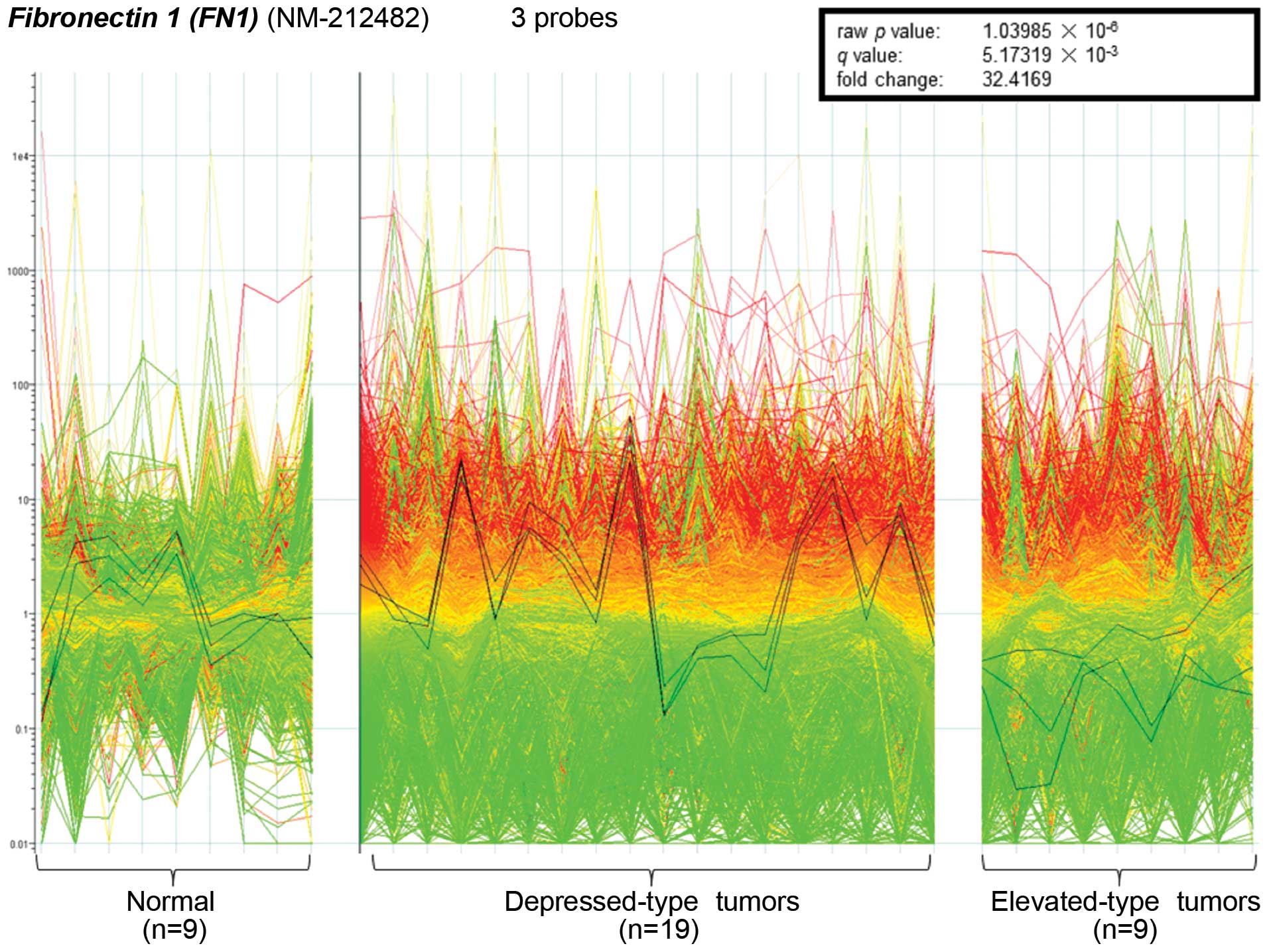
Microarray analysis revealed a significant difference in the expression of the FN1 gene between depressed-type tumors and lesions (0-IIb, 0-IIc, 0-IIa+IIc, 0-IIc+IIa, type 2 and type 3 tumors) and elevated-type tumors (0-Ip, 0-Isp, 0-Is, 0-IIa and type 1 tumors). The microarray contained three probes for FN1, all of which were significantly upregulated in depressed-type lesions (n=129) compared to elevated-type tumors (n=17). The 3 probes were also used to validate these findings in representative samples of depressed (n=19) and elevated (n=9) tumors and normal tissues (n=9). The 19 depressed tumors showed significantly higher expression than the other groups (raw p-value, 1.03985×10⁻⁶; q-value, 5.17319×10⁻³; fold-change, 32.4169; Fig. 1). In comparison to that of normal samples, the average expression of FN1 in depressed type lesions was upregulated, while expression in elevated-type lesions was downregulated.

Figure 1

Differences in the growth type in Tis-T2 CRC tumor. Three probes covered the coding region of FN1 (NM-212482) on the Agilent expression array. FN1 expression detected by each probe is represented by the black lines in each column. Left column, expression in normal colorectal epithelial cells (n=9); middle column, expression in depressed-type tumors (n=19); right column, expression in elevated-type tumors (n=9). The upregulated (red lines) and downregulated (green lines) expression levels of whole genes in the microarray analysis are also denoted.

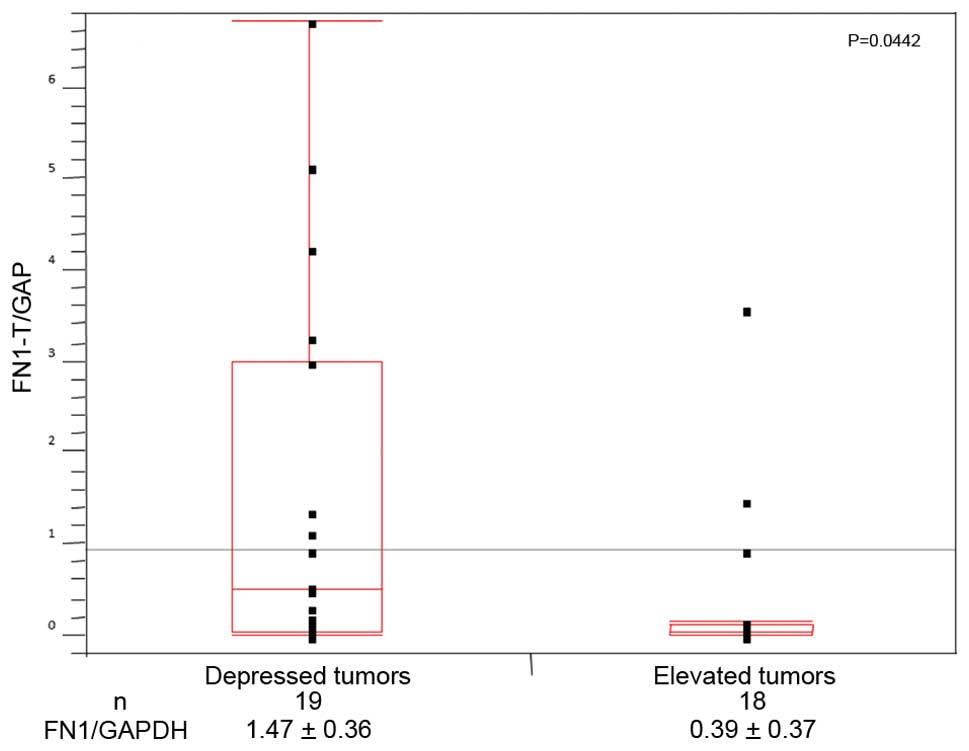
qRT-PCR supported the finding that the expression of FN1 in the subgroup of depressed tumors (19 tumors; 1.47±0.36) was significantly higher (p<0.05) than that in the subgroup of elevated tumors (n=18; 0.39±0.37; Fig. 2).

Figure 2

Validation of the association between tumor shape and FN1 expression. The expression of FN1 in the subgroup of depressed tumors (n=19; 1.47±0.36) vs. the subgroup of elevated tumors (n=18; 0.39±0.37; p<0.05). FN1, fibronectin 1.

Clinicopathological significance of FN1 in CRC cases

In addition to tumor shape, 2 other clinicopathological factors were associated with FN1 expression (Table I). Higher expression was observed in larger tumors (>5 cm; n=71) than in smaller tumors (n=75; p=0.0024). There was also a significant difference in FN1 expression between lymphatic permeation negative (n=65; 4.38±0.24) and positive (n=61; 3.70±0.22) tumors (p=0.036).

Table I

Clinicopathologic significance of the expression of fibronectin-1/GAPDH in CRC cases.

Table I

Clinicopathologic significance of the expression of fibronectin-1/GAPDH in CRC cases.

Clinicopathologic analysisNFibronectin-1/GAPDH logP-value
Gender
 Male824.27+0.28NS
 Female643.67+0.25
Location of tumor
 Rectum524.40+0.27NS
 Proximal colon433.57+0.30
 Distal colon513.97+0.28
Size of tumor (cm)
 Large (>5)714.51+0.230.0024
 Small (<5)753.53+0.22
Type of tumora
 Depressed1294.16+0.170.0098
 Elevated172.84+0.47
Histologic differentiationb
 Well824.02+1.92NS
 Mod614.03+2.11
 Poor22.76+0.13
 Muc13.62
Depth of tumor invasion
 pTis-pT1(pM-pSM)82.92+0.70NS
 pT2 (pMP)194.25+0.46
 pT3 (pSS/pA)884.12+0.21
 pT4(pSE-PSO/pAI)313.82+0.36
Lymphatic permeation
 Negative654.38+0.240.036
 Positive813.70+0.22
Venous permeation
 Negative544.15+0.27NS
 Positive913.93+0.21
Lymph node metastasis
 Negative754.01+0.23NS
 Positive703.98+0.24
Peritoneal dissemination
 Negative1404.00+0.17NS
 Positive63.933+0.81
Liver metastasis
 Negative1264.01+0.18NS
 Positive203.98+0.45
Dukes
 A213.86+0.44NS
 B494.09+0.29
 C534.09+0.28
 D233.77+0.42

a Shape of tumors: depressed-type tumor; 0-IIc, type 2; type 2. Elevated type tumor: 0-Isp, 0-Ip; type 1.

b Histologic differentiation: well, well differentiated adenocarcinoma; mod, moderately differentiated adenocarcinoma; poor, poorly differentiated adenocarcinoma; muc, mucinous adenocarcinoma.

FN1 expression is associated with 1 SNP

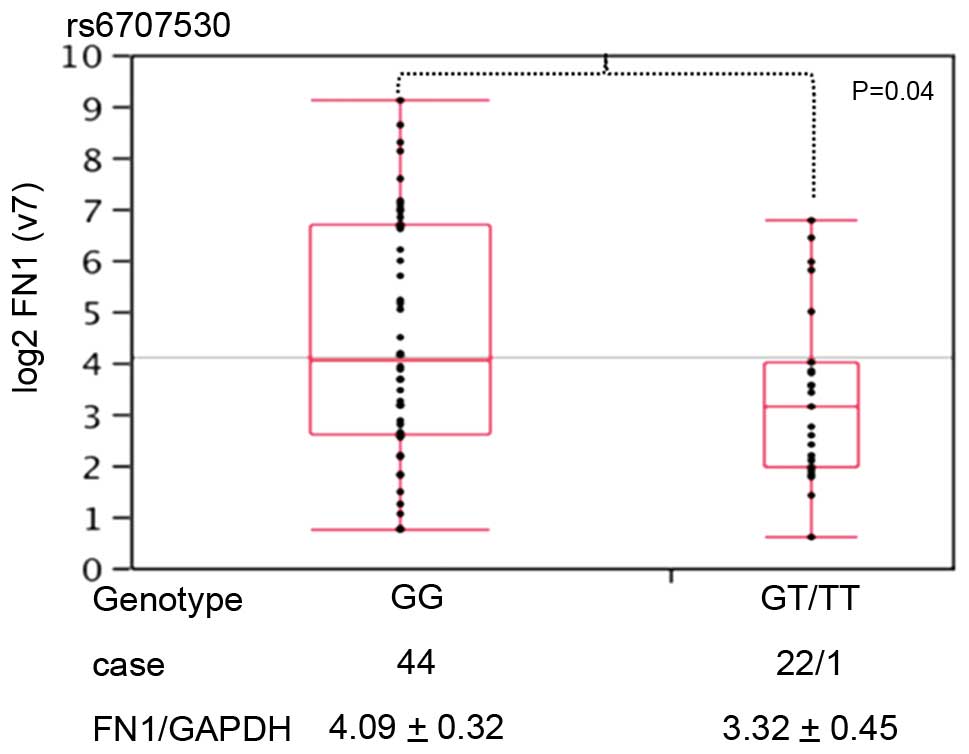
Of the 30 SNPs in the FN1 region, rs6707530 was associated with tumor shape in CRC (Fig. 3). The expression of FN1/GAPDH was higher in CRC samples with a GG genotype (n=44; 4.09±0.32) at this locus rather than a GT or TT genotype (n=23; 3.32±0.45).

Figure 3

FN1 expression is associated with a single nucleotide polymorphism. The GG and GT/TT genotypes of rs6707530 were identified in 44 and 23 CRC cases, respectively. The expression of FN1 was significantly higher in GG cases of CRC than in GT/TT cases. FN1, fibronectin 1.

Discussion

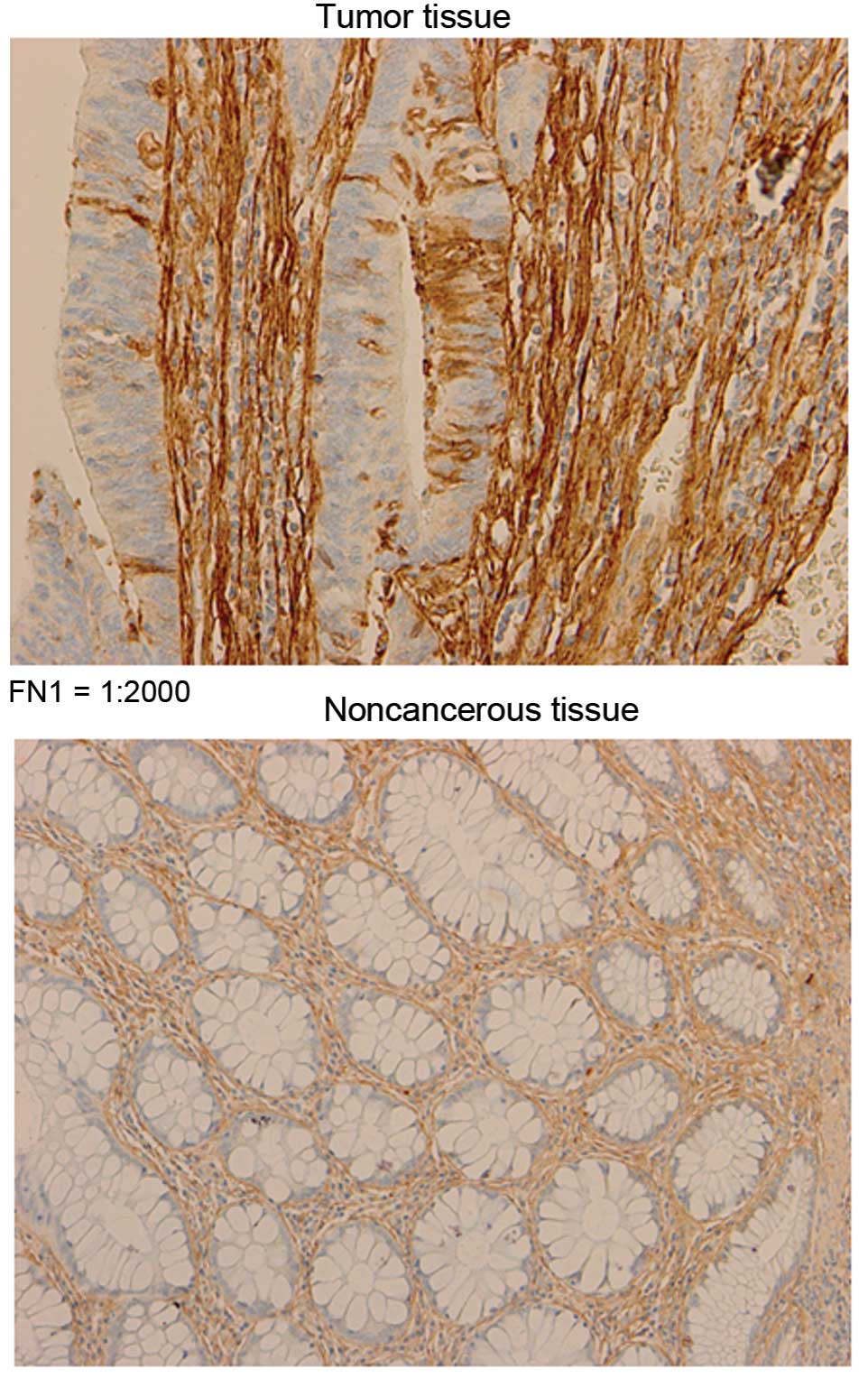
The tumorigenesis of depressed tumors progresses along a different pathway from the conventional path for elevated tumors that was advocated by Vogelstein et al (4). It is believed that malignant cells in serrated and adenomatous lesions proliferate and grow laterally and top-down from the surface of the lesion (1–3). However, little is known about how the molecular biology of certain cancer cells is determined. In the present study, we focused on clarifying the mechanism responsible for the differentiation of the shapes of malignant cells. In order to do this, we extracted cancer cells from primary tumor tissues, avoiding contamination with interstitial cells or non-malignant cells with the use of LMD. Microarray analysis following the extraction of total RNA and purified mRNA identified 1 gene, FN1 (10). FN1 was more highly expressed in the interstitial tissues than in the superficial glands in the section (Fig. 4). We propose that the abundant expression of FN1 may allow for the generation of traction forces through its surface receptors. However, further in vitro and in vivo studies are required to answer this question.

Figure 4

FN1 expression in representative CRC tissues. FN1 expression was much stronger in the interstitial tissues of tumors than in the corresponding normal tissues. FN1, fibronectin 1; CRC, colorectal cancer.

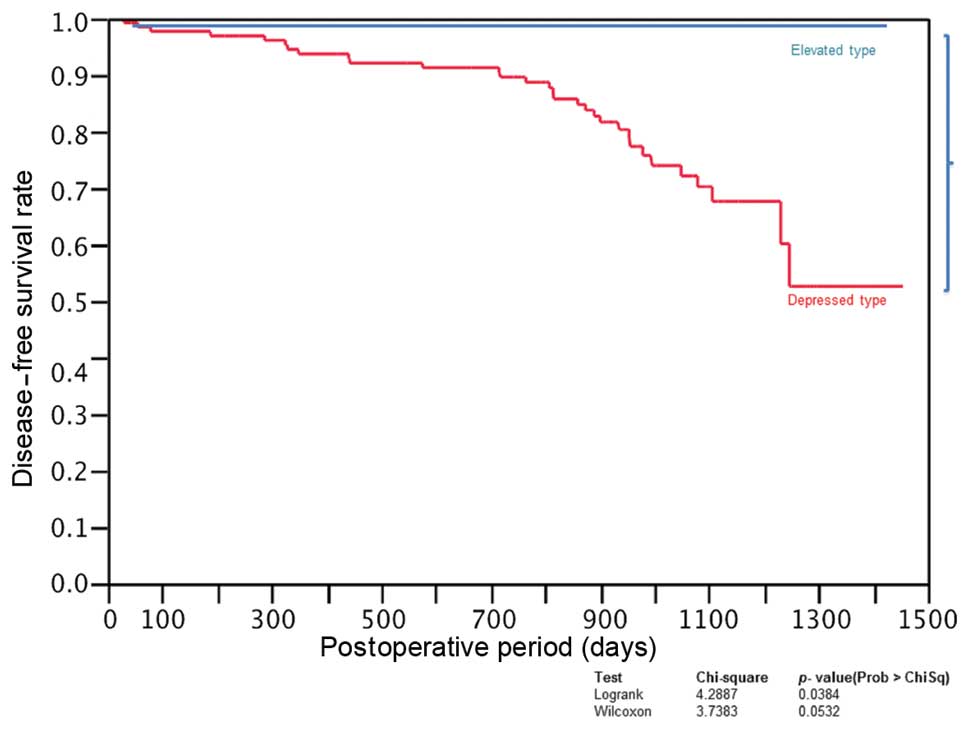
CRC characterized by depressed tumors has a higher incidence of recurrence than CRC cases characterized by elevated tumors (Fig. 5). Considering practical clinical applications, reliable markers that can be used to predict tumor shape may facilitate the early diagnosis of malignancy prior to a colonoscopy. In the present study, we identified 1 SNP in FN1 that was significantly associated with tumor shape.

Figure 5

Comparison of disease-free survival rates based on Dukes classification and tumor shape. A Dukes D classification was indicative of the highest recurrence rate among this collection of cases. CRC cases with depressed tumor (n=129) had a much higher incidence of recurrence than those with elevated tumors (n=17; log-rank test; p<0.05). CRC, colorectal cancer.

In conclusion, we found that the majority of CRC cases with depressed tumors had a higher frequency of elevated FN1 expression. In addition, we could predict the presence of depressed tumors by evaluation of 1 SNP (rs6707530) in the FN1 region in germline DNA from peripheral blood. This discovery will beneficial in the clinical setting, providing a method for the early diagnosis of depressed-type tumors by colon fiberscope.

References

1 

Jass JR, Baker K, Zlobec I, et al: Advanced colorectal polyps with the molecular and morphological features of serrated polyps and adenomas: concept of a ‘fusion’ pathway to colorectal cancer. Histopathology. 49:121–131. 2006.PubMed/NCBI

2 

Jass JR, Biden KG, Cummings MC, et al: Characterisation of a subtype of colorectal cancer combining features of the suppressor and mild mutator pathways. J Clin Pathol. 52:455–460. 1999. View Article : Google Scholar : PubMed/NCBI

3 

Snover DC, Jass JR, Fenoglio-Preiser C and Batts KP: Serrated polyps of the large intestine: a morphologic and molecular review of an evolving concept. Am J Clin Pathol. 124:380–391. 2005. View Article : Google Scholar : PubMed/NCBI

4 

Vogelstein B, Fearon ER, Hamilton SR, et al: Genetic alterations during colorectal-tumor development. N Engl J Med. 319:525–532. 1988. View Article : Google Scholar : PubMed/NCBI

5 

Kudo S, Lambert R, Allen JI, et al: Nonpolypoid neoplastic lesions of the colorectal mucosa. Gastrointest Endosc. 68(Suppl 4): S3–S47. 2008. View Article : Google Scholar : PubMed/NCBI

6 

Kudo S, Kashida H, Tamura S and Nakajima T: The problem of ‘flat’ colonic adenoma. Gastrointest Endosc Clin N Am. 7:87–98. 1997.

7 

Kudo S, Tamura S, Hirota S, et al: The problem of de novo colorectal carcinoma. Eur J Cancer. 31A:1118–1120. 1995. View Article : Google Scholar : PubMed/NCBI

8 

The Paris endoscopic classification of superficial neoplastic lesions: esophagus, stomach, and colon: November 30 to December 1, 2002. Gastrointest Endosc. 58(Suppl 6): S3–S43. 2003. View Article : Google Scholar : PubMed/NCBI

9 

Update on the Paris classification of superficial neoplastic lesions in the digestive tract. Endoscopy. 37:570–578. 2005. View Article : Google Scholar : PubMed/NCBI

10 

Goossens K, Van Soom A, Van Zeveren A, Favoreel H and Peelman LJ: Quantification of fibronectin 1 (FN1) splice variants, including two novel ones, and analysis of integrins as candidate FN1 receptors in bovine preimplantation embryos. BMC Dev Biol. 9:12009. View Article : Google Scholar : PubMed/NCBI

11 

Sato Y, Yoshizato T, Shiraishi Y, et al: Integrated molecular analysis of clear-cell renal cell carcinoma. Nat Genet. 45:860–867. 2013. View Article : Google Scholar : PubMed/NCBI

Related Articles

  • Abstract
  • View
  • Download
  • Twitter
Copy and paste a formatted citation
Spandidos Publications style
Kida H, Takano Y, Yamamoto K, Mori M, Yanaga K, Tanaka J, Kudo S and Mimori K: A single nucleotide polymorphism in fibronectin 1 determines tumor shape in colorectal cancer. Oncol Rep 32: 548-552, 2014.
APA
Kida, H., Takano, Y., Yamamoto, K., Mori, M., Yanaga, K., Tanaka, J. ... Mimori, K. (2014). A single nucleotide polymorphism in fibronectin 1 determines tumor shape in colorectal cancer. Oncology Reports, 32, 548-552. https://doi.org/10.3892/or.2014.3251
MLA
Kida, H., Takano, Y., Yamamoto, K., Mori, M., Yanaga, K., Tanaka, J., Kudo, S., Mimori, K."A single nucleotide polymorphism in fibronectin 1 determines tumor shape in colorectal cancer". Oncology Reports 32.2 (2014): 548-552.
Chicago
Kida, H., Takano, Y., Yamamoto, K., Mori, M., Yanaga, K., Tanaka, J., Kudo, S., Mimori, K."A single nucleotide polymorphism in fibronectin 1 determines tumor shape in colorectal cancer". Oncology Reports 32, no. 2 (2014): 548-552. https://doi.org/10.3892/or.2014.3251
Copy and paste a formatted citation
x
Spandidos Publications style
Kida H, Takano Y, Yamamoto K, Mori M, Yanaga K, Tanaka J, Kudo S and Mimori K: A single nucleotide polymorphism in fibronectin 1 determines tumor shape in colorectal cancer. Oncol Rep 32: 548-552, 2014.
APA
Kida, H., Takano, Y., Yamamoto, K., Mori, M., Yanaga, K., Tanaka, J. ... Mimori, K. (2014). A single nucleotide polymorphism in fibronectin 1 determines tumor shape in colorectal cancer. Oncology Reports, 32, 548-552. https://doi.org/10.3892/or.2014.3251
MLA
Kida, H., Takano, Y., Yamamoto, K., Mori, M., Yanaga, K., Tanaka, J., Kudo, S., Mimori, K."A single nucleotide polymorphism in fibronectin 1 determines tumor shape in colorectal cancer". Oncology Reports 32.2 (2014): 548-552.
Chicago
Kida, H., Takano, Y., Yamamoto, K., Mori, M., Yanaga, K., Tanaka, J., Kudo, S., Mimori, K."A single nucleotide polymorphism in fibronectin 1 determines tumor shape in colorectal cancer". Oncology Reports 32, no. 2 (2014): 548-552. https://doi.org/10.3892/or.2014.3251
Follow us
  • Twitter
  • LinkedIn
  • Facebook
About
  • Spandidos Publications
  • Careers
  • Cookie Policy
  • Privacy Policy
How can we help?
  • Help
  • Live Chat
  • Contact
  • Email to our Support Team