Spandidos Publications Logo
  • About
    • About Spandidos
    • Aims and Scopes
    • Abstracting and Indexing
    • Editorial Policies
    • Reprints and Permissions
    • Job Opportunities
    • Terms and Conditions
    • Contact
  • Journals
    • All Journals
    • Oncology Letters
      • Oncology Letters
      • Information for Authors
      • Editorial Policies
      • Editorial Board
      • Aims and Scope
      • Abstracting and Indexing
      • Bibliographic Information
      • Archive
    • International Journal of Oncology
      • International Journal of Oncology
      • Information for Authors
      • Editorial Policies
      • Editorial Board
      • Aims and Scope
      • Abstracting and Indexing
      • Bibliographic Information
      • Archive
    • Molecular and Clinical Oncology
      • Molecular and Clinical Oncology
      • Information for Authors
      • Editorial Policies
      • Editorial Board
      • Aims and Scope
      • Abstracting and Indexing
      • Bibliographic Information
      • Archive
    • Experimental and Therapeutic Medicine
      • Experimental and Therapeutic Medicine
      • Information for Authors
      • Editorial Policies
      • Editorial Board
      • Aims and Scope
      • Abstracting and Indexing
      • Bibliographic Information
      • Archive
    • International Journal of Molecular Medicine
      • International Journal of Molecular Medicine
      • Information for Authors
      • Editorial Policies
      • Editorial Board
      • Aims and Scope
      • Abstracting and Indexing
      • Bibliographic Information
      • Archive
    • Biomedical Reports
      • Biomedical Reports
      • Information for Authors
      • Editorial Policies
      • Editorial Board
      • Aims and Scope
      • Abstracting and Indexing
      • Bibliographic Information
      • Archive
    • Oncology Reports
      • Oncology Reports
      • Information for Authors
      • Editorial Policies
      • Editorial Board
      • Aims and Scope
      • Abstracting and Indexing
      • Bibliographic Information
      • Archive
    • Molecular Medicine Reports
      • Molecular Medicine Reports
      • Information for Authors
      • Editorial Policies
      • Editorial Board
      • Aims and Scope
      • Abstracting and Indexing
      • Bibliographic Information
      • Archive
    • World Academy of Sciences Journal
      • World Academy of Sciences Journal
      • Information for Authors
      • Editorial Policies
      • Editorial Board
      • Aims and Scope
      • Abstracting and Indexing
      • Bibliographic Information
      • Archive
    • International Journal of Functional Nutrition
      • International Journal of Functional Nutrition
      • Information for Authors
      • Editorial Policies
      • Editorial Board
      • Aims and Scope
      • Abstracting and Indexing
      • Bibliographic Information
      • Archive
    • International Journal of Epigenetics
      • International Journal of Epigenetics
      • Information for Authors
      • Editorial Policies
      • Editorial Board
      • Aims and Scope
      • Abstracting and Indexing
      • Bibliographic Information
      • Archive
    • Medicine International
      • Medicine International
      • Information for Authors
      • Editorial Policies
      • Editorial Board
      • Aims and Scope
      • Abstracting and Indexing
      • Bibliographic Information
      • Archive
  • Articles
  • Information
    • Information for Authors
    • Information for Reviewers
    • Information for Librarians
    • Information for Advertisers
    • Conferences
  • Language Editing
Spandidos Publications Logo
  • About
    • About Spandidos
    • Aims and Scopes
    • Abstracting and Indexing
    • Editorial Policies
    • Reprints and Permissions
    • Job Opportunities
    • Terms and Conditions
    • Contact
  • Journals
    • All Journals
    • Biomedical Reports
      • Information for Authors
      • Editorial Policies
      • Editorial Board
      • Aims and Scope
      • Abstracting and Indexing
      • Bibliographic Information
      • Archive
    • Experimental and Therapeutic Medicine
      • Information for Authors
      • Editorial Policies
      • Editorial Board
      • Aims and Scope
      • Abstracting and Indexing
      • Bibliographic Information
      • Archive
    • International Journal of Epigenetics
      • Information for Authors
      • Editorial Policies
      • Editorial Board
      • Aims and Scope
      • Abstracting and Indexing
      • Bibliographic Information
      • Archive
    • International Journal of Functional Nutrition
      • Information for Authors
      • Editorial Policies
      • Editorial Board
      • Aims and Scope
      • Abstracting and Indexing
      • Bibliographic Information
      • Archive
    • International Journal of Molecular Medicine
      • Information for Authors
      • Editorial Policies
      • Editorial Board
      • Aims and Scope
      • Abstracting and Indexing
      • Bibliographic Information
      • Archive
    • International Journal of Oncology
      • Information for Authors
      • Editorial Policies
      • Editorial Board
      • Aims and Scope
      • Abstracting and Indexing
      • Bibliographic Information
      • Archive
    • Medicine International
      • Information for Authors
      • Editorial Policies
      • Editorial Board
      • Aims and Scope
      • Abstracting and Indexing
      • Bibliographic Information
      • Archive
    • Molecular and Clinical Oncology
      • Information for Authors
      • Editorial Policies
      • Editorial Board
      • Aims and Scope
      • Abstracting and Indexing
      • Bibliographic Information
      • Archive
    • Molecular Medicine Reports
      • Information for Authors
      • Editorial Policies
      • Editorial Board
      • Aims and Scope
      • Abstracting and Indexing
      • Bibliographic Information
      • Archive
    • Oncology Letters
      • Information for Authors
      • Editorial Policies
      • Editorial Board
      • Aims and Scope
      • Abstracting and Indexing
      • Bibliographic Information
      • Archive
    • Oncology Reports
      • Information for Authors
      • Editorial Policies
      • Editorial Board
      • Aims and Scope
      • Abstracting and Indexing
      • Bibliographic Information
      • Archive
    • World Academy of Sciences Journal
      • Information for Authors
      • Editorial Policies
      • Editorial Board
      • Aims and Scope
      • Abstracting and Indexing
      • Bibliographic Information
      • Archive
  • Articles
  • Information
    • For Authors
    • For Reviewers
    • For Librarians
    • For Advertisers
    • Conferences
  • Language Editing
Login Register Submit
  • This site uses cookies
  • You can change your cookie settings at any time by following the instructions in our Cookie Policy. To find out more, you may read our Privacy Policy.

    I agree
Search articles by DOI, keyword, author or affiliation
Search
Advanced Search
presentation
Molecular Medicine Reports
Join Editorial Board Propose a Special Issue
Print ISSN: 1791-2997 Online ISSN: 1791-3004
Journal Cover
May 2013 Volume 7 Issue 5

Full Size Image

Sign up for eToc alerts
Recommend to Library

Journals

International Journal of Molecular Medicine

International Journal of Molecular Medicine

International Journal of Molecular Medicine is an international journal devoted to molecular mechanisms of human disease.

International Journal of Oncology

International Journal of Oncology

International Journal of Oncology is an international journal devoted to oncology research and cancer treatment.

Molecular Medicine Reports

Molecular Medicine Reports

Covers molecular medicine topics such as pharmacology, pathology, genetics, neuroscience, infectious diseases, molecular cardiology, and molecular surgery.

Oncology Reports

Oncology Reports

Oncology Reports is an international journal devoted to fundamental and applied research in Oncology.

Experimental and Therapeutic Medicine

Experimental and Therapeutic Medicine

Experimental and Therapeutic Medicine is an international journal devoted to laboratory and clinical medicine.

Oncology Letters

Oncology Letters

Oncology Letters is an international journal devoted to Experimental and Clinical Oncology.

Biomedical Reports

Biomedical Reports

Explores a wide range of biological and medical fields, including pharmacology, genetics, microbiology, neuroscience, and molecular cardiology.

Molecular and Clinical Oncology

Molecular and Clinical Oncology

International journal addressing all aspects of oncology research, from tumorigenesis and oncogenes to chemotherapy and metastasis.

World Academy of Sciences Journal

World Academy of Sciences Journal

Multidisciplinary open-access journal spanning biochemistry, genetics, neuroscience, environmental health, and synthetic biology.

International Journal of Functional Nutrition

International Journal of Functional Nutrition

Open-access journal combining biochemistry, pharmacology, immunology, and genetics to advance health through functional nutrition.

International Journal of Epigenetics

International Journal of Epigenetics

Publishes open-access research on using epigenetics to advance understanding and treatment of human disease.

Medicine International

Medicine International

An International Open Access Journal Devoted to General Medicine.

Journal Cover
May 2013 Volume 7 Issue 5

Full Size Image

Sign up for eToc alerts
Recommend to Library

  • Article
  • Citations
    • Cite This Article
    • Download Citation
    • Create Citation Alert
    • Remove Citation Alert
    • Cited By
  • Similar Articles
    • Related Articles (in Spandidos Publications)
    • Similar Articles (Google Scholar)
    • Similar Articles (PubMed)
  • Download PDF
  • Download XML
  • View XML
Article

Antitumor activity of bee pollen polysaccharides from Rosa rugosa

  • Authors:
    • Bo Wang
    • Qiyu Diao
    • Zhongyu Zhang
    • Yang Liu
    • Qipin Gao
    • Yifa Zhou
    • Shanshan Li
  • View Affiliations / Copyright

    Affiliations: School of Life Sciences, Northeast Normal University, Jilin 130024, P.R. China, Feed Research Institute, Chinese Academy of Agricultural Sciences, Beijing 100081, P.R. China
  • Pages: 1555-1558
    |
    Published online on: March 20, 2013
       https://doi.org/10.3892/mmr.2013.1382
  • Expand metrics +
Metrics: Total Views: 0 (Spandidos Publications: | PMC Statistics: )
Metrics: Total PDF Downloads: 0 (Spandidos Publications: | PMC Statistics: )
Cited By (CrossRef): 0 citations Loading Articles...

This article is mentioned in:


Abstract

In the present study, bee pollen polysaccharides from Rosa rugosa (WRPP) were extracted and fractionated. WRPP were purified to neutral (WRPP-N) and acidic polysaccharides (WRPP-1, WRPP-2) with DEAE-Cellulose. WRPP-N were mainly composed of glucose, mannose, arabinose and galactose, indicating the existence of glucan, arabinogalactan (AG) and mannoglucan. WRPP-1 mainly consisted of rhamnose (3.0%), galacturonic acid (12.4%), galactose (24.7%) and arabinose (53.9%), and contained a large proportion of AGs. WRPP-2 consisted of rhamnose (7.8%), galacturonic acid (23.0%), galactose (15%) and arabinose (48.7%), while WRPP-2 contained more galacturonic acid compared to WRPP-1. WRPP-1 and WRPP-2 were composed by type I rhamnogalacturonan (RG-I), homogalacturonan (HG) and AG fragments, while WRPP-2 contained more HG and RG-I. All the fractions had significant anti-proliferative activity in HT-29 and HCT116 cells; the neutral and acidic fractions were shown to have significant synergistic effects which accounted for the antitumor activity of bee pollen polysaccharides from Rosa rugosa in vitro.

Introduction

Bee pollen is the male gametophyte of gymnosperms and angiosperms, which contains all the necessary nutrients for plant growth and development. Bee pollen is known to be a natural and healthy food that improves human immunity (1). Bee pollen polysaccharides exhibit antitumor (2) and immunomodulating activities (3,4). Previous studies have demonstrated that pollen significantly inhibits tumor growth and enhances immunomodulating activity, while alleviating the distress of chemotherapy in cancer patients (5,6).

Polysaccharides constitute one group of the main components of plants, and have complex structural features including type I (RG-I) and type II rhamnogalacturonan (RG-II), homogalacturonan (HG) and arabinogalactan (AG). Polysaccharides have been reported to possess a broad spectrum of biological activities, particularly antitumor (7–10) and immunomodulating activities (11–16). Rosa rugosa is a common type of plants in China, and its bee pollen has been used as an immunological food for a long time. Polysaccharides are the main active components in bee pollen. However, there is limited information regarding the fractionation and antitumor activity of bee pollen polysaccharides. To the best of our knowledge, this is the first study to investigate the total fractionation and antitumor activity of bee pollen polysaccharides from Rosa rugosa.

Materials and methods

Materials

Bee pollen from Rosa rugosa was kindly provided by the Feed Research Institute Chinese Academy of Agricultural Sciences (Beijing, China). Sepharose® CL-6B was purchased from Sigma-Aldrich (St. Louis, MO, USA). Dulbecco’s modified Eagle’s medium:Nutrient Mixture F12 (DMEM/F12) medium and calf serum were purchased from Gibco (Carlsbad, CA, USA). Trypsin was obtained from Amersco (Framingham, MA, USA), 3-(4, 5-dimethylthiazol-2-yl)-2,5-diphenyl tetrazolium bromide (MTT) from Sigma (St. Louis, MO, USA), and penicillin/streptomycin from the Tianjin Hao Yang Biological Manufacture Co., Ltd. (Tianjin, China). All the additional analytical grade chemicals and reagents were produced in China.

Analytical methods

Total carbohydrate contents were determined using the phenol-sulphuric acid method (16,17). Uronic acid contents were determined using the m-hydroxydiphenyl method (16,18). All the gel permeation and anion exchange chromatographies were monitored by assaying total sugar and uronic acid contents. Sugar composition analysis was performed as described by Zhang et al(15) and Yu et al(19). Each polysaccharide sample (2 mg) was hydrolyzed with 2 M trifluoroacetic acid (TFA) at 120°C for 2 h. The monosaccharide derivatives were released using 1-phenyl-3-methyl-5-pyrazolone and analyzed on a DIKMA Inertsil ODS-3 column (4.6×150 mm) connected to a Shimadzu high performance liquid chromatography (HPLC) system (LC-10ATvp pump and SPD-10AVD UV-VIS detector).

Cell culture

The cell lines HT-29 and HCT116 were obtained from the American Type Culture Collection (ATCC; Manassas, VA, USA). HT-29 cells were cultured in DMEM/F12 medium supplemented with 10% calf serum and 100 IU/ml penicillin and streptomycin. HCT116 cells were cultured in Iscove’s modified Dulbecco’s medium (IMDM) supplemented with 10% calf serum and 100 IU/ml penicillin and streptomycin. The cells were incubated at 37°C in a humidified atmosphere of 5% CO2 in air.

Cell proliferation assay

HT-29 and HCT116 cells were seeded in a 96-well plate (Costar®) at a density of 1×10⁴ cells/well, adhered for 24 h, and then treated for 72 h with the polysaccharide fractions at varying concentrations (7). Control cells were similarly treated without the polysaccharides. The media were removed and 100 μl/well of MTT solution (0.5 mg/ml) were added. The supernatants were discarded after a 4-h incubation. The resulting formazan was dissolved in 100 μl DMSO and the absorbance at 570 nm was measured using a microplate reader (Bio-Rad, Hercules, CA, USA). All the experiments were performed in triplicate and repeated at least three times. Cell proliferation under all the conditions was expressed as a percentage of the control, which was set at 100%.

Statistical analysis

Data were presented as the means ± standard deviation (SD). Statistical analysis was performed using SPSS version 17.0 software. One-way analysis of variance (ANOVA) test was used to perform a statistical comparison between the treatment and control groups. P<0.05 and <0.01 were considered to indicate a statistically significant difference.

Results

Isolation and fractionation of bee pollen polysaccharides

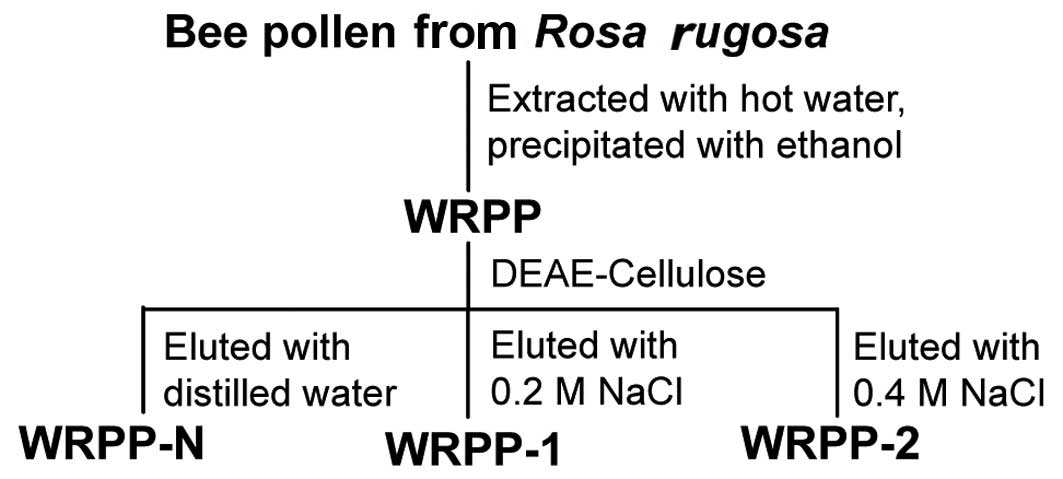
The water-soluble polysaccharides were extracted from the bee pollen of Rosa rugosa with hot water. Following precipitation by the addition of 4 volumes of 95% ethanol, a total polysaccharides fraction, referred to as WRPP (water-soluble Rosa rugosa bee pollen polysaccharides), was obtained with a yield of 4.6% (w/w). WRPP contained 58.1% total sugar and 13.3% uronic acid. WRPP was a water-soluble light yellow powder. Sugar composition analysis by HPLC indicated that WRPP consisted of galactose (Gal) (21.4%), arabinose (Ara) (47.9%), rhamnose (Rha) (3.4%), galacturonic acid (GalA) (12.1%), glucose (Glc) (11.6%), mannose (Man) (2.6%) and glucoronic acid (GlcA) (1.0%).

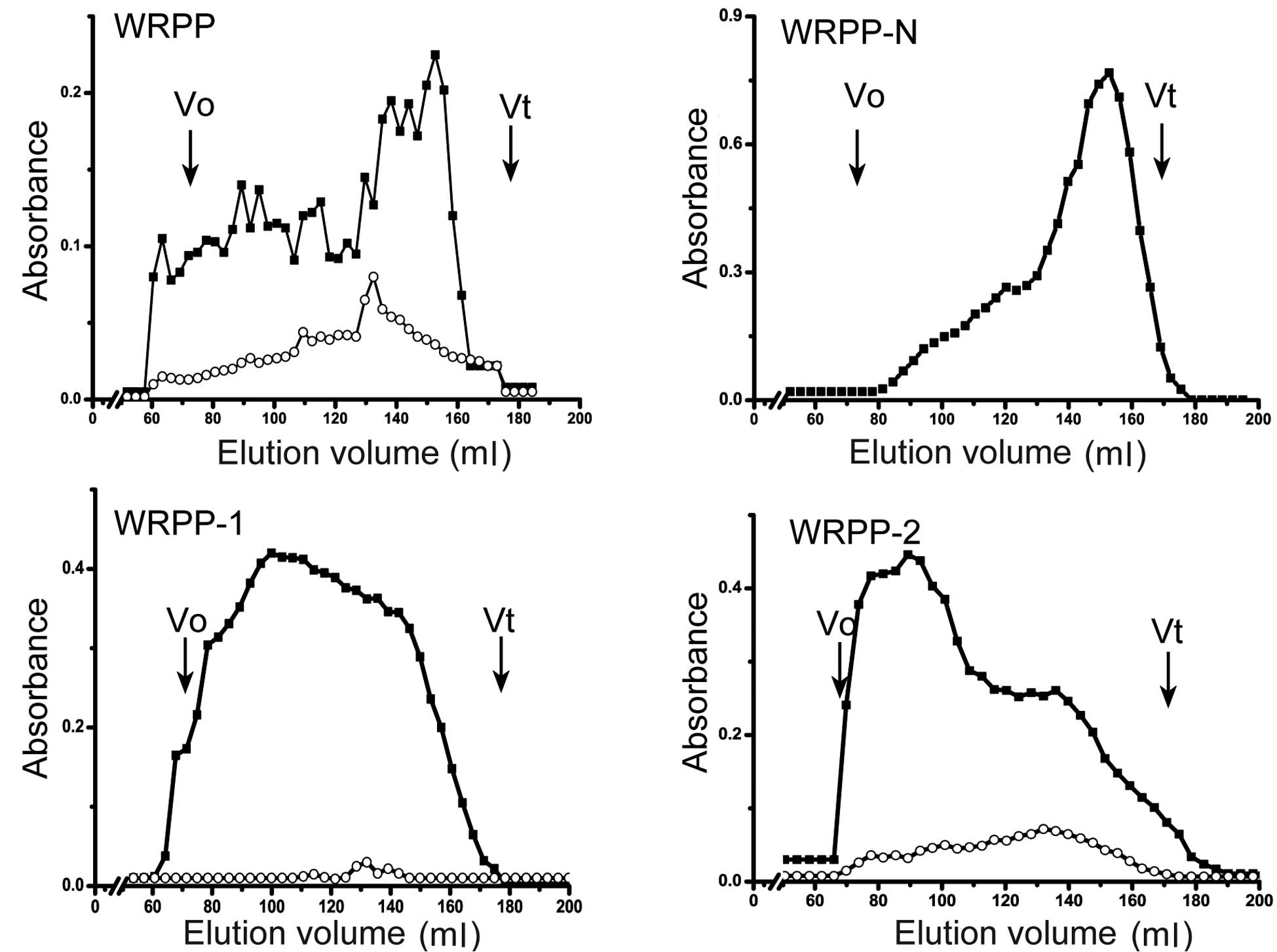
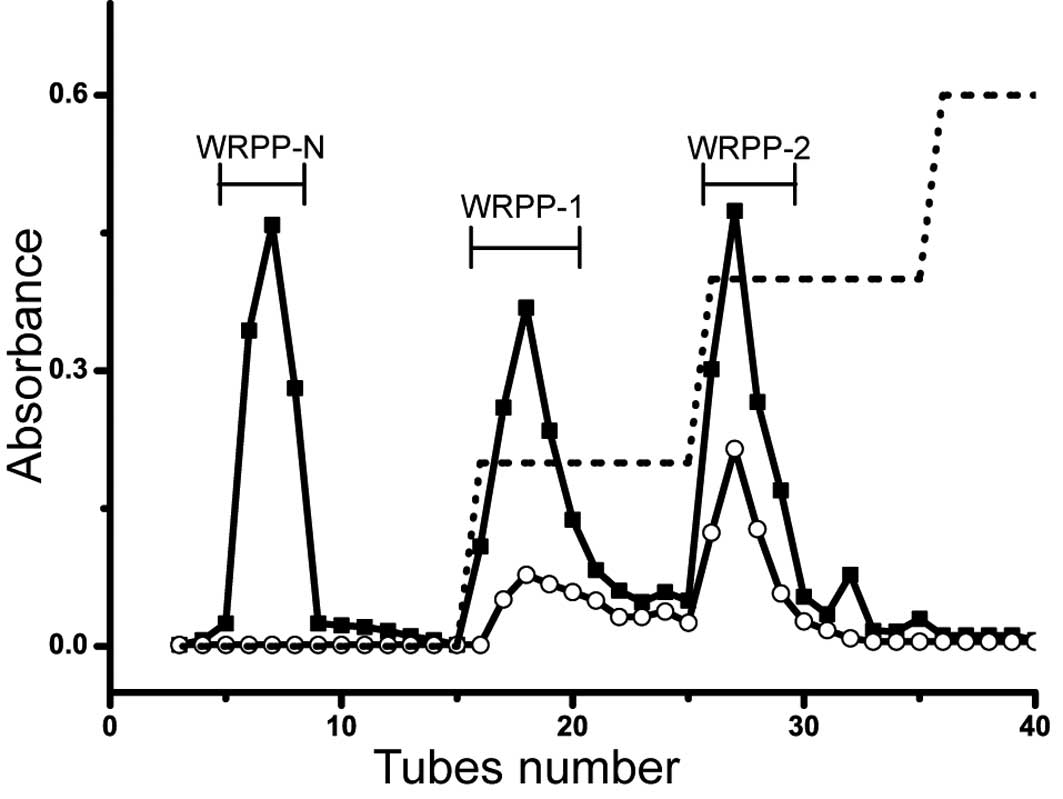
WRPP contain neutral and acidic polysaccharides and showed a wide molecular weight distribution using Sepharose CL-6B (Fig. 1). To fractionate WRPP, it was applied on anion-exchange chromatography (Fig. 2). The elution profiles on DEAE-Cellulose column are shown in Fig. 3. Three fractions of WRPP-N, WRPP-1 and WRPP-2 were eluted with distilled water, 0.2 and 0.4 M NaCl, respectively. The molecular distribution on Sepharose CL-6B was analyzed (Fig. 1). WRPP-N exhibited one main peak near the total volume, while small curves prior to the main peak also existed, suggesting a mixture of polysaccharides with different molecular weights. WRPP-1 showed wide distribution from the out volume to the total volume of Sepharose CL-6B, while uronic acid showed a small peak. WRPP-2 exhibited a main peak near the out volume, while an additional peak of rich uronic acid appeared near the total volume.

Figure 1

Molecular weight distributions of polysaccharide fractions using Sepharose CL-6B. ■, total sugars; ○, uronic acid. Vo, out volume; Vt, total volume.

Figure 2

Fractionation scheme of bee pollen polysaccharides from Rosa rugosa.

Figure 3

Elution profiles of WRPP on DEAE-Cellulose by a stepwise gradient of NaCl. ■, total sugars; ○, uronic acid; dashed line, concentration of NaCl.

Composition analysis of the polysaccharide fractions

The monosaccharide compositions and yields of the collected fractions are listed in Table I. WRPP-N was composed of Glc (34.3%), Gal (25.0%), Ara (36.7%) and Man (4.0%), while uronic acid was not detected. The iodine test suggested that no starch was present, while WRPP-N was composed of glucan, arabinogalactans (AGs) and few mannoglucans.

Table I

Yields and structral features of the collected fractions.

Table I

Yields and structral features of the collected fractions.

Monosaccharide composition (%)

FractionYield (%)RhaGalAGalAraManGlcGlcA
WRPP4.6a3.412.121.447.92.611.61.0
WRPP-N26.9b0025.036.74.034.30
WRPP-121.4b3.012.424.753.91.93.01.1
WRPP-213.1b7.823.015.048.71.72.80.9

a Yield as % of bee pollen dry weight;

b yield as % of fraction applied to column.

{ label (or @symbol) needed for fn[@id='tfn3-mmr-07-05-1555'] } Rha, rhamnose; GalA, galacturonic acid; Gal, galactose; Ara, arabinose; Man, mannose; Glc, glucose; GlcA, glucoronic acid.

WRPP-1 consisted of Rha (3.0%), GalA (12.4%), Gal (24.7%) and Ara (53.9%), with minor amounts of Man, Glc and GlcA being detected (Table I). The amounts of Gal and Ara were >70% of total sugars. The ratio of Rha/GalA was 0.24, which was within the RG-I range of 0.05–1.0, defined by Schols and Voragen (20) and Yu et al(19). These results indicated small amounts of RG-I and HG domains, while a large proportion of AG and arabinan fragments was evident.

WRPP-2 consisted of Rha (7.8%), GalA (23.0%), Gal (15.0%) and Ara (48.7%), with minor amounts of Glc, GlcA and Man being detected. The ratio of Rha/GalA was ~0.34, suggesting the presence of RG-I, HG and AG.

WRPP-1 and WRPP-2 were mainly composed of Gal, Ara, Rha and GalA. Both had a large proportion of Gal and Ara, suggesting the existence of AG fragments. The amounts of GalA in WRPP-1 and WRPP-2 were 12.4 and 23%, respectively; one explanatory reason could be the elution order from the DEAE-Cellulose column. WRPP-2 contained more RG-I and HG domains compared to WRPP-1, while WRPP-1 contained more AG fragments compared to WRPP-2.

Antitumor effects in vitro

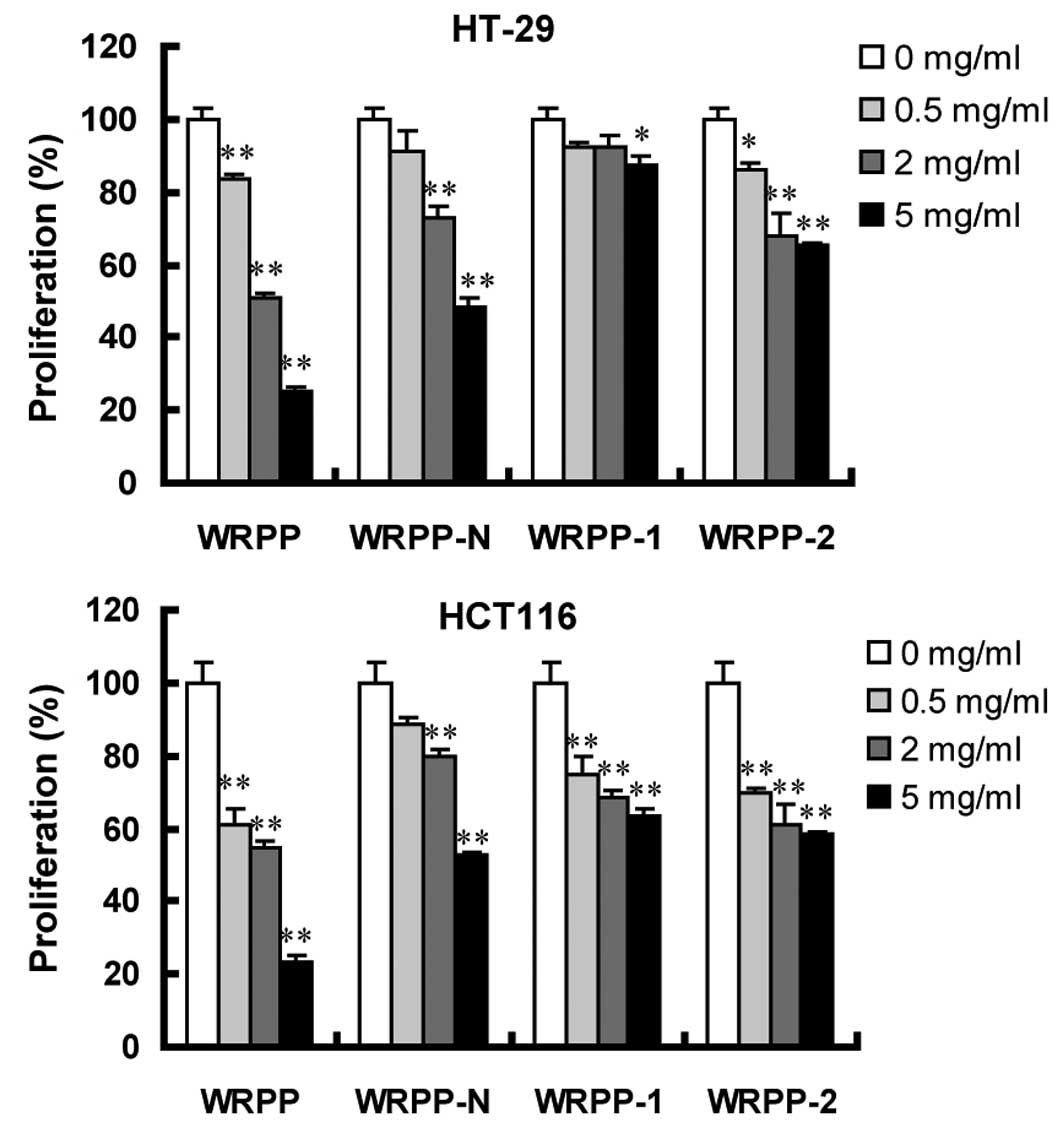
Human colon cancer HT-29 and HCT116 cells were treated with varying concentrations of various bee pollen polysaccharides from Rosa rugosa for 72 h. Cell proliferation was assessed using MTT assay. Following a 72-h treatment with total polysaccharides WRPP, cell proliferation was significantly inhibited in a dose-dependent manner. All the sub-fractions of WRPP also showed a concentration-dependent proliferation-inhibitory effect on HT-29 and HCT116 cells (Fig. 4). Notably, all the sub-fractions were less effective compared to the total fraction WRPP, suggesting that sub-fractions have a synergistic effect, which accounted for the anti-proliferative activity of bee pollen polysaccharides from Rosa rugosa on HT-29 and HCT116 cells in vitro.

Figure 4

Anti-proliferative effects of bee pollen polysaccharides from Rosa rugosa on HT-29 and HCT116 cells. HT-29 and HCT116 cells were treated with various polysaccharides at varying concentrations for 72 h, as indicated. Cell proliferation was determined using MTT assay. Columns, means from three independent experiments; bars, SD. *P<0.05, **P<0.01.

Discussion

In the present study, bee pollen polysaccharides from Rosa rugosa were extracted and fractionated. Total WRPP were purified to neutral (WRPP-N) and acidic polysaccharides (WRPP-1, WRPP-2). Acidic fractions contained different amounts of RG-I, HG and AG fragments. All the fractions inhibited the proliferation of HT-29 and HCT116 cells in a dose-dependent manner in vitro, indicating a potential antitumor activity. Sub-fractions showed a significant synergistic effect. To the best of our knowledge, this is the first study investigating the fractionation and antitumor activity of bee pollen polysaccharides from Rosa rugosa.

Acknowledgements

This study was supported by the Fundamental Research Funds for the Central Universities (no. 09SSXT125).

References

1 

Kroyer G and Hegedus N: Evaluation of bioactive properties of pollen extracts as functional dietary food supplement. Innov Food Sci Emerg Technol. 2:171–174. 2001. View Article : Google Scholar

2 

Yang X, Guo D, Zhang J and Wu M: Characterization and antitumor activity of pollen polysaccharide. Int Immunopharmacol. 7:427–434. 2007. View Article : Google Scholar : PubMed/NCBI

3 

Li F, Yuan Q and Rashid F: Isolation, purification and immunobiological activity of a new water-soluble bee pollen polysaccharide from Crataegus pinnatifida Bge. Carbohydr Polym. 78:80–88. 2009. View Article : Google Scholar

4 

Brecker L, Wicklein D, Moll H, Fuchs EC, Becker WM and Petersen A: Structural and immunological properties of arabinogalactan polysaccharides from pollen of timothy grass (Phleum pratense L.). Carbohydr Res. 340:657–663. 2005. View Article : Google Scholar : PubMed/NCBI

5 

Gao Y, Hu F, Zhu W and Li Y: Study on the antitumor activity of propolis and bee pollen and royal jelly. J Bee. 7:3–4. 2003.

6 

Wang W, Hu J and Shen W: Antitumor activity and mechanism of pollen. Chin Beekeep. 36:1–3. 1986.

7 

Cheng H, Li S, Fan Y, et al: Comparative studies of the antiproliferative effects of ginseng polysaccharides on HT-29 human colon cancer cells. Med Oncol. 28:175–181. 2011. View Article : Google Scholar : PubMed/NCBI

8 

Fan Y, Cheng H, Liu D, et al: The inhibitory effect of ginseng pectin on L-929 cell migration. Arch Pharm Res. 33:681–689. 2010. View Article : Google Scholar : PubMed/NCBI

9 

Xu C, Liu Y, Yuan G and Guan M: The contribution of side chains to antitumor activity of a polysaccharide from Codonopsis pilosula. Int J Biol Macromol. 50:891–894. 2012. View Article : Google Scholar : PubMed/NCBI

10 

Zhao H, Li Y, Wang Y, et al: Antitumor and immunostimulatory activity of a polysaccharide-protein complex from Scolopendra subspinipes mutilans L. Koch in tumor-bearing mice. Food Chem Toxicol. 50:2648–2655. 2012. View Article : Google Scholar : PubMed/NCBI

11 

Inngjerdingen KT, Kiyohara H, Matsumoto T, et al: An immunomodulating pectic polymer from Glinus oppositifolius. Phytochemistry. 68:1046–1058. 2007. View Article : Google Scholar : PubMed/NCBI

12 

Inngjerdingen M, Inngjerdingen KT, Patel TR, et al: Pectic polysaccharides from Biophytum petersianum Klotzsch, and their activation of macrophages and dendritic cells. Glycobiology. 18:1074–1084. 2008.

13 

Nergard CS, Matsumoto T, Inngjerdingen M, et al: Structural and immunological studies of a pectin and a pectic arabinogalactan from Vernonia kotschyana Sch. Bip. ex Walp. (Asteraceae). Carbohydr Res. 340:115–130. 2005. View Article : Google Scholar : PubMed/NCBI

14 

Ni W, Zhang X, Bi H, et al: Preparation of a glucan from the roots of Rubus crataegifolius Bge. and its immunological activity. Carbohydr Res. 344:2512–2518. 2009. View Article : Google Scholar : PubMed/NCBI

15 

Zhang X, Li S, Sun L, et al: Further analysis of the structure and immunological activity of an RG-I type pectin from Panax ginseng. Carbohydr Polym. 89:519–525. 2012. View Article : Google Scholar : PubMed/NCBI

16 

Zhang X, Yu L, Bi H, et al: Total fractionation and characterization of the water-soluble polysaccharides isolated from Panax ginseng C. A. Meyer. Carbohydr Polym. 77:544–552. 2009. View Article : Google Scholar

17 

Dubois M, Gilles KA, Hamilton JK, Rebers PA and Smith F: Colorimetric method for determination of sugars and related substances. Anal Chem. 28:350–356. 1956. View Article : Google Scholar

18 

Blumenkrantz N and Asboe-Hansen G: New method for quantitative determination of uronic acids. Anal Biochem. 54:484–489. 1973. View Article : Google Scholar : PubMed/NCBI

19 

Yu L, Zhang X, Li S, et al: Rhamnogalacturonan I domains from ginseng pectin. Carbohydr Polym. 79:811–817. 2010. View Article : Google Scholar

20 

Schols HA and Voragen A: Complex pectins: structure elucidation using enzymes. Progress Biotechnol. 14:3–19. 1996. View Article : Google Scholar

Related Articles

  • Abstract
  • View
  • Download
  • Twitter
Copy and paste a formatted citation
Spandidos Publications style
Wang B, Diao Q, Zhang Z, Liu Y, Gao Q, Zhou Y and Li S: Antitumor activity of bee pollen polysaccharides from Rosa rugosa. Mol Med Rep 7: 1555-1558, 2013.
APA
Wang, B., Diao, Q., Zhang, Z., Liu, Y., Gao, Q., Zhou, Y., & Li, S. (2013). Antitumor activity of bee pollen polysaccharides from Rosa rugosa. Molecular Medicine Reports, 7, 1555-1558. https://doi.org/10.3892/mmr.2013.1382
MLA
Wang, B., Diao, Q., Zhang, Z., Liu, Y., Gao, Q., Zhou, Y., Li, S."Antitumor activity of bee pollen polysaccharides from Rosa rugosa". Molecular Medicine Reports 7.5 (2013): 1555-1558.
Chicago
Wang, B., Diao, Q., Zhang, Z., Liu, Y., Gao, Q., Zhou, Y., Li, S."Antitumor activity of bee pollen polysaccharides from Rosa rugosa". Molecular Medicine Reports 7, no. 5 (2013): 1555-1558. https://doi.org/10.3892/mmr.2013.1382
Copy and paste a formatted citation
x
Spandidos Publications style
Wang B, Diao Q, Zhang Z, Liu Y, Gao Q, Zhou Y and Li S: Antitumor activity of bee pollen polysaccharides from Rosa rugosa. Mol Med Rep 7: 1555-1558, 2013.
APA
Wang, B., Diao, Q., Zhang, Z., Liu, Y., Gao, Q., Zhou, Y., & Li, S. (2013). Antitumor activity of bee pollen polysaccharides from Rosa rugosa. Molecular Medicine Reports, 7, 1555-1558. https://doi.org/10.3892/mmr.2013.1382
MLA
Wang, B., Diao, Q., Zhang, Z., Liu, Y., Gao, Q., Zhou, Y., Li, S."Antitumor activity of bee pollen polysaccharides from Rosa rugosa". Molecular Medicine Reports 7.5 (2013): 1555-1558.
Chicago
Wang, B., Diao, Q., Zhang, Z., Liu, Y., Gao, Q., Zhou, Y., Li, S."Antitumor activity of bee pollen polysaccharides from Rosa rugosa". Molecular Medicine Reports 7, no. 5 (2013): 1555-1558. https://doi.org/10.3892/mmr.2013.1382
Follow us
  • Twitter
  • LinkedIn
  • Facebook
About
  • Spandidos Publications
  • Careers
  • Cookie Policy
  • Privacy Policy
How can we help?
  • Help
  • Live Chat
  • Contact
  • Email to our Support Team